214 pointsby cobri5 hours ago50 comments
  • freedomben4 hours ago
    The color options are a much bigger deal than I think many people realize. It's been too many years since I saw the studies so I have no hope of being able to cite it, but in a marketing class in college I remember reading about how much people value picking a color they really like, that they feel matches their personality. It increases satisfaction, significantly reduces the cognitive dissonance (aka "buyers remorse") that usually accompanies a major purchase, and increases identity sharing (where the vehicle feels like part of your identity, which is good for brand loyalty and total ownership satisfaction). I've been surprised how limited the color palette usually is for vehicles given all that. It will be interesting to see how Slate does!
    • efsavage4 hours ago
      AFAIK there's actually only one color and you can wrap it. The wrap kits are supposed to be DIY friendly so you can change it yourself when you want a new color.
      • bitexploder4 hours ago
        The body panels are some sort of composite polycarbonate plastic. They offered a number of colors in the UI for the pre-order system. It basically allows you to configure options that are available and see what it looks like. The wraps are (offered) DIY and they claim it will take two people 14-16 hours. They offer a number of colors that cost $500 right now.

        Pretty interesting as far as cars go. I think all of the customization options are really smart, but we will see if that is enough for the average consumer. The number of relatively inexpensive options and ability to customize various details rivals some high end car configuration systems, Porsche is famous for letting you customize every detail.

        The way Slate has designed their vehicles, they are making it very easy to change just about anything with the vehicle. I can see this being very popular with young people who cannot afford a lot of car, but still want a highly customized and personalized vehicle that they identify with. We will see if all of the other factors work out in Slate's favor.

        • freedomben3 hours ago
          > The wraps are DIY and they claim it will take two people 14-16 hours.

          Oh man, that is ... a lot labor. I can't imagine many people are going to want to do it

          • bitexploder3 hours ago
            They designed the vehicle to be "easy" to wrap. Meaning you don't have to remove trim or anything like that. It is still non-trivial and you would want to do it inside of a garage IMO.
          • vablings2 hours ago
            Why not? This is an easy version of bribe your friends with a case of beer while you work on your POS project car.

            I feel like this truck really appeals to the more moderate project car folks who want something both reliable and personal to them

          • baby_souffle3 hours ago
            Presumably that's assuming no prior experience. That seems pretty reasonable to me. I would be rather annoyed if I brought it to a professional wrapping shop and they quoted me 15 hours of labor though
          • dismalaf3 hours ago
            In the FAQ it says you can also order it pre-wrapped.
          • 3 hours ago
            undefined
          • laweijfmvo3 hours ago
            and it will look terrible if you don’t do it properly
      • simonsarris2 hours ago
        That sounds a bit like one of Saturn's (1985-2010) original ideas from the 80s. The plastic paneling was easy to take off so that people could DIY change the colors or add their own panels (and Saturn engineers could quickly revise styles). I am not sure very many people ever did, however. Or even if the cars were all that customizable in the end.
        • davkan22 minutes ago
          Notably truck people love customizing their trucks. Less so for economy sedan people.
      • xattt4 hours ago
        This is great if you have a garage to do it in. This is terrible if you’re an apartment dweller and have no workshop space!
        • vablings4 hours ago
          Parking garage, a friend's house etc.. You make it work.
          • SoftTalker4 hours ago
            Or take it to a vinyl shop and pay to have it done properly in an afternoon.
            • therealdrag03 hours ago
              Thousands of dollars tho right?
              • SoftTalkeran hour ago
                I don't know but probably. A good wrap job isn't actually much cheaper than a decent paint job, the undersurface still has to be prepped as any dents or chips will show through (less of a concern with a new car though). Applying vinyl without any wrinkles and cutting it perfectly is a skill. Guys need to pay the rent on the shop, pay for tools, and make a living.
          • netsharc4 hours ago
            Sounds like the vinyls will feel like "Hooray my own kinda car!" but will end up in the storage room with "I'll stick these on later" note in the buyers' heads.
            • baby_souffle3 hours ago
              You can order a wrapped professionally from the factory. Depending upon which segment of the body panels it's as cheap as a few hundred bucks all the way up to something like 800 bucks for a full wrap.

              I don't think I've ever gone shopping for a car and had the dealer present me with the exact same trim options but color selection was only going to change the MSRP by $800 at most...

              • baby_soufflean hour ago
                Too late to edit parent but I might be wrong about wrap from the factory. (up to) $800 just for the materials is still reasonable but even with experience doing wraps, I would probably still bring it to a shop. DIY wrap is a bit like baking cookies; you don't need much in terms of skill or tools to do it but you absolutely can tell the difference between cookies made in your average kitchen using the recipe on the back of the box versus cookies made by people that earn a living making cookies.
    • pjc504 hours ago
      I think this is starting to change, fortunately, with things like the yellow Renault 5s.

      Mind you, when ordering a lease car for the first time recently, I did notice that I was paying a premium for non-bland colours. I suspect the weird financial structure of new cars has - they're often not bought to hold, but leased - has a lot to do with the blandness.

    • ellyagg4 hours ago
      I noticed recently it’s cool to match the color of your vehicle to your house
    • cvdub4 hours ago
      Definitely!

      Gen Z & A value uniqueness and authenticity. I think the customization options will resonate a lot with them.

    • insane_dreamer2 hours ago
      I agree, this is a very smart move.

      I just wish they had also released a smaller body, so you could build something close to a regular hatchback (like a Golf or Mazda 3)

    • V__4 hours ago
      That was my first thought as well. I can't articulate why, but if the company and product survive a few years, it feels to me like it might become a modern "cult" car.
    • whatever14 hours ago
      And then they pick black or white.
      • xnx4 hours ago
        Wraps are nice because they're not permanent and don't affect resale value. Having a car without a wrap might soon be as unusual as a phone without a case.
        • formerly_proven4 hours ago
          ime for many models colors are sufficiently rarely ordered from the factory that they ironically have higher resale values than the standard grey/white/black ones.
        • x3qt4 hours ago
          I thought only poor people used phone cases. Otherwise, what’s the point of having an iPhone Air or any other premium built phone at all?
          • officeplant3 hours ago
            I don't know anyone who rocks a naked phone anymore except people like my brother, who only does it because he likes to boldly claim how rarely he drops his phone. Which is funny because he has cracked way more screens/glass backs than I have with my thin minimal cases.
          • dzhiurgis33 minutes ago
            I have shorts that I love. They've been repaired many times by my partner. Its pockets developed a hole in a way that sometimes my phone just goes straight to the ground and my rawdog iPhone has a cracked screen and back as a result. Terrible way to save.
          • keanukerr4 hours ago
            How many people have an iPhone Air?
            • x3qt4 hours ago
              That’s exactly why I added “or any other premium.” Why buy a sleek phone made of premium materials just to bury it in the cheapest, ugliest, chunkiest plastic case you can find?
              • alamortsubitean hour ago
                Plenty of people buy expensive phones for the specs and features, yet either have no interest in jewelry or see it as a negative status symbol.
                • dzhiurgis37 minutes ago
                  And by plenty you mean minority.
              • baby_souffle3 hours ago
                I don't think the super cheap and chunky phone cases are analogous to a wrap here.

                I know more than a few people with very expensive phones covered in thin carbon fiber style cases which are there purely to protect the glass and metal from egregious scratches, though.

    • vel0city4 hours ago
      > The color options are a much bigger deal than I think many people realize.

      Any mass-market car has practically the same color options. Wraps have existed for a looong time.

      • eddieroger4 hours ago
        Wraps exist for folks who pursue it, which is always going to be a subset of those who only look at dealer / manufacturer options. Being able to get a wrapped vehicle off the line is a new option for most buyers.
        • bitexploder4 hours ago
          Slate does not wrap the vehicle at manufacturing time. You do it or a service center does it for you.
          • baby_souffle3 hours ago
            Is that confirmed?

            I was under the impression that you could order wrap from factory and it would come wrapped and not in a kit ready for you to apply.

            • vel0city3 hours ago
              The featured website here directly states you need to either install the wrap yourself or hire someone else to do it.
        • vel0city4 hours ago
          > Being able to get a wrapped vehicle off the line is a new option for most buyers

          It isn't an option here. When you go to pick a wrap it directly states:

          > 2 people required. 12-16 hours. A big commitment for a DIYer. We'd recommend professional installation if you're not sure you can tackle it.

          The only difference is you're shopping around at wraps at purchase time, you still need to either put it on yourself or find your own shop to install it post-delivery. No different than you driving any other car off the lot and going to the body shop down the street and having them wrap it for you.

      • insane_dreamer2 hours ago
        the difference is manufacturers don't advertise them, so most customers go with what they see at the dealer or on the website
    • SoftTalker4 hours ago
      I'm not sure they are. I don't think most people give two shits about the color of a vehicle, that's why most of them today are white or silver.
      • volkk4 hours ago
        I think people care more than you think and it's mostly an effect of the limited options setting the tone/culture for most of society so when "exciting" colors randomly come out, nobody wants to stand out amongst the sea of silver/black/white. I bet if cars became more funky on average, people would exercise a lot more freedom in selecting wilder colors. An example of a culture of fun selection is snow sports. Colors rule the landscape, and yes sometimes for safety, but it's also because it highlights personality.
        • freedomben3 hours ago
          Agreed. I care about the color, but not enough to wait for "special order" so I end up taking whatever is in stock at the dealership, which is always the bland colors. I love a green car, but there's almost never an option (or the green is hideous)
      • 3 hours ago
        undefined
    • llm_nerd4 hours ago
      The four most common vehicle colours in the US are white, black, grey and silver. I believe this covers like 80%+ of vehicles. Canada is worse still (so much so that many makers basically just offer the shades of grey, sometimes with a special-order red or something for the rebels), and a few days ago I was on a walk and saw a light turn red and a dozen cars that pulled up to stop and every single one was white.

      People have other colour choices, but they're constantly choosing the most spectacularly boring, neutral colours possible.

      The colour thing is neat, but I'm not sure it's going to be a big deal. It might actually lead to the paradox of choice where people basically feel even worse about their options.

      • chucksta4 hours ago
        It also just so happens grey scale is almost always cheaper. Car color historically correlates with prosperity in the US

        https://magazine.northeast.aaa.com/daily/life/cars-trucks/au...

        https://www.ppg.com/en-US/autocoatings/color/history-of-colo...

        • jwx484 hours ago
          That strikes me as a forced correlation. Something along the lines of "some people are willing to pay more for British racing green, so let's charge $X for it".
        • llm_nerd4 hours ago
          I really don't think that's a big factor in this, at least in modern times. Maybe it was once the case where colour was difficult or something.

          I mean I see the inverse as true, and entry level vehicles seem to have the most colour diversity in their sales. It is cars like the Nissan Versa where you see real colour variations.

      • freedomben3 hours ago
        > It might actually lead to the paradox of choice where people basically feel even worse about their options.

        Very good point, that will be interesting to see

      • vel0city4 hours ago
        Going by what I hear talking to friends and family, they often don't want to choose outside of those range of bland colors as they're worried about resale value. Its probably easier to find a buyer who is OK with a black car than someone who would want metallic purple and gold car or a bright pink car.

        Wraps are typically pretty easy to remove. Far easier than removing a paint job.

        • deltoidmaximus4 hours ago
          I could have sworn there was actually some kind of study that proved this. Cars are sufficiently expensive and longer lived these days that resale value is actually something buyers at least think they need to take into account.

          It's actually a little depressing if you're sitting in traffic, just watch the cars go by and see how few of them actually have a unique color. And most of the exceptions are something like an almost gray blue.

          For my part I've found new car styling hideous with little difference between brands my entire adult life. Probably for nostalgic reasons I like the sharp geometric shapes of cars from the 1980s which largely disappeared with a focus aerodynamics for gas mileage. So I'm usually satisfied with whatever color is on the lot since I hate the look by default anyway.

        • sokoloff3 hours ago
          If you’re that worried about resale value, I’d think that buying a 2-4 year old used car is a way better proposition.
  • alistairSH5 hours ago
    Just built a "hatchback" Slate with what I guess will be common options (speakers, wheel upgrade, spare wheel carrier, and a few other odds and ends) and it came to $35k. So, still pretty inexpensive, but also getting close to some existing EV sedans that are known entities and have pretty decent interiors. So, I'm not totally sold on these, but not not sold either. Need to see one in person, I think.
    • aidenn04 hours ago
      Compared to gas cars: Kia K4 hatchback is $26k with a lot more creature-comforts. Gets 34mpg, so if $6/gal gas is here to stay that's $0.17 per mile of fuel costs. My EV gets almost exactly 4miles/kW average and I pay $0.21 per kW so that's about $0.05 per mile.

      So $0.12 per mile saved in fuel costs implies about 80k miles for break-even.

      This excludes costs of servicing, which should be higher on the gas car.

      [edit typo'd an extra 0 it's 80k miles for break-even]

      [edit2]

      After looking up my energy bill I pay $0.27 so it's between 10 and 11 cents per mile saved. Break-even is still under 100k miles.

      • beaviskhan3 hours ago
        I think you've got an extra zero in there somewhere

        $35k - $26k = $9k

        $9k / $0.12/mile savings ~= 75,000 miles breakeven

      • jerlam2 hours ago
        California (and many other states) also charges you an additional annual EV registration fee of $121 in lieu of gas taxes. There was some noise earlier this year about a federal EV tax too.
      • fouc3 hours ago
        I think you meant 80k not 800k, $0.12 * 80,000 = $9,600
      • superxpro123 hours ago
        $.21/kw seems high for home charging... im at $.12, before the extra savings that gets me closer to $.10
        • aidenn02 hours ago
          $0.21 was from memory, so I pulled up my bill and it was actually low:

          Southern California Edison on the time-of-use plan, charging during "Super off peak." Note that nowhere on the bill do they show one number for how much you pay per kWh. These numbers will change next month as we go from "Winter" to "Summer"

          Delivery charges: $0.17664

          CCA Cost responsibility surcharge: $0.02007

          Nonbypassable charges: $0.00644 + $0.00591

          Fixed recovery charge: $0.00619

          Generation charge: $0.05958

          Unless I typoed something again (oops 800k) that works out to $0.27 for the cheapest I can pay in winter. I compared last fall and this was by far the cheapest plan offered to me for overnight charging.

        • toast03 hours ago
          I was at $0.12 3 years ago, but rates have jumped (and there's two more years of planned rate increases coming up)
        • neogodless3 hours ago
          Varies widely by state and other factors. I'm at around $0.18 for 1kWh when you look at the overall bill including generation, supply, and all other fees.

          (My car averages 3.3 miles / kWh, so ~$0.055 / mile assuming 100% charge efficiency... I'm using a 120V outlet so it's probably 75-80% charge efficiency, pushing the cost to ~$0.068 / mile.)

        • culopatinan hour ago
          And yet half what they charge in some areas of California
    • p1mrx4 hours ago
      > wheel upgrade

      At the same size (17"), going from steel to alloy improves performance but reduces durability. Larger wheels (20") are generally a downgrade for performance and ride quality.

      Engineering Explained has a video on this topic: NYvKxsYFqO8

      • bruce3434342 hours ago
        tldw:

        - wider wheels are marginally less efficient but almost negligible

        - rims with larger diameter have larger air resistance. Probably because the rim patterns intersects the air in weird ways but it's not explained. Tire walls are relatively smooth, so tires with higher aspect are way more aero-efficient despite having more marginally lower rolling resistance.

      • sokoloff3 hours ago
        Downgrade in ride quality for sure, but that’s the first I’ve heard of it being a performance downgrade. Will check out the video later to learn more.
        • jerlam3 hours ago
          I believe the smaller wheels accelerate better because they are lighter, but corner worse. The smaller wheels also get better efficiency.
        • therealdrag03 hours ago
          Maybe just due to lift. Thinner wheels and lower car is better aerodynamics
      • alistairSH3 hours ago
        Yeah, I kept 17", but went to alloy (I think).
    • zamadatix4 hours ago
      I'm simultaneously not interested in an electric truck & amazed the price is still reasonable if you want to turn it the truck into a hatchback instead. The range is also meh.

      Same conclusion: interesting, but not necessarily interested. Hope they go places though.

      • alistairSH4 hours ago
        I see lots of tradesmen in Ford Mavericks or Transit Connects. The Slate could work well for some of them - basic truck model, with the ladder rack for long stuff (like ladders or pieces of wood). Saves them some money up front, and gas and maintenance (in theory).
        • SoftTalker3 hours ago
          Yes and no. I'd think residential plumber or HVAC service tech can easily drive more than the stated range just going from job to job during a day. They're going to want to be sure that they don't have to stop to charge between jobs; time is money for those guys, and especially if the fast charging infrastructure is not well built out in their area it could be a showstopper.
          • bluGill3 hours ago
            A fast charge over lunch would be acceptable. However there are not near enough fast chargers. Every fast food place needs to have 1/2 of their parking spots equipped with a faster charger (1/4 if there is a way to limit them to people charging)
        • officeplant3 hours ago
          City Vans have completely died in America for the last few years until the Promaster City's recent resurrection. Something like this is a dire need for in city tradesmen in the US.

          My boss's have been asking me how life is with my Ford E-Transit, but it doesn't have enough range for most of our site technicians which end up driving 200-300 miles a day.

          • bryanlarsen3 hours ago
            I hear the Kia PV5 is pretty much sold-out world-wide and delivery is now 2027 in most markets.

            A reasonably priced cargo van with decent range was a large untapped market for far too long.

            • officeplant3 hours ago
              I really hope it gets a US market release. So far only Ford (e-transit) and VW (id.BUZZ) have attempted EV vans in the US and they both cost extreme amounts of money new.

              I bought an E-Transit anyway to setup as a Home/Office on wheels. Really hoping that in the future we see aftermarket long range batteries for these first two decades of mass market EV's being produced.

        • zamadatix4 hours ago
          Ford Maverick is a hybrid for about the same price and I could definitely lean more easily towards that kind combo at the moment.

          The Transit Connect is discontinued in North America and was only ever a plug in hybrid here (outside a 500 unit collaboration in the early 2010s) but maybe one of the newer electric variants of the Transit lines will make its way over some time (e.g. looks like the Ford E-Tourneo Courier is an all electric in Europe).

    • cammil4 hours ago
      Presumably you could reconfigure it easily later. Which seems like a plus
      • alistairSH4 hours ago
        Yeah, you could buy a basic one and add the rear seats and roof later.

        But, is that likely? Most people buy cars on credit and won't have $10k cash to spend on those bits later. I guess they could put it on Visa, but that's a terrible financial choice.

        • giantg24 hours ago
          It's possible they will offer financing for that. From a business strategy perspective it would be almost unimaginable that they wouldn't.
        • bitexploder4 hours ago
          If these become popular it should be reasonable to expect the aftermarket to provide less expensive options. These are clearly where Slate's margin will live right now.
    • cherry_tree3 hours ago
      There isn’t a hatchback option. Did you mean fastback?
      • alistairSH12 minutes ago
        Yeah, whatever the 4-seater with a notchback style is called.
    • roysting4 hours ago
      > still pretty inexpensive

      Can we stop being so out of touch and/or deluding ourselves to believe $35k is “pretty inexpensive” for people not living in a bubble; whether that is the Americas bubble or the tech bubble within the bubble or the urban bubble within that; let alone for a tiny two seater electric truck that has a 200 mile range.

      The 45th percentile, i.e., the bottom 90% have a median income of roughly $40,000. $35,000 for a enclosed covered or even hatchback type mini SUV is not reasonable and you know very well when they come out with that, it’s going to be at least $40,000. None of that is inexpensive or even pretty inexpensive. That’s just rationalization and coping, trying to convince ourselves and others of things that are incongruent.

      “Pretty inexpensive” would be an enclosed bed version that cost $22,000 maybe.

      For additional context; the industry standard measure of income to cost ratio has risen from 9.3 weeks of household income gross pay for a baseline vehicle, i.e., civic, in 1973 to, 16.5 weeks of gross pay in 2024; and that’s based on the fraudulent official inflation numbers.

      Yet more context, a civic can seat 5 people and still has a range of 450 miles on a tank of gasoline that you can find all over the place, even in far off rural places OSD puppy can carry gasoline with you if need be.

      There is no sense in rationalizing and deluding ourselves about the real limitations that still exists that are real and are why adoption is not matching imaginations.

      • bluGill4 hours ago
        Most people don't buy new cars, they buy used cars. Particularly in the bottom 45%, they know they can't afford a new car - they might look at them but they know they know it is a dream (or the car they will buy in 5 years). Car makers know they can only charge this price for a new car because in 3 years it will still have a lot of value left - most new car buyers never pay the full price: they only pay the difference between the cost and the value in 3 years (plus interest).
        • WillAdams3 hours ago
          Time was, CAFE forced Detroit to build affordable cars which folks could buy new --- rather miss that --- that said, I'm never going to buy an all-electronic vehicle w/ multiple screens (still annoyed about the radio on my current vehicle going out) GPS tracking and built-in monitoring by way of a backup camera and so forth.
          • bluGill3 hours ago
            Even at the height of that, most people were buying used cars. However the cheap CAFE cars did bring in a few people who would be on the fence of affording a new car. Those cheap cars also got people who could afford a bigger car, but the price was compelling anyway.
      • bryanlarsen4 hours ago
        There are lots of vehicles available for $22K. On the used market. Buying new is a privilege.

        A $35K vehicle will reach $22K on the used market a lot faster than a $60K vehicle will.

        • unregistereddev3 hours ago
          There are new hybrids available for $30k. There are new vehicles available for $22k. There are reasonable used vehicles available for $10k.

          The problem with the Slate isn't that cheaper vehicles exist. The problem with the Slate is that you can buy nicer, better equipped vehicles for the same price.

          • jwx483 hours ago
            ...that use gasoline, and come from a dealership that is actively hostile. I'd rather take my chances on the Slate to replace my 13 year old car.
      • unregistereddev4 hours ago
        I completely agree. A base Prius is $30k. A base Kia Niro is $27k. Those are hybrids and not EV's, but 50+mpg is not bad. Those also come with power windows and many other features and creature comforts that the Slate doesn't.

        $35k is not outrageous for a new car, but the Slate is supposed to be affordable basic transportation. Slate is selling barebones, stripped down basic transportation for the price of a middle class family car.

        • rpdillon3 hours ago
          On the flip side, if you want a car that doesn't try to track you and record you, and doesn't upsell you on a subscription for seatwarmers, and doesn't use gas, Slate looks pretty attractive.
          • WillAdams3 hours ago
            I'd be interested in what they could do for a competitor to my Geo Metro/Chevy Aveo, esp. w/ a convertible option.
      • alistairSH3 hours ago
        A new Honda Civic is $25k, so the same as the Slate. The average new car price in the US is $50k, so double the Slate base price and still significantly more than the upgraded Slate I built. As far as I can tell, the US market has only one sub-$20k car - the base Nissan Versa.
        • officeplant3 hours ago
          The versa is dead now. The Hyundai Venue is now the cheapest base model vehicle in America at nearly $22k.
      • aidenn03 hours ago
        In '73 a Chevy Nova just under $2500, which CPI is just under $20k. Median household income was around $12k

        $25k is about right for a cheap new car today (you can get a few base models for less than that, but good luck finding one). Median household income is around $83k. So a cheap new car cost went up by 10x but income only went up by less than 5x. Inflation implies it should cost 8x as much, but it costs 10x as much.

        Of course the Chevy Nova didn't have ABS, airbags, a touch screen, an automatic transmission, power steering, or retractable seat belts. Car companies could make models without some of these (though most are required by law; can't even have a car without a screen since RVC is mandated). But now they would be competing with used cars that have most, if not all, of these things and cost less.

      • win311fwg3 hours ago
        > Can we stop being so out of touch and/or deluding ourselves to believe $35k is “pretty inexpensive” [...] let alone for a tiny two seater electric truck that has a 200 mile range.

        It suppose is "pretty inexpensive" compared to other new trucks you can buy right now. However, my much more equipped, full size truck cost less, inflation adjusted even, than this thing when it was new. Today's truck market baffles me.

      • vel0city4 hours ago
        > tank of gasoline that you can find all over the place

        I can find electricity in far more places than I can gasoline. It even comes out of my walls. Do you have gasoline piping throughout your home?

        • bluGill3 hours ago
          I can find 1000 watts of electric anyplace. However to get any reasonable range from that means my car has to sit there 3-4 days! This works for me because I only make the long trips on weekends (I ride my bike to work when the weather allows).

          For practical EV purposes there is not electric everywhere. If there isn't enough at home chargers are hard to find. Sure they are all over - but they are not advertised and not at every exit: you need an app to find them. Using an app is not safe when you are driving so you better have someone else with you to figure out how to find them or plan ahead.

          • vablings2 hours ago
            This is just fundamentally not true, literally every single home in the USA is capable of level 2 charging, the question is just do they have a 240v outlet somewhere nearby to a garage or parking spot.

            Using apps like ABRP you can easily schedule your drip to have the optimal stops for route planning based on your battery technology, if you are doing a drive long enough to have multiple stops that should be part of your travel planning even with a gas car alongside a pre-trip check.

            You can easily circumnavigate the entire USA with an EV that supports NACS!

            • bluGill2 hours ago
              > every single home in the USA is capable of level 2 charging

              Agreed

              > the question is just do they have a 240v outlet somewhere nearby to a garage or parking spot.

              They almost never do. This is the key thing you are not understanding about my reply. We can get level 2 anywhere, but most of the time it means you have to have an electrician.

              > Using apps like ABRP

              That is my objection. When I drive a gas car don't need an app. I drive until my gauge gets "low" and then find the next gas station - I can be assured that almost anywhere I will make it to a gas station if I start looking when the gauge reaches 1/8 (though I refuse to let it go below 1/4 for safety reasons). No app needed for gas, there are big signs everywhere that alert me where I can fill up. Last road trip I looked for those signs wondering if I could have used the EV and there wasn't 1 in 300 miles: then I pulled up the app, and there were plenty - but none where in places you could see from the main road and none advertised (they were also a lot less common than gas stations)

              • vablingsan hour ago
                > They almost never do. This is the key thing you are not understanding about my reply. We can get level 2 anywhere, but most of the time it means you have to have an electrician.

                In my personal experience most, homes have a dryer outlet in the washroom connected to the garage at least in TX. It's no bother running a cable from the washroom to the garage.

                > That is my objection. When I drive a gas car don't need an app

                Any time I am making a long drive I always use a GPS app such as Waze or Apple Maps, I don't know what's on the road ahead traffic, accidents and closures the app will re-route me appropriately and optimally. If you made a drive so regularly you felt like you didn't need an app then you would already know on that route where charging stations are.

                I do agree they are less common than gas stations because of a few reasons but that's set to change with time and market adoption.

                • bluGill17 minutes ago
                  TX is the key. Where I live nobody would put a washroom in an unheated space - the pipes would freeze and break. Thus no easy to get at dryer outlet. I'm not sure how far north things change, but my impression is not very. Rest areas in TX often don't put doors on the restrooms (thus heat is not possible), but OK does - implying that it gets cold enough to need them (but this was also very different ages of building so not a fair comparison)

                  I use a GPS when I don't know the route, but I've been to parents in a different state several times - I don't need a GPS interrupting my music to get there.

                  I agree EV chargers are being installed and will be installed more and more.

          • bryanlarsen3 hours ago
            Batteries are good at averaging out usage. Anybody who averages under 40 miles a day can do almost all of their charging overnight on a 120V outlet. As long as most nights you charge more than you use eventually it hits a full charge and is ready for your next long trip.
        • baby_souffle3 hours ago
          Lots of people only have street parking or their apartment complex has detached parking where they can't realistically charge overnight.

          But otherwise... Yeah, That's absolutely amazing to wake up every morning to a full tank/charge

          • aidenn02 hours ago
            My mom has an EV, and when my parents bought their condo they got a promise in writing that they could install a charger at their parking spot. Condo board reneged on that agreement and so she's selling her EV to buy a hybrid. If gas prices return to pre-Iran-war it will be cheaper than paying to use an L3 charger, and even if they don't it will be far more convenient.
            • baby_soufflean hour ago
              Sorry to hear that the HOA is earning their reputation :(.

              > If gas prices return to pre-Iran-war it will be cheaper than paying to use an L3 charger, and even if they don't it will be far more convenient.

              Yeah, that's Toyota's main argument for not diving head-first into EVs. Yes, merging the two technologies means you have the complexity of both... but after a decade+ of experience, they've gotten it down to be pretty reliable.

              For a lot of people, that's still the best choice assuming you don't mind the budget for wear-items / oil changes ... etc. When my current econobox is _done_, I will probably go straight to EV just so I don't have wear-items to deal with and because I either drive a few hundred miles per week or fly. I don't need to account for family road trips or anything else that make the ubiquitous fuel station network worth it.

              • vel0city44 minutes ago
                > merging the two technologies means you have the complexity of both

                I (and many others) would actually argue many common hybrid drivetrains are actually simpler than many ICE-only drivetrains.

                Things like transmissions and complicated AWD setups are incredibly complex. Planetary gear sets and using an electric motor for the rear axle to add AWD can make things vastly simpler mechanically than a regular pure-ICE. You need a computer to get it to all play nice, but in terms of moving parts and things rubbing it can be a lot simpler.

  • whycome5 hours ago
    I don’t care that it’s EV. I’m just stoked that they’re making an actually modular system like this. I don’t know why it’s not possible with other cars.
    • lastofthemojito4 hours ago
      I blame the dealers, at least somewhat. In the early days of the Scion brand, the idea was something like, all of the cars are shipped to the dealer as base models, customers could choose from a menu of add-ons, and the dealer would install them. Want just the basic car? Fine. Want to add keyless entry and mood lighting and a CD changer and chrome alloy wheels? They'll add those for you.

      But (at least in my experience), that made for a worse product than having factory installation and QA. I bought a brand-new car from a Scion dealer in 2005 and indicated I wanted to add keyless entry. I paid the dealer, they did the install, and I left ... with a car that would intermittently fail to lock some doors with the key fob. I realized shortly thereafter that the dealer had installed an aftermarket system to save money rather than the offical Scion keyless entry system. I complained and eventually got them to install the right system, but jeez, that did not enhance my experience compared to just finding a car that was built in a factory with the options I wanted.

      I'm not saying the modular Slate pickup isn't cool. I'm kind of tempted by it. But I wouldn't be surprised if people find themselves with leaky roofs, electrical gremlins and random squeaks and rattles compared to if they just bought some other truck/SUV and left it alone.

      • bluGill3 hours ago
        Also assembly lines can achieve the scale factors needed to pay for all the jigs needed. A dealer doesn't sell enough cars to afford those expensive jigs. Making your cars in the factory is nearly always going to be cheaper the dealer customization. The dealer can do minor things that are quick and easy, but putting a different back on the bed on is something the factory should be able to do better and cheaper.
      • eddieroger3 hours ago
        I vaguely remember that from the Scion days. I wonder what that does to liability? Like if it's something that impacts the safety of the vehicle - like a roll bar? - who takes on the liability if it's a dealer option?
        • echoangle2 hours ago
          Probably depends on who made the mistake. If the design is faulty the designer, if the part itself is faulty factory, if the installation was wrong even though the instructions were reasonable, the person doing the installation.
    • nashashmi4 hours ago
      It makes sense for a utility truck to be modular. I cant say the same for vans and sedans.
    • eagerpace4 hours ago
      Tesla made some progress with this, but it’s the dealer network. The existing manufacturers are beholden to it and $200 oil changes.
      • red_hare4 hours ago
        Oil changes aren't the best example. They're pretty easy to do at home for basically everything and filters are pretty standardized.

        But car batteries, brake pads, tire pressure sensors are all becoming increasingly software-locked in. We're lacking open standards for this stuff.

      • NDizzle4 hours ago
        $200 oil change?! I pay $85 for a 5.7L V8 with a 7.5 quart capacity. Who is paying $200???
        • malfist4 hours ago
          My stealership wanted $158 for the 10k mile maintenance for my EV. That maintenance is a visual inspection, tire rotation and "high voltage battery test" (meaning they plug it into their charger for 5 minutes and see if it charges).

          I can charge it at home. The tire discounters by me charges $15 for a rotation if they didn't sell you the tires, and they do the inspection to see if there's anything they can sell you.

        • pc864 hours ago
          If you go to a BMW or Mercedes dealership with no coupons or anything it'll be about that.

          It's less that the oil change costs that much and more that they don't want you to show up with a car they've never seen for an oil change when they can make more doing other work in that bay. So it's priced to keep people out rather than to draw people in.

    • xnx4 hours ago
      The tradeoff is creaks and rattles.
      • DangitBobby4 hours ago
        Is it modular enough for creaks and rattles to be a concern?
    • __s4 hours ago
      https://www.andysautowreckers.ca they have a field of junk cars that people come in & harvest parts from
      • whycome3 hours ago
        I decided I hate their website. If I'm looking for a part, sometimes the part applies to multiple model years and I'm not convinced that they've organized it with that taken into account. Also, I don't necessarily want to search for a specific part -- I may just want to know if they have certain vehicles. Why can't I just search by make/model/year and give me a list of all parts. If that's too taxing on the database add in classifiers like "electrical" "interior" or whatever the hell else. And the initial search form is enraging because it "tries to help" by automatically selecting the subsequent dropdown when I'm already clicking it and it sends me into the wrong section.
        • __s3 hours ago
          They're not organized: you go into the yard, find the vehicle you're looking for, take the part out yourself, & they weigh it on the way out
    • close044 hours ago
      The modularity is there with classic manufacturers too, just not "exposed" to the buyer. Cars use a common platform and you can still buy the classic or fastback, different styling packages, but you won't be able to self service them after the sale. I don't really know how much Slate is the Framework of the auto world, and how much it's just customization options at purchase time.

      Most people who buy a car would never be bothered to "tweak" it later, upgrade, add stuff. Modularity also constrains the design and could add some reliability issues.

      The biggest benefit would be home repairability so I think that's a big driver for why other manufacturers don't do it. EVs already require less maintenance so that's lost revenue.

      P.S. Looking at the options on the site, other than the body style everything else is just as easy to have on any other car. Most of the customization is purely esthetic (wraps, decals, rim options, light plates) and even the practical options like light bars or roof racks are common in the OEM world for any classic brand.

      • mlhpdx4 hours ago
        This concept makes a lot of sense for first time car buyers. Having never owned a car, maybe being fresh out of college, a car can be a big leap. What will it need, what will it do? Commute? Car pool? Camping? Moving? Boating?

        If the customization can be done after the fact it lowers the risk of buying.

        Makes sense to me.

      • happyopossum4 hours ago
        The difference is that with a slate you’re not limited to buying one of the versions of the modular platform - you can swap them out yourself.

        Want an open air 5 seater in the summer and an enclosed pickup the rest of the year, except for November when you really want an SUV? Sure, no problem.

      • FloatArtifact2 hours ago
        Have you tried to get an EV part independent of a dealership?
    • linuxftw4 hours ago
      GMC made a modular system for like 50 years, it's called the SBC.
  • MisterTea4 hours ago
    My favorite part about this vehicle is no stupid center console touch screen. Hopefully aftermarket dash kits for a DIN radio become available and we can put proper audio and control back into our vehicles and remove the tyrannical center console screens.
    • mghackerlady4 hours ago
      I love the lack of a center console touch screen precisely so I can add one I made myself with a raspberry pi and some cool shit from adafruit
      • dmonitor23 minutes ago
        I'm surprised I haven't seen a generic "turn a raspi into carplay" firmware or anything of that sort.
      • alamortsubite31 minutes ago
        Entertainment, telemetry, weapons systems?
    • zamadatix4 hours ago
      I love that there are physical buttons for all of the car functions (fuck trying to adjust the temperature/audio/car settings on a touchscreen while driving) but I do feel like having an optional component for a large 1st party screen which sits in the dash with Android Auto/Apple CarPlay would be nice instead of only having the phone mount option.
      • MisterTea2 hours ago
        I have a 2022 CR-V and thankfully has knobs for the volume, and temperature controls with a few buttons. The touch screen actually crashed on me the other day while driving. I had to pull over to turn the car off and wait for the power module to kill the power to the screen as it didn't shut off (WTF happened to off being off!) I HATE these things with a passion.
        • zamadatixan hour ago
          I suppose the alternative would be not having a screen to pull over and bother trying to restart. Either way, it being an option wouldn't force anyone to get it the same as speakers or paint.
  • bryanlarsen4 hours ago
    I wish the design was more function over form. Why is the grill so large? A lower front end would improve efficiency (and thus probably give another 10-20 miles of range), improve visibility, and kill fewer pedestrians.

    I know why, the market is nostalgia and it wouldn't sell well if it looked more like a mini kenworth which has a hood that slopes down and in and less like a pickup truck.

    That low range is going to turn off a bunch of buyers. I doubt another 10-20 miles of range would capture more buyers than a non-traditional shape would turn off. But I wish the market was that rational.

    • SoftTalker3 hours ago
      Yeah 200 miles is pretty much the low end of what I'd consider (and I assume that is an "absolute best case" number, e.g. unloaded at a constant speed on a flat road, not running AC or heat but IDK how those are actually computed).

      300-350 miles would be a lot better. That would cover most of my trips (and allow for some payload) with a little bit to spare before I needed to stop to charge.

      I guess the price isn't too bad. I still remember something like a Toyota or a Ford Ranger or Chevy S10 selling for under 10K new, but inflation and all... probably not terrible for a compact truck in 2026.

      • neogodless28 minutes ago
        I own a Polestar 2 with an effective 75 kWh battery and an average efficiency of 3.3 mi / kWh. So 248 mile range if you charge to 100% and run it down to 0%.

        Real world, 99.9% of driving I do is well under 100 miles per day, and my charging between 6pm and 8am on a 120V outlet adds 50-60 miles. You could plug in every night, but in practice I wait until the battery is below 40%, and tend to plug in every 1-2 weeks depending on how much I use it.

        It's been driven over 200 miles in a single day twice, and each time the car was charged for 15-20 minutes at a fast charger to top up. shrug

        For many people, in real world usage, 205 mile range is great for how you'll actually use the truck.

        • SoftTalker9 minutes ago
          > average efficiency of 3.3 mi / kWh.

          I'm curious, is that your personal average or is that what the company claims?

          I've not taken the plunge on an EV yet, but realistically I'm interested in the actual range driving 70-75mph on the highway, with the AC running, as compared to the manufacturer's claims.

      • ssl-33 hours ago
        I guess it depends on the person.

        200 miles more than covers all of the driving I do on any normal day. Today is an exceptional day, and I'll be driving a total of 120 miles for work. The Slate would cover that just fine with a ton of breathing room.

        I do take far longer trips than that for pleasure, but they're rare.

        I think if I only had an EV to drive, and that EV could only do 200 miles on a charge, then I'd be able to figure out how to make these <5% events work for me.

        (I can use a break after a couple/few hours on the road, anyway.)

        • SoftTalker3 hours ago
          It does depend on the person for sure. I can see 200 being adequate for many cases. It's even still something I'm considering. I'd like to get a small truck again, they are just so useful if you are a homeowner, but I do a 220 mile drive about once a month and that's often enough that I'd ideally want to have that covered. Stopping for a top-up charge on a bathroom break might be OK, but I haven't ever looked at the locations where that would be possible, and if there are times when a wait would be likely, etc.
        • bryanlarsen3 hours ago
          Once you reach a reasonable threshold, fast charging is more important than capacity. 200 miles is that threshold IMO, but Slate is "200 miles doing 55 in the summer". I want "200 miles doing 70 in the winter". And the Slate's charging isn't particularly fast: 20-80% in 30 minutes.
          • ssl-33 hours ago
            Sounds great!

            I can live within those limitations.

    • greedoan hour ago
      A lower hood would shrink the size of the frunk. Also, this isn't a tall vehicle by any means.
    • chaostheory4 hours ago
      They have a lowering kit, but it’s “coming soon” and it costs extra
  • rib3ye4 hours ago
    Saw this on Jay Leno's youtube channel: https://youtu.be/L6_9_HHLOSY

    Everything about modularity seems awesome, but you can see panel misalignment in several shots. Are the component tolerances really going to be that low?

    • kllrnohj4 hours ago
      I believe all of these previews are using pre-production units. Production units should be better built with better tolerances since it becomes all factory done, but that's definitely something you'd have to wait and see when it actually begins shipping.

      That said, given the price point and the new-ness of the manufacturer, there's all but certainly going to be fit & finish issues.

      • vablings4 hours ago
        Tesla normalized bad panel gaps in production EVs. I don't really think they matter that much as say suspension creaks, performance and reliability and general useability
        • WillAdams3 hours ago
          Not a strictly recent thing --- I am still baffled that my father took possession of a new Ford Escort station wagon in 1981 where the front fascia was offset to the passenger side by a quite visible 1/8".
        • neogodlessan hour ago
          ... in Teslas. Not in "production EVs."
  • coldpie5 hours ago
    Interested to see how this turns out. I'd like to see a size comparison. Is this actually a reasonably-sized vehicle, like a pre-2000 pickup, or just a cheap modern monster truck? Sadly it's not on carsized.com (yet).

    If the company is still around 5 years from now, I could see myself getting one of these to replace our current "compact" (but still enormous) SUV.

    • fwipsy5 hours ago
      https://www.slate.auto/en they have a size comparison if you scroll down about 3 pages.
      • coldpie5 hours ago
        Oh wow sure enough, I just needed to scroll down. It does look like a human-scale vehicle. Thank you.
        • ben-schaaf4 hours ago
          Yet it still has a relatively tall, straight hood that tends to drag people underneath the car. These designs are terrible in pedestrian accidents; to a significantly greater degree when children are involved.
          • bitexploder4 hours ago
            The hood is very short and you sit way closer to the ground. I have driven one of their comparison vehicles (the 1985 toyota) with a very similar profile. There is no way you are missing someone in front of you compare to other vehicles. This thing sits lower and gives better visibility than many SUVs people are driving. This truck is small.
            • bryanlarsen4 hours ago
              It's still square rather than sloped, and higher than massive vehicles like the Pacifica. It might be low enough that it'll bounce an adult off the hood rather than drag them underneath, but it'll still drag kids underneath.

              That 1985 Toyota had a radiator in the grill so had a reason for that shape. This truck doesn't.

      • gwd4 hours ago
        Yeah, really enjoyed the size comparison.
    • 4 hours ago
      undefined
  • gibspaulding4 hours ago
    Really excited to see this one step closer to release! My first car was a 1999 Mazda b2500 (a rebadged ford ranger). I’m sure I have a bit of nostalgia around it but I’ve missed the compact simplicity of that vehicle ever since. It had manual locks, crank windows, a manual transmission, and sat about 2.5 people. I distinctly remember in that truck that I could very comfortably lean over and crank down the passenger window without taking my eyes off of the road.

    This feels much more like a spiritual successor to that truck than the actual new Ranger or Maverick. I’m really hoping this succeeds so that they’ll be around to replace our Dakota when it dies!

    • tbolt4 hours ago
      The b2500 was great. My buddy's dad had one and we would take it to go fishing. This and the 95 or so Ford F-150 are _the_ canonical trucks to me.
  • x1874635 hours ago
    These things remind me of my dad's 90's ford ranger. I would love a small functional pickup. I don't need to drive a battle-tank around town. If all works out for these trucks, it's a top contender for my money in the near future.
    • jollyllama4 hours ago
      > my dad's 90's ford ranger

      The only reason it takes an EV to get this is CAFE.

      • malfist4 hours ago
        The maverick isn't an EV
        • Server63 hours ago
          The Maverick is barley a truck. It's a unibody SUV with a small truck bed. Its built on the Escape/Bronco Sport platform.
          • malfist3 hours ago
            The dimensions of the maverick vs a 1990's ford ranger are almost identical. The Maverick is slightly bigger.

            So if the maverick is barely a truck, then the 1990's ford ranger is barely a truck too.

            • officeplant18 minutes ago
              1990 Ranger Regular Cab Short Bed [1] 108in wheel base, 175.6in long, 66.9in wide, 6ft bed.

              2025 Ford Maverick 121.1 inch wheel base, 199.7in long, 72.6in wide, 4.5ft bed.

              1990 Ford F150 Regular Cab Short Bed 119.9 wheelbase, 202.2in long, 78.4in wide. 6.5ft bed.

              Idk how you get "almost identical" out of those numbers, unless you are using the long bed ranger or an extended cab short bed ranger. Even the longest 1990 ranger was shorter than a Maverick by a few inches.

              The Maverick is actually the size of an F150 from 1990. Similar to how the Colorado/Ranger today is the size of a full size truck in the 2000's

              The Maverick is barely a truck because of the bed size. But a lot of modern trucks have comically small useless beds so it is hard to fault it for that.

              [1]https://www.therangerstation.com/tech/ford-ranger-dimensions...

            • alamortsubite21 minutes ago
              Size has nothing to do with it. The Rangers were body on frame.
        • klooney2 hours ago
          It's pretty big, too
          • jollyllama2 hours ago
            Indeed, it's wider and taller. And more importantly, it's unibody.
    • tonyarkles4 hours ago
      I have a 91 Ranger Club Cab, 4.0L RWD sitting around waiting to get used again. The only reason I upgraded (2016 Tacoma) was because of how bad it was in the winter (Western Canada, lots of snow and ice). Couldn’t get good tires for it anymore (15” is so passé) and often got stuck on flat icy surfaces. If it had been 4WD I’d probably still be driving it every day.

      I love the Tacoma for a lot of reasons, but that Ranger really had a lot going for it in the summer.

    • RhysU24 minutes ago
      Loved that Ranger my father owned. Rolled it onto the driver's side, totalling it. Still have road rash on my left forearm from when the window broke mid-accident and my left arm dragged a touch.
  • doodlebugging3 hours ago
    I like the idea of the Slate. I think the ability to transform from truck to SUV mode in your driveway is pretty great. It reminds me of my Broncos where I can remove the top and the rear seat and have a truck. I love the idea of individualized wraps as there are far too many white, black, silver, and grey vehicles on the road. We need some color.

    I love that it is a bare-bones basic vehicle that can made to be whatever you need it to be and that it does not have all the factory owner tracking bullshit in new cars today.

    I can see this being useful to my wife and I both as a small truck and as an SUV. For the things that we do every week this vehicle would work fine and would replace our Ford Ranger. It might be able to replace our 90's F150 too.

    I do most of my own maintenance so a vehicle that comes with factory manuals at no cost is far superior to any other that I have owned. I have bought factory manuals for all of our vehicles so that I can minimize downtime when doing maintenance. I would also take advantage of a service network in the event that I had more projects than time, which is increasingly the normal case at my house. With that network I could spend my time on things that have the highest impact.

    The vehicle's range works fine for my wife and I. As a vehicle for our kids off at college it is not as attractive. The distance from our house to campus is just under the stated range of the Slate so anything that prevented the vehicle from hitting maximum target mileage would cause it to fall short and I would need to tow or trailer it the rest of the way home. That would be a drag (haha, I made a pun). Adding the ability to run from an external battery would be a huge plus since that would eliminate range issues.

    I wonder how difficult it would be to add connections and charge circuitry for an EcoFlow or Jackery battery bank so that it could be carried in the cargo compartment and serve as a backup.

    I would also probably use solar panels to keep it topped off while in my driveway. I think the existing EV chargers manage that well today.

  • dwa35924 hours ago
    It's at the second to last page where it says it's an EV. I didn't know and had to scroll down. Also there is no mention of range on one charge, which I think is a miss. The range (especially for an EV) must be on the landing page.

    The modular design is cool though.

    • coldpie4 hours ago
      Good criticism. It looks like the car's EV tech is average at best; definitely not outstanding. That's probably why they don't advertise it strongly, and also probably a big factor in why it's so cheap.

      They list some details on the Specs page[1]. They quote 200 miles of range, which is not great especially for a small car. They list a 20-80 charge time of 30 minutes so it's probably a 400V architecture, which is becoming outdated as 800V architectures and chargers exist now.

      Seems like a fine about-town car, but probably not a great one for road trips. I think that probably aligns with the NVH[2] expectations you should have for a car of this price.

      [1] https://www.slate.auto/en/specs

      [2] https://en.wikipedia.org/wiki/Noise,_vibration,_and_harshnes...

      • WarmWash4 hours ago
        It's a fine anything-other-than-5hr+-road-trip car. Which covers 99% of people's daily driving. And frankly even if this thing was gas, it looks brutal to road trip in.

        A 200mi range means you can comfortably commute an hour to work each day, and then get back and "drive around town" in the evening without any worry.

        • bluGill3 hours ago
          People buy their vehicles with the 1% use like the 5 hour road trip in mind. The cost of renting a car is high enough that it is cheaper just buy the one you need for everything. That is before you realize that sometimes who show up to pick up your rental car and they don't have anything.
          • WarmWashan hour ago
            The weighing though is "and extra hour per 5 hours driven, cost of a rental, savings using an EV (time and money) the other 99% of the time".

            For example, my boss, who has a 1.5 hour driving commute, refuses to get an EV because he drives a 750mi road trip once a year. In order to avoid spending an extra 3 hours for this road trip, he shoulders all the additional gas costs (and many more than 3 hours spent driving to and sitting at gas stations annually) and then service costs of owning a gas car on top.

            The guy is trading $2500+ a year and 20 hours a year fueling, to save 3 hrs on a single road trip. Totally illogical.

            • bluGill12 minutes ago
              It is a reasonable bet that your boss has a "wife" who is also driving a car every day. Which is to say they could have an EV for the closer trips and whoever really is doing the long trip that day can get the gas car. Or a PHEV works well in this situation, my wife has that and it saves more than $200/month in gas since we now only fill 1/month.
          • radpanda2 hours ago
            Yup. My parents bought a Jeep Cherokee back in the day as the family car rather than something like a Ford Taurus just so they could drive on the beach. That probably only happened a few days a year, but they were beloved outings and made the Jeep worthwhile to them. You could say that it would make more sense to drive a more economical car for most of the year and only rent a Jeep for the beach excursions, but how realistic is that? Most rental car places won’t guarantee much in terms of what sort of vehicle you’ll get. And most forbid offroad driving. It makes sense to a lot of people to buy vehicles for the 1% case if that 1% case is something they really value.
        • coldpie4 hours ago
          100% agreed, yup :)
      • tristor2 hours ago
        I pretty much concur with your take. I'm interested in this because I sometimes need a truck, but I don't want to spend a lot of money on an oversized gigantic vehicle I don't really need to have a truck the sometimes I need it. For me, that is mostly to go to the home store and back w/ materials, which is something I expect to do more regularly near the tail end of this summer onward as I ramp up my carpentry hobby. That 200 mile range is fine for me, because the closest home store is just 2.1 miles away from my house.

        The flip side of that is over the holiday weekend I drove more than 250 miles to go visit my folks for Father's Day, which is just a couple of hours driving each direction. That's not even a long drive, that's a fairly normal weekend mini-roadtrip. It's not unusual for me to sometimes drive to the office in the next city over for meetings, and that's 116 miles from my house, where I work from home hence having significantly shorter typical driving experiences than most Americans. That next city over is a place where quite a lot of folks work and commute daily. 200 miles is definitely on the short side of acceptable range in the US.

        Maybe it's just a Texas thing, but driving a hundred miles or more in a single direction is a typical behavior for many people under a variety of circumstances when you expect to return on the same day. This state also has the largest market for truck sales in the US.

        • officeplant13 minutes ago
          To be fair texas also has a fairly decent amount of charging stations at this point as well. I road trip my E-Transit from South Louisiana to Austin/Dallas all the time. Does it suck? Yeah kinda, but stopping every 1.5 hours to charge isn't so bad once you get used to it. I hate road tripping in ICE cars now that can go 500 miles on a tank of gas and no one wants to stop to pee and stretch every few hours.
        • coldpiean hour ago
          FWIW I just rent a truck from the home center when I need to do that two or three times a year. Small hassle but a lot easier than owning a whole vehicle.
          • tristor35 minutes ago
            That's what I do now, but as I spend more time on a hobby that requires trips for materials, it becomes unreasonable to do that. I am not quite at the break point where I think buying a truck makes sense, but I could see that happening by the end of this year. For those wondering, Home Depot rents pickups for $20/day if you are not leaving the immediate area of the store (the metro pretty much).
            • alamortsubite9 minutes ago
              A 4x8 trailer is also a great option, if you have a place to keep one, and super cheap. I have a Thule that stands on end in the garage. Trailers are a lot easier to load and unload than an American pickup, too. It seems like every time I take mine to the Home Despot I see someone struggling to get materials into their SUV or short-bed pickup, and I'm in and out in a flash. Just don't expect to win any races driving in reverse.
      • rjsw4 hours ago
        That range is typical for European mass-market EV cars.
        • coldpie4 hours ago
          That's cool. This is a US market vehicle. The geography of the US is very, very different from Europe, so I don't think expectations for the European market are terribly useful for a US market vehicle. Have a play around with https://thetruesize.com and https://luminocity3d.org/WorldPopDen .

          200mi is definitely acceptable in the US, but it's on the low end of the acceptable spectrum.

          • vel0city4 hours ago
            Yeah all of us Americans drive 200mi+ each way nine days a week 'cause the average house is on a 2,000 acre ranch.

            People often really overestimate their driving habits.

            Some Americans would absolutely be heavily impacted by a vehicle with a vehicle with 200mi range on a good day. A ton of Americans would never really be affected.

            • bluGill3 hours ago
              That is 200 miles in perfect conditions. Last winter I tried to make a 120 mile trip in my EV and I didn't make it despite having a claimed 220 miles of range when I left. I realized in time to make it to a charger (this was in a very rural area there were few gas stations), but it was a slow level 2 - an hour having lunch someplace other than where I would have chosen and I was able to get home but the car switched to power saving mode for the last mile.

              200 miles in perfect conditions is the minimum anyone should accept. Just like in winter I never let my gas tank go below 1/4 tank - in case I get stuck and need to run the engine for heat while waiting for help. You should plan to only run between 20% and 80% battery, which means your 200 mile range is already 120 miles of useful range in perfect conditions.

              • officeplant7 minutes ago
                The Slate got swapped to LFP so you can take it down to 10% without care.

                I take my E-Transit down to single digits because I gotta make this 130 miles of range work for me. I max out around 80 miles between stops during winter road tripping.

                The EV life is just getting used to planning ahead of time like the old days again. I always pull up the route on ABRP app, and check its suggestions on plugshare for recent issues if I'm driving somewhere I haven't before.

              • vel0city2 hours ago
                I agree with your take, hence my "on a good day" part of the comment. For a lot of people, 200mi of on a good day range on an EV probably isn't enough. In fact, for a number of people who drive a good bit in very cold climates, I don't think an EV will make sense for them without some pretty radical changes in battery energy density. The fact an ICE throws off so much waste heat is such a feature and not a negative in some climates.

                Not everyone lives in the rural parts of the North though. In fact, most of the country doesn't.

            • vablings4 hours ago
              Americans specifically overestimate driving habits. There is the odd occasion that a requires a very long drive but that drive once or twice a year shouldn't weigh as heavily as it does for most people.
            • coldpie4 hours ago
              > Yeah all of us Americans drive 200mi+ each way nine days a week 'cause the average house is on a 2,000 acre ranch.

              I never claimed that.

              > People often really overestimate their driving habits.

              I agree, and like I said I think 200mi is acceptable. But people do like driving in the US. I used to go up to Brainerd from the Twin Cities regularly; that's 135 miles each way. This is not uncommon, lots of people here like to do short road trips up north on holiday weekends. Sometimes I even did both directions in a single day. My 300mi Ioniq 5 could probably do that whole trip on a single charge, maybe with a short stop to bump it up, which will be fast thanks to the 800V architecture. But the 200mi range would take at least one full charging stop, possibly two, which will also be slower thanks to the slower architecture.

              Like I keep saying, I don't think 200mi is a deal killer, but it's also definitely a con for the US market. But it keeps the price low, which is definitely the focus here and means it slots nicely into the 2nd family car budget. Nothing's perfect; I still think it's a cool product and will be keeping my eye on it.

              • vel0city4 hours ago
                > I used to go up to Brainerd from the Twin Cities regularly;

                But you're going to stop somewhere along that path already, right? You're not driving straight there and immediately turning around and leaving right?

                I've done several road trips between DFW, Houston, and Austin in an EV with ~200mi of range and a 400V pack. The DFW<->Houston trip is nearly 300mi. Compared to my average trip time in my gas cars, its about an extra 15-20 minutes on a four and a half hour drive. I was going to stop for lunch on that four and a half hour drive anyways.

                Oh no such a massive impact on my life, spending an extra 20 minutes a few times a year.

                Meanwhile I spend hours a year going to gas stations and pumping gas for my gas cars that get fewer miles.

                • coldpie4 hours ago
                  > But you're going to stop somewhere along that path already, right?

                  Honestly, no, I didn't. It's only 2 hours. Having to stop for a 30+ minute charge in each direction would add a significant amount of time to the trip.

                  I don't really understand why you're being so aggressive about this. We are almost entirely agreeing. 300mi is a selling point for buyers because it means an easier time doing 100+ mile road trips, which are not uncommon in the US. More range is a tick in the "pro" column when comparison shopping, and it could convince someone to buy a car other than this one. That's all I'm saying.

                  • gravatron3 hours ago
                    All this guy has done for 2 days is make bad arguments in car posts. I don't think he is a very happy person.
                  • vel0city3 hours ago
                    > Having to stop for a 30+ minute charge in each direction would add a significant amount of time to the trip.

                    Sure it would, but why would you? It would be more like one 20 minute charge in Brainerd. Maybe a half hour if you want some extra buffer. And that's assuming you're unable to charge wherever you're staying.

                    • coldpie3 hours ago
                      Well I mean yeah. That's exactly my point, you don't have to do that with the 300mi range. I think 300mi is the "sweet spot" where you're probably going to stop anyway to take a break or whatever, or your trip will be done already, so charging isn't really an issue. 200mi feels on the short side to me, and I think my Brainerd trips are a good example of the difference that 100mi difference makes.
                      • vel0city3 hours ago
                        And my point is people will often overestimate their needs, like suggesting for that few times a year road trip they'll need to stop twice for probably an hour or more on their trip when in reality it'd be more like one twenty minute stop.
                  • 3 hours ago
                    undefined
                • SoftTalker3 hours ago
                  Lots of places in the USA outside of major metros don't have much in the way of fast-charging infrastructure yet. I'd have to drive nearly 30 minutes outside my "everyday" travel area to get to the closest one. I don't know about Twin Cities - Brainerd but it sounds like a lot of drives in the USA: 100 miles of corn fields between two somewhat interesting end points.
                  • vel0city3 hours ago
                    What percentage of US cars will find themselves on those roads?
            • dismalaf3 hours ago
              No one buys for their average daily commute. They buy for the longest drive they'll do in a day, which is typically wherever they go for their summer vacation and/or hobbies on the weekend.
              • vel0city3 hours ago
                I've gone on lots of 1,000mi+ road trips. I guess I need to focus on buying cars with 1,000+mi range.
                • dismalaf2 hours ago
                  And I'm guessing you bought a vehicle with enough space for all the things you'll take on that road trip right? Odds are you didn't buy a Prius and rent an SUV for your road trip...

                  Range doesn't matter for ICE vehicles because of the speed of refueling and ubiquity of gas stations. And you know this.

                  • vel0cityan hour ago
                    I've never owned a Prius, but I've known several Prius owners. Several of them have gone on some quite long road trips, several >1,000mi. I don't get why an SUV is required to go on a road trip for a couple of adults. People often fly for travel, do you really take significantly more stuff in the car than you do when you fly? Do you normally need a thousand pounds of clothes to go away for a week or two?

                    I've gone on several 1,200mi each way road trips in cars like a Honda Accord and a Ford Focus hatch. A couple of those in that Focus hatch even carried four adults in the car. I just put a little luggage rack on the back.

                    It's not like you need a giant SUV to drive a few hundred miles. I can assure you smaller cars can make that drive as well!

                    Range doesn't really matter past a certain point for a ton of people. Few vehicles even go on massive road trips these days. Traveling with my little kids these days, we end up stopping just about as much in our ICE as we do on in our EV on road trips.

                    As I've mentioned here many times, the amount of time I spend "charging" my ICE dwarfs the amount of time I spend charging my EV, and my EV gets significantly more miles. Even with road trips factored in.

                    More proof people massively overestimate their vehicle needs. Thinking you need an SUV to go on a road trip, that a Prius just can't possibly be enough.

        • pc864 hours ago
          The US is bigger.
    • shawabawa34 hours ago
      On the specs page is say "205 miles" estimated range for the blank slate/minimal version - which is not great

      Very surprising it doesn't say the battery capacity anywhere and has no option for a bigger battery

    • dwa35924 hours ago
      I dug in a bit. Slate has around 63Kwh battery capacity and a range of 205 miles. For pure metrics comparison - chevy bolt has similar battery capacity and a range of 260 miles and similar price range. So basically slate looked at the existing market and said we need a better looking chevy bolt even if it sacrifices range. I guess there will be a market for this.
      • tinyplanets4 hours ago
        I love the Chevy Bolt. Wish I could find one for a decent price in my local market.
  • mghackerlady4 hours ago
    I don't like trucks, but I might get this solely because it's the only thing like it right now. Honestly half the reason I want one is because I'd love to cram a raspberry pi and some cool shit in there to make a custom "smart car"
  • woeirua4 hours ago
    Slate was far more compelling when we still had the federal EV incentive. Now... you can get a far better equipped Ford Maverick hybrid just around $30k (maybe less with dealer discounts). Hard to see what the market is for the Slate.
    • officeplant3 hours ago
      >Hard to see what the market is for the Slate.

      Well you quoted a hybrid, which needs fuel. At current local electric rates ($0.07/kw) I can fully charge my E-Transit (~68kwh usable in the battery) for $4.76. Then I can go around 130 miles before coming back home to charge.

      Vastly cheaper than a gas van, but lets look at the Maverick which gets even better economy.

      Most gas stations I drove by today were $3.15 to $3.39 for 87oct gas. Self reported fuel economy for the Hybrid Ford Maverick on a few sites maxes out around 37mpg combined.

      That means for a Slate truck with the larger 84kwh battery you'll be spending $5.90 for a full at home charge in my area which will get you ~240 miles. While if you bought a Maverick you'll be getting around 70 miles for the same cost.

      This is all before we even factor in maintenance differences.

      EDIT// They dropped the 84kwh battery, but my point still stands.

    • DangitBobby4 hours ago
      There are people who want an EV and not a hybrid, like me.
      • woeirua4 hours ago
        That's fine, but there are a lot of used EVs that have more features in the low-mid 20s now. You really have to want an _EV_ truck.
        • officeplantan hour ago
          If you keep your eyes on the market often enough you can even grab a Ford F-150 Lightning used for sub $35k and I've seen a few go sub $30k. They haven't devalued as fast as some of the other EV work vehicles. The E-transit was $67k new for a high roof and now they are going for $23k on the used market.
        • bluGill3 hours ago
          Considering the cost of gas wanting an EV is an economical choice.
  • nunezan hour ago
    Here's to hoping that they don't pull a CyberTruck and decide "you know what? $79000 US seems like the right price."
  • theappsecguy5 hours ago
    This looks great, I'd happily buy one if they are proven reliable and can remain a sustainable company.
  • jefb4 hours ago
    Can't believe it's come down to this in 2026, but if this does not beep incessantly and slam on the brakes when maneuvering around some foliage I'm all in.
    • tonyarkles4 hours ago
      You’ve hit a nerve for sure. A couple years back I was doing some field ops in rural Illinois and the rental SUV I had (Nissan?) made it almost impossible to turn around on a gravel road. Slowly backing up towards the ditch, watching carefully in the backup camera… BAM, full brake, lots of beeping, cue frustration. Every damned time.
    • officeplant3 hours ago
      You can usually disabled the automatic braking in every vehicle I've driven from 2020-2025. I tend to leave on the warning noises, but disable to auto braking.
  • visha1v4 hours ago
    crank windows and zero touchscreens is a feature, not a compromise. give me a dumb car with physical buttons over a rolling ipad any day of the week.
    • bobchadwick20 minutes ago
      I understand zero touchscreens, but what's the problem with power windows? What if you're driving and you want to lower the passenger window?
    • MetaWhirledPeas3 hours ago
      We are about to see this increasingly frequent commentary put to the test.
  • uberman4 hours ago
    If only the federal incentives were still in place that might have made this brand new car cost $16k. I would have got one for each of my daughters.
  • cptaj4 hours ago
    Dead on arrival.

    China will sell you fully kitted hilux equivalents with japanese engines for 10k. Even toyota is making 10k trucks in thailand.

    US manufacturers are just not ready to face free market competition these days. They're entirely reliant on tariffs protecting them.

    • voakbasda4 hours ago
      That is not just the auto industry either. US manufacturers have really dropped the ball across the board, and tariffs are not going to fix it for them.

      I’m not really sure what the solution is at this point. We can’t just drop the tariffs, as that will decidedly end almost all manufacturing that has been propped up by them. On the flip side, the current administration’s recent erratic application and resulting litigation in this area have created an environment where no one in their right mind would invest in building out new capacity. The winds have demonstrated that they are too likely to shift again.

      I hope someone can swoop in on this thread and explain how it’s all going to work out. Because I just don’t see it anymore….

      And that makes me sad, because I want to love the Slate. Seems great. But I can’t see past how the pricing is tantamount to systemic theft, knowing that it has been artificially inflated by such protectionism.

      • Server62 hours ago
        I think the answer is subsidy rather than tariffs (maybe a combination). One of the reasons China is beating the US in manufacturing is because they have a fully thought out economic plan and directly subsidize targeted sectors. In the US its a free-for-all with tariffs, which means we can't compete on world markets.
  • tedggh5 hours ago
    I could not see anything related to safety besides airbags and cameras. Any crash tests available anywhere?
    • neogodless4 hours ago
      The Specs page has a list of safety features. Sadly it's an image and not text, so here's a direct link:

      [PAGE] https://www.slate.auto/en/specs

      [IMAGE] https://images.ctfassets.net/20dhmw20vttc/2wmiW5shOfgAKsd1nF...

    • kasey_junk4 hours ago
      I’m on the waitlist and this is the main thing I’m contemplating before actually pulling the trigger on buying one.
      • ramesh314 hours ago
        Do they actually have solid delivery dates yet? This still reeks of vaporware to me.
        • kasey_junk3 hours ago
          The preorder delivery window they offered me was effectively q2 2027. No idea what the likelihood of them delivering it by then is.
    • beart4 hours ago
      They did a demo and some discussion in this video. I recall some discussion on safety features www.youtube.com/watch?v=L6_9_HHLOSY
  • giantg24 hours ago
    I love that it's reasonably priced and somewhat low tech, but the range is just too limited for me. I can't wait for the batteries promising 4x energy density. That would really change things.
  • peppersghost933 hours ago
    Neat vehicle but there's no way I'm giving bezos even more money. Maybe I'll buy used if it's proven there aren't always on connections later down the road.
  • codingrightnow2 hours ago
    Its size and range are too low for the price. End of story on this one.
  • throwawaypath4 hours ago
    A pickup truck with less towing capacity than a Tesla Model Y?
  • WillAdams4 hours ago
    Price on the tower roof racks? I need a plywood hauler.
  • chrsw4 hours ago
    Do they not use any memory chips in this thing?
  • cobri5 hours ago
    Pricing was released today for the base truck and accessories.
  • pwenzel3 hours ago
    Speaking for Minnesotans and other winter folk, I would love to see heated seats as an option!
    • bryanlarsen3 hours ago
      Heated seats make a lot of sense for small battery EV's. Cabin heating can really take quite a dent out of your battery, but heated seats use a lot less power.
  • -warren4 hours ago
    There used to be (before preorder) an option for an extended battery. Am I missing it hidden in the customizer?
    • MichaelNolan4 hours ago
      I believe they got rid of the smaller battery. Before the tax credit was removed, they were sourcing a more expensive battery. After the credit was removed the switched to a cheaper battery. The cheaper battery would not have qualified for the tax credit, but that’s not an issue anymore.

      https://insideevs.com/news/799667/slate-truck-lfp-battery-ra...

      • -warren3 hours ago
        Thank you for that!
  • fergie4 hours ago
    Is this an actual think that is actually going to happen? I really want a simple notech ev.
  • __mharrison__4 hours ago
    Wish it had all wheel drive...
    • deltoidmaximusan hour ago
      Wish it was at least at FWD. I know, I'm the oddball that wants a subaru brat. I'm more concerned about snow handling with very limited truck utility.
      • __mharrison__18 minutes ago
        Agreed. Driving in snow is paramount for me...
  • boombapoom4 hours ago
    can someone please make an EV passenger van with good range and costs 25k?
  • alexb_4 hours ago
    The truck is cool. The blank slate looks good. Every other "suggested" design looks insanely corny, in the Cybertruck sort of way.
    • kypro4 hours ago
      Everyone has their own corny. Problem with the Cybertruck is that it's corny in a single cyberpunk kind of way which doesn't appeal to many people. Some of the designs are corny but in a way I find quite appealing. The Moon Duster looks super cool imo.
  • cjonas4 hours ago
    I would honestly consider one of these for the utility of a cheap, small electric truck, but not having 4wd is an absolute deal breaker for a truck in the mountain west.
  • Kalkaline4 hours ago
    I love the concept, but it's giving me Elio vibes.
  • dismalaf3 hours ago
    Looks cool but rear wheel drive only is a no-go where I live (somewhere very snowy).
    • bluGill3 hours ago
      Don't be so sure. Rear wheel drive is just fine in a truck if you fill the bed with firewood. This is an EV, so I would expect they put a lot of batteries under the bed and so have good weight on the back wheels.

      Of course I'm waiting for real world reports, but I'm not going to rule it out yet.

      • dismalafan hour ago
        > Rear wheel drive is just fine in a truck if you fill the bed with firewood

        "Just fine" lol. Alright let's go straight back to being 16 years old and doing ghetto shit for the sake of it.

        AWD is ubiquitous nowadays. Can get it on entry level vehicles as an option. Electric vehicles are way simpler, as in they could simply strap a motor to the front wheels without much complication.

        I already have a 4WD SUV. 4WD is simply superior in the snow, even if I could suffer and survive with RWD.

  • thegrim333 hours ago
    I mean, it still seems like a lot for an absolutely barebones vehicle. Going by an inflation calculator, $25K in 2026 translates to $~13K in the year 2000, and in the year 2000 the average completely barebones/entry car sold for $~8K-9K. So this is still 50% more expensive than barebone cars used to be.
    • superxpro123 hours ago
      Compared to ICE? Yes. EV's are still paying a premium for the battery. That's not going to change any time soon.

      Compared to Ford or GM's EV trucks? It's almost 1/3 the price...

      The closest comparison is like the Ford Maverick, and that starts at 29.

  • frabjoused4 hours ago
    This is very cool, probably should have gotten more inspiration from Porsche on the design UX. It's pretty rough.
  • drunner3 hours ago
    I am glad there is some viable disruption in the auto space here, but I am also really disappointed.

    A new 4wd kei style truck is ~10k, with a bigger bed. I know its apples to oranges, but damn do I hate the ridiculous regulatory capture around small vehicles and trucks we have in the US.

  • Marciplan5 hours ago
    cute cute car
  • mekdoonggi4 hours ago
    The Japanese Kei trucks have a cult following, so if this hits the right niche, it might be viable. I think these might have a slow start, but as long as the company can survive and the trucks last, I think they could have a winner.
  • gwd4 hours ago
    I like the idea, but the "About" page triggers some warning bells: "We’re not trying to make this about us. BECAUSE SLATE IS ALL ABOUT YOU."

    I mean, that's fine, but... I am on your "About" page, that's because I actually want to know about you. How can I trust you with $25k if all I know is "We’re designed in California and Michigan, engineered in Michigan, and assembled in the Midwest. And our team is spread across the entire country, from Washington state to Florida" ?

    What's your funding? Who owns you? Who's the CEO? What are the credentials of your engineers? Basically, why should I believe that you can pull this off?

    https://www.slate.auto/en/about

    • pc864 hours ago
      The general population doesn't care a lick who has invested in the company, who the C suite is, any of that.

      Normal people make product-buying decisions based on the product.

      • gwd3 hours ago
        I mean, that's just not true. You're right that when people buy a Ford, they're not thinking that much about the CEO. But they certainly are thinking about other Fords they've owned, or their friends have owned, or things they've heard about in advertisements or the news. Ford may not be the best car out there, but it's very unlikely to have basic thinks like seals that don't work; and if somehow they do have basic issues, the company will be around to fix it. If you pre-order a Ford, you know there's a near-zero chance that you won't get what you ordered, and an effectively zero percent chance that you don't get your money back.

        None of those things are true for a brand new company. Tesla was infamous for having random things wrong with their cars in the early days which the established car companies had figured out a long time ago. And there's a non-negligible chance the company will end up folding before it can give you your product, or before they can fix the product you got.

        The amount of money they have, the character of their backers and their CEO, and the quality of their engineers matters significantly.

    • officeplant3 hours ago
      It's well known to be backed by Jeff Bezos which might be the only reason they haven't ran out of money.
  • ChrisArchitect4 hours ago
    Previously (2025):

    A $20k American-made electric pickup with no paint, no stereo, no screen

    https://news.ycombinator.com/item?id=43794284

  • deadbabe5 hours ago
    That deeply undercuts Rivian.
    • pc864 hours ago
      Approximately zero people who are in the market for a Rivian would consider buying this.
    • brendoelfrendo4 hours ago
      You wouldn't cross-shop a Rivian and a Slate. The Rivian is a high-end luxury vehicle with a laundry list of features, including things like self-driving. The Slate is literally the opposite: it has a laundry list of things it doesn't have and, indeed, its lack of features is part of the sales pitch.
      • dpb0014 hours ago
        Right. Even the cheaper R2 just released is in a different market segment. There will be some cross-shopping of the Slate with the upcoming new platform Ford EV truck, which Ford is hinting will be $30K. Of course, I remember when Ford hinted that the F150 Lightening would initially be a $40K truck, so we'll see.
      • frenchman_in_ny4 hours ago
        On your point of self-driving, I was just looking into if this would be compatible with a comma.ai autopilot, and it looks like Slate doesn't even have the default hardware onboard to allow it (and there's no option to add it?). Unfortunate miss.
        • mikestew4 hours ago
          A “miss”? If you’re looking for self-driving HW in a $25K vehicle, I think you’re “missing” the point.
      • marssaxman4 hours ago
        Someone is finally building an electric vehicle for people like me!
      • ux2664784 hours ago
        > The Rivian is a high-end luxury vehicle

        High end luxury vehicles are coach built. The Ferrari Luce is a mid end luxury vehicle. Rivian is more like a low end luxury vehicle.

      • pennomi4 hours ago
        Lack of features sounds better and better as time goes on. No thank you, I do NOT want my car sending telemetry data.
  • functionmouse5 hours ago
    Awesome
  • poppafuze4 hours ago
    tight cabin. where's the legroom.
  • nathan_compton5 hours ago
    One under-appreciated value of having an EV is that you don't have to buy gas. You literally do not have to buy gas. I cannot emphasize this enough: you do not buy gasoline for these cars. Not only that, but many places let you charge them for free. That is like someone giving you free gas.
    • tedggh4 hours ago
      You always buy fossil fuels with an EV, not directly but you do. When you stop at the plaza for a quick super charge there’s no way to tell where is the energy sourced from, it could very well be from a diesel generator a few miles down the road. The value is in all the parts found in an ICE that need servicing or replacement that you don’t have in an EV. With an EV you basically need tires and maybe brakes once every 8-10 years, no oil and fluids, no oil or engine filters, water pumps, spark plugs, valves, seals, etc etc
      • jackdoe4 hours ago
        > You always buy fossil fuels with an EV,

        "always" is just not true. "most of the time" is true, and it will get less and less as time goes by.

      • froindt4 hours ago
        While it may be dirty sourced electricity, there are still significant benefits many people don't think about. As (or I suppose now, if) the grid moves towards cleaner electricity sources, the total emissions go down, where the ICE vehicle will always be an ICE vehicle.

        Generators are also much more efficient at converting fuel to electricity. They don't have to provide pretty good power output at all RPM's, they are much more fine tuned. There are also emission reduction options that are economical at the scale of a power plant, but not when attaching to millions of cars.

        • baby_souffle2 hours ago
          You also get regenerative braking; some of the energy that you took out of the battery and put into the wheel can be recaptured and stored. The alternative is burning the fuel and ablating your brake pads.
      • bluGill3 hours ago
        Where I live my utility generates more wind power in a year than all customers use. (I assume the excess is sold to some other utility) There is also a lot of solar people are putting on their houses.

        > no oil and fluids, no oil or engine filters, water pumps, spark plugs, valves, seals, etc etc

        Those are cheap though.

        You still have tires, shocks, and the general body wearing out from use.

      • tencentshill2 hours ago
        But they are also extremely efficient. So at worst its like driving a diesel truck that gets 120mpg.
      • adammarples4 hours ago
        You can charge this thing on solar panels at home
      • idiotsecant4 hours ago
        Depends where in the country you live and when you charge. 8AM in the pnw? 100% renewables. 5PM in oklahoma? Not so much
    • coldpie5 hours ago
      Not only that, if you have access to an outlet at home (many do; many do not), then you just never have to think about your "gas tank" at all. You start every day at a full "tank". After a month of ownership, your state of charge is just not even something you think about, at all.
      • bell-cot4 hours ago
        Not quite that simple. "Normal" home outlets (120v, 15A) charge EV's very slowly. And even then, non-trivial driving will show up on your electric bill.
        • coldpie4 hours ago
          You're kinda right.

          Our car (2025 Ioniq 5) gets about 3-4 miles of range per hour on a 120V outlet. If you're home for 10 hours overnight, that's at least 30 miles of range each day. Some random article I found[1] suggests the average commute is about 42 miles. So if you include some extra time on weekends, a 120V outlet easily matches the average commute distance. If you drive less than that, or are home more often due to WFH or whatever, then a 120V outlet is definitely enough.

          In reality, probably people drive significantly more than that, eg for shopping and seeing friends and shuttling kids around and whatever. So in the end I do agree with you, lots of people will want to get a 240 line to their garage. But an existing 120V line is probably genuinely enough for a whole lot of people, too. It is for my wife & me.

          [1] https://www.axios.com/2024/03/24/average-commute-distance-us...

        • Schiendelman4 hours ago
          As someone who does non-trivial driving: When I switched over, I was floored - that electric bill increase was less in a month than gas was in about three days. And yes, I also have a dedicated 240V/50A circuit, 120/15 is only fine for normal commuters.

          In Seattle, we also went from flat 13.4c/kWh to a new variable rate with 8c/kWh available from 12-6am. My electric bill just dropped by about 30%.

          • bell-cot4 hours ago
            What did you switch from and to? Even Tesla's Charging Calculator is far less optimistic than that:

            https://www.tesla.com/charging-calculator

            "Seattle" may be a critical bit here. The Fed thinks the "U.S. City Average" cost of electricity is far higher than yours:

            https://fred.stlouisfed.org/series/APU000072610

            Based on how many of my friends followed their first EV purchase with an electrical outlet upgrade - even those with very short commutes - I suspect your "120/15 is only fine for normal commuters" is still a tad optimistic.

            EDIT: Re-reading comments here - I'd bet a leading reason to upgrade from 120/15 to 240/50 charging is to get much more of your charging done within the 12am - 6am "lowest rate" time window. Or whatever that window is, locally.

        • nathan_compton3 hours ago
          Yes, it will show up on your bill as a cost drastically smaller than purchasing the equivalent amount of gas. If you put solar panels on your house you can get that cost even lower.
          • bluGill3 hours ago
            I'm sure it shows up on my bill, but there are so many other variable costs that I can't find it. The weather (how much I use the heat pump) is a much larger factor
    • mitthrowaway25 hours ago
      This is like saying "an under-appreciated value of ordering from Amazon is that they deliver to your house".
      • ericmay4 hours ago
        Well, if you had never used Amazon before and all you did was drive to the store it kind of could be considered under-appreciated if you didn't give it the proper weight in the convenience factor.

        It really is under appreciated how much less stressful EVs are to own on a day-to-day basis until you have one. Never worried about gas prices, it's always "full", don't have to deal with crazy people bumming money at the gas station, &c.

    • WarmWash4 hours ago
      Where people snag is the "gas station mentality", where everything they know about car ownership revolves around "filling up at a station".

      So when they think about owning an EV, they focus really hard on "gas station mentality" things like "how long does it take to fill" and "how far can you go between fill-ups?".

      Once you own an EV (and have a home charger) you pretty quickly forget about those things shy of the occasional 300+ mi road trip.

      • ux2664784 hours ago
        It's true it only matters for the road trip, although a slight note that the slate has a stated 150 mile range so you may have to take it into account if you're driving all over a metropolitan area.

        For an around-town daily, the only real reason you wouldn't want to take an EV is because literally all of your options are rolling privacy violations. At least with an ICE you can buy a 2011 panther platform and rest easy.

        Thankfully, Slate solved this problem. I don't care that it's a cheapy, uncomfortable shitbox with no range. Please yes, more modern cars that aren't literally made out of spyware at an atomic level.

    • mikestew4 hours ago
      One under-appreciated value of having an EV is that you don't have to buy gas.

      I’m pretty sure that’s the whole g-damned point of an EV. Who are you thinking needs to be told this?

    • x1874635 hours ago
      Is that under-appreciated? It's kind of the whole deal aside from environmental concerns.
      • Schiendelman4 hours ago
        It's hard to understand beforehand just how game changing it is when you switch. Once you're not constantly thinking "Wait, is 60% enough?", it's incredibly freeing. No more "ugh, I'll have to spend $70 before I do that."
    • bigfishrunning4 hours ago
      It's ok, just keep a generator in the bed and you can buy gas for it
    • pc864 hours ago
      That is literally the only selling point what are you on about?
    • economistbob4 hours ago
      True, but one does not have to replace their gas powered engine and fuel tank and drive train every ten to fifteen years if they want to drive several hundred miles. The problem with EV is destroying the economy to shift it to a tiny few people. From all the gas station workers, fuel distribution, parts makers, parts suppliers, etc. for several hundred moving part vehicles. To the oligarchs who control the thirty moving parts that must be replaced every ten years for ten grand.

      EVs are a massive serfdom wealth and freedom transfer masquerading as a decade of not having to visit a gas station while hiding the country sized hole that will be needed for all the battery trash.

      They are a blight on humanity. China survives them at scale because they are communist and have policies to mitigate economic fallout in one sector by having people supported in others. The USA just makes more homeless people and tells the next generation of high schoolers to enroll in a special work ready jobs pipeline program for whatever the local school board thinks will be left. And their non-employment rate skyrockets.

      • Schiendelman4 hours ago
        I'm not sure where you got these ideas. Do you have some recent data showing that EV batteries go to trash at all?
        • bluGill3 hours ago
          Sure, but it is all specific to the Leaf. And newer leafs apparently have good systems and won't have that problem.

          The problem is we can only guess because we are talking about going to trash in 8-10 years, and most EVs are not near that old. Still signs are good.

  • gigel822 hours ago
    This was posted about a year ago and it was complete vaporware, all pictures and videos were digital art.

    And looking at their website now, I see the same thing unfortunately. Why would someone "preorder" a car that only exists as a prototype and digital art? What proven track record do they have of actually being able to manufacture these, and what independent outlets reviewed it?

    I'm sorry, but a lot of red flags immediately pop up for me, I'm confident this is 99% a scam.

  • tw19844 hours ago
    pretty cool, now wait for the Chinese to list this company as national security threat and ban selling any parts to it.

    oh, wait, that is what Americans do.

  • for_i_in_range5 hours ago
    If not bankrupt in three years like Lucid and Rivian, I'll still buy a Cybercab instead. Also, I hope they succeed. There's definitely a market for them.
    • alistairSH4 hours ago
      I'll be amazed if Tesla meets their sub-$30k target for the cab. But stranger things have happened.

      And the Slate should have better utility, for anybody who needs a truck/SUV vs coupe. And also comes without the Musk stigma.

      • bluGill3 hours ago
        The Slate only tows 2000lbs, and has a tiny bed. If you need a truck it isn't for you. Maybe it works as a SUV.

        Of course most people only need a coupe to begin with. Too bad you can't buy any that are cheap. (that and you mostly only need a coupe, but at least once a week need something more)
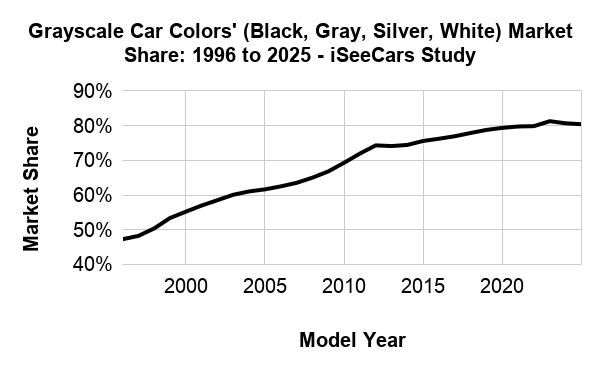
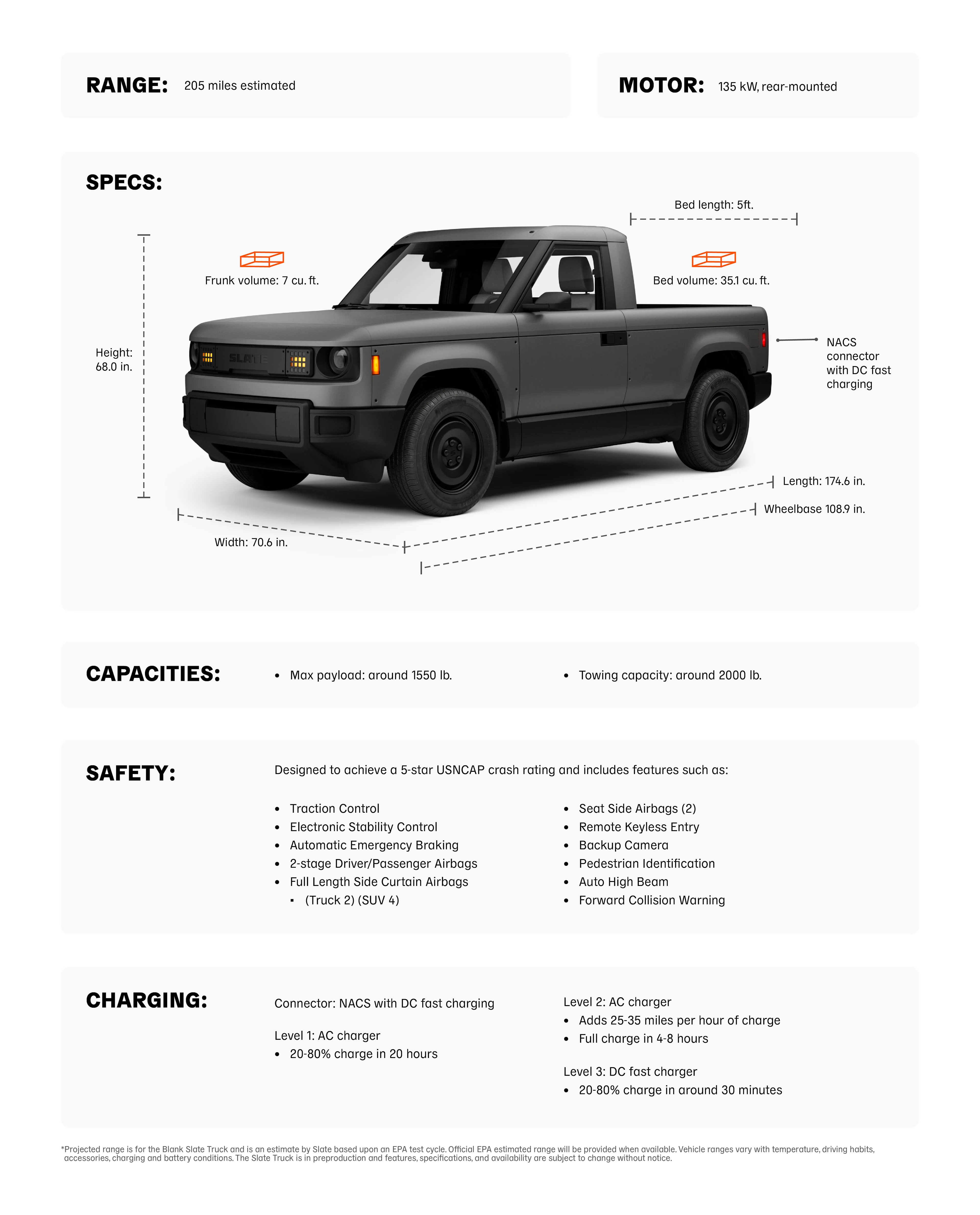
        • greedoan hour ago
          I bought a house recently, and need something to haul landscape stuff around. Slate is perfect for that. I also need something to haul wood around for woodworking etc. Slate is perfect. If I need to help my kids move out of their apartment or move some furniture, this is perfect. Can't do any of that with my coupe.
    • alexb_4 hours ago
      Personally, I hope that nothing Elon Musk ever does for the rest of his life succeeds. Maybe that's just me though.