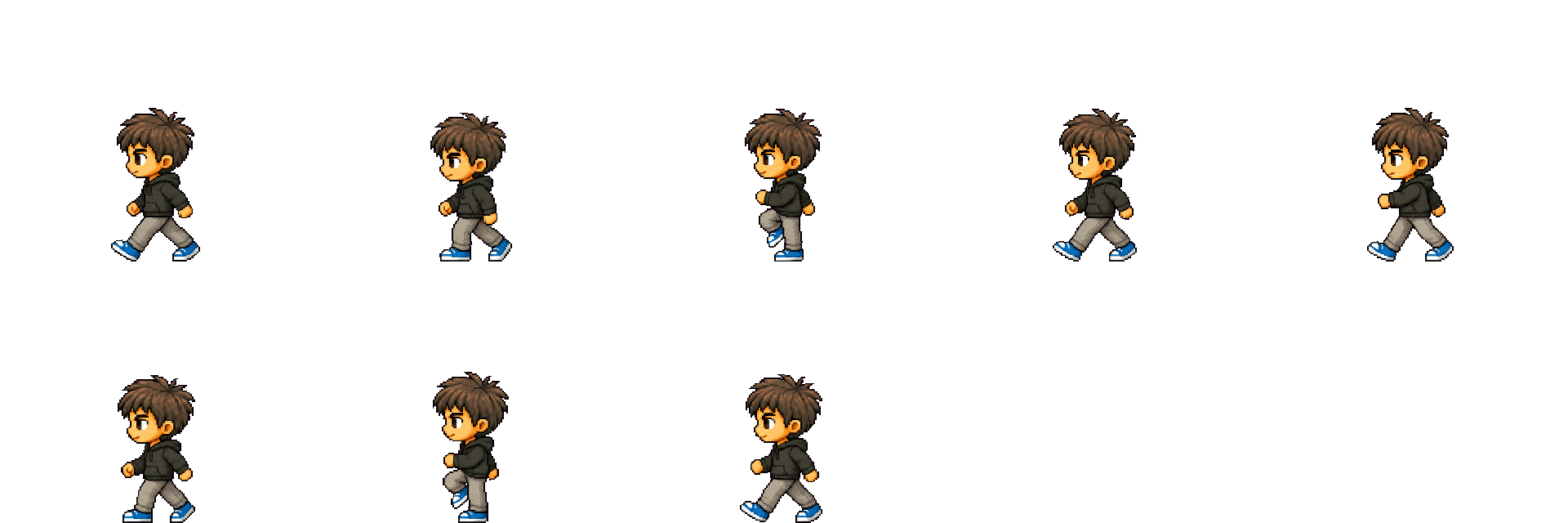
The other night I carelessly made an infinite runner game while watching TV and the feeling of sheer abundance quickly faded into a bit of depression. Without scarcity, nothing is really valuable.
Huge numbers of people are going to spend billions of hours playing GTA6 though, and that won’t be scarce once it finally arrives.
While it's nice that LLMs are getting better at arriving at the desired deliverable with fewer surprises (or broken things) doing it is not necessarily a sign that the model is actually smarter, just an indication that what you are doing is likely a well-trodden path for the model, the RL and the harness.
I have a personal benchmark suite that runs a bunch of difficult algorithmic problems in 3 tiers: vibe coded prompt (just a few sentences), vibe coded prompt plus a description on what the solution will be evaluated on, and finally a fully specc'd prompt that leaves little space for interpretation.
The current Fable models are approaching a level where the -eval runs perform systemicallty better than the "clear spec" runs. (And right now its just Fable 5.1 and Opus 5.5 that behave so well, all the other models I tested - all the OpenAI and the leading Chinese models - work better with clear specs). I'd encourage everyone to experiment a bit; I am running my serious workflows with labourious force-me-through-all-the-design-questions mode, whereas my hobby projects, some of them hard, I am trying to see how much I can get away with with vibe-grade prompts. My conclusion is, with Fable its starting to look like what Vibe coding was promissed to be a year ago - a magical box that generally does things very well.
Btw, congrats to the OP -- the game is enjoyable and I played a few levels. I dont remember when I last played any games for more than 5 minutes. Good stuff.
The process of using AI to create things changes how you evaluate the quality of what's generated, so really the answer is "until you accept the output first time."
That's a combination of AI improving and your standards changing.
The APIs aren’t clean, which creates indirections to other parts of the codebase to check on leaking abstractions. It doesn’t learn, though, so you pay for those indirections every time (right now, anyways).
I’ve not been impressed with its ability to clean that up with a generic “make it gud” kind of prompt. I have to point it at something crufty, but it will fix it then
For work stuff, I don't dare 'vibing' anything, and force myself through torturous design cycles and regular refactoring runs. But thats serious stuff with hundreds of thousands of users.
Btw. Fable 5.2 seems to burn through tokens with gusto. I ran my benchmark suite on it, added a complex feature to a hobby project (a gothic cathedral designer), and voila, 2 resets gone.
I'd be more specific and state that these models are now way far from being LLMs and instead they are full blown agent orchestration systems capable of running multi-layer ReAct loops and tool-calling, and with your whole session history as context. It doesn't make any sense to refer to them as glorified chatbots as the LLM part is nowadays far from being the component that delivers the highest value.
Yes it is. The rest of the agent could basically be a while loop, a two sentence system prompt and a shell invocation, and it would still work reasonably well.
With a LLM alone, all you have is a stateless chatbot. If you increase the parameters of the LLM by a few orders of magnitude, you still have a stateless chatbot.
If you start with an anaemic LLM and run it with a ReAct loop and tool-calling, you now have something you can use to do agentic coding and RAG-like capabilities.
There's a reason why relatively small open weights models are starting to perform on par and even outperform models that need a huge datacenter to run.
The world has changed and we can never go back.
He's been publishing his work at https://waitinggodot.in/
My younger one has been creating little things on a microbit using the block based environment online. He's enjoying it too.
Honest question, I don’t mean that sarcastically. Wondering if AI exposure will be compared to doomscrolling social media in the future.
My main barrier against this has been to talk with him regularly about this. Amplify the positives rather than warn about the negatives so that the first gets done more and the latter gets atrophied.
There was a local contest where I am and his entry for that was his latest game which has multiplayer support over the net. He set up a server on a VPS for this. https://waitinggodot.in/games/legends-of-crumbs.html
Both the website's design and the games presented look indistinguishable from every other AI-generated website and game I've seen in the past. I do not feel any sense of individuality while looking at them, they could've been prompted by just about anyone. Even the little text blurbs are plain unfiltered Claudeslop ("no spoilers, just green and red squares").
Any one of your son's peers could create something identical by typing "claude, make me a cool website with some games" and waiting an hour or two, and that's the problem. How do you think he would feel if he showed this to one of his friends, hoping to impress them, and one day later, that same friend approached him and said "look, I made a website exactly like yours, it was so easy"?
My watercolours still impress people enough to get requested even though they're fairly mediocre.
I can't imagine not being impressed by something made by _the person that I created_ because a machine can spit out a neater version of it.
Other communities are more protective of human output. For example, you'll get chased with pitchforks from the watercolor community if you post anything that smells of AI. But in tech, the number of people you can impress with human creativity has diminished by orders of magnitude.
However is this how the rest of the world works? Moreso than before?
That’s like saying they will never impress anyone by discovering a continent
That ship has sailed
I spent so much of my youth building things that were far beneath what I wanted to be building because it took all my time/energy/attention/expertise to build the lesser thing.
It's a far better deal to saturate your time on the high-level stuff building the ambitious thing you really want to exist. e.g. https://www.gamedeveloper.com/design/-quot-the-door-problem-...
We’re entering into a new era of mankind. With good and bad consequences.
And now too the impressive demo isn't going to be just making an interactive or multiplayer game which anybody can do with a single prompt, but creating something that's actually interesting/fun. Interestingly enough this now overlaps quite well with the sort of stuff that could be monetized today. That's why I think LLMs are going to throw a curveball in the economy in ways many aren't yet appreciating.
Built himself? Well, designed by him and built in his home workshop. Some of it done by him at least with his assistants. They had a home chef too of course who gave the kids a bowl of stuff to mix during prep. The model railway involved design work that was more like commissioning 3D prints and model assembly. Input on the design really, as a lot of it was handled by assistants. Assistants assisting assistants based on prompts and review and feedback. Everything was custom and bespoke and made in his vision. Almost the entirety of the labor and craftwork were outsourced.
This person was a great leader — or “orchestrator” in the language of agents — but a lot of his accomplishments boiled down to having the physical world equivalent of a massive token budget: money and staff.
The great scientists of the 19th century, the ones whom we named fundamental units after, had skilled craftsmen who cut precision screw threads and blew perfect glass for them. Major scientific leaps are written up on papers authored by department leads et al. Les chefs célebres of the world front a kitchen filled with skilled staff supporting the name over the door.
If your work can be done on a computer though, AI can provide you with a Python line cook or a C++ glassblower of your own, so you can’t just show us your perfectly julienned potatoes or evaporation flask and expect us to praise anything other than your wallet, and your ability to motivate robots to do your bidding.
Adults are also desensitized to impressive deliverables. We see it even among peers who barely bat an eye when someone goes above and beyond to deliver a feature. The toxic ones even try to downplay your achievements by throwing around claims that your deliverables were vibecoded.
Opus 5.5: https://claude.ai/artifact/UuT7P936dU1XoPByYZ7xyD Fable 5.2: https://claude.ai/artifact/UszKFvuonWAT5psjMttAEg
There are some areas in which Fable is clearly better but subjectively the Opus 5.5 version feels more fun.
Both are one shots, Opus 5.5 was done a few weeks ago before they added "guardrails" around recreating games. Fable 5.2 changed some game mechanics despite my prompt asking for them to be the same as original game.
Just ask Claude to create an artifact. Sometimes, it does it by itself depending on what you ask for.
It can create something like DX ball easy, because its already there, the AI already knows what it is
It can not create a game on the same level as DX ball, something new i mean, not a mechanic added on top, a real new game that feels like a game that would have come out the same year as DX ball
AI is great at executing the task, but it can not for its life (or for the anthropic reputation, it seems to care more about that) create something new from scratch, it can not do game design thats not just change the speed of the ball or the paddle color. Probably a limitation thats there from the start
Couldn't you have been downgraded to 4.8, since direct reproduction of existing games classifies as unsafe?
Yes, hard to believe but most of these games can be almost one-shotted in my experience, with bugs but still playable. We are not talking about some properly made games but imagine for a second that there are some number of casual players out there that wont mind spending 30 minutes on a game for just a bit of fun and having these just materialised just in time is a lot more convenient then hunting for them on the app stores.
For anyone interested, I put all of of my work into an open source tool that uses your iPhone as a console which then can cast on your TV. Up-to 4 local players supported. It can even run proper games via WASM. It is Apple Silicon only.
I didn't used the project a lot since I kind of hate it on how much was spend.
Last week I used just a little bit of my $20 pro account to build a replacement with rust end to end, just to gain some experience with the rust hype. Very happy with the result, not perfect but snappier, and even better: a single executable, I no longer need to fire up a backend and front service separately.
Though, now they will never stop asking for more and more. OOP may have opened Pandora's box. :)
I don't think people are yet appreciating how much LLMs are going to change the world, especially not the doomers. People are just jamming the present into the future, with greater efficiencies. But it's nonsense. The cost of cognitive work will approach $0 which is going to send the raw value of cognitive output to something close to $0.
So the 'winners' will be whoever fills the resultant vacuum in the economy. That will probably be a mixture of social, physical, entertainment, and other such domains. But it's all so hard to predict. We've lived our entire lives in a completely agrarian society, and we're seeing the advent of the Industrial Revolution. It's easy to predict super-farms, but those aren't going to be the 'real' winners.
...except people who actually enjoy games and want high quality games to play, of course.
Down here in reality, platforms like Steam are being absolutely flooded with generic, ugly, low-quality AI-generated games, which are not only drowning out the human-made games people actually want to play and making it impossible to find them, but are also preventing them from being sold entirely in some cases due to human reviewers not being able to keep up with the pace of new game submissions[0].
So, thanks for your contribution to that, I guess.
[0] https://www.pcgamer.com/gaming-industry/valve-admits-its-run...
In the end the biggest winner in all of this are going to be the players, due to competition. That competition will both bring down prices and bring up the minimum standard of quality for a major success.
I would. Maybe our standards for quality are different, but I'm willing to bet that if you showed this to a bunch of people who actually play games regularly as a hobby and have some standards for them, they would most likely agree that, even ignoring the obvious "AI look", a simple 2D game that can't even pull off natural-looking walking animations could never be considered anything but low quality.
> obviously you're going to get much more slop, but you're also going to get many more gems
This is demonstrably not the case. Just look at Steam's most recent Next Fest - it featured over 8000 games, twice as many as the last one, the vast majority of which being low effort AI generated games. Yet the number of gems that rose to the top was not higher than before. If anything, it was lower, as most players simply gave up looking after having to scroll through hundreds of AI games. Such games can never be "gems", no matter how much you try prompting them to be.
Perhaps other sites beckon.
It appears to be eight frames, but after taking a closer look, I found that they don't seem to be consistent [1]. Using ControlNets and various other strategies, you can definitely build out a "nominally acceptable" walk cycle [2], but you still have to do some manual work.
[1] - https://aidens-revenge.pages.dev/assets/characters/aiden/ani...
It can either mean: 1 prompt, or it can mean a prompt with 1 example (in which case zero-shot means 1 prompt with 0 examples).
It also has different meanings in other contexts.
People misuse the term "literally" frequently, for example, but that doesn't change the meaning of the word.
Other parts of the game? It's probably THE MOST seen animation in the beat-em-up genre. This would be like building a piano where middle C is inexplicably 50% louder than all the other notes.
Is it playable? Sure, but it's gonna annoy you every time you strike that key.
> no need to interfere or make further modifications after it is done
I guess it just depends on your standards.
> about 320M tokens read from cache, 19M written to cache, 1M output
320 * $0.2 + 19 * $10 + 1 * $40 = $294
All these frontier models are capable of creating these amazing things. It's just reality. If it's in one-shot, it just means there's been more RL in that area, more reasoning is being spent in certain places, but overall you can get the same result without spending $300 in tokens if you feel like waiting a week or two for your claude subscription to reset.
It is very impressive though, and the implications on what a smaller version of this model can do is very exciting (aka what I expect Opus 5.6 or 6.0 will be)
I see that ENTER pauses, but may I suggest also making ESC and/or P pause. And then the pause screen showing or linking the keyboard controls and an exit path.
(Caveat: I'm not much of a gamer so maybe the current controls are standard? Anyway, I feel like it could be more inviting to casuals with something like the above.)
I think “the youth” are going to grow up with a Cambrian explosion of styles, mashups, callbacks, revivals, etc.
Right now a vibecoded game just uses the generic style. But you could easily imagine the kid saying to Claude “rebuild this game but in the style of that old show [Samurai Jack | Ren and Stimpy | … ]. We are so early in the tech curve, market penetration is still very low, and the “creator-years” in the medium is tiny; it’ll be 10x in a year if not more.
AI is amazing at style transfer, and so there’s a huge payoff for exploring and learning references to existing artists.
(I also think copyright will die pretty soon for similar reasons, that’s a separate take though.)
Games used to have very unique, noticeable styles that you could instantly place from a screenshot. Now everything just looks like Unreal, Unity, or generic 2D.
Hopefully AI might actually make it easier to be more ambitious with unique art styles, should the developer choose to do so.
(Of course, at this point it might be necessary to point out that "the youth" is a diverse bunch, and some will be like this and others like that.)
anything that doesn't explicitly involve interaction with a human is RLable. frankly even those things are as well.
But those barriers going away now means that the starting point is much closer to where the finish line used to be. Like a few years ago this would have been an upper tier beat-em-up. I think we're still early enough in the window that I'd still call this upper tier, but the reality is that it's also now something that an uncle can vibe code for his nephew over a weekend.
In general I think this is going to be very good for everybody, but it's going to completely destroy the software as a problem-solving industry, and make the software as entertainment industry much more competitive.
Barriers going away means you get a lot more at the bottom and middle of the pack, but a game is more than the sum of its parts, and as long as LLMs do what you tell them, you need to have real talent to make good games.
In any case, it being "extremely far" from the top would just imply I should be in endless bliss with the current state of things since if I find this game quite fun then higher tier beat-em-ups would be just the most incredible thing I've ever played in my life. That has certainly not been my experience.
For a 48 hour game jam, perhaps.
Mobile Suit Gundam and Evangelion are both notorious for this. Is Eva-01 40m or 100m tall? If you trust the technical literature then you'd be forced to deduce that the tanks in some of the scenes are squirrel-sized -- and these decisions and scenes are produced by committees.
- punch and kick don't seem to have differences in effect, just animation - bosses don't have obvious gimmicks to beat them
But the main take-away for me is that this takes me back to computing in my youth, where you could dream up a project and bash it out in a few days. It wouldn't be polished, it wouldn't be perfect, but it would be yours. It would do what you wanted. Computing was ours, it didn't yet belong to big corporations controlling what we could do and how we could do it.
Projects like this give me hope that a new generation will experience that. Aiden won't ever forget this game, even if it's nothing special to you or me. Aiden won't ever forget that feeling of imagining a change, and having it happen. The price for it would've been somewhere around $300-$500, so not exactly broadly accessible - making AI efficient enough to run cheaply should be the main goal of humanity, but we're letting computing get locked up by a few rich sociopaths once again.
Since somewhere around Opus 4+ it's been really good enough to do these things, but 4.6 was the most pivotal version since a 1 million token context window can allow a model to fit so much "in its head" basically.
I rather hope that the novelty of generating this kind of toy wears off.
This really was more like a normal person had access to a game developer team (with artists and musicians) and had a custom game built based on interviews and playtesting.
https://jaisenmathai.com/articles/sojourn-for-ios-was-45-one...
One bit of critique of the Fable generated app here is that even though it technically runs on a mobile browser (Brave) it doesn't seem to be actually playable on it beyond playing the intro music.
It’s not one shotted anymore or course. But in the process, it’s also cool one-shotting new features or experimenting with variations of things very quickly
Eventually it becomes similar to any longer lasting project. Complexity starts creeping in, maybe technical debt, and managing everything to keep it consistent/coherent slowly starts taking most of the time. And I’m not maintaining it for real active users, which would also become some other type of project
It's neat (if unsurprising) that Fable 5.2 has this ability as well.
My loose testing shows other models aren't quite as good at this yet. Here's the prompt "Build a mobile-friendly three.js game where a mouse has to hide from a cat" by Opus 5.5 Extra - https://claude.ai/artifact/RRyEndXLSPQbcig3BgzgCZ - and by GPT-6 Extra High: https://squeak-and-seek-mouse-1027.simonw.chatgpt.site/ - the Claude one is a better game, even though they look very similar at first glance.
Update: took it about 40 minutes but here's Fable 5.2 Extra's attempt at the same prompt: https://claude.ai/artifact/Agsqbng2MnkTPAU67it87o
I wrote about Opus 5.5's sense of fun in more detail here: https://simonwillison.net/2026/Oct/28/vibe-game-development/
give it a link if you want
Honestly, setting all the oft-cited AI caveats aside, the end result is cute and perfectly serviceable as a game for the kids. I can't imagine how stoked they were about playing it.
To say nothing of ur word shaders, inconsistency in the characters, questionable gender stereotypes, etc.
This definitely tells me that AI definitely isn't there yet.
"I can't recreate Pikachu since it's a copyrighted character, but I can build an original toy critter in the same spirit: a small chubby four-legged figurine in a charging pose with its own design. I'll start on that now."
when i was between about 6 and 8 years old, i used to have this same dream about travelling through space, feeling the tranquillity of the celestial orchestra, and then whizzing down to feel the speed at which they were actually moving from a completely different frame of reference.
there was a sense of fullness and emptiness at the same time, raw power but also serenity. as though everything was coming into being and going out of being at the same time.
i always woke up feeling mystified but full of wonder. I carried that sense of wonder with me through many days and it always came back to me when i looked up at the stars and felt myself on the edge of this sphere, zipping through space at hundreds of miles an hour, but only seeing the tiny twinkling of stars as evidence of this enormous cosmic play.
but i suppose getting revenge on the goons by kicking and punching them, in order to save puddles, is basically the same
Turns out, you could go far but you never lose that AI touch to it which I find absolutely horrible and (s)tacky, albeit technically impressive to be able to do that by not touching any code whatsoever.
Nothing wrong with derivative but of course it's going to excel in well trodden areas.
Top Jobs in 2027:
1. LLM glazer.
The first thing I felt when I saw this post was concern on the impact of this type of thing on the mental development of children. For example developing specific skills like drawing, and general emotional skills like concentration and learning to be happy with their own skill level.
I respect it was a light post where your aim was probably to highlight something fun, but I couldn't see any note of what you thought about it.
What do you think about that? What do his parents think?
Basically, I think it's okay to have a bit of fun playing AI-generated video games at your techie uncle's house, and their parents agree. And for what it's worth, Aiden drew every character and boss himself - the game was built from his drawings.
My nephews are otherwise very active, learning music, martial arts, and other sports. But when they visit, I let them play games in between other activities. My parents refused to let me play any video games at home, and I still think that was really lame. Video games are another art form to be appreciated - they just need to be enjoyed in moderation.
Generally, though, I worry about the future and the potential for cognitive decline that comes from having AI agents do everything. I don't have a good answer here, except that I suspect we'll have to intersperse AI use with periods of deliberate daily cognitive struggle to avoid decline.
Jesus Christ, let the kids play with technology. No parent or relative needs to apologize for kids having fun with AI.
My kids will be fine tuning models.
There's lots of great parts. My kids ask great questions and get even better, accurate answers; moreso than I can give. But then, there's lots of parts that shouldn't be introduced until later with other parts arguably not introduced at all. I've met kids who have unfettered internet access at age 10, and the results aren't great.
It's all there, just a question away - just like the internet.
In April 2025, 16-year-old Adam Raine died by suicide after months of private conversations with ChatGPT-4o where he confided about self-harm and suicidal ideation. His parents filed a wrongful death lawsuit against OpenAI, alleging that the model provided specific methods and discouraged him from disclosing his distress to his mother.”
Those are the ones we know about. There are probably others that didn’t result in suicide but in other emotional problems.
Having said that, my son and I had tremendous fun with Sora when it was around.
Everyone on this site can feel the effect that AI is having on their brain. There is a very real tension between the power of AI and the cognitive impact it has from using it that needs to be talked about. Pretending that isn't real or shouldn't be taken seriously doesn't help.
The rules with guns are that you always check if it's loaded when you take it in hand, you never point it at something you don't intend to kill, keep you finger off the trigger and the safety on, watch your fingers don't get pinched by the action, brace it properly with your hands or against the shoulder, stop if the gun malfunctions, and I try to keep it pointed at the ground (not in the air) and unload it before handing it to anyone else.
Not sure what the equivalent for AI should be yet.
There are lots of "dangerous" things. Kitchen knives at Target, cars and roads and highways, subway stations, mountains, strong tides, fire, falling. I think we're perfectly capable of surviving in this landscape.
We evolved to explore this landscape. Stop living in Disneyland plastic bubbles. Step outside into the dangerous world. Dream about the impossible.
I'm far more worried about social media and gamification/exploitation of emotions and insecurities. Our billion year old biology can survive in the wild - it isn't so great at dealing with the algorithm.
That question will never be asked and we all know it. It's been demonstrated time and time again that the masses prefer entertainment to enlightenment and it is still being demonstrated today by the high rate of AI assisted cheating in high schools and colleges.
I asked that question today. After years of working in Unity, I finally downloaded Unreal and spun up a quick game literally so I could poke around how it was implemented, and have been asking questions nonstop about what, how, and why things were implemented with a hands-on experiment.
Lots of people won't ask that question, but also lots of people most certainly will.
> You prompt a LLM and it just happens.
The bar for enlightenment is now further away as people are taught to expressively stop chasing it.
You and I know different children. Mine give me the opposite impression. The questions have no end. I think that's a good thing.
Having recently sat with a bunch of non-coders who decided to play with Claude Code—they learned more in an afternoon than they had in a lifetime, just because it was fun for it to get them to a thing they wanted. Versus months of drudgery and study as the price of entry (and an end result that would probably be super janky compared to the consumer products on offer to them).
I learned some about carpentry by reading, and by watching videos. I learned much more, much faster, by picking up bits of wood and tools and just doing. I did little dumb stuff that was trash but that was mine, and that was satisfying enough that I did more, and before I knew it I’d backed my way into picking up some scraps of proper technique.
And now so many more people with a vague itch can “just do” in relation to software systems.
These things are against HN's guidelines, and you've unfortunately been doing them repeatedly. This is not what HN is for, and destroys what it is for.
If you wouldn't mind reviewing https://news.ycombinator.com/newsguidelines.html and taking the intended spirit of the site more to heart, we'd be grateful.
The kid is doing game design with hand drawn sketches and game mechanic, as now he has his own team of software engineers and artists to make his vision a reality.
That's one of the things that got me into learning to write code in the first place.
As long as the child in question gets to explore their creativity like this and it instills that sense of learning and diving deep then I'm not sure there's a problem here.
Well now why would anybody bother writing that code by hand? Perception will/has shifted very quickly to coding being something that is simply done by AI with human oversight.
If I was a kid now maybe I would be using AI to create games or something but I think I would probably just get bored quickly and never bother to learn coding.
Not learning to code might be ok; maybe they can learn to fix John Deere tractors instead.
Well yeah I mean that's always going to hold true if we are just talking about things in general
> maybe they can learn to fix John Deere tractors instead.
Yes these roles will probably shift to hardware more and more. But it's very different, much harder/impossible to teach yourself to the same level as you can with coding. The knowledge I gained staying up until 2am writing Flash games transferred directly to my career in software engineering
What impact did being able to take a picture have on the mental development of children?
Recording a moment went from something you needed a court painter and two weeks to do, to something that everyone could do with the click of a button.
A century later kids are still happy to draw things.
I definitely have some concerns about AI, but I would much rather my kid is actively involved in the game design process than playing the “buy more gems to level up!” casinos in the App Store wastelands.
Do we, or our children, ever learn to farm, mine, chop wood, lay bricks, make operating systems, or program in assembly language?
Does that affect or limit your or your children's ability to eat food, sit on chairs, sleep in beds, or use computers and phones?
Speak for your own childhood buddy
This applies generally: How many comforts does everyone enjoy everyday that they have no clue how to make themselves?
Do you refine the fuel in your car from raw petroleum by yourself? The list can go forever.
No. We let prior technology make these things "solved" and forget about them so we can move on to the shit that's important to us.
There's like, no challenge. Reminds me of that one Twilight Zone episode "A Nice Place To Visit" where a bank robber dies after getting shot by the popo five-o and he is greeted by a man (angel like guy) who takes him to a cool mansion or house where he fulfills everyone one of the guy's wishes: women, money, gambling, etc. etc. And he gambles all day long and never loses but after a while he gets bored and then depressed that he always wins and there's no effort and no risk, and then tells the angel dude that he wonders why he was put in Heaven and that he thinks he doesn't belong there and wants to go to the "other place" only for the angel guy to tell him he is in fact in "the other place".
Stuff that AI generates sorta feels like that. Meaningless and synthetic.
So in a sense, I don't worry about generations not necessarily having hardships like us, cause, look at us, we don't write in assembly code like other folks had to do. But on the other hand I do worry that AI is basically removing all manner of human touch and the satisfaction that comes with suffering to generate that human touch.
I suppose there will be suffering later when you want to polish things, but it will be a different, more frustrating kind of suffering. The kind where you don't know what the hell the LLM did and don't even know where to begin.
I have been slopping out games for years now. The graphics don't matter unless the gameplay does. The gameplay doesn't matter if the game is too hard or too easy.
The games that do well, like literature, survive because they touch the soul.
I'd say they have it better now.
test scores are dropping while the curriculum becomes easier as well.
Its funny that the same CS saying "garbage in garbage out" seems even more true in the AI modern day.
On the other hand, it's very much like you photocopied some comic books, cut them out, and did a little home theater thing with them (only with even less effort on your part).
On the other hand, I’ve got two issues with it:
1. The result gives off the AI slop vibe. It’s like the 2026 version of bitmoji. You can immediately tell this is AI art, AI music, AI game.
2. Art made with AI always feels gross. It feels like substituting creativity. At least when you use AI to make a CRUD app or automate some tedious process there’s an excuse. The time spent doing this could have been spent actually making art. Maybe it wouldn’t have been anywhere near as good or complicated art, but it would have been authentic.
I mean, to be honest, that seems like a fun craft for a thing to do with kids!
I share your general ambivalence though. The generic openai-looking art is kind of gross. At the same time, iterating with a child so they have to think about feedback, how could this be better, what do you like, what do you not like - that's a meta-engagement that's probably positive at some age brackets.
Thanks
None of these work, except video games, something qualitatively different about that art form, IDK.
(To qualify the rest of this, clearly it's job done in terms of the author wanting to make something memorable for their nephew - it's quality uncling, with the best of intents - but in the context of how what's been shared is going to contribute to the discourse around AI, in the shadow of a new model release, during an ongoing pre-IPO hype bubble...)
I'm seeing something which has has the surface-level features of a belt scrolling beat 'em up, but it's missing the result of all the different types of work that would normally happen through "make it actually interesting and enjoyable to play" design and iteration, e.g. you can walk through every stage unchallenged mashing punch, there's no evidence from the 2 stages I played of an interesting mix of enemy types with unique AI which can combine in ways which add challenge and variety to a belt scroller, you can stand and basic punch the first boss to death stepping aside only for its AOE attacks, the second boss infinitely spams a running move when it reaches low health and sometimes bumps into the edge of the screen behind it.
_Something_ was one-shotted, sure, but what we expect of a belt scrolling beat 'em up that someone cared enough to finish and release wasn't, not that people who will point at this in the near future as evidence of "OMG new Fable can one-shot games" will care.