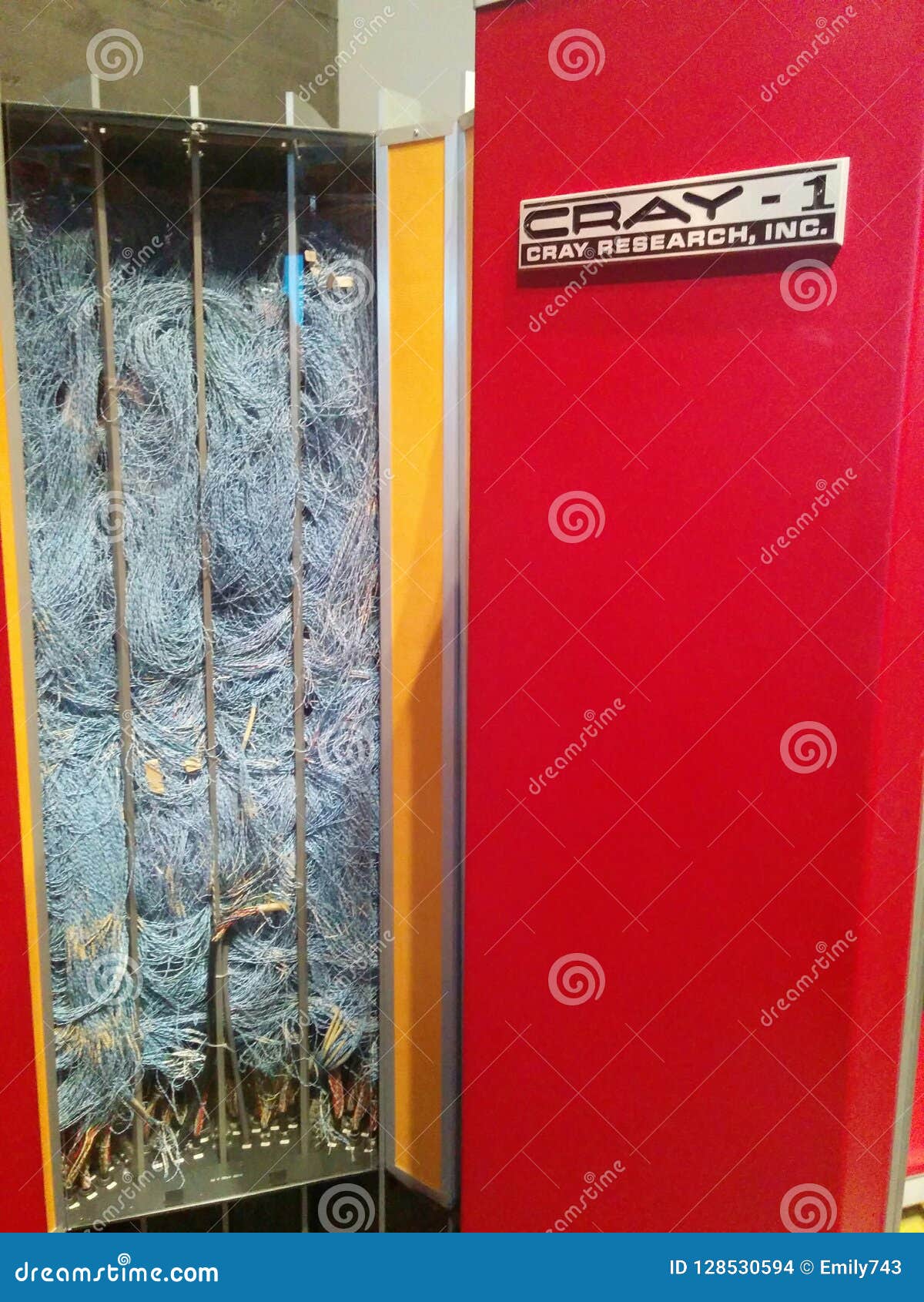
I installed the open source Cray Simulator on my "Le Potato" SBC, then installed UNICOS, then tasks Gemini with writing a weather forecasting program that ingests raw data from METAR weather stations and uses the simulator's vector processor to generate the forecast. It renders a nice little weather dashboard viewable in the terminal. A python http service runs outside the Cray and serves up a nice little web page with a virtual terminal that displays the dashboard.
Is it useful? No...but it's cool as hell. I plan to print up an enclosure for it along with a mini terminal with a 4" LCD to display the live dashboard. Then I'll have a nice little baby Cray to put on the shelf in my gameroom.
My little tribute to one of the first deployments of a Cray at NCAR.
Is ~100 Mac Minis really all it takes to get into the TOP500 these days?
but for some history fun: https://www.top500.org/lists/top500/2003/11/
#3 on the list was "X" https://www.top500.org/system/173225/
Virginia Tech, self made 2,200 core PowerPC 970 as 1100 G5 Macs with Rmax at 10,280.00 GFlops (this is 0.012 PFlops).
... and for some more history about the Cray vs modern computers... http://www.roylongbottom.org.uk/Cray%201%20Supercomputer%20P...
“In 1978, the Cray 1 supercomputer cost $7 Million, weighed 10,500 pounds and had a 115 kilowatt power supply. It was, by far, the fastest computer in the world. The Raspberry Pi costs around $70 (CPU board, case, power supply, SD card), weighs a few ounces, uses a 5 watt power supply and is more than 4.5 times faster than the Cray 1.” This refers to official average geometric mean results.
It debuted in 2020 at #130 with Max at 2.66 PFlops.
A M4Pro mini today benches at 8.520 TFlops https://www.check-mac.com/en/product_benchmark-apple_mac_min...
From the article, the minis they are using:
... the developers can orchestrate the 64 active processing cores into a combined 1.3 teraflops of performance in their most recent tests.
... however it would only take about 300 Mac M4Pro minis to get to the 500th spot today.
https://github.com/andrastantos/cray-sim
I imagine that they could run that on top of them and run official Cray software. The instructions are for Linux/Windows, but I bet it runs in homebrew just fine.
https://hackaday.com/2023/01/23/running-cray-os-and-unicos-o...
Mine is a lot smaller, but it can run Cray workloads at full speed.
I always wanted to build a mini CM-2 supercomputer with the red lights.
New 48GB DDR5 ECC UDIMM chips are retailing for £2.5K each in the UK.
they'd lose their minds lol
(Cray-1 was 160 megaflops, smartphones are teraflops)
The iPhone 4 was probably the first that could beat a Cray-1, and it was by a narrow margin. However, that was only a 32-bit chip. The next year iPhones went 64-bit, and it was all over.
ie. Feature film? Sure. Music album, sure. Your own electronics project designed at the kitchen table, ordered from china, housings printed on the 3d printer -- all from the table.
It is an absolutely astoundingly low bar of entry these days to almost anything you'd like to create or build.
(now calculate it in iphone charger plug computing power heh > lunar lander)
If you were an engineer working on this machine, it was visually clear to you that the modularity took up the majority of the space. The ICs themselves were already pretty dense.
Pace of computer power increase was huge even back then, so imagining something like a powerful pocket computer was quite an easy thing to do.
I can easily imagine that these engineers would be disappointed by the first iPhone because, by interpolation, they expected something like that by the early 1990's.