The more you tighten your grip, Tarkin, the more star systems will slip through your fingers. -- Princess LeiaIn fact, Google is making alternative stores even less convenient with their latest 'side-loading' hurdles.
Regulators need to wake up, issue record fines, mandate equal access and a 'Choose your app stores' screen on device setup.
Otherwise competitive third party stores and a fair market are going to remain a pipe dream.
I'd also love it if we also enforced existing regulations with teeth. Like of your data center doesn't have a permit for a gas turbine and you run them anyway instead of saying "oh well, you can run them until we settle in court" we toss the CEO in jail to think about their lapse in ethics
They appreciate this sort of political nihilism where everyone seems to have collective amnesia about the current status quo vs. just a couple years ago and so lament "nothing ever changes, voting is pointless".
And yet trivial little alternatives like idk maybe you ever heard of Steam did actually happen, or the entire Android ecosystem itself when there was already an immense Palm app ecosystem that was like desktop apps where you got apps all manner of ways from physical sd cards to web sites to various curated stores. Or idk Epic, over a single app. They are back on the traditional stores now only because they called everyone's bluff and were suceeding, so the old stores caved rather than be seen to lose to someone so much smaller and newer, even in a small way that was more appearance than material.
There is no such thing as unthinkable. It's all not only thinkable, it has all actually already happened before and multiple times.
If something seems unimaginable, that only says something about your imagination not the reality.
This is very unlikely to change without regulatory intervention.
And more importantly I didn't ask what the user is picking or not picking, I'm asking: why is there an app store out there that's better than the main one? Is a 3rd party app store going to spin up a CDN, a transactions system, handle the customer service involved there, etc. and then just... not do all the evil shit Google and Apple are doing now, which is why their app stores make so much money? You're asking businesses to enter a market with established competitors with solid and wildly profitable business models, and to just have them make less money for the principle of it. Which like, I agree with, but you're gonna have a SHORT list of investors if that's your pitch.
But Google has agreed to distribute app stores (in America anyway) for a modest $5000 fee + $5000/year fee + transaction fees.
Competition is what stops the exploitation.
Epic Games has always offered lower fees and their CEO has been advocating for small developers for years.
There is no reason why Google and Apple get to bundle their stores, and these other big names have to collect the scraps from users who care to look up alternative stores and go through scare screens.
And they created the hardware and software to make all this possible.
If your app is rejected, there should be a real appeal process. Maybe developers should be able to demand arbitration for some non-trivial fee?
The first step of the appeal would be for the store to disclose to the arbitrator precisely what rule was violated and in what way. The arbitrator can uphold the rejection and you lose your fee or can force the app store to accept the submission and you are refunded.
Microsoft support used to work something like this. There was a fee to get them on the phone but if the problem turned out to be an actual bug, the fee was refunded.
Don't get me wrong, I understand why it makes sense for a company to have the ability to block spammers, scammers, and malware without proving a case in a court of law, but I feel like there's a spectrum of importance, where the more potentially harmful the action is to the user, the more process is due to the impacted user to make sure the action is justified. Examples from least- to most-important:
   - removing individual content that has little real-world importance: comments, social media posts, etc.
   - banning accounts on platforms that generally have low real-world value (other than sentimental value) to the user: reddit, HN, non-monetized Youtube accounts, etc
   - banning accounts on free platforms that have a very high cost to the user of being banned: Gmail (keys to the user's digital kingdom, the rest of the Google account), Facebook (real-name policy means that it's difficult to start over), high-notoriety accounts on other social media, etc.
   - removing individual listings/etc on platforms where the user makes money: eBay, monetized Youtube videos, paid App/Play store apps, etc
   - Banning accounts on platforms where the user makes money and the account itself has some intrinsic value (reputation, following, etc): eBay, monetized Youtube accounts, App store accounts, social media accounts for businesses, etc.
   - Locking up or taking the user's money: locking the user out of a bank/brokerage/crypto/payment platform account; rescinding money (or other things with monetary value): bank account balances, payment platform balances, unpaid Youtube/other monetization earnings, loyalty/credit card points, etc.
   - Banning accounts that are essential for the user to participate in society: bank account, cell phone plan, identity providers, etc.
I don’t doubt the author, at the same time this is a serious accusation with no details and little context.
This could have been presented in a more organized way, with timelines and redacted content.
Part of the problem is Google not being transparent, having more transparency could help.
Although I must admit I've never gotten nudes from them. Up your game, Google.
This is an argumentum ad populum fallacy. "Everybody Knows" this kind of thing is true, ergo you should believe the example here without evidence.
It's also kinda ridiculous in context. I mean, no, there are no cases in the literature where Google has rejected an app due to misidentification with NFSW content and then sent screenshots of said content as part of the review. Even not in combination I don't think. Like, has either situation every been documented on its own? "Far from outside the norm" indeed.
A much more charitable reading would be something like: Numerous people have all made this complaint, therefore the broader point is probably solid, even if this particular example might not be iron-clad evidence on it's own.
I've certainly heard enough similar stories that I don't have much trouble doubting this one, although I'd hardly consider any one story super-convincing on it's own
Fair.
> It's also kinda ridiculous in context. I mean, no, there are no cases in the literature where Google...
Ok you lost me. What is "the literature"? Published scientific studies about Google's app review process? Obviously there aren't any of those. Blog posts? You (presumably) just read one, and if you take a minute to search, you'll find tons more. News articles? Perhaps harder to find, but definitely exist.
The whole nudes thing is just a funny outlier; don't fixate on that. Who cares what randomly chosen reason the Google overmind decided it didn't like you. The point is it feels like a dice roll and you have no recourse when you suddenly and randomly fail it.
He's jotting down his thoughts, not trying to be a review process to distribute software on the most used operating system on the planet
> Have at least 12 testers opted-in to your closed test.
> Run your closed test with at least 12 testers, for 14 days
The funny thing is this seems to apply to recently-created personal publisher accounts. I had a very old publisher account but because I was unable to move my account owner to another email address, I closed it and registered a new one. Little did I know what this would lead to later on.
In essence, while the app stores used to be about hobbyist software to some degree, they have become a place created by big companies for big companies, much like Walmart or Target. That would be fine if customers could choose when they visited Walmart or Target, but instead, we've created a regime where you must buy everything from Walmart or Target.
This has made mobile development a wasteland for hobbyist-built and community-built software. I know some people cheer this as the removal of amateurs and crappy software from the marketplaces, but I would counter with the observation that commercial software often doesn't have my best interests at heart, and I would, many times, prefer a piece of community-built or amateur software instead. This gets harder to procure with each passing day.
So, I think developers are generally better-served leaving mobile development and instead focusing on web development, which is not gated in the same ways. While you won't have the same reach that you would get through the app stores, you do have much more control over the platform on which you're developing.
There's just no money in it for them, and a lot of support burden. Hobbyist apps are either free, or a few bucks. For Google, the income is a rounding error compared to ad revenue for household-name apps or in-app purchases inside blockbuster mobile games.
(I will be first in line to buy the first working and affordable Linux smartphone.)
But they have just become shortsighted over time and, perhaps correctly, don't think they need to keep investing that way to get the payoff any more, they can just go 100% payoff now.
I also had my old dev account that I used during school permanently disabled.
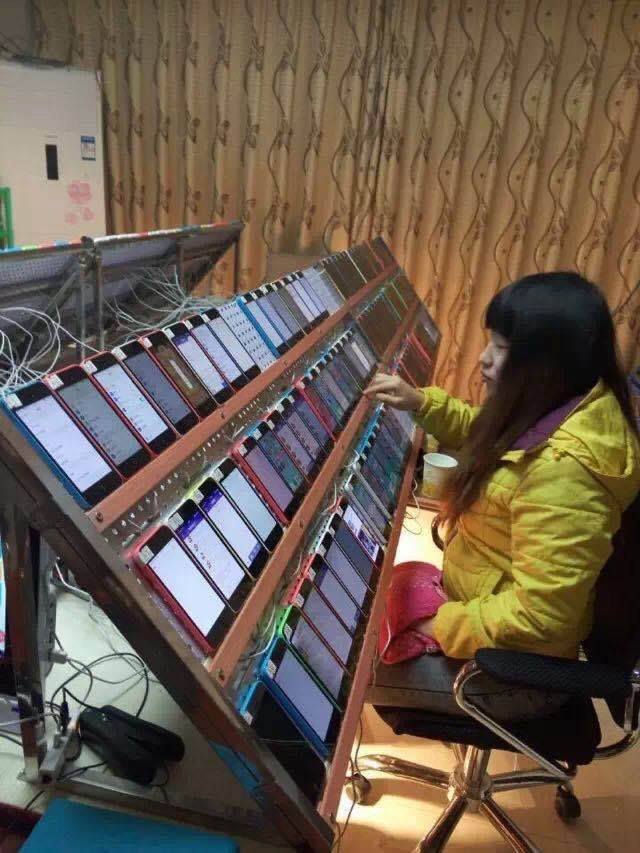
https://cheq.ai/wp-content/uploads/2021/12/clickfarm6-1920w....
MAXS (Modular Android XMPP Suite) could also work.
http://projectmaxs.org/homepage/
https://bitbucket.org/projectmaxs/maxs/src/master/
https://search.f-droid.org/?q=Maxs&lang=en
> Version 0.5.19 (2000506627) suggested Added on Jan 22, 2025
>This version requires Android 4.4 or newer.
(Hope the author is doing OK.)
That's an average of 24,000 apps per day.
With that amount of volume, it would be safe to assume that there's more reasons why google just won't accept an app even if it works fine or fits all the public guidelines.
Okay, can you concoct some prompt-injection-like scenario where you can fool increasingly sophisticated agents about the presence of your malware? Sure, maybe. It's MILES ahead of where both major app stores are today, though, where you can find obvious scams that sailed through review just by looking at their description.
Apple releases numbers: 130,000 app reviews per week.
The human component to this doesn't need to do much more than verify it works, they say they churn through that with just 500 reviewers that must be costing just a few $10s of millions.
They could certainly do a better job, but maybe that means 2,500 reviewers? That'd cost them half-a-year of Roblox's commissions.
If Google needs 2x as many that's 5,000 people, their whole Roblox commission. There are more people working at their HQ, and this is a job they can distribute between cheaper countries.
And then of course all the apps will use some kind of AI, and because humans don’t care to wade through a trillion tip calculators or whatever, they’ll use AI to pick the app. And then have AI use the app for them through a voice assistant.
maybe in the short term, and if thier app store is a loss leader.
Millions and millions.
The cost of false rejections is generally quite low.
Of course I understand that they are not going to spend money on improving their review process for our benefit until regulators force them to.
Maybe they need personnel tasked solely to just go in, with the blessing of some high-up person, find any bad customer service or goodwill problem, bottom-up, figure out why it's happening, and work with the relevant teams to fix it, quickly. Then repeat.
To fit with ingrained cultural incentives for relevant teams, other managers and ICs might have to be convinced that their performance evaluations depend strongly on cooperating with this process.
Apple did this correctly, IMHO, when the App Store first came out by both:
- reviewing all apps
- having it take 30 days to get the feedback
The 30 days seemed draconian or bureaucratic but it forced builders to be 100% sure that there app was working and ready for consumption. It probably also acted as major friction for scammers etc who figured it wouldn't be worth it.
I was able to share it on f-droid though, and I am starting to think that it may be good just to publish app only through it.
We really need an open source and funded OS for phones like we have with Linux for desktops/servers.
Also, with AI 100x'ing developers productivity it might be a really interesting time for phone OS's.
A company that does not provide support to normal people and has a compulsive habit of closing services for absolutely no good reason? You don't say?
Maybe that could even be extended to browser, OS, webpages (just have a bad AI rewrite every page you read, and in the future maybe every video you watch) ... everything people use. Everything you come into contact with.
Think about it: no ads, and no way for anyone to bring them to your devices!
And, even if we assume the investments in OpenAI and Anthropic Google and maybe Apple have made somehow makes them inclined to defend their monopolies, we still have a variety of other models that can also build apps. Sure, I like Claude and Opus 5.5 is the best model for most things, but I'm not going to be severely put out if I have to use Kimi or GLM or whatever. They're Good Enough. And, I know AI companies outside of the US don't have a vested interest in the ongoing success of Google and Apple and are unlikely to stand in the way of competitors.
But, antitrust is absolutely necessary to fix this problem.