Sadly I don’t think the general populace understands that LLMs are unreliable. (And even people in tech can vastly overestimate the capabilities.. at least judging by the insane spending on them).
I think people in (software) tech are currently more prone to overestimate the capabilities, because LLMs in a harness are genuinely excellent at programming. Programming is the perfect LLM task since 1. it's symbolic manipulation, 2. there is a vast corpus of high quality training data, and 3. most mistakes can be harmlessly caught at compile-time or unit-test-time. Especially point 3 makes it so that just throwing more "effort" at a problem, something the machine is endlessly willing to do, virtually guarantees an improved result.
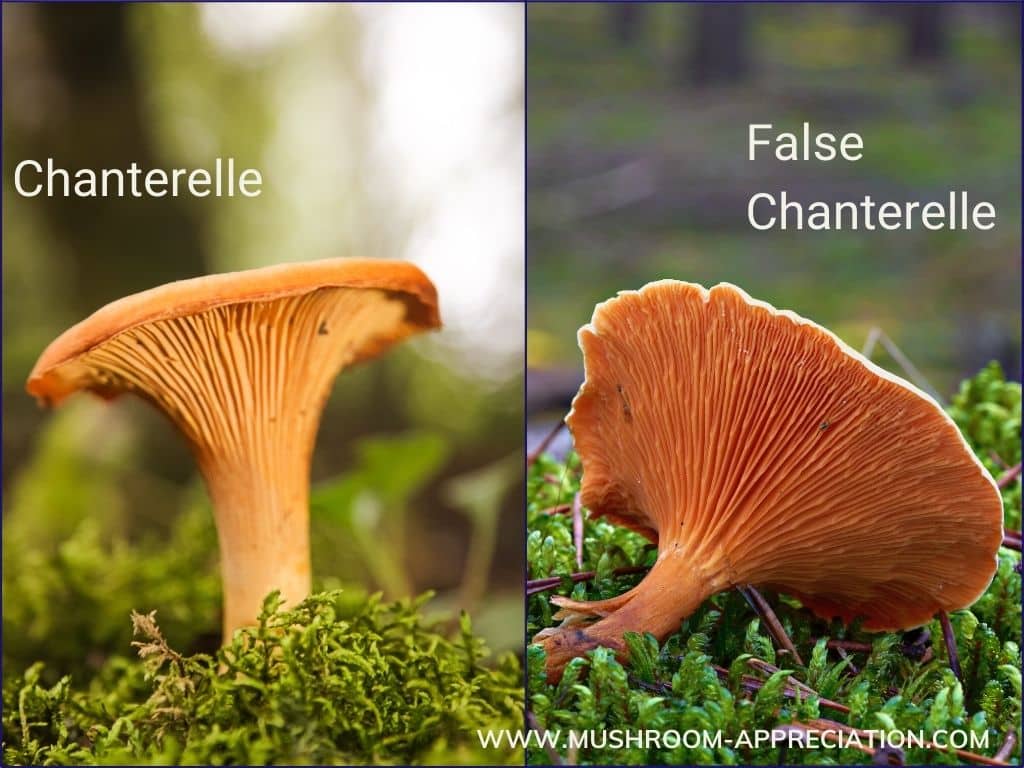
In contrast there is no way for the machine to write a unit test to double-check its work when what it's offering the user is a legal document, or a medical diagnosis, or a recommendation of "yep that mushroom is safe to eat".
I've often seen the "Gell-Mann Amnesia Effect" referenced with respect to LLMs. It is said that most people can tell the LLM is not great at their own subject of expertise, yet they still trust it for other subjects where they can't personally assess the quality of its answers. Imagine how bad this is when the LLM actually is great at the thing you have expertise in.
Amanita travels everywhere with wood mulch around local gardens, and is practically impossible to get rid of once established.
Stay safe, and never believe your own lying eyes when it comes to mycology. Could join a local university hosted public outreach foraging club, as the experts enjoy nothing more that spotting weird looking finds. =3
So even if it's wrong, a short verification usually reveals why it was wrong. I haven't had a situation yet where it was catastrophically wrong (i.e. the mushroom it called out looks nothing like the mushroom imaged). It also will generally warn of lookalikes.
I also use it a lot for general plant ID, and it's really impressive there too, with much lower stakes (I'm not eating those).
There are no old bold mushroom hunters.
All image datasets have an intrinsic minimum error that comes from the limit of information in the data, regardless of what model or method you use to analyze it.
You might not be able to tell apart two similar-looking mushroom species just by looking.
https://www.mushroom-appreciation.com/wp-content/uploads/202...
The real thing is plentiful enough I don't mess with them, but I know people that regularly eat the false ones.
However it's very obvious that you shouldn't rely on them to decide what to put in your body. All those apps that I have seen (I guess the responsible ones?) will warn you not to do it. That's not what it's for.
It is simply not possible to identify mushrooms from image alone, no matter how good your LLM is.
Or, what is needed before we are forced to give LLMs control of life or death decisions in the name of profits?
Not trusting my life to an “intelligence” that has nothing to lose.
If the only reason you give advice is predicated on the transactional value of that action, I think you've given up on acting ethically.
While to some extent we all are motivated by some abstract transactional value, I think immediately perceiving and reducing everything to a surivivalist, transactional mentality is an empty, cynical existence.
I said nothing of the sort.
Let me give a different example: I would not ride on a plane being flown remotely by a pilot on the ground. But I will ride on a plane with the pilots aboard. I do not necessarily believe the remote pilot would intentionally endanger me, but at the same time they are not facing mortal peril if they screw up. So I would need some other reason to trust them (maybe the remote pilot is a family member).
An AI has nothing to lose for misidentifying a mushroom, and I have my life to lose by trusting it. It can’t even fear for my life on my behalf.
Everything performs a particular task to the best of its ability and we all accept the level of risk we are willing to tolerate. If machines gain trust from enough sources, it will be accepted.
All I'm saying here is (if you walk back the necessity of having "skin in the game") -- all I'm saying here is, we regularly trust our lives to situations and people we expect to reasonably fulfill a given task. Most of us get in an elevator, or drive in a car, or even just buy food from a store.
I also don’t really have any other options in that regard, so there’s no real choice to make, other than getting a second opinion. I may not have a chance for a second opinion if I fully trust an AI on mushroom ID.
> Most of us get in an elevator, or drive in a car, or even just buy food from a store.
Of course, and I do too. Mostly because I have to and because there are many aspects of those risks that remain under my direct control. At times I have decided to take the stairs instead of the elevator.
So it will probably come long after airplanes actually.
(isn't that the standard proponents use for autonomous driving?)
Mushrooms are best treated like firearms; that’s not an impossibly high standard.
Curiosity is great. Take a picture, enjoy what you find in nature. At the same time, stay safe and resist the urge to throw a random mushroom down your throat just because you might be able to unless you're willing to put the work in to make doing so reasonably safe. If you do reaaaaallly want to try a mushroom you can't find for consumption otherwise then it's worth the heavy amount of verification. 99.9999% of mushrooms people normally care about eating can more easily be found without foraging and self-identifying though.
I’ll never understand mushroom culture.
But, I still enjoy the hunt every spring.
* Foraging is very satisfying to do
* Foraging allows you to participate in your cultural practices (although sadly many people in the US are long-cut off from such cultural knowledge)
* You can get fresher food foraging
* There absolutely are interesting varieties that aren't sold because they are hard to farm/transport/store etc.
* Foraged food is free
I used to go in the forest and find maybe 5 types of really tasty mushrooms, come back with enough for the whole family. Add some cheese and some onions and it's Michelin star in the mountains.
People have been foraging for mushrooms for literally thousands of years, but mushroom cultivation is pretty recent, and the overwhelming majority of edible species have not yet been reliably cultivated.
Are you ignorant of where those interesting flavors come from (indeed, are discovered)?
This has strong "why should we care about farms? People get everything they need from the store" vibes.
No, really just this one. There’s not that many hobbies that have death as an outcome of a minor mistake. For something like free solo climbing, we all understand those guys are nuts and wired different for an incredible high. For mushroom foraging on the other hand, it seems to me like… your reward is a slightly different mushroom flavor?
Would you characterize beekeeping as nuts? Too many bee stings in a short(ish, weeks or months typically) period of time render one deathly allergic to further bee stings. Ooh, what about the risk of growing tomatoes, potatoes, or other members of the belladonna family? I mean, their greens are all toxic. Likewise for home grown rhubarb!
There are plenty of things people engage in for fun, on a regular basis, that are incredibly punishing of mistakes. Car and home repair come to mind. Downhill skiing, bicycling, motorcycling are all in there.
But the thing of it is, for every single one that I've mentioned, there are reasonable steps to be taken to mitigate a lot of those risks. Like, every mushroom foraging guide I've consumed goes to some lengths to point out how to correctly differentiate between dangerous and not dangerous mushrooms.
Your take on why people free solo is also misinformed. To be honest, I've never experienced an adrenaline rush from it, and if I did, I'd expect that to be in the 2-3 seconds before I met a violent and bloody end. It's not an "I survived that!" sort of experience, so much as it is a "I only had to focus on the climbing, not faffing with ropes and things" experience. A core goal of my climbing is already not to fall, and I can already get seriously hurt or killed, even whilst using the gear correctly. Neither the risk nor the sense of defying it are factors in why I do it.