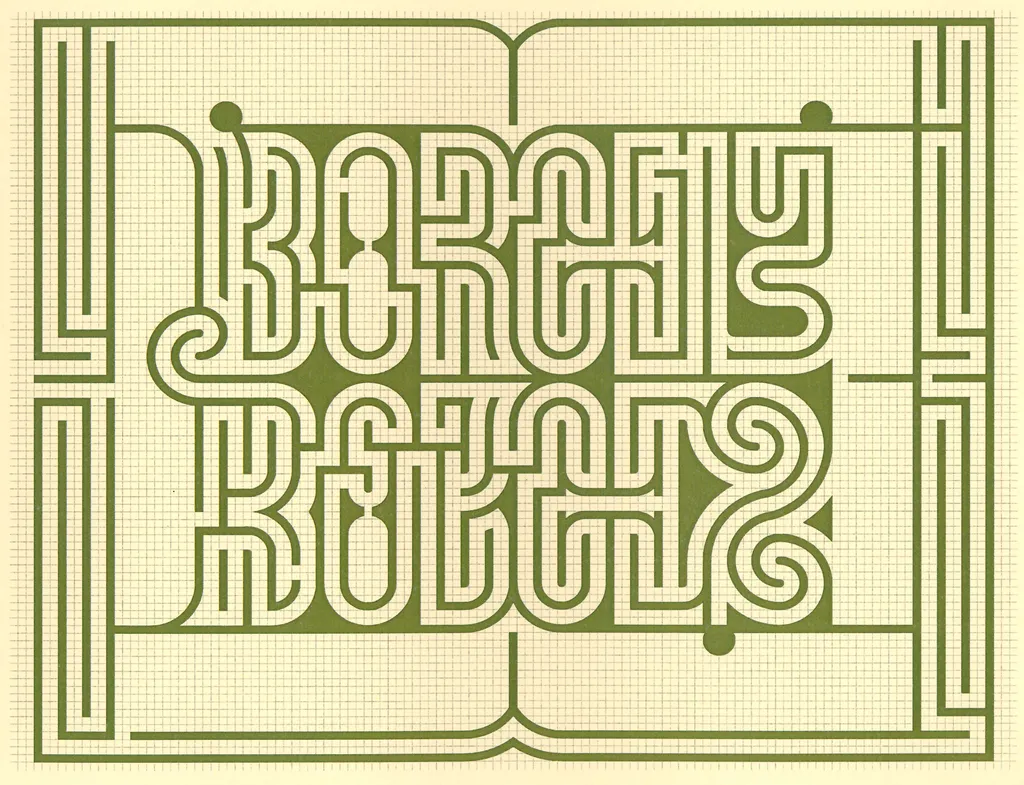
My first introduction was the 'Celestial Emporium of Benevolent Knowledge'[0], from which I will never forget "those that tremble as if they were mad"
And in rare scenarios I've found 'On Exactitude in Science'[1] to be pertinent. The thing itself is it's own map (maybe even: the code _is_ the documentation).
[0]: https://en.wikipedia.org/wiki/Celestial_Emporium_of_Benevole...
[1]: https://neilgreenberg.com/ao-quote-borges-on-exactitude-in-s...
When we make a map, it is a purposeful abstraction. It disregards some things and exaggerates others. The map cannot explain everything – to do so it would need to be exactly the same size as the land beneath it.
When you make a map, document code, present or listen to an argument etc. you need to focus on what's important for this specific purpose. Otherwise your map will be useless. Either from being incomplete, of from being too complete.
Have you read Libro del cielo y del infierno, and El libro de los seres imaginarios, and Cuentos breves y extraordinarios?
The poetry is also very, very worth it.
And there is a recording of Borges reading a selection of his own poems. (Of which do not miss, for example, "El Golem").
Begin argument https://en.wikipedia.org/wiki/Labyrinth
(I adore Borges, his Aleph story follows me through life, such wonders he opened.. "but all space was there, actual and undiminished"..)
https://dn760105.eu.archive.org/0/items/borges-jorge-luis-bo...
The labyrinth symbol, as a decoration or motif in ancient Greek artifacts, isn't generally a maze, but the labyrinth of myth is. Theseus had to use thread, given to him by Ariadne, to find his way back out.
Labyrinth is many things - substantially a maze (not e.g. a subset of it like specific shape).
[0] https://en.wikipedia.org/wiki/Pierre_Menard,_Author_of_the_Q...
I once calculated the number of books in The Library of Bable, and had to try a number of numerical libraries to do so. one after another they kept puking on the large integers.
I also think of "the secret miracle" often.
https://canterburybookstore.com/new-content/2024/11/22/how-b...
Spoilers: it's big. Vastly, hugely, mind-bogglingly big. You might think it's a long way across the diameter of the observable universe but that's just peanuts compared to the library.
Also, a fun website:
I guess it is a direct idea given the structure is there to celebrate a blind master.
https://cdn.mos.cms.futurecdn.net/bFhmPUzXwoyNXtWmfaeGCb-102...
> memorial
Well yes, Borges was especially fond of labyrinths. And Borges is not just any writer: his process and language is indelible to anyone who read him, especially in formative years.
--
Spinoza
Las traslúcidas manos del judío // labran en la penumbra los cristales // y la tarde que muere es miedo y frío. // (Las tardes a las tardes son iguales.)
Las manos y el espacio de jacinto // que palidece en el confín del Ghetto // casi no existen para el hombre quieto // que está soñando un claro laberinto.
No lo turba la fama, ese reflejo // de sueños en el sueño de otro espejo, // ni el temeroso amor de las doncellas.
Libre de la metáfora y del mito // labra un arduo cristal: el infinito // mapa de Aquel que es todas Sus estrellas.