For example: https://sites.suffolk.edu/jhtl/2025/10/30/game-over-for-unau...
Software developers, unfortunately, have been convinced that they don't need to unionize, so have no collective bargaining power for dealing with situations like this.
That’ll be somewhat detrimental to me perhaps (which isn’t certain), but that’s okay. I’d rather attempt to adapt to a changing world.
A union doesn't give you unilateral power; it just gives you a better seat at the bargaining table. Capital pools its resources to negotiate better as a single bloc; why shouldn't labor as well?
Unions are very much an in-group vs out-group phenomenon (and in many cases, the benefits are specifically to the more senior union members vis a vis the less senior ones.)
localized gains, distributed loss.
a computer can never be sad or horny or have taste. it can only make product. i also think artists should be paid living wages with good working conditions.
thank you SAG-AFTRA, WGA, IATSE, AEMI and Teamsters.
Yes, exactly. Do not advocate for yourself and your colleagues by joining them in a united front. Your voice does not matter. You will continue to adapt to widening wage disparities.
You will accept a pay cut and increased productivity goals and be happy to continue adapting as your cost of living keeps on climbing.
It is if it makes it worse for everyone else.
e.g a lot of video game studios even the AAA ones could be co-ops. same as a lot of SAAS software companies. Linear - just announced a tender offer. I don't see a reason - why linear couldn't work as a co-op.
>California’s legislation passed AB 2602 and AB 1836 in September 2024, prohibiting media companies from using AI to replicate actors’ performances without their consent.
it's a very reasonable law, but it is not the win you seem to believe it to be. the actors who refuse to consent will simply be passed over in favor of those who don't. no law will ever be passed to force companies to employ humans over machines, and if it were, the industry would move elsewhere. this is not without precedent :)
speech models have got so good so quickly that you can already replace a VA -- even an AAA prima donna -- with a teenager from Fiverr, who will simply bruteforce the right inflection.
I think too many just expect that they can get by like before because they're a 10x engineer or whatever
Inexplicably for the current moment, AI has so far actually meant I have even more to do instead of less. I expect that to change eventually... but man, is it a bit of whiplash to go from wondering if my job will be around in 10 years to starting the work day and being more backed up than ever. Doubly so since the rate of change does not seem to be very evenly distributed by tech role.
Spoiler alert: unions can help with that.
To be fair, most of us spent our entire career trying our best to automate ourselves away one way or another, and always seen that as our job description.
Some people dislike automation altogether and like the computational aspect. Most people seem to enjoy constructing virtual worlds and Rube Goldberg machines.
It's kind of hypocritical to change just because it's now a different industry being impacted.
In my experience this is what almost everyone thinks, right up to the point where it starts happening to them.
And it isn't just an individual blind spot, organizations suffer from the same thing in the sense that many companies will be happy to automate away all their labor to avoid paying the "human tax" without giving much thought to the fact that the need for the company itself will also be automated away soon after.
If you can replace nearly all of your workers with some cheap tokens and prompts, everyone else who previously would have been a customer can replace your whole company with the same thing.
Useful idiots always go first after the goal is accomplished.
In any case, the overwhelming majority of jobs is non-unionized and I don't think that software developers can stop technological changes by unionizing.
It is possible. But it's quite uncommon in this industry in the US.
And given the current administration, it is hard to trust you'd get fair enforcement of labor laws if the company did illegal things to block unionization.
https://www.computerweekly.com/news/252481961/Amazons-Whole-...
https://www.sciencedirect.com/science/article/abs/pii/S01762...
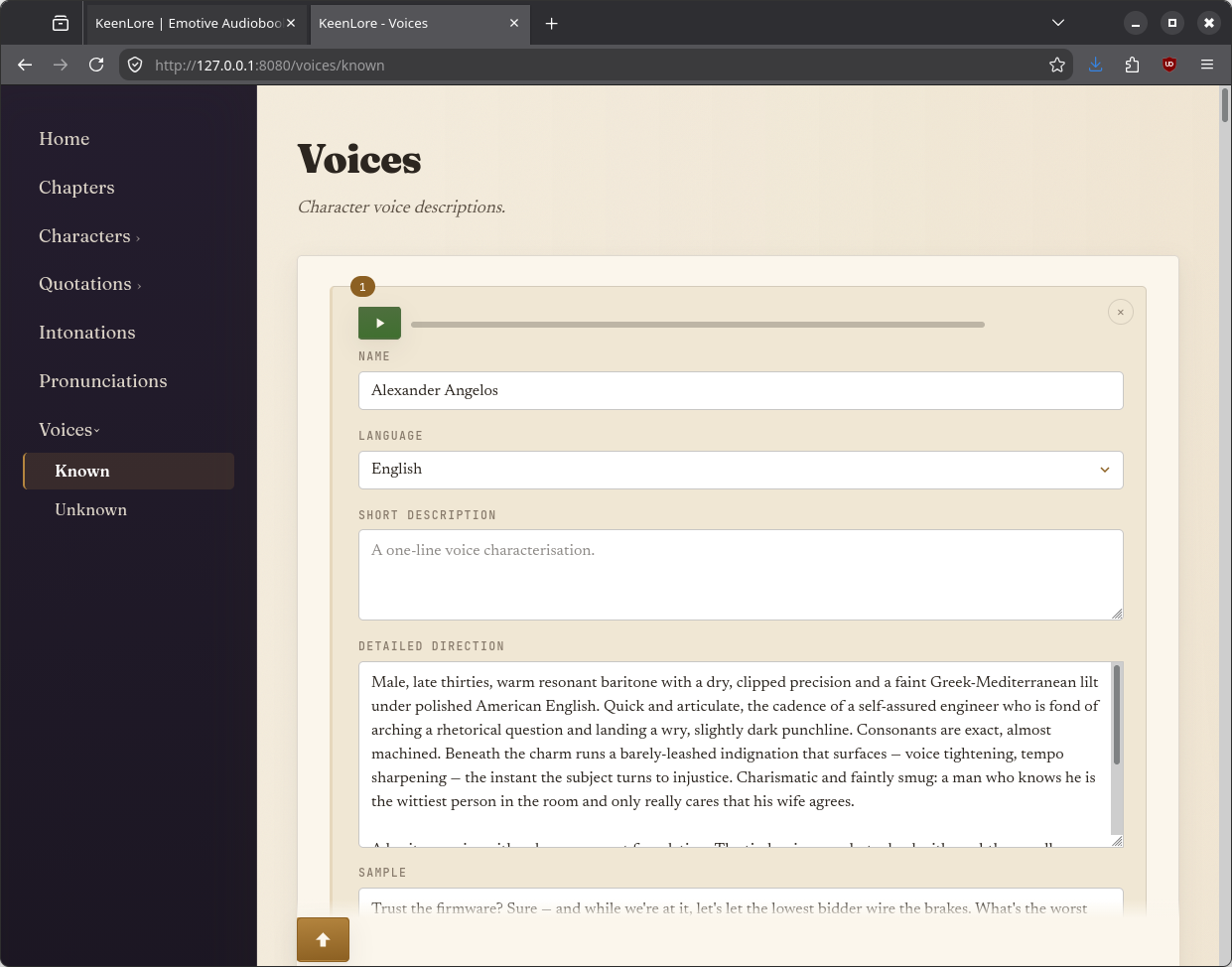
* https://i.ibb.co/ccqKZ71L/keenlore.png
I don't know how the next generation of beloved actors comes about and how we don't descend into a pit of neverending photocopies of things people once loved in the 1990s/2000s.
It’s brutal for these people. The creative industry was always hard, but this is just plain brutal.
All these demos are focused on how easy it makes everything. Easy is great, but if everyone is able to make instant cute cat videos or whatever it just devalues it. I want to see turning a photo into a rigged 3d model, letting the artist animate and then generate the video. This technology could be used to increase creative expression, but instead it's being used to squeeze out creative expression
There could easily be at least some time period of low skilled ugly people acting in approximate but shitty ways in cheap sets just to give an input reference to a model and then describing the differences in text, yielding gorgeous people speaking with prestigious accents doing stuff in fancy locations in the output.
one youtuber used irl footage, with hands and stuff - so I know there's human behind the camera
the other was a letsplay that reacted to events just fine emotionally
and yet the uncanny valley of the sound is in full force. Maybe youtube has done something with the codecs?
I feel sad
It has nothing to do with skill. Both were very skilled jobs. Draftsman as well despite many people going to it straight from school. But computers and CAD mean that it is now necessary for someone to do a STEM degree to be a draftsman. Recorded audio made many stage musicians redundant. It is cheaper to do it this way and gets superior results, that is all, there is no further agenda.
Now too, the next generation of voice actors and many other knowledge workers will have to go up the value chain one step and operate or potentially build these tools (in whatever form they mature to in a decades time).
The current generation of voice actors will face the same situation as many before in the performance industry - stage musicians/performers for example that were made redundant by recorded audio. The reality is that most of them just left and dispersed into the economy doing completely unrelated jobs.
For software and generally computer engineers, this new primitive happens to itself be software, so it's less of a transition and an easier upskilling path to learn to build it. And building it is one step higher in the value chain than simply using it. That is a structural advantage.
But now that we are automating white collar work... where will people go? I'm a 36 year-old veteran who has returned to college and so many of the younger students seem to be filled with despair.
I have hope for the future, but I think there will be an uncomfortable period of time.
This slow transition period will also help answer the "where will they go" questions. We can't answer them right now.
Ultimately, everything we do is in service of social political and personal human incentives, and I think the effect of that is discounted when people make these takeoff predictions for AI and "AGI"
it always sucks at everything else.
If anything FF gets left out because usage is so low.
I've been following this for a long time. They were leaving Firefox out when its usage wasn't low.
Probably the typical backdoor executive mandate that led to death by "sprint prioritization":
Yes, we will for sure work on the Firefox compatibility bug, Dave-Open-Source-Enthusiast-Google-Dev.
But we can only pick up 10 bugfixing tickets this sprint and the ticket you highlighted, as the entire team agrees, is priority #12.
<repeat every sprint, where during the sprint 9-10 new higher priority items magically appear just in time for the next sprint>
Death by slow asphyxiation.
>Firefox makes up about 90 percent of Mozilla’s revenue, according to Muhlheim, the finance chief for the organization’s for-profit arm — which in turn helps fund the nonprofit Mozilla Foundation. About 85 percent of that revenue comes from its deal with Google, he added.
https://www.theverge.com/news/660548/firefox-google-search-r...
Billion with a B, as in 10 zeroes, not 7.
Maybe because they see video generation as key to developing "world models"?
And, Veo and omni simply were better than Sora
And, Youtube is huge both as a place where video contents goes and where can be trained from. Microdramas are starting to become a real category--14 Billion USD, 90% of it made with AI.
Chinese video models can be more immediately impressive, but none of them come close to beat the value of Google's Flow. Especially when you are throwing away a lot of generations as part of the creative process. Which is what you have to do to make longer content with any video model.
OpenAI needed to be able to focus. Google can walk and chew gum, and they're not going to run out of money to buy chewing gum.
I work in advertising and some days I spent a lot of money using these models. The amount and rapidity of prototyping using them has changed everything about advertising pre production.
I never personally got the least bit excited about Sora or nanobanana or whatever video/audio generation thing. But I guess I'm just not their customer. I do love the read-side of it though.
Previously when making video ads you'd need to actually create the video. Actors, cameramen, editors - you name it. Now a new video ads is just a prompt away, directly inside the ad-spend web UI too no doubt.
People say Google have lost and that they're having their lunch eaten by anthropic, but I am not so sure...
Google is selling shovels, leasing mines, buy stakes in "competitors" and doing it's own exploration/mining. When you look at the full picture, it kinda doesn't even look like Gemini matters that much to them overall.
While it sounds great you're quickly disappointed after you run the same prompt at standard resolution only to get a different result because it's non deterministic.
The capital infusion the frontier labs have received has gotten to a size where many believe it may not be possible to recoup this investment without some very unrealistic things happening.
I think it's reasonable to not completely drain one's cash reserves trying to stay ahead in a race where participants may very clearly be about to run straight off of a cliff.
Sure downside would be not learning from people using your model for coding, if we're on the cusp of huge leaps in self-improvement. But there is a reasonable case for avoiding desperate scramble, especially if other parts of the business can also create value with the compute.
Version 3.1 has plenty of room for improvement, yet they don't seem to be giving the attention it deserves or at least communicating accordingly.
It may be that they wish to slow their cadence of releases, or develop their models to focus more in a different direction, etc. No matter what the actual reasoning, they have chosen to not compete in the same race, and I cannot say I fault them.
They never gave an official answer as to why, so I'll let you draw your own conclusions.
They did not decide it wasn't worth spending the money to train.
They absolutely spent the money.
Also, look at Flash 3.5 to 3.7. Flash 3.7 is a genuinely decent Sonnet 5 class model. Flash 3.7 is quite efficient too. Also, whatever was spent training 3.5 pro is probably not wasted. However, as a strategy, when I see models like Kimi K3, Fable, Sol. If you discard "because the model sucked" what other alternatives or potential options might exist?
I thought of a quite a few and they are far more compelling and interesting to me.
(Also Gemini models tend to be pretty decent at more than just programming. Enterprise AI use is more than just software eng / programming)
If you'd told me at the end of Cloud Next 2025 that by now Google still wouldn't have a competitive offering to agentic coding offerings from Anthropic (Claude Code + Fable) or OpenAI (Codex + Sol), I wouldn't have believed you.
In our non-coding use cases where we're embedding models in our product, we're also not reaching for GCP stuff. Because Anthropic has the mindshare of our engineers and product folks, since it's what they use every day.
They mentioned that they have already started pretraining Gemini 4, which will be the full ground up rip-your-face-off-expensive training that is often discussed.
In the real world out there, Google and Microsoft are absolutely dominating enterprise customers.
Every single non-tech office worker I know is writing Gemini "gems" (sort of claude prompts/skills) or prompting Copilot to help drafting board meeting notes, insurance contracts updates that reflect changes in regulations, make quick loan feasibility assessments before passing them to the relevant office, presentations, etc, etc.
I'm talking insurance, banking, consultancy, manufacturing, etc, etc.
Why? Because Google and Microsoft already were in these companies, all they had to do is "oh, you also have AI now with your plans". Procurement and data compliance are the first thing businesses have to sort out. They were already sorted out.
Google doesn't need to have the best coding model or triumph in meaningless benchmarks, it only needs their models to get better and cheaper while serving them to their existing customer base.
They are playing a different game.
And Microsoft, doesn't even need to care about models at all, they can provide whatever open or closed AI with their services and have to focus on the harness in Excel or Github/Azure Copilot or whatever.
E.g. while developers in most of my clients use whatever they prefer or the company pays for, the remaining 90% uses either Google or Microsoft products.
Not a single one has incentives into venturing into OpenAI or Anthropic or Z.Ai lands because they might be better at some benchmark that is completely irrelevant to their tasks of updating powerpoints or summarizing incoming emails.
Pro models are mainly for coding agent work; it doesn't necessarily make them any money.
Meanwhile, I'm happily using Minimax H3 locally on my 12Gb 4070RTX to finally finish the lip syncing to recorded dialog on my abandoned 20 year old Flash animation hobby projects.
Why do we look at art, watch videos/movies? Is that replicable as a function of text, other existing media, and 3-30 cents of compute per second? I'm pretty functionalist about these things, and at some point it probably won't be possible to tell the difference. But until then, at which point we might just say 'death of the author', it seems like a category error.
I do work with artists that use video and image generation models to create stuff, but from what I can tell they're interested in faster iteration and controlling a lot of intermediate steps (their graphs can get pretty labyrinthine).
I like to generate songs from obscure poems
I enjoy making short films with AI. When my latest short screens at a festival in Ocotber, alongside traditional and AI films, hopefully the audience will like it too.
The quick "one shot" video generation might be slop to you, or I. But if someone wants to send it as birthday greeting to their aunt, and they both enjoy it, what business is it of ours?
I have a young boy, and whenever he builds an impressive "scene" from LEGO (like a diorama or whatever), I take a couple of reference pictures with my phone and make it into a "real" movie scene, cartoon, or whatever. He loves it, and this motivates him to build more and bigger things out of LEGO.
If he builds something really special, I might actually fork over the $5 to use Omni to turn his LEGO creation into a 10-second video instead of a still image. It'll blow his mind!
PS: There also are cheap and even free phone apps that make stop-motion animation trivial. We've already made a couple of videos of his toys moving around that way.
When it comes to fish swimming around I don't think I would be able to reliably tell what was real vs generated even with deep inspection.
x There are so-called “SOTA” or “frontier” models that are more effective than the other ones (independent of harnessing and routing)
x OpenAI and Anthropic have all the SOTA models and lead all the innovation
x Google’s moat is its search bread/butter (it’s the only reason they’re relevant)
All 3 operating assumptions are - I think - false.
What Google has done that the “cuter products” (Claude, ChatGPT) haven’t is connected relatively standard LLMs to an externally valuable live service.
As more companies realize that is where all the value is (the service) and not in the AI capability, then products (and humans) become important again.
Google should just be Google again, and Gemini should be Gemini, off to the side. Omni confuses everyone (and angers some iykyk), they should resolve “AI mode”, rename Gemma? and consolidate the brand overall so it’s clear what Google is.
Google is search.
It helps people on all sides of the market find what they’re looking for.
I don’t really see how repeatedly reinventing and rebranding the same AI chat UX is accomplishing anything toward that goal.
Implicit to that is "find". Their AI integration into search has really hit its stride for me. They have that search box (or speech prompt) hard wired into people and they are finally iterating and crafting AI into that experience. They really failed hard initially.
I know others have worse experiences than me but Google knows a lot about me so maybe that affects my results. YMMV