I got a call from the school principal. She said “another parent called and said your son 3D printed a gun and brought it to school”.
I looked at the print history. It was a tiny toy mandalorian figurine holding a blaster pistol in his hand.
I bought my son a bigger 3D printer and told him to stop playing with that boy.
I can't think of a better response to that situation. I'm going to use it when appropriate for my own kids when the time comes.
Also - your kindergartner is autonomously searching for 3d printer models and executing prints at that age? That's awesome. Curious what 3d printer and what mechanism he uses to search and initiate prints.
I tried basic elegoo and bambu printers.
He can’t read very well but he likes dragging shapes around on a tablet.
He would ask me to find shapes using the search engines then he mixes them together or reshapes them.
I would add them to his history.
This is why I was surprised to hear about 3D printed guns. I was quite sure there wasn’t anything like that in the history.
It was a good discussion topic about why adults get so bothered by things that look like guns.
Hands up if you’ve ever been told you can’t do something because of potential SOC2 audit non-compliance. Or it’s against GDPR. Or legal won’t allow it. Or it’s against IT security policy. Or just against “policy”.
1/ Some top-level authority writes down a rule saying “as of 2021, it is forbidden to have red pencils”.
2/ The authority might prosecute one or two cases, but most enforcement is largely farmed out to certification bodies: the lawyers, auditors, inspectors of this world.
3/ No auditor or auditee ever wants to be the first to fall foul of PNCL21 regulations. The expense one would incur of being a test case incentivizes every regulation to be widened in scope, unreasonably, to try minimize risk.
4/ Moreover, there is a purity spiral incentive as an auditor to maintain the illusion you know what you are doing and therefore justify your $500-a-day fee. No widening-of-scope is too much! No one ever got fired for buying IBM, and no one ever got fired for banning pink crayons “just to be safe”, even though no normal person would call them either red or a pencil.
Cylindrical graphite rods stored in the same building as red paint? Audit failure risk. Orange pens on your desk? Audit failure risk. Office within 1000 yards of a stationery shop? Audit failure risk. You are single, own a traditional twig-broom, and you like black cats? Audit failure risk!
Before that when it was still in the assembly, I wrote to Matt Haney, which didn't do much good because he voted for it both in committee and for passage.
But, I feel like bay area legislators need to know many of their constituents know this bill is misguided and are paying attention. The tech capital of the world shouldn't have artificially impaired tools.
It's a serious problem that there are some congresspeople who don't do any local events, send all comments straight to the trash, etc. You should vote those folks out.
In the longer term, we should push for significantly increasing the size of the US House of Representatives to 5–10x the current size and implement serious campaign finance reforms. In combination, these will help make congresspeople more responsive to constituents and less reliant on donors.
I worry about the size of the bodies, however. Too big, and they become less wieldy. Maybe I'm wrong, but I wonder about other solutions. I was thinking of, for example, 10x the number, but each grouping of 10 has a representative, and they each give proxies on votes. Maybe best though of as, junior representatives. It'd allow more direct interaction, and in a sense you'd be electing regional representative staff for each congressperson.
I guess there are a lot of ways to handle this, but regardless I overall 100% agree.
In fact I think my preferred system would be representatives get a number of votes equal to the people who voted for them, and anyone can assign anyone as their representative. Gate things like getting speaking time on representing more than x% of the vote, and maybe even have a minimum threshold if we're insisting votes are cast in person for cyber security reasons, but generally the bar for being able to represent people should be low and there shouldn't be winners and losers in elections but just people who represent different numbers of people.
We're losing our government and voice to radicalization.
It's possible that nobody reads it and captures the nuance, but I did spend time to consider the framing. Nobody who actually reads it will think I am an extremist or that I haven't carefully considered the topic.
And they respond more often than you'd think. Your attitude is pretty prevalent so the chance to write back and change a voter's impression is hard to pass up.
Calls may work even more.
It won't work all the time and how much they do will depend on the issue and why they are supporting it etc. But it's worth a shot.
Remember I said: they should know you're paying attention. This can cause them to also pay attention.
As an example (maybe some of the HN audience will dislike the outcome here but the point stands nonetheless), this week two sitting members of Congress were knocked out in New York, and their party told them the previous year to not bother trying.
--
For integrated preprint software [slicer] design, guidance for how vendors shall demonstrate that printers will accept print jobs exclusively through authorized and validated software systems and will not accept print jobs from unauthorized software pathways, including attempts by users seeking to evade a detection algorithm.
(did choose to edit the letter but otherwise really, it autofills and takes no time)
[email received 6/18/26 from the office of Steve Scalise, majority leader in the house, who is one of my representatives. I have trimmed for brevity.]
>> Due to advancements in technology, many third-party organizations use their mailing lists to send advocacy letters like this on your behalf. With the increased volume of third-party letters being sent to my office, I want to be sure that I am able to more appropriately address your thoughts and concerns.
I will be sure to consider the views you have sent me, but if you have any additional thoughts on this issue, or need other assistance with a federal agency, please contact my office directly through my website scalise.house.gov or by calling (202) 225-3015
-----------
In case it is not clear to anyone reading, this is kosher political speak for "I am ignoring automated emails. Consider this your notice."
Honestly, I am surprised it took this long, although I'm quite certain it has been going on for a lot longer and generally they simply do not provide the courtesy of telling you they are ignoring you.
Or if you couldn't buy scissors (because they could cut brake lines).
Or if you couldn't buy a car (because it could be used to run someone over).
And if all of those checked with the government before functioning.
It's almost like maybe instead you should just ban the undesirable end action, enforce that law, and create societal conditions that don't nudge or force people into doing undesirable things.
Califoria would not be a sanctuary state if they actually cared about enforcing laws.
They cannot take this shit away. It's futile.
The undesirable action is shooting people, right? That's still banned.
It seems like you think the undesirable action is publishing plans for machines you don't want people to have.
Which parts of a firearm can be printed in a consumer-grade 3D printer? Be as specific as your knowledge permits.
Of those that cannot, how much money does one have to spend in order to purchase a 3D printer that is capable of printing those parts that cannot be printed by a consumer-grade printer?
Are you aware of "slam fire" firearms? If you were not, you owe it to yourself to learn how to make a functional "slam fire" shotgun. The tutorials are pretty widespread.
I don't know the details of what can be printed in a consumer-grade printer, not having performed firearms manufacturing myself, but I've seen things claiming to be pretty complete kits and it seems to me that most components should be possible. Barrels of any reasonable length might be hard, perhaps firing pins too. (And springs, but of course those are trivial to manufacture by hand.) If it's not actually possible to 3D print an effective gun, perhaps someone should make that argument in detail.
A lower receiver is not complicated. It essentially just a quirk of the law that the ability to 3d print a lower receiver is useful to people who want to manufacture “untraceable” guns.
You could change the law so that barrels have to have serial numbers and accomplish nearly the exact same thing as completely banning 3d printers.
Also buying a kit, 3d printing a lower receiver, snd assembling an effective firearm is about as difficult as buying a kit to assemble an 3d printer and using existing open source slicers (or modifying a 3d printer to let you use an open source slicer).
And if 3d printers are as dangerous as the proponents of this legislation thinks they are, people would just hop across the border to Nevada and use a 3d printer there.
im looking forward to the idea that the outline of Ca. may trigger false positives
Maybe it would be possible to just embed a prompt injection into metadata or the STL mesh itself.
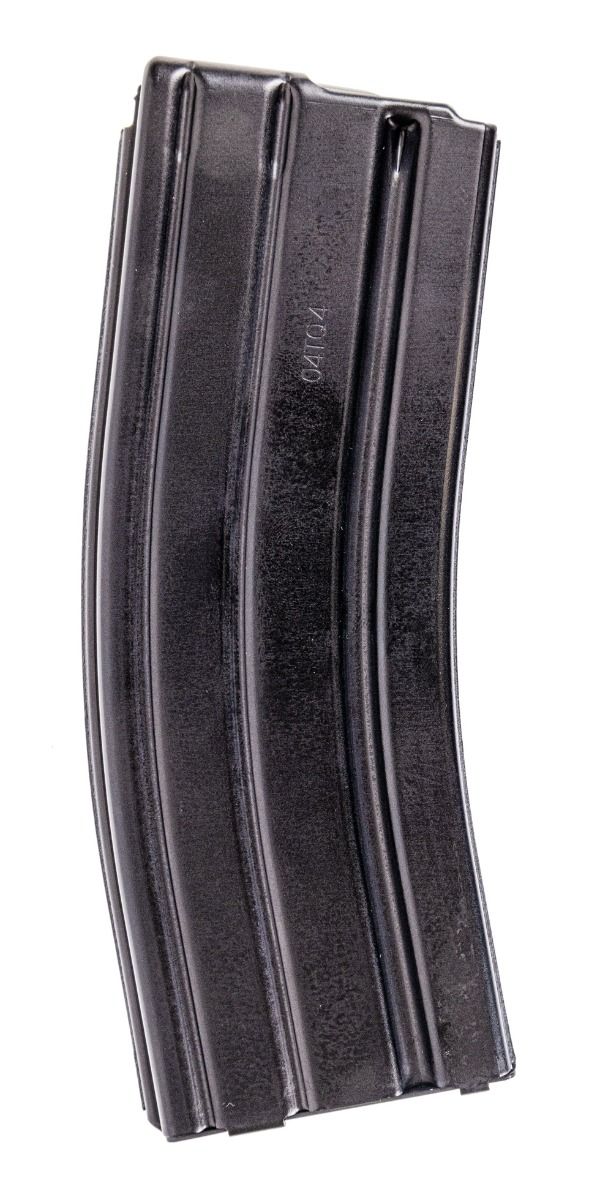
https://dpmsinc.com/media/catalog/product/cache/7217d38013ee...
I don't think we will have much of this in Europe because guns are pretty rare here and so is ammo. We just don't really have gun problems except with organised criminals but they don't 3D print them, they just buy them.
But anyway, 3D printing isn't rocket science. It never was and it sure isn't now. Anyone can build one in their garage and many of us have in fact done so when it was a new tech. If someone wants to be printing gun parts they are going to be printing gun parts.
I support gun control.
This feels like theater, not gun control.
In America the problem is really more that people can just buy guns, not the printers.
This joke of a law isn't going to stop any 3D printed handguns from getting made, it will only add one more relatively easy step.
Then what, ban stepper motors?
Don't give them ideas.
But seriously, given that the 3D printer movement started out with people building their own printers from scratch and there continues to be a healthy open-source hardware ecosystem within the community, I can't see this stopping anyone.
Unless you also make it illegal for 3D printers to print 3D printer parts...
We still do similar things now, though for ostensibly different reasons. Inkjet and laser printers have long had various signatures they add to every printed page, barely noticeable to the naked eye, that can lead back to the specific printer used. The stated motivation is to prevent counterfeitting. Similarly, there is a pattern of "O" symbols called the EURion constellation that, if present in an image file, most commercial image editing software will refuse to print [2].
It's not surprising that politicians are trying these sorts of strategies with 3D printing, because they've already tried and used them often in the past.
[1]: https://en.wikipedia.org/wiki/The_Lives_of_Others
[2]: https://en.wikipedia.org/wiki/EURion_constellation#Counterfe...
> "We have a major problem in California -- ____ is not as ____ as it should be. Prop 1234 authorizes the state to sell $__,000,000,000 in bonds[1] to be repaid over the next 30 years. This will completely fix the ____ problem. By the way, it looks like a lot, but it's actually a good investment that will SAVE TAXPAYERS MONEY in the future."
Then we get another almost identical one in 3 years saying that ____ is worse than ever and this new round of $__,000,000,000 will finally fix it once and for all.
Voters approve like three quarters of these, and usually don't even remember we just gave them billions of dollars to fix the same thing a few years ago. I've heard plenty of people in my social circle who basically vote by reading the supposed purpose from the title ("Anti-Homelessness", "Schools", "High-speed rail", "Animal welfare") and they vote based entirely on the assumption that this proposition is the only and best way to help the homeless, improve schools, etc. They don't even entertain the idea that the prop might be a pork-filled piece of trash written by lobbyists that might even make the problems worse while costing eleven figures and still not be paid for in 20 years.
We just trust Sacramento so blindly.
[1] That, or the other alternative funding: A tax raise "on big corporations" which will 100% definitely not affect you, dear voter.
In my experience, if there's anything that shouldn't be judged by what it's called, it's typically political things, ballot props and bills especially. Sometimes I even adopt an inverse intuition, which is the proposal will have an opposite effect to its nominal one.
Yeah, I'd prefer to have an offline 3d printer but it seems I've made a mistake with my Bambu P1S.
*printers will accept print jobs exclusively through authorized and validated software systems and will not accept print jobs from unauthorized software pathways, including attempts by users seeking to evade a detection algorithm.*