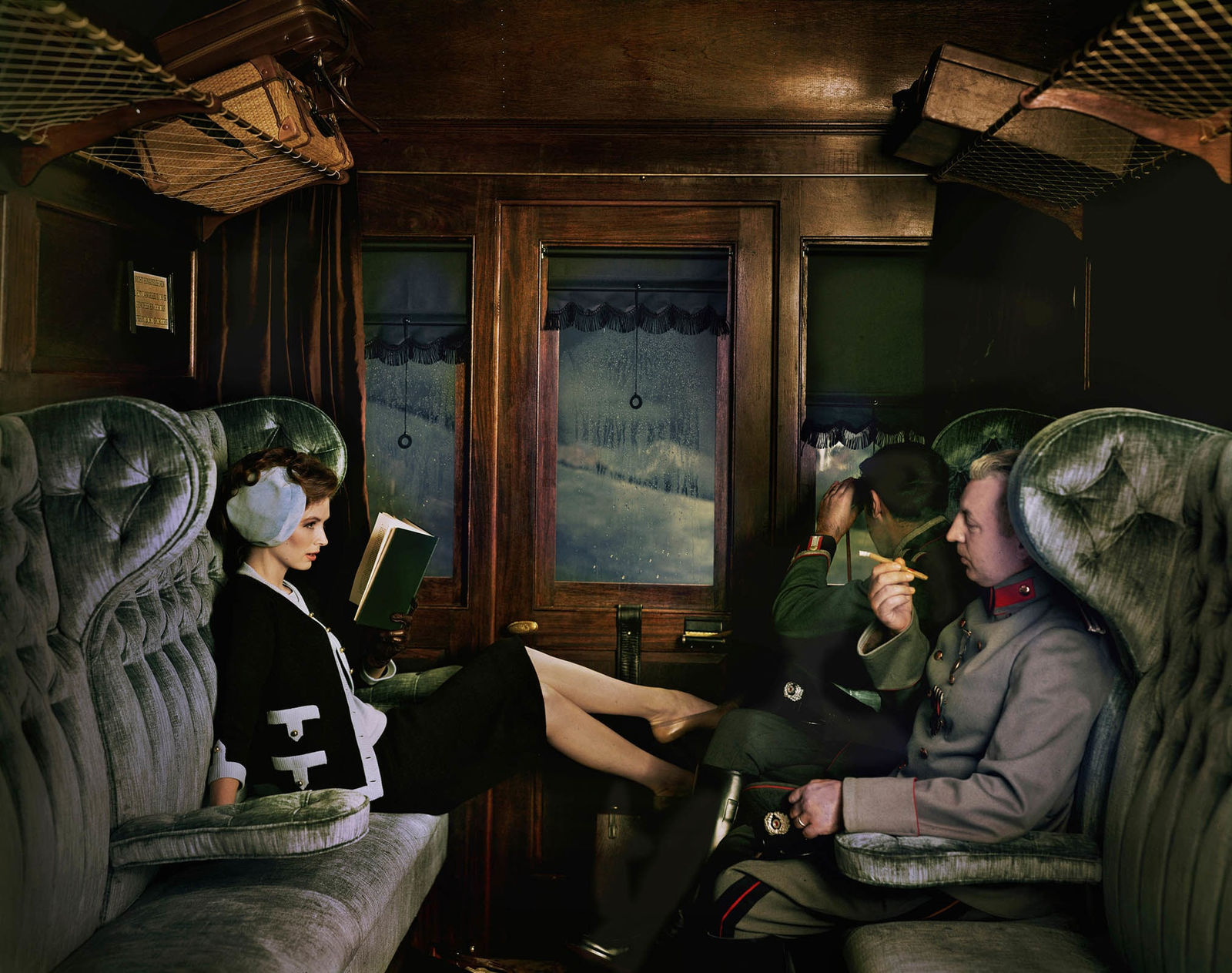
Essentially, the judge found that this qualifies as fair use because (a) publishing this with commentary is "transformative" even through "Defendants used the exact, unaltered [photo] in the blog post"; (b) "the blog post is not focused on the [photo]"; and (c) "there is no indication that [the use] impacted or has potential to impact the market or value of the Photo".
As an amateur photographer, this doesn't give me warm fuzzy feelings about posting anything I shoot online. By the reasoning here, a company (as in the commercial site here) can use my photos so long as the use is incidental and doesn't earn them too much money -- or at least impact my revenue, which is currently $0.
Heaven help me, though, should I misuse a corporation's copyrighted works, even purely personally.
That is how copyright has worked since forever. This isn't something new. Copyright is primarily about protecting your ecconomic rights (and attribution rights. In some countries also the integrity of the work). Its not meant as a way for you to fully control what happens to your creative output.
This particular case does seem very borderline though, if you are selling (or potentially selling) your photos, them using it as an illustration without permission is something that would be commercially negative to you and speak against fair use. I wonder to what extent the judge wasn't thrilled to be bothered by something with so few views and as a result was more sympathetic to thd blogger. I'm somewhat doubtful this would go the same way if it wasn't about something so inconsequential.
One of those economic rights, somewhat inconvenient to your argument, is charging for editorial usage.
The entire function of what remains of the stock photography economy relies on the basis that usage can be billed for. Not sure how else a photographer is ever going to earn money.
If we get to "it's not as if you were making money out of it before" as an argument, which this is approximate to, then the ability to earn as a photographer is destroyed.
"Conservatism consists of exactly one proposition, to wit: There must be in-groups whom the law protects but does not bind, alongside out-groups whom the law binds but does not protect." - Frank Wilhoit
Yeah, fascinating that a 43-view blog post would go all the way to the federal court like this. Surely the plaintiff often has people give up and pay because they fear the case? Otherwise the economics of chasing down copyright violations of this scale surely don't make sense.
I swear, on a busy week I had about 5 people reading that blog and they were all coworkers. The next day, I had a 6th visitor from Los Angeles and got excited. Who was this mysterious visitor? I found out when I opened my email and saw a C&D from Universal's lawyers saying I was abusing the trademark.
I blogged the next day, "Wtf, Universal?" and a few days later, got an email from the local celeb apologizing for the overzealous legal team. He was indeed totally cool about it.
> “A lawsuit like this heightens the demand for Generative AI replacements.”
Most generative AI corpora were arguably trained on copyrighted material, making the output potentially infringing.
Training is not neccesarily sufficient for it to be a derrivative work, just like if you learned to draw based on famous drawings doesn't mean every single drawing you ever made is infringing.
Obviously there are cases where it could be infringing, its going to depend how close the output is to the original.
I guess it depends on how you read the post, is it saying use gen-AI to intentionally recreate the photo, something that sounds danger-zone, or are they saying use gen-ai to make some other photo suitable for purpose?
AFAIK american law is going towards similar setup.
So the process of acquiring inputs may or may not be an infringement, but with at least proposed EU rules it does not matter to created model itself.
The exception being that output it produces is judged similar to infringement as human output without any "transformative work" credit to model - so similar to how a human could learn a book or painting to memory and close enough reproduction from memory would be infringement, but not generally using the ideas taken from them
On one hand aggressively punitive copyright claims stifle creativity and innovation in transformative art. On the other hand, generative AI reopens that transformative creativity.
If this were still the norm, it would feel crazy that blockbuster movie studios are still recycling comic book characters from the 1950s.
Consider the case where someone deliberately prompts the AI to build a facsimile image and the AI does a creditable job after some tweaking.
Tremblay v. OpenAI, Inc., No. 3:23-cv-03223 (N.D. Cal.) (https://dockets.justia.com/docket/california/candce/3:2023cv...)
Andersen v. Stability AI Ltd., No. 3:23-cv-00201 (N.D. Cal.) (https://law.justia.com/cases/federal/district-courts/califor...)
Authors Guild v. OpenAI, Inc., No. 1:23-cv-08292 (S.D.N.Y.) (https://law.justia.com/cases/federal/district-courts/new-yor...)
Getty Images (US), Inc. v. Stability AI, Inc., No. 1:23-cv-00135 (D. Del.) (https://dockets.justia.com/docket/delaware/dedce/1:2023cv001...)
The New York Times Co. v. Microsoft Corp., No. 1:23-cv-11195 (S.D.N.Y.) (https://law.justia.com/cases/federal/district-courts/new-yor...)
Richard Kadrey et al. v. Meta (https://www.documentcloud.org/documents/25984135-richard-kad...)
Bartz v. Anthropic (https://www.documentcloud.org/documents/25982181-authors-v-a...)
---
Further reading:
"Generative AI Systems Tee Up Fair Use Fight" (Feb 2024) https://natlawreview.com/article/generative-ai-systems-tee-f...
"Meta’s AI copyright win comes with a warning about fair use
The federal judge who ruled in Meta’s favor still isn’t convinced its use of copyrighted materials for AI training qualifies as fair use." (Jan 2025) https://www.theverge.com/news/693437/meta-ai-copyright-win-f...
"Anthropic wins a major fair use victory for AI — but it’s still in trouble for stealing books
Judge William Alsup determined that Anthropic training its AI models on purchased copies of books is fair use." (Jun 2025) https://www.theverge.com/news/692015/anthropic-wins-a-major-...
"Copyright Office Weighs in on AI and Fair Use Amid Major Leadership Shakeup" (May 2025) https://ipwatchdog.com/2025/05/12/copyright-office-weighs-ai...
But aren't all of these initial decisions? That is, I don't expect that this is decided until there's a Supreme Court decision. There's still two levels of appeal to go before we get there.
As always, IANAL, but I do listen to their podcasts often (IANALBIDLTTPO)
They sort of look like WWII Nazi uniforms, but they aren't.
Maybe they are made-up?
That’s a bit rich, isn’t it? Why did she not simply search the file name, nevermind reverse image searching the photo itself? Since when is ignorance an excuse - especially in a case like this, when claiming ignorance/negligence could easily cover for deliberate intent?
Since 1998. This is a claim under 17 USC 1202, created by the DMCA, which explicitly says requires intent.
Personal/non-commercial use should be fair game for everything for everyone.