184 pointsby eustoria4 hours ago19 comments
  • nostromo19 minutes ago
    I think this is just the new normal.

    My car was stolen in Seattle and it was found with the person driving it when he was pulled over by police. In the car he had paperwork with his name on it, a weapon, and his work uniform in the trunk with a name badge (he was a security guard - lol) along with a neighborhood witness.

    Despite a mountain of evidence, the prosecutors declined to press charges because without direct video evidence of him stealing the car, they would not get a jury to convict, because jurors in Seattle have become accustom to thinking that the only way to overcome reasonable doubt is to have it on video. And even that often isn't enough...

    • dylan604a few seconds ago
      You know, sometimes, you just gotta get to work and the busses just aren't going to get you there in time. /s

      I was in a jury pool not in Seattle for a guy that already plead guilty for GTA, so it was just the sentencing part. The defense attorney asked if I thought it might be possible to sentence the minimum. I said yes. The prosecutor asked if I thought I could give the the maximum sentence of 99 years. I said for stealing a car? I was bounced from the pool. So maybe juries in Seattle have had their fair share of prosecutorial shenanigans as well???

  • Lammy27 minutes ago
    > Each surveillance technology in our field guide includes the following categories to help you “spot” surveillance technology in the wild

    One shouldn't trust their eyes alone to spot all the hidden cameras that private property owners love to have covering the streets. For example, it took me months to realize that a tenant in my own building has three cameras pointed down from the windows of their unit and can track my every coming and going if they so wish, and that's an environment I have my eyes on every single day.

    I have a modified Olympus OM-D E-M5Ⅱ MFT camera body that I picked up on a whim because it came with a bunch of lenses and batteries and other things I wanted to use with my PEN-F, and it turned out to be amazing for spotting hidden surveillance cameras.

    The way it works is that the underlying camera sensor can see IR by design, and an IR-cut filter is installed over it to restrict it to the visible spectrum for photography. The mod simply opens up the camera body and removes that part. Surveillance cameras in dark rooms (or at night on the street) then show up as bright spots, because the modified body can see the ring of IR LEDs they use to illuminate dark scenes for night surveillance.

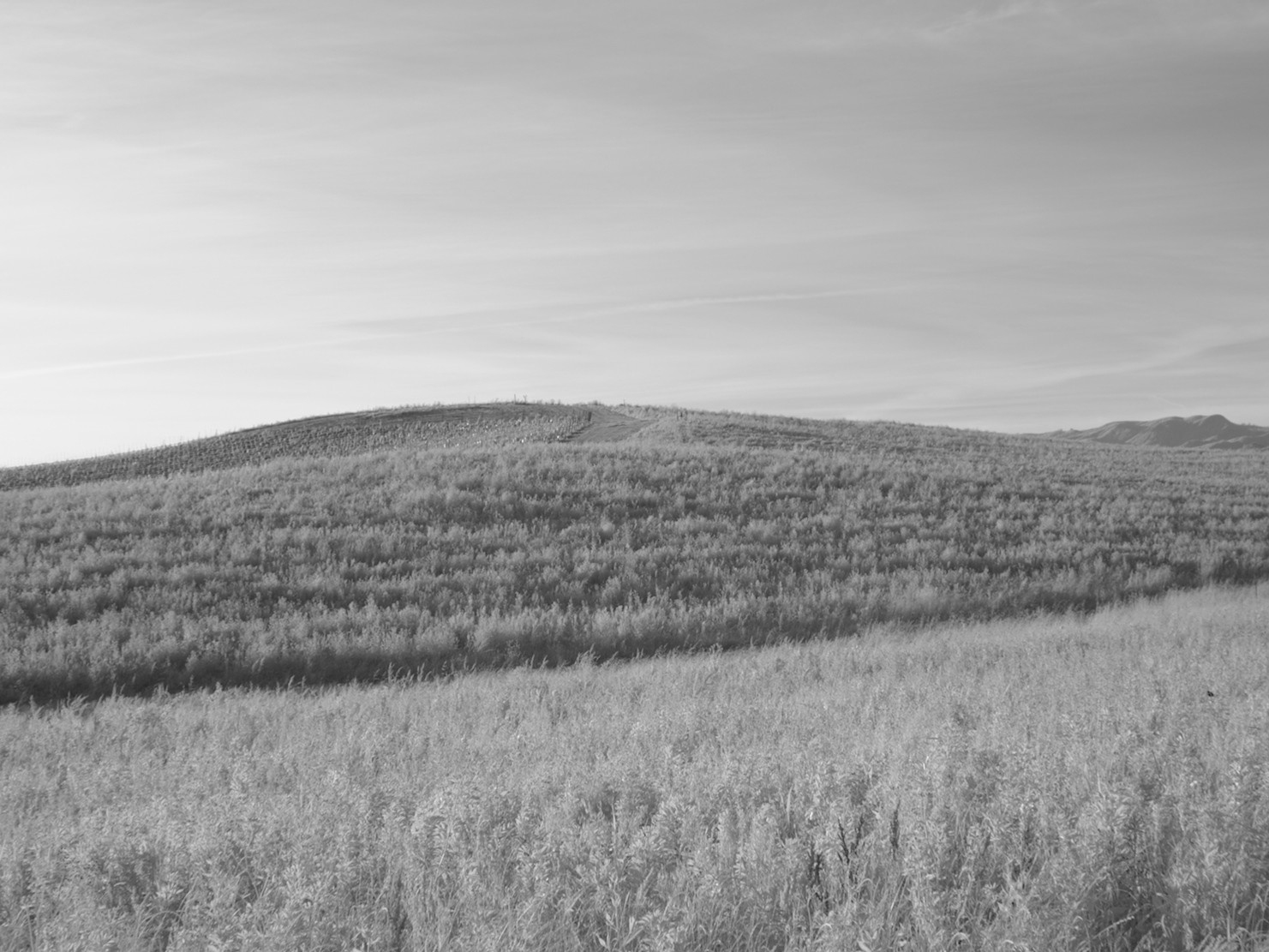
    I don't have any surveillance-spotting images to share, because I usually only do that via the viewfinder live preview (because tbh a photo of an all-black room with a single bright IR blob isn't interesting enough to shoot), but for example here is my IR photo of the Windows XP “Bliss” hill (near the Sonoma/Napa border) both as-shot and after channel mixing:

    - https://i.ibb.co/23t4HdrZ/P5160220-1.jpg

    - https://i.ibb.co/1Yw8RFLS/P5160220-2.jpg

    Not affiliated with and have never purchased from this store, but here are bodies converted for every system: https://www.lifepixel.com/product-category/converted-cameras

  • smithkl422 hours ago
    I wonder what they mean by this?

    > The camera can have different ways of seeing encoded in it, including kinds of gazes that enforce social agreements about what kinds of behavior and people are considered “normal”

    The phrase "kinds of gazes" strikes me as the sort of thing that's only going to make sense to people trained in a very particular and idiosyncratic flavor of ethical critique. What a normal person sees here is, "These cameras can detect if people are acting bizarre and dangerous," which is probably something most people would appreciate. In Seattle, the problem, of course, is that the streets are full of people acting bizarre and dangerous, it doesn't take a camera network to find them, and the police seem to be under strict orders not to do anything about it.

    • myrmidon2 hours ago
      My best guess would be

      [[Surveillance cameras normalize/denormalize behavior in a way that is easily biased and undemocratic.]]

      It might e.g. direct the full force of law against a drunk urinating on a tree (easy to spot/classify), while tolerating vicious verbal attacks disguised by somewhat subdued body language (missing data/difficult to detect).

      Letting automated surveillance systems judge people will inevitably influence our own collective judgement.

      • ctoth2 hours ago
        > tolerating vicious verbal attacks disguised by somewhat subdued body language

        Two people arguing in public, words only, is close to a legal non-event in the US. So I would hope so?

        • seethishat2 hours ago
          Until one of them communicates a threat, then it is a criminal matter.
          • emptybitsan hour ago
            Perhaps, depending on specific intent, credibility, and the nature of harm threatened.

            But since this is about surveillance, I hope that detection of verbal threats is not a goal of government surveillance because it's difficult to imagine how that could be accomplished without significant loss of privacy or other liberties.

            • saltyoldman42 minutes ago
              I can see it in court now. Our AI monitoring system did indeed know about the threat to the building where 800 people died on Sunday.

              It says: " Agent: Voice to text detected: I have everything ready - all the XXX chemicals are ready in the van and I'm going to park in the 900 S Crap St now"

              Agent: Thread Level HIGH.

              Agent: Looking up local codes.

              Agent: Mayor signed SB-1238 in 2026 - no surveillance devices may be used for audio threat determination.

              Agent: Threat silenced, but logged.

              Judge: Oh, that makes sense. Make sure to bag and tag and bill the families for the bags.

              City Employee: We also know who parked the van, should we arrest them.

              Judge: No it looks like SB-1238 would forbid us from using this data for the purposes of arrest. I guess send them a thank you letter for testing our laws.

              • anigbrowl2 minutes ago
                [delayed]
              • ryeats22 minutes ago
                This is essentially the Trolley Problem.
          • stickfigurean hour ago
            I don't think you're advocating to have our personal conversations continuously monitored whenever outside, but in the context of this thread, that's what it sounds like.
      • s1artibartfast43 minutes ago
        Seems like a fundamental problem if we dont want the laws we passed to be enforced.
        • mackeye35 minutes ago
          "we" didn't pass them --- i don't think changing the severity of law enforcement alone can achieve what i wish for in society, but the existence of many laws (and severity of their punishment) i disagree with and thus do not want enforced
    • anigbrowl6 minutes ago
      Agreed. I have a read a lot of social/political theory and I am sick of this language. These are academic/philosophical tropes presented as if they were scientific findings. Even when the ideas are interesting, the Theoretical baggage gets in the way and the result is at best clumsy and at worst insufferably pompous.

      I try to make a habit of gently reminding academics I know how badly this gets in the way of communication with non-academic people and ends up hindering the transmission of their ideas. To be honest, I think quite a lot of academics wind up communicating this way because they're subconsciously looking for positive feedback from their colleagues and so slip into the abstruse language of the classroom without realizing it.

    • bonoboTPan hour ago
      I think it's clear what it means but indeed it's formulated in a critical theory framework (see also "male gaze" in feminist theory) that makes it seem more complicated.

      Yes, they take camera images and videos and there is value judgment regarding the behaviors.

      Reading between the lines, the authors criticize the approach of law enforcement around drug use and dealing, living on the street in tents etc.

      But the language makes it sound like special academic expert language and hence automatically right and high prestige.

    • thewebguyd2 hours ago
      > acting bizarre and dangerous

      The problem with surveillance like this becomes "who gets to decide what is bizarre and dangerous?"

      • bonoboTPan hour ago
        Elected lawmakers and courts.
        • matheusmoreira30 minutes ago
          The ones bought and paid for by billion dollar corporations and industries?
          • brailsafe15 minutes ago
            The entire city of Seattle seems to have been bought and paid for by basically 2 - 4 companies. Microsoft, Amazon, Boeing, ...Starbucks in year's past maybe?
        • lux-lux-lux34 minutes ago
          It’s actually the arbitrary whims of police officers
      • mc322 hours ago
        They could at least address that the man and woman on the street would easily identify as people who need to be put in a paddy wagon. Leave the unsure cases alone. Get the obvious ones.
    • RickS2 hours ago
      There's a PG essay related to this: https://paulgraham.com/orth.html
    • Stefan-H2 hours ago
      What came to mind is a camera pointed at the cash register tells a very different story than the camera pointed at the ATM, or pointing from the ATM for that matter. Placement and the stories behind them offer interesting perspectives on what the observers are trying to catch or deter.
      • bonoboTPan hour ago
        Do you mean trying to catch employee theft vs theft by externals? Why can't you write plainly instead of in riddles?
    • superbyte2 hours ago
      I miss when every second comment on hn didn't sound like a cop
      • shortstuffsushi44 minutes ago
        Usually, I'd say this sort of comment is not really contributing much to the conversation, but in this case I agree with the sentiment. With a lot of these posts about the surveillance tech that's becoming increasingly prominent everywhere in the public, there are a lot of commenters here that seem to be of the opinion that "this is fine, as long as you have nothing to hide, there's nothing lost" - or worse in this case, that perhaps that there's something to be gained by taking the "bizarre and dangerous" off the street. Admittedly, I do not live in one of the cities that have issues with a large homeless population, so the experience is a bit lost on me, but I am surprised to see, especially on this forum, people embrace any form of surveillance state. We evidently have learned nothing by both the performative and actual surveillance adds since the Patriot Act. Perhaps the general populous is in fact on board with this and those of us who aren't are the minority.
        • Bratmon29 minutes ago
          > I do not live in one of the cities that have issues with a large homeless population, so the experience is a bit lost on me

          That's the key experience you're missing. If you've never lived in a high-homeless/drug abuse area, you don't really understand how thoroughly draining it is on every aspect of civic life.

          • shortstuffsushia few seconds ago
            I recognize that I'm missing that part of the context, but it still surprises me that the answer to that is relatively global surveillance. In the current state of things, homelessness is perfectly public and observable, right? And so at any point now, the proposed "enforcement" could take place without the need for cameras? I think that part is unclear to me as well, the problem that exists that this solves.
    • Barbingan hour ago
      Gaze language needed to be fleshed out perhaps
    • gowld2 hours ago
      >> enforce social agreements about what kinds of behavior and people are considered “normal”

      > What a normal person sees here

      The post is talking about you.

  • titzer18 minutes ago
    America needs to realize that this is absolutely not the land of the free anymore. The government and big business are in cahoots to screw you out of every cent they can and to make sure you're not about to commit some unspeakable act of terror, like hold up the wrong protest sign.

    Edit: case in point by https://www.techradar.com/pro/quote-of-the-day-by-oracle-co-...

  • brk36 minutes ago
    There are too many technical inaccuracies in this to take it serious (or to try and address them all here). Directionally it is fairly accurate, but the author clearly has very little knowledge of surveillance cameras, their capabilities, or even broadly how to identify ALPR vs. traffic control cameras (and similar nuances).
    • lgats10 minutes ago
      "The Acyclica device casts a fake Wi-Fi network and tracks phones that try to join"

      an incorrect start to a bunch of incorrect/outdated info

  • shermantanktop2 hours ago
    Lots of po-mo art-school language on this site about “encoding ways of seeing” and “gazes.”

    The content itself is somewhat interesting but imo plain language would be more accessible.

    • patjaan hour ago
      I'm still trying to figure out how I feel about statements like these which seem to assume the reader is incredibly uninformed and naive, to the point of condescension.

      "sends the information to a central storing place (called a database)" TIL what the word database means?

      "Amazon can use your purchases to know more about you using patterns." Is this news to someone? Condescending.

      "It might be connected to a network (via Internet or radio frequency)" Radio frequency and Internet are not really directly comparable

      Also don't like that the site hijacks the appearance of my mouse pointer, which feels similarly disrespectful of the reader.

      • gs17an hour ago
        The way it's written, I wouldn't be surprised if it was meant to be read by/to children (or at least used by a elementary/middle school teacher).
      • raincolean hour ago
        I think these criticisms are unjustified. The article could be aiming for less tech-savvy people. Remember the most tech-savvy people in the world are those who enabled the surveillance infrastructure in the first place. Also if you want any meaningful grassroot change, you need to appeal to the less knowledgeable cohorts. Politics is more or less "which informed people can convince the most uninformed ones."

        > Is this news to someone?

        Yes, many. xkcd 1053.

    • tencentshillan hour ago
      It's a very strange mix of overexplaining basic concepts and in-depth details. I suspect AI.
  • mips_avatar40 minutes ago
    Still somehow was "impossible" for the Seattle police to recover security camera footage of my bike being stolen under the light rail station security camera.
  • xx_ns3 hours ago
    > A probe packet contains the MAC address as well as the list of all the past Wi-fi networks that your device has tried to join before, which can reveal a lot about you!

    Generally, most modern devices send broadcast/wildcard probes precisely to avoid leaking the PNL. From what I know, directed probes are only sent for hidden APs.

    • rafram3 hours ago
      And most modern devices randomize MAC addresses ("Wi-Fi addresses" in Apple-ese, for probably obvious reasons) between networks, and even between broadcasts/connections to the same network.
      • gausswho2 hours ago
        I think this is only true for mobile devices? I'm curious how one would configure Linux to randomize MAC addresses by default.
        • rafram2 hours ago
          macOS rotates MAC addresses between networks by default, and between connections to the same network unless it's password-protected. (It's under System Settings -> "Details..." or three-dot menu by a network -> "Private Wi-Fi address.")

          Windows also randomizes by default as long as your network controller supports it.

          It sounds like Linux requires some textual configuration that depends on your distro.

        • c222 hours ago
          In Linux changing the MAC address can be done simply on the command line, so I'd probably just write this functionality into a bash script that I'd call before ifup.
      • Jordan1604an hour ago
        [flagged]
    • oofbey3 hours ago
      Correct. All major OSes stopped broadcasting the preferred SSID list by 2017, with Android and Linux being the last. Apple stopped in 2014. Windows by 2009.
  • Barbingan hour ago

      Flat black circles on top of traffic signal control boxes, which are large, gray or painted metal boxes, typically found at street corners.
    
      The Acyclica device casts a fake Wi-Fi network and tracks phones that try to join the network in passing cars. Since each phone has a unique identifier …, different Acyclica installations can track your personal location as you pass them in the city.
    
    Is iOS latest susceptible on default settings? w/“Rotating” “Private Wi-Fi Address“
    • jrmg11 minutes ago
      No.
  • pietervdvn2 hours ago
    For everyone interested in this topic: with https://mapcomplete.org/surveillance, anyone can easily see and update surveillance camera's in OpenStreetMap
  • SauntSolaire3 hours ago
    Surprisingly milquetoast list given the title
    • oofbey3 hours ago
      They clearly have an agenda, but also openly acknowledge that public surveillance is a two sided coin, balancing public safety and convenience with privacy. Some of the risks they identify are real, but others are unabashedly exaggerated.
  • Fogestan hour ago
    I still feel so conflicted on things like the Flock cameras. On one hand I understand that they have the capability of incredibly enhancing the ability for police departments to solve more crimes. Especially things related to vehicle theft, they could likely track down your stolen vehicle very quickly especially if they have a wide network of cameras.

    However, my concern is always about the possibility for misuse. Even if I trust the current government, it doesn't mean I will trust a future one. What if they use the technology to track/monitor people like investigative journalists? We've already seen a recent state passing bills that would make it harder for investigative journalism to happen. So it's not even out of the realm of possibility for this technology to get used in ways that even would be deemed "legal" as they can simply expand the laws to use it unreasonably in the future.

    There is also the other obvious concern which is surrounding things like data breaches or other unauthorized access issues. There have already been many people exposing some large security flaws in a lot of the devices currently out there.

    Where I am stuck is how do we balance the huge set of benefits that can come from this kind of tech, with the tradeoffs? Ultimately this tech is unlikely to stop being implemented as governments and even most of the population is largely unbothered by mass surveillance. I almost don't even bother bringing up discussions on these topics with non-tech people as I have yet to find someone who seemed to care at all about this. If anything they are very in support of this technology being implemented as they seem unable to understand the tradeoffs due to it often requiring more technical knowledge. They just see all the positives it can give, and don't grasp the negatives.

    Ultimately people usually desire safety, and these cameras definitely can give people more safety. Is it possible to balance safety with proper privacy safeguards?

    • goda9038 minutes ago
      What if instead of trying to figure out how to catch criminals, we focus on building a society where no one wants to be a criminal? Can we find solutions to what causes crime, like desperation, greed, fear, failure to understand and have compassion for other people, etc?
      • Fogest29 minutes ago
        Unfortunately that's not how society works. I don't think I can think of any society out there where this idealistic model works. Of course I'd love for that to happen, but that's just not where we are at right now, nor would it be something that could happen overnight. We have to live with what we have right now. And right now the majority of people seem to welcome this technology and have no problem with it at all.

        My view on the topic has shifted from "how can we stop this?" to instead "how can we make sure it gets implemented in a way that has the proper checks/balances to ensure citizens still have some right to privacy even when in the public?".

        Personally, I am actually more concerned about the fact that every big store out there is using technology to track me as soon as I enter the store and likely has a big profile of data on me. I'm more uncomfortable with that reality and it's something that continues to happen with no restriction. Which is why I think I'd be okay with this technology as long as it has proper auditing and is kept fairly specific in when it can be used and who has access.

        • titzer14 minutes ago
          I guffawed at "proper checks/balances". Since ICE brownshirts have been roaming around with masks and automatic weapons, abducting random people and even shooting some, you're at "checks/balances". What?
    • trbleclefan hour ago
      What's that quote about essential Liberty and temporary Safety again...
      • stickfigure41 minutes ago
        When you get a gun pointed at your face, or your home violated, or your car stolen, you tend to rebalance your principles a little. The cameras are a symptom of bigger problems.
        • Fogest33 minutes ago
          This is the main issue. People aren't going by what may be the best solution long term, they are going by what they feel and experience in the moment. Right now people feel unsafe and they feel these systems increase their safety and seem unphased by the privacy ramifications. I personally still am not sure how I feel as I do value my privacy, but at the same time I also understand how this can be a useful tool. Many tools the police have also invade my privacy as well to some degree.

          It's so hard to draw a line of what is good or bad, and it seems like the majority are okay with this technology. Which I think means the conversation should shift from should we allow these cameras at all, to instead, how can we allow them to be implemented in a way that minimizes privacy risk as much as possible while still remaining a valuable tool to solve crimes.

        • lux-lux-lux23 minutes ago
          You also rebalance your principles when you rot your brain with vast quantities of fearmongering slop on your screens, and that’s way more common.
      • AndrewKemendo35 minutes ago
        Keep quoting it and people will continue to ignore it

        Look around.

        99% of people couldn’t care less about privacy and are begging to give over their whole personal life data for (insert corporation) “points/rewards/discounts”

      • forrestthewoods39 minutes ago
        It’s a pretty unhelpful quite imho. You can use that quote to oppose anything beyond pure anarchy!

        Yes the police can be abusive tyrants. But a society with no rules and no rule enforces is not a prosperous society. And yet if you lived in total anarchy you could oppose anything beyond pure rules and any rule enforcement with that quote.

        Clearly the slope is very very very <breathe> very very slippery. And yet the ideal, dare I say necessary, point is not at the far end cap.

    • m304728 minutes ago
      Kind of moot if, when the police allegedly call you to report finding your stolen car, they use misleading caller ID and don't leave a message.
      • Fogest23 minutes ago
        Not really sure what this has to do with my comment, it just sounds like you're airing a personal grievance with an individual in a police department.
    • tencentshillan hour ago
      A lot of European countries manage it just fine. There can be reasonable rules and regulations put in place, but America usually waits until the worst harms have already occurred before regulating. It has already been heavily abused by the government/ICE. Hopefully we still have a functioning electoral system to make the necessary changes.
    • reaperduceran hour ago
      On one hand I understand that they have the capability of incredibly enhancing the ability for police departments to solve more crimes.

      Do they?

      There are millions of these cameras all around the country, yet when pressed about their value, Flock and cops can only point to one or two crimes prevented/solved at a time. And they're usually things like "caught a burglar after the fact," or "stopped someone from dumpster diving."

      Get back to me when they find Samantha Guthrie.

      • Fogest44 minutes ago
        I've already watched many dozens of bodycam videos on YouTube where the Flock cameras we used to help track down suspects of crime, so I feel like this may just be a case of you being ignorant on the topic. You can argue on the other merits of such a system, but I think you're being a bit silly making an argument that these don't help solve crime.
      • stickfigurean hour ago
        I share the parent's internal conflict, but this is an interesting critique that I hadn't considered: The cameras don't actually work. Do we have any data on that? Seems like I hear about stolen cars (and their drivers) getting picked up fairly frequently due to these cameras. Is it marketing or is it true?
        • Fogest41 minutes ago
          I think they are just being intentionally ignorant on the topic due to their dislike of the system overall and I don't think that is fair of them. There is lots of videos even of YouTube via bodycam videos with many police departments making good use of these cameras to aid in solving crimes. I'm sure there are many articles and maybe even research out there which would show this.

          I think it's just a way to try and dismiss the cameras without trying to tackle the heart of the problem. When you have to contend with the fact that the cameras have a lot of useful purposes, it makes arguing against them much more challenging. If you can pretend they are not useful, it may be a way to try to stiffle any productive discussion around them.

      • rootusrootus44 minutes ago
        > Get back to me when they find Samantha Guthrie.

        Nancy?

        • reaperducer12 minutes ago
          Probably. I don't follow it. All I know is that a high-profile person's mom got kidnapped and in spite of all the billions of dollars spent on surveillance technology in this country, she's vanished into thin air.
  • richard_chasean hour ago
    Saying that patterns are dangerous because they can reinforce stereotypes sounds a lot like you are saying the stereotypes are true.
    • bonoboTPan hour ago
      Also the gorilla example from many years ago makes it seem like the author just superficially follows this stuff from the media. It was a single instance of misclassification in a widely deployed photo categorization model, not some reproducible trend with the models.
    • 12 minutes ago
      undefined
  • 3 hours ago
    undefined
  • tpolm2 hours ago
    If the survelliance tech is so great, why post amber alert messages with the license plate numbers all over all highways to help find the car?
    • mc322 hours ago
      The more eyes the better the chances. Obviously it’s not total information awareness the likes one of the previous DNIs dreampt about. We see its imperfection if the fact that a very public case in an Arizona abduction case is basically cold. They basically have zero leads -which is pretty incredible in this day and age.
  • zeafoamrun23 minutes ago
    This is out of date, Amazon Go has shut down. RIP to some really cool tech.
  • corprew3 hours ago
    Based on context on their site, this looks like it was generated in ~2019 from data gathered before that, and some stuff in it is out of date as other comments mention.
  • nobody_r_knows3 hours ago
    [dead]