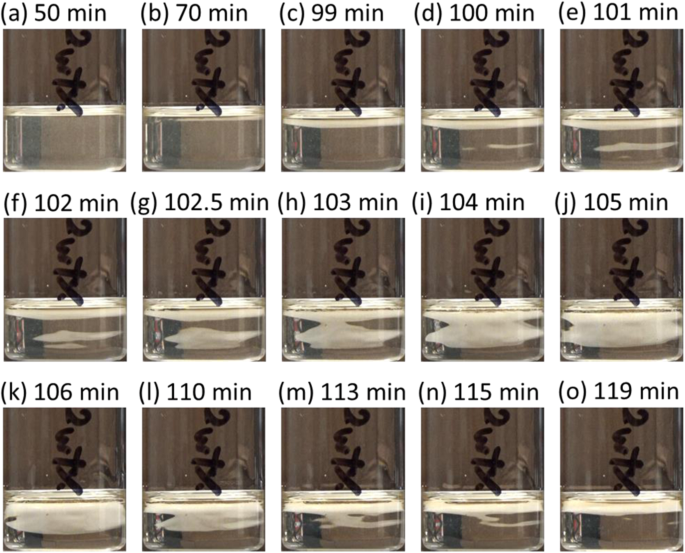
https://iomosaic.com/docs/default-source/papers/polymerizati...
From fuzzfactor's comment with lots of other great info:
For comparison, there is a nice video by NileRed https://www.youtube.com/watch?v=phNLecfyWS8 He is making Bakelite that is a type of plastic. It's a tiny amount, in a lab, on purpose and he may make a few attempts. Anyway it overheat and instead of a nice piece of plastic he got a nasty block of foam with burned plastic. No imagine a huge tank of a similar chemistry reaction.
After a big earthquake you don't want to have to also deal with other emergencies (à la Fukushima).
Aside: One good side-effect of the 2011 Tōhoku earthquake being so horrific is that it stopped the self-obsessed whinging in my city (Christchurch was still trying to recover from an earthquake).
> The use of high levels of inhibitor can cause the monomer system temperature to far exceed the onset temperature of thermal polymerization under external heating. Once the inhibitor is exhausted, the thermal runaway reaction proceeds at an elevated temperature with a substantial reaction rate and very little reactant/monomer consumption.
Source: This fascinating paper linked to by fuzzfactor in yesterday's (edit: 3 days ago, lol) thread:
https://iomosaic.com/docs/default-source/papers/polymerizati...
The comment:
Something passive could be submerging the tank in a pool of water (also good for proving spill containment won't leak).
Because the US chemical industry has been effectively unregulated for a century and can do whatever it pleases.
There's a neutralizing chemical that could have been injected to stop the exothermic reaction in its tracks. They didn't have it on site. A "response team" (likely a contractor that responds to chemical emergencies) did, but by the time they showed up, supposedly things were too damaged to inject it. That neutralizer should have been a Big Red Switch away.
They also should have had a deluge system, for example, to cool the tank. With a standpipe for firefighters if there's no water available onsite. Was there? Nope! No requirement for it. Despite the dangers of this stuff being very well documented, it having caused disasters before, etc.
Consider that the chemical industry can invent a new chemical and the onus is on everyone else to prove it is hazardous. So what does the US chemical industry do? Spend lots of time "innovating" new versions of chemicals to constantly leverage the 'innocent until proven guilty' scam. Chemical A is found to be cancerous, so they rework it slightly, enough to call it a new chemical even though it's nearly the exact same thing, but we're right back to square one on it "not being hazardous."
Protection systems cost money. If something really bad happens the cost of the disaster far outweighs whatever assets the company has hanging around, and in the US, we basically never hold anybody responsible for what they do in the course of their job running a corporation. GM willfully ignored problems with Chevy Cruze ignition switches that caused countless people to die because they'd randomly shut off _and shutting off meant the airbags would get disabled_. Did anyone in those teams, or their managers, ever get held accountable? Nope, not except in some civil suits, where Chevy repeatedly claimed they didn't have any documentation. Well, at some point Congress went after them for something, and in the massive pile of documents lo and behold there wer piles and piles and piles of documentation about the ignition switch issues.
A company like that isn't even required to carry a lick of insurance, far as I'm aware. Meanwhile, and I wish I were joking on this - if I want to get a permit to set aside space in front of my apartment building to park a moving truck, I have to carry a million dollars insurance that protects the city.
If I park my car blocking an ambulance I get charged with at least one crime, possibly even manslaughter or homicide. Ditto for blocking a fire truck trying to get to a fire. A railroad can do it to half a county, dozens of times a year, and everyone just shrugs as people are harmed or killed, or half a neighborhood burned down. All because private equity is milking the railroad so tight that it's making trains that are miles long instead of lengths that are appropriate for the tracks they're on and won't block fire trucks, ambulances, police cars, school busses, and the general population as a whole.
The free license corporate America gets to shit all over society has got to stop.
This case probably fell through the cracks, was grandfathered in due to military importance, or is a symptom of the utter lack of industrial knowhow plaguing modern US manufacturing because much US manufacturing is legacy work from decades ago with little ability to modernize, at a plant that likely existing long before the nearby housing.
You want Gore-Tex (expanded PTFE) boots, Cobalt EV batteries (Child labor in the DRC), Solar Panels (Open pit quartz mines), Wind Turbine Blades (Epoxy Resins & glass-like fibers), and so on. All those things sound nice and good for the environment but don't appear out of some magical horn of plenty. All those things require intensive chemical and industrial processes that cost a lot of money.
"Just make the government solve the problem by criminalizing their entire operation" isn't a serious solution. It's a generic anti-corporation/NIMBY argument to outsource uncomfortable things to another country without labor or safety protections. Consumers need to accept that if they want nice things those things come with some amount of cost to the environment and level of risk. The government needs to work with corporations to find the safest _practical_ mitigation that doesn't bankrupt them. If that's done correctly you will actually avoid accidents like this because everyone is working together on the same page.
If some corporation comes along and says they have dry boots and electric cars, it is not realistic to expect every single consumer in a society to become expertly informed on fluorochemistry or the economics of mining, and then also expect them to make the decision that is best for all of us.
From one angle, that is all modern corporations are: a mechanism for offloading costs onto the public, while privately pocketing the profit.
Corporations naturally seek to improve margins, all the time, constantly. They will push and push against rules and regulations. It's the proper role of government to balance the costs to the corporation against the interests of the public. And it can be done well. But in the US, it's becoming more and more rare.
I have lived in places with more rules, but that meant we just didn't do it. We eventually gave up.
There is jurisdiction shopping of course. If china or wherever wants to have really lax rules, and that means production moves there, I’m not sure what the answer is.
But, for this product (making plexiglass like things), I expect all the consumer production has gone overseas anyway. This is defense / aerospace, so it probably can’t move.
I avoid this stuff as much as I can without upending my life, and I'm still forking over much of my spending to companies that can pollute my land, water, and air with near impunity. I didn't choose this shit!
And yet I bet if I look there's actually a ton of regulation.
>Chemical A is found to be cancerous
Chemical A is assumed to be cancerous by the state of California, you mean?
https://www.csb.gov/t2-laboratories-inc-reactive-chemical-ex...
This agency is the subject of a budget war between the current executive and Congress, with the former trying to cut its budget and the Congress just restoring its budget, so not sure if it will be doing a report on Garden Grove:
https://www.chemistryworld.com/news/congress-rescues-industr...
Guess He was asleep on the job when the valve broke causing the situation in the first place, but good on Him for intervening later.
He did give us a manual. He very clearly says that slavery is okay and eating shrimp is a sin, and lots of other rules.
Such a miserable existence looking down on people for their own beliefs. Please get a hobby.
[1] https://commons.wikimedia.org/wiki/Category:American_Pygmy_G...
MythBusters have a good BLEVE episode. Apparently Adam Savage's favourite explosion.
Also, as someone affected by this, it has been extremely frustrating getting updates via xitter. Do we really have no other options?
Can you expand on that? It seems like there wasn't a lot they could do once the tank started leaking.
Genuinely open question. I don’t know anything about stuff.
[1] This is the hazchem code. I think the US uses a different system. A list is here: https://www.ricardo.com/media/radn55jg/dangerous-goods-emerg...
Delta P... when it's got you... it's got you.
I was literally just this afternoon telling someone about TIWWW and posting them some favourites.
The "it will explode leveling a couple city blocks" danger seems to be abated, but instead it's spraying an insanely toxic chemical out into the open, which will likely have health repercussions for residents for decades?
Thousands of gallons of toxic chemicals don't just disappear.
I've heard from others that it's readily absorbed by water. That's bad in the ground water case, but it seems it might be a positive when trying to clean up a (contained) spill.
It appears to me to have a relatively high lethal dosage (my back of the napkin calculations are saying a 200 pound human would have to orally ingest almost a liter of it to reach the LD50 dosage--but again don't quote me on that number because I am not an expert and could have very easily messed up the math or the concept of a lethal dose).
So, while I agree there might be unknown long term issues, it does appear to be a relatively low probability of that since it seems to be on the less pernicious side.
Additionally it is almost certainly not in vapor form at 100 degrees. In sunlight it will also polymerize to a solid pretty quickly.
As such you'd practically have to drink it inside to hit the ld50.
The explosion would be much worse than a release of liquid or vapor based MMA during the day, and here it almost certainly solidified at this point
Also, vitamin C is not volatile, so there is no risk of inhaling it as a gas.
The overall point remains the same: the toxicity, both short and long term, of MMA, is comparable to lots of everyday substances that are both commonly eaten and inhaled.
It just isn't that toxic as far as chemicals go. That doesn't mean it would be like great for you but calling it "highly toxic" is tremendously overblown and doesnt serve anyone well to claim.
Let's save the highly toxic claim for things that actually deserve it. We don't have to sensationalize everything. I maintain my view that the explosion would likely be much much worse than the odds of significant respiratory damage from MMA.
Also note the sensationalization also causes placebo effect. People miles away started claiming "their lungs hurt" when
1. There was no leak
2. Even if their was and it was a conspiracy or whatever, your lungs have ~no pain receptors and your chest/pleura/etc would generally not hurt from MMA overexposure. Your throat would and your skin would, depending on concentration. But nobody complained about skin irritation when the is basically no way to end up with one without the other.
Etc.
Sensationalization of this hurt people so far more than the actual issue!
In some plastics the monomer is toxic, but the polymerized form is safe. (I think it was use for windshields for planes, so once polymerized it was probably safe to touch at least.)
In this case it was an uncontrolled reaction so I'm not sure if someone knows the exact current composition of the goo, so I strongly recommend to avoid licking it.
This is common. Isocyanates are a common example — isocyanate monomers are nasty, and the very light ones are very nasty. They’re used to make polyurethane, polyurea and such, which are quite nontoxic in polymerized form.
In applications where the unreacted isocyanates are used by anyone other than professionals (e.g. two component varnishes), the manufacturer may go out of their way to use more expensive but less toxic variants.
Some quick searching suggests that it’s toxic but not even close to “insanely toxic”. And it’s not persistent in the environment.
If you want a genuinely nasty chemical, check out methyl isocyanate, which is some two orders of magnitude more acutely toxic.
https://en.wikipedia.org/wiki/Dimethylmercury#Safety
- considerably more deadlier, and the mercury an element - so no clever chemical reactions can break it down into innocuous CO2, H2O, and N2.