> When requiring approvals only for first-time contributors (the first two settings), a user that has had any commit or pull request merged into the repository will not require approval. A malicious user could meet this requirement by getting a simple typo or other innocuous change accepted by a maintainer, either as part of a pull request they have authored or as part of another user's pull request.
If companies can screw you over and claim it's a mistake, there isn't much a person can do.
It's all about level's of trust, a maintainer going rogue is less likely, a past contributor going rogue more likely but not too much, a stranger with a typo pr merged even more likely but still, a complete stranger least trust worthy.
If you are insecure because someone has had one of their otherwise completely innocent PRs merged into your repo... you are insecure, period.
Also please let us delete PRs just like we can delete issues.
A similar system would be nice for issues, though I'm not sure what it'd look like if issues are the springboard for contributing PRs.
Not likely to ever happen (as others said), GitHub/MS want to sell CoPilot subscriptions/tokens and LLM-generated PRs are a part of that business model.
The issue here is the core model is broken (misaligned incentives). That's not something you are going to fix with a github "downstream". A token system could help but it's easy to imagine ways that could be gamed, if not implemented well.
If search ads are blocked on search engines, then there is no revenue for the browser. It's that simple (on top of that Brave has other revenues, but the majority is search ads).
So it's a game of hoping that the majority won't change the default.
This is the main reason Brave does not block search ads specifically by default, but still block the other ads. Blocking the other ads there are no consequences, since anyway this revenue is not shared back to the browser.
This is why the business model of Brave is cynical.
-> It's the same model as AdBlock and the "Acceptable Ads" (block all ads, except the acceptable ads, unless you disallow them)
When the article mentioned email matching, I was concerned that it would break down when a contributor's email address changes. (I have contributed to more than a few projects over the years, using email addresses that no longer exist.)
However, it looks like they're not using the email address recorded in the author's original git commit, but instead a GitHub-generated address whose unique parts are the GitHub user ID and username. That should survive authors changing their email addresses. It would still break down if a contributor loses access to their account and has to create a new one, but that's probably less common.
Negative score would be reports from other users because of spammy content or not acknowledged issues, with a middle ground of neutral score (+-0) or little positive score to issues or whatever with clear good intention, but couldn't reach a proper merged PR or were not issues (e.g. issue existed but wasn't the correct repo to be addressed, PR was good but needed other stuff to be implemented prior to it, maybe in the long run, etc)
Given any manipulatable scheme, AI will figure out how to manipulate it. For the OP, what happens if a single AI manages to get through to contributor? Then it starts elevating other AIs to contributor, and we're off again. There doesn't have to be a purpose to this. Trolls will troll, and trolls armed with AI bots can devote endless energy to doing so. The more you work to keep them out, the more fun it becomes for them.
I wish I had an answer for that problem. But I don't.
You could probably use some kind of pairwise ranking algorithm (like anything based on the Bradley-Terry model) to rate human vs. AI contributions, but that would take a lot of manual effort. Google is using it to (supposedly) improve their searching algorithms. They give testers two different versions and ask them what's better.
The totality of someone's currency is their reputation.
Of course, now the decision becomes...who is the central currency issuer that creates it?
Then they'll get removed by the humans? Its about cutting down work, not about eliminating the work entirely
The current approach removes about 99% of their overhead it would seem. If they have to do a few manual interventions here and there, that seems like a huge win overall
Frontier users: 527,865 Light indexed: 527,865 Ready to queue: 9,083 Fast scores ready: 0 Activity events 24h: 30,266 Fast scores completed 24h: 19,123 Deep jobs completed 24h: 3,043 Fast-score ETA: n/a Deep-hydrate ETA: 69h Stale running jobs: 0 GitHub backpressure jobs: 19,113 High automation signals: 4,608 Medium automation signals: 1,327 Completed jobs: 74,714
Biggest challenge is Github's rate limits. At this pace it will take two more months to have 98% coverage. But after that the maintenance should be quite straight forward.
The Elo rating system doesn't make sense in this context; it's designed around collecting zero sum game results for a given community of players and building a model around it.
There are a lot of political tricks that get used.
What is scary is that one of those kinds of users are malicious state actors. Like North Korea and Russia...
Cowboy coders got a virtual cowgirl coder and sold it to everyone, hmm, maybe... (respected or not, solo devs don't always have the requisite skills to not be a cowboy, either due to lack of experience or lack of innate skill)
I don't know that I completely buy this narrative, though. There has been a strong, top-down push for this since the "beginning".
You can’t submit a PR because your laptop is too slow? Rent some hash rate from someone, and now you’ve just made a system of paying botnet owners to be able to make a typo fix on a github repo. HashCash was never used in the real world for a reason, it sounds cute but the incentives are so insane as to only work in a vacuum where you assume everyone isn’t cheating.
Sure, but looking at the cost to do it at scale is the wrong metric. I surely can't compete with a career spammer on emails-per-second or even emails-per-dollar, but I also don't need to.
It's more about the expected-value versus the cost. For example, my expected benefit from one email to my family is (while hard to quantify) hopefully much higher than a spammer's expected benefit of one spam email going out, which has a very small chance of leading to any amount of money. Attaching a CPU-churn cost per email is something I can ignore on my desktop, but they have to at least budget for it.
I'd also like to note that the win-condition isn't as extreme as making spam (or other "crimes") truly unprofitable, it just needs to be less profitable than other things the time/resources could be used for.
We really need to solve SPAM itself here, I think there may be a way to do it. I.e., the problem of spam is NtoN scaling connections. The network has never been able to solve that problem (exponential is the hardest). Limiting communication in terms of mesh networking may be the ultimate solution - bots can't get to you because they can't reach you.
What needs to be invented is a bridging protocol - some way to establish "legitimate" lines of communication over a network, while preserving (to some degree) privacy and decentralization. AI can only enter this network by being explicitly added to the channel, and thereby explicitly and easily blocked (and also solving the general SPAM issue once and for all).
Yes
Also devs: stop giving us real world problems to solve
The writing style in their onboarding doc has common AI tells (in the quote: em dashes, “it’s not A, it’s B” sentence).
I can understand that, perhaps they want to fight fire with fire or don’t have time as they already say. Still, it all feels like inadequate half measures to me.
At least bringing up the underlying method (restrict to contributors) has spawned the discussion about how that's probably a bad idea on the security side.
Your solution would be great if GitHub would also allow me to whitelist specific users, but unfortunately this still won't block "implementation plans" in comments.
How does the website trigger the CI script? Through GH rest API?
Imagine you want to get a doctor's opinion, or maybe a couple of opinions. But a zillion AI-amateurs have registered themselves as doctors. How do you separate wheat from the chaff?
Right, but that's not what happened though.
Someone went to the public square, said "Hey, I'm looking for any sort of doctor, and I'll pay you $900 if you tell me your plan and then whatever plan I chose wins" and then they get surprised they get flooded by zillion AI-amateurs.
You don't generate a ton of chaff then try to find the wheat, you ensure your process doesn't generate a ton of chaff in the first place. Offering large monetary rewards for relatively simple work for anyone in the public is bound to generate a ton of chaff...
imo AI bots have significantly affected OSS and we need better qualitative measures to define success
Seriously. Just ask for a US$10 deposit for the each PR. If the PR is accepted (not even merged, just accepted as "this is a good effort"), give it back. Hell, give double the amount for good effort and you got yourself a cheap way to attract good contributors.
Best case, bots will balk at the payment. Worst case, the funds can be used to hire someone specifically for triage.
Seriously, chill, then think about how you'd implement it. Then think how it'd go wrong. Then think about how to fix those problems. Repeat until you realize there's a better solution or until you solve the problem without making it overly convoluted. More often than not the former is the better option. More often the latter is just a variant of the sunk cost fallacy and your ego. Reality is (un)surprisingly complex and solutions aren't usually trivial
More than likely GitHub would have to maintain their own internal wallet solution for this, which is a big engineering lift. But we're all just having a discussion.
> to a genuine solution
> More than likely GitHub would have to maintain their own internal wallet solution
> This is an overly negative response
There's two types of lazy, and this is the kind that creates more work, not less
Mind you: that's on one of the most convulated ways there is to get involved, because it involves a bunch of smart contract operations and on-chain voting. If we are talking about crypto only as a payment network, things are even simpler.
A generic python library used by generic people who have no interest in this field is something else.
Also, we are talking about people who are tech-savvy enough to be interested in participating in a FOSS project. Opening an account at an exchange is not rocket science.
No one, meat or chip, would just set aside $10 "for the opportunity to contribute"
This is "let them eat cake" level of out of touchness.
If I was told that I could make a deposit of $10 to get less stressed maintainers and a faster PR review cycle, I wouldn't even blink. I wouldn't even ask for the money back.
---
I know it's against convention to comment on downvotes, but really? Really? This is controversial? The OP came up with an elegant solution that cleanly solved their problem without subjecting contributors to anything more than a captcha. Then somebody comes along and says "oh, it's so easy, just charge $10". You're going to set up payment infrastructure, incur administrative overhead with human support managing refunds, and deter 99% of actual humans from contributing, and then call that the easy solution that OP is so stupid for not thinking of first? Give me a fucking break. This site really is just Reddit-lite, anyone who thinks about engineering problems seriously would realise this does not stand up as anything beyond a pithy internet solution with three seconds of thought into what actually implementing it would entail.
Polar.sh is already doing things that are a lot more complex in this space.
If you are in a civilized country which allow direct payments (i.e, anything but North American nowadays) and you don't want to deal with Github or any external system, there is always good old "make a M-PESA/SEPA/Pix/UPI transfer to account XYZ")
> the thought put into it as the actual solution by people with a stake in actually solving the problem
Let me flip your argument: think of how much time and thought is poured into problems like this one by people who don't even try to implement a Pfand system beforehand.
...which is not available to maintainers to use in this way.
> there is always good old "make a M-PESA/SEPA/Pix/UPI transfer to account XYZ"
And then lock out anyone who is not from the same country as the maintainer, on a platform that is known for its global reach.
Moreover, you're introducing significant anti-human friction. For privacy-conscious people, it's a complete non-starter; I'm not giving my payment information, not for a $1 transaction, and compromising my anonymity just to make a PR for the benefit of other people. That's a small subset. Then, you have the lazy people. The majority of the population will simply not bother with something if it has friction. Getting out their credit card is one of those things, and it's why products/services that offer free trials or a free tier tend to be overwhelmingly more successful -- people want to see a tangible benefit to themselves before they engage in high-friction processes (where "high-friction" is as little friction as requiring a payment, yes). "Free to play" video games with microtransactions engineer first-time purchases to be cheap ($1 or $5) and have 5x or 10x the value of the normal microtransactions, because that first hurdle of getting somebody to hand over their payment information is by far the biggest.
I'll take the captcha, thanks. And maintainers will too, because they'd rather have the solution that filters bots and keeps humans contributing rather than the one that filters out both humans and bots.
Yes, that friction is intentional. The lazy people don't want to do it? Great, there is very little chance their contributions are worthwhile. The privacy conscious people won't do it? Then let them work on their own repositories and complain loudly about the idiot maintainer who puts these insane barriers. Then the maintainer can go take a look at that forks done by the loud complainers and see if it is worth to whitelist them.
> it's why products/services that offer free trials or a free tier tend to be overwhelmingly more successful
Drug dealers also offer the first hit for free, why don't you use that as an example as well? ;)
To answer this properly in case the quip was too vague: there is no reason for "number of PRs opened by new contributors" to be a viable/interesting KPI for any FOSS project.
> I'll take the captcha, thanks.
First you need to show me all your cool FOSS projects.
Unless I knew the maintainers personally, this would prevent most of my contributions, which are most often accepted. Maybe it's worth losing out on my small contributions to avoid slop. But things would absolutely be lost this way.
Or teenagers without full access to online banking.
Or the unemployed.
Wonder if a dollar would work for now until more people give bots credit cards.
Location of the envelope with the money: the same police station where I'd reported the death threats.
The bigger issue being, raising the bar to students who may have otherwise had productive careers (but education is a general issue, where the students don't even yet recognize they are being scammed).
Unless the contributors don't care about the repos they contribute to, this is not a likely scenario. AI doesn't care. We do.
You keep describing this as not a likely or realistic scenario. But why is the likelihood even of relevance here? The way to avoid the worst case i.e scammed of your money, is to not even put it on the table in the first place.
Ill thought out logic like your own. I think you are likely a bot at this point.
It's not likely, because that's not something that people are likely to do. Only a bot like yourself with a poor model of the world will do this type of thing. It will be amusing to see the AI bots trying to run the scam you are describing and then nobody will contribute to the fake projects... except other fake AI contributors.
I think that OP is trying to say is that there is very little reason for a human to go through the trouble of contributing to a "plausible looking fake repo".
To get to the point that a repo starts to attract interest from other contributors, that project needs to have actual utility.
Who in their right mind would jump into opening a PR from projects they never used? And if the project does get used to the point that it attracts people interested in contribute to improve it, wouldn't it mean that we've achieved https://xkcd.com/810 ?
That's called theft. And for what, one banana?
Let's also be realistic, everything that can be automated will. Even if that thing is worse off for it. There's a clear historic pattern of this. Companies and people love to be penny wise and pound foolish.
Of course not, because the number of low-quality PRs with $10 attached to it will be lower than whatever number of PRs are being created now.
Let's say I'm a maintainer of an open source project on Github/Gitlab. How would you actually implement this deposit-refund loop in practice?
``` # FIrst-time contributors
Due to the increased number of AI bots and low-effort contributions, we are being forced to add some friction for first-time contributors. PRs are closed for anyone not explicitly added to our list of authorized users.
To be accepted in the list, you must do one of the following:
- Show a history of meaningful contributions in projects from related technologies done before Jan 1st, 2023.
- Be vouched by one of the existing contributors in the core team
- (If you have github sponsors/polar/patreon) Be a sponsor for the project for the last 3 months)
- Submit a small payment, which will be held in escrow until your PR is accepted. The following methods are accepted (choose all that apply: paypal, SEPA, Crypto, Venmo, Pix, UPI, M-Pesa, etc) ```
I was also wondering how automated or manual you would envision the review process. I'm guessing your hope would be that the small deposit would stem the flow of submissions enough to make it all possible to review manually again, and you would also manually return all the payments sent to escrow?
Paypal/SEPA transfers are free in Europe. And even if I lived in the US and had to pay a small processor fee, I'd be more than willing to cover the $0.50 in fees if that meant I was receiving contributions from people who went through all the trouble.
Unfortunately, the issue is that time is not enough of a filter anymore. The time from machines is basically worthless compared to yours, so you need to give something else, and that something else needs to be something that shows you have actual skin in the game.
Well no, they don't need to. As they said they could just do something else instead of contributing (and I know I would too).
Your proposal would just end up killing those open source projects even more than what you are trying to solve.
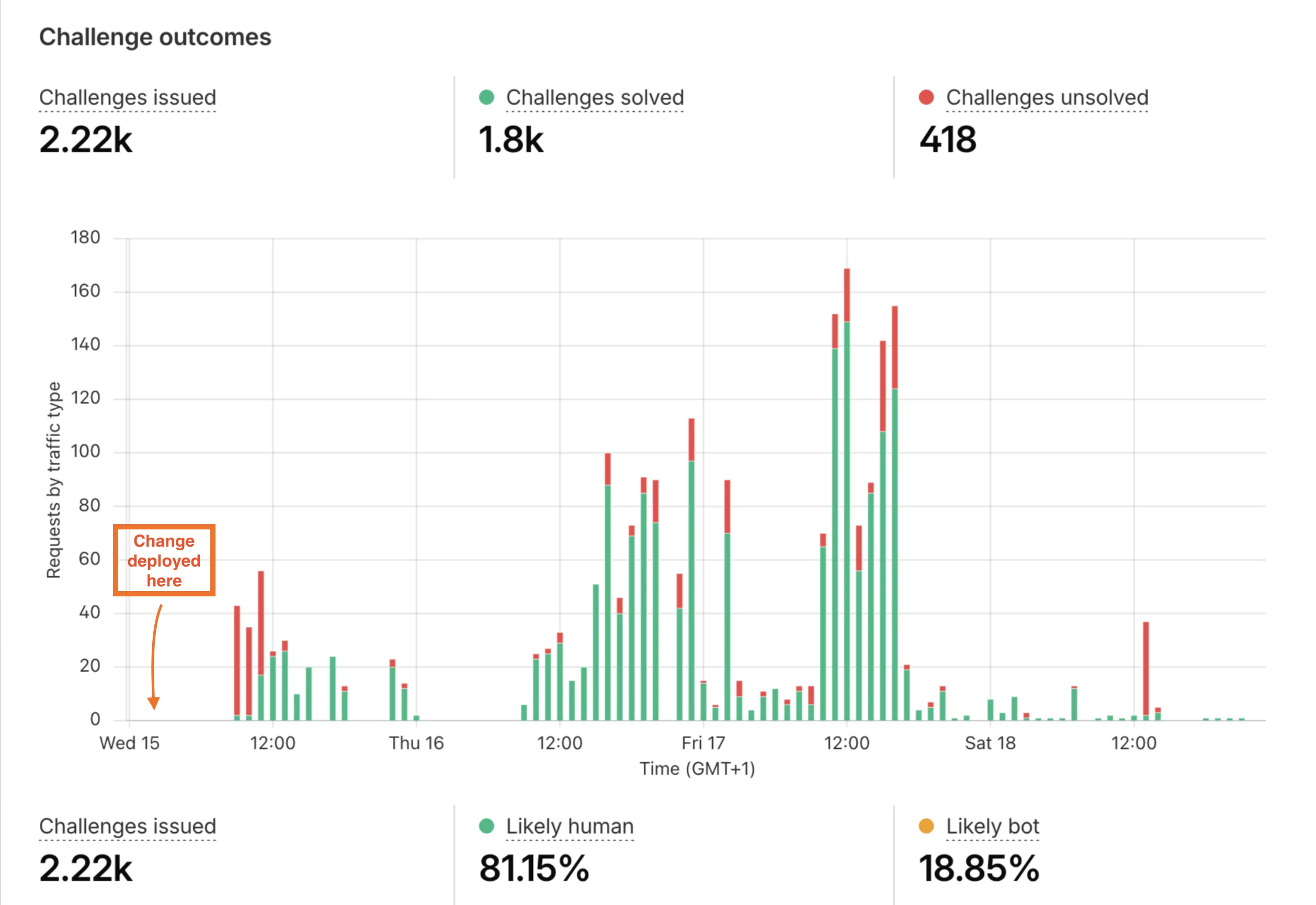
Currently, more than 10% of all commits in the archestra repo are essentially noise (369 of 3521 commits), accounting for more than half of all commits in the last month (303 of 578 commits).
But maybe (probably) the amount of such commits will go down over time, compared to the growing amounts of AI slop
The captcha - maybe.
why not use hooks to automatically reject issue comments / PRs etc. from users that didnt go through onboarding, rather than repurposing GH features that aren't really designed for that use (and are hence in danger of being changed someday)?
> While GitHub reports massive metric growth — a substantial part of which is AI-generated — we as an open source project team have to do the heavy lifting of cleaning up AI slop from our repository and come up with esoteric workarounds to keep the level of legitimacy of our open source audience.
AI generated slop!
not just this issue — but the entire repo.
contributors like @ethanwater, @developerfred, and @Geetk172 — people actively working on bounties — were getting buried.
two identity fields — author and committer — and they can be different people.
metric growth — a substantial part of
Altman after the verdict: "It's okay to steal a charity"
Soon there will be no more AI doomer comments. The bots will take over that job too.
---
I'm working for an open source company, and my God, are 95% of contributions useless.
There are really dumb ones where the bot writes 10 paragraphs about how he implemented the feature, but the entire changeset is adding one line to .gitignore or adding a CLAUDE.md file.
There are even worse ones where the bot submits 3000 lines of code that seemingly works, but you have to spend an hour to figure out why it doesn't work.
The dumb ones are so much better.
(Why there is a race for AI commits/PRs to projects is beyond me though...)
I strongly prefer the git email model, where it’s often trivial to control the flow of changes proposal. GitHub does not have the same wealth of tools and versatility.