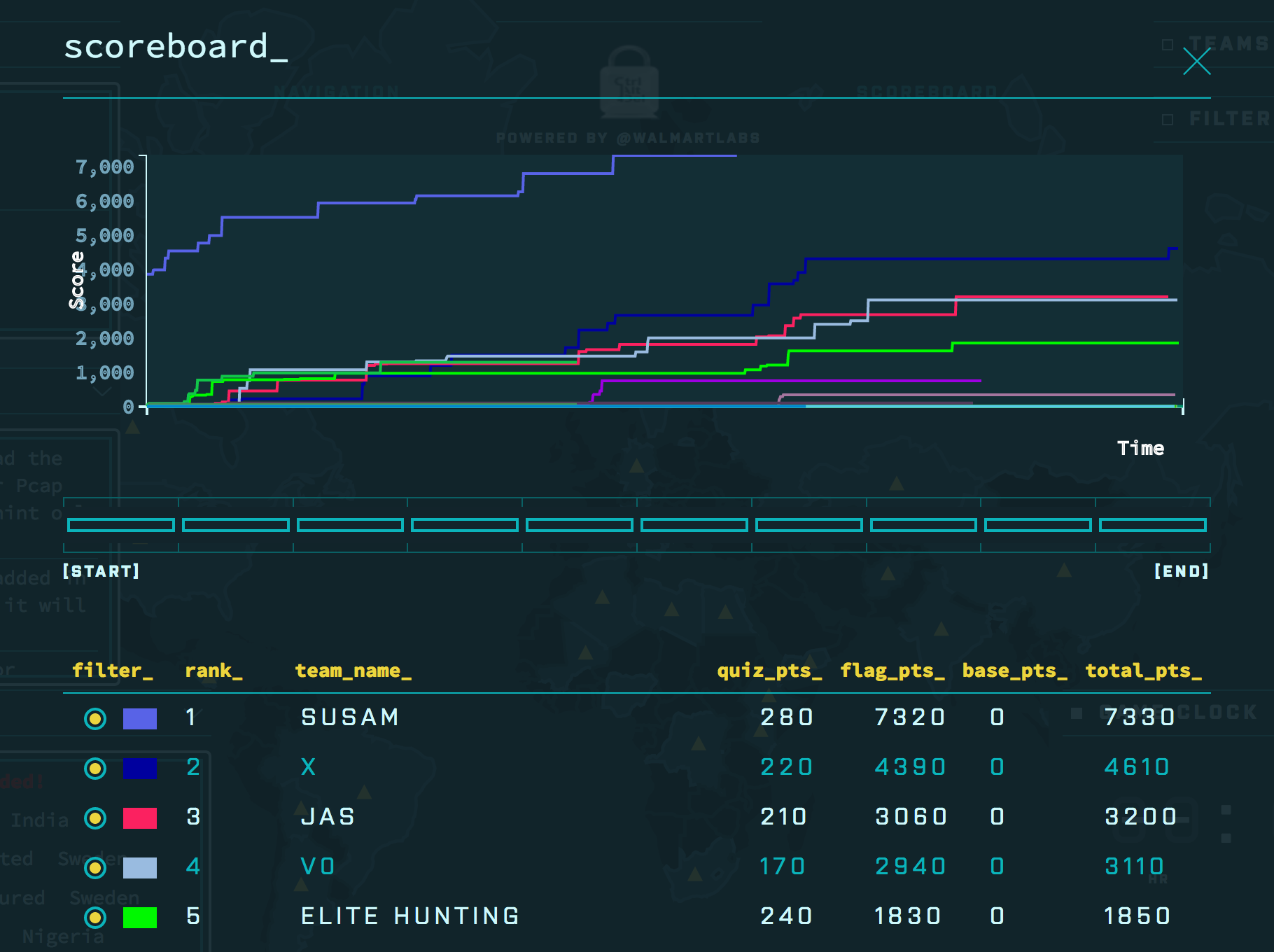
We’ve figured out the human replacement pipeline it seems, but we haven’t figured out the eduction part. LLMs can be wonderful teachers, but the temptation to just tell it ‘do it for me’ is almost impossible to resist.
The solution is just to make CTFs harder, but when do CTFs become too hard? Maybe the problem is that 'hard' CTFs are fundementally too 'simple' where it's just a logic chain and an exhaustive bruteforce towards a solution since there really are limited ways to express a solution in plain sight.
Or maybe human creativity has been exhausted and we're not so limitless as we thought. Only time will tell.
I had another idea spring to mind: we could hide two flags, one that could only be found by ai agents and not humans or tools written by humans.
we have very powerful simulation tools so something like "project a pattern at these angles" wouldn't really work as you could simulate that.
I guess something cool is that we can make simulating the solution very expensive, but in real world it would be free since it's analog... As long as simulations take longer than it takes for a human to find a solution it would be a pretty good way to deal with it. I am sure people smarter than me can come up with something.
Maybe I was too early to dismiss human creativity.
These models seems completely unbeatable only in the ads. There are 100+ times way someone puts Hindi Yoda talk In Morse Code and it goes nuts. The reason they are going to hard for PR Marketing on this is because they know it is a matter of time.
Explicit ELO measurements with some cheating detection. AI assistance wholly banned. As you climb the ELO ladder, detection gets more onerous. At top level during online events, anti cheating teams require the use of both monitoring software and multiple cameras.
Idea is that you can cheat pretty easily at the lowest levels but it gets less easy the higher you go. This allows for better feeding into the truly elite competitions.
I think chess’s very firm stance that AI is never allowed in competition (neither online nor in person), rather than CTF’s acceptance, was the right call.
This stands out to me, and speaks perhaps broader than the article itself? I’m sure this has been in the spotlight before, but well put for many areas I think.
I just did a CTF where I was in the top 10. It was the first CTF I completed and I used AI because the rules permitted it. That said, I couldn’t solve all challenges.
But yes, it was significantly easier now than I last attempted one. Even manually solving with AI assisted assembly interpretation was much easier.
still has no mention of AI, but that will likely change as they increasingly dominate competition.
As I don't know much about the CTF scene, I looked for other takes on this topic.
Here's an article from 2015 about how tool-assistance already changed CTFs:
> Individual skill will undoubtedly be a factor next year. But, I'm left wondering whether next year's DEFCON CTF will tell us anything more than how well-developed each team's tools are (and how well they can interpret the results).
https://fuzyll.com/2015/ctf-is-dead-long-live-ctf/
But there are quite a few recent (2026) articles with the same core message as in the original article, e.g., https://blog.includesecurity.com/2026/04/ctfs-in-the-ai-era/ or https://k3ng.xyz/blog/ctf-is-dead
And here's someone explaining how Claude Max allowed them to win CTFs:
> I had always been interested in CTF as one of the only ways people could compete and show off their skill in coding/problem solving on a global scale. It was just too difficult and didn't make sense for me to learn the fundamentals as an electrical engineer. As time went on, I got better and better, and it was hard to tell whether it was because of experience or if it was because of improvements in AI.
> I accomplished my goals, and for that reason I'm quitting CTF, at least for now. [...] I'd like to think I highlighted the problem before it became a bigger issue. So, how do we fix this? Teams and challenge authors losing motivation is not good. CTF dying is not good. AI bad. Or is it?
https://blog.krauq.com/post/ctf-is-dying-because-of-ai
The only article that saw LLMs as a non-negative force for CTFs was this one. Fittingly, it sounds like LLM output ("Let's be honest", "This is where things get interesting.") and only contains hallucinated references.
On the other hand, CTFs are fundamentally a game and a competition which are supposed to be fun and compare and improve ones skill. So when I let an LLM generate the entire solution for me, what's the point anymore? I did not learn anything. I did not work for that place on the leaderboard, I just copied the solution. And worst of all, I did not have any fun. It's boring.
So how does using AI as a solver not feel like cheating?
It's an incredibly exciting time in security research in my humble old man opinion.
Think the cadence of new exploits is perhaps a good measure of that rather than subjective thoughts by anyone regardless of experience.
It's pretty fun. Or at least it was, back when you had some sense that your competitors were competing on an even playing field and just beat you because they were better than you.
I wouldn't say the name is a "gaming reference", it's just a descriptive name for a game.
Its a war game reference I guess?
>and the old game is not coming back
For many people the CTF scene was already dead in 2021 because it had turned into something unrecognisable.
In reality it’s just different.
"That makes open CTFs pay-to-win. The more tokens you can throw at a competition, the faster you can burn down the board. Specialised cybersecurity models like alias1 by Alias Robotics are becoming less relevant compared to general frontier LLMs. The competition is turning into "who can afford to run enough agents, with enough context, for long enough.""
1) It’s OK to do just about anything to win a CTF, including installing malware on the organisers computers months before the actual event so you’ll have an easy time stealing the flags.
2) It’s not ok to try and win the CTF with a solution the authors did not intend.
Recently the #2 crowd has been winning because the hacking scene has turned corporate and boring. People started to partake in CTFs in the hopes of landing a job(!)
CTFs are indeed ruined for those people, I personally don’t mind.
For the people in group #1 LLMs change little. Attacking the challenges directly was always a last resort.
I never got super into security but it gave me the confidence to play in the same field and lose the stupid aura I had that somehow "rich americans" would be better than me at everything because they had better universities or because of Hollywood or something.
Sad that another cool thing is lost to AI but I guess kids will learn in other ways.
The text itself being exceedingly long for no obvious reason doesn’t help.
And if you think it was too long, what part would you have shortened? I never knew about the scene and found it interesting to read this personal take on it.
The whole point of competitions is to provide a safe environment thanks to a set of rules all participants AGREE on in order to progress together.
If new tools "break" the competition, we change the rules and that's A-OK.
CTF isn't a natural phenomenon, if tools change, rules change, simple.