No, this is a bad solution. If you want a repairable machine, buy one. They exist. Others have already mentioned Framework, but there are other options that aren't that far down the spectrum either.
One of the things macbook users praise the most is "build quality", which often means the solidity of the device, lack of flex, etc. These quality features are, in part, achieved by the same choices that make it hard to repair. Ease of repair and "build quality", are to some degree (although not entirely) tradeoffs against each other.
I say this as a framework owner who would never buy something as irreparable as a macbook. Regulation is not the answer here.
It’s time to accept regulation actually does work when you have a competent government.
This is how you end up turning a chunk of your food supply into fuel to subsidize crops which aren't all that good at being distilled into fuel in the first place...
Elected officials (and some appointed, like SCOTUS) keep changing laws and precedents to allow more and more money in politics. They can't quit all that dark money - without a lot of funding, you don't get elected. Usually the best funded candidate wins.
There was an anonymous oped from a congressman some years back which bemoaned the reality - that 60% of their time was dedicated to meeting with donors for reelection campaigns instead of working on real problems.
If USB C had been so important to me I wouldn't have bought iPhones all those years.
Throughout its life, Lightning suffered from "black pin plague" where when springs in the port wore out, the power pin would start arcing. Now you have a cable with poor connectivity on the power pin, and you use this cable in another Apple device and it starts arcing on that device as well, causing that device to start transmitting this disease. It was a terrible design and USB-C does not have it.
https://ioshacker.com/iphone/why-the-fourth-pin-on-your-ligh...
You didn't say why this is a bad solution. The government mandates that cars get safer every year and fatalities are down 78% from the 1960s. Whenever government regulates things to benefit people, people tend to benefit.
> One of the things macbook users praise the most is "build quality", which often means the solidity of the device, lack of flex, etc.
It seems like the Macbook Neo has a lot of those properties as well for a very inexpensive device that is extremely easy to repair.
Forcing a particular trade-off on everyone is entirely the point. It's the point of car safety, it's also the point of minimum warranties, electrical emission regulations, safety standards, etc.
That "what if" cost is going to be built into the cost of the laptop. Repairability doesn't always keep the cost low. The purchaser will definitely have to foot the cost otherwise it isn't sustainable.
We define the rules of the game and companies that can best implement those rules will succeed. That is capitalism.
It’s easier and more profitable for companies to make a product that catastrophically fails around about when the new model is out. So that’s what they do. Until just now when the EU is reeling them back in line.
You know that safety for pedestrians is also a very tightly regulated car safety category, right? Obviously, there's not much that can be done if you get hit by a car going 70mph, but the fact that most people should survive a 30mph impact with a modern car is mostly thanks to regulations requiring crumple zones specifically designed to protect pedestrians in a collision. And yeah, there are huge trade offs - I imagine people would generally prefer a car that doesn't need incredibly expensive repairs after a minor collision because everything at the front just crumpled, but then they would be guaranteed to cut off legs of any person hit - it's a trade off.
It's slightly worse, slightly more flex, thicker and heavier vs an Air in spite of having a smaller battery and more empty space. It's all trade offs.
If you want repairable, please buy a Framework or Lenovo. Backseat industrial designing through legislation is not the answer.
Again, why not? It's not mandating design, just minimal standards for repairability that should be obvious. If Framework and Lenovo can do it and Apple can do it on a $600 laptop, why can't everyone do it?
> why can't everyone do it
What everyone is missing: Because other manufactures do not have to; the profit margins are too good to give a shit, and they allow some pretty fierce competition within the target demographic:
<soapbox>
Sadly, the general public still just wants the cheapest option to consume their bullshit content, even if it needs to be replaced a year from now after their cat walks on it and causes critical damage.
The MacBook Neo is brilliant in that Apple takes a share of this market with a premium and affordable product that is basically just their previous generation phone, with the expensive bits likely sourced from their exchange program or surplus supply. Products that at some point the same people would've loved to have, but couldn't afford. Now repurposed with a larger screen, sporting the envied Apple logo, at an affordable price, and targeting that same demographic as the hot new thing, just one generation later.
I have a feeling we'll see this pattern continue, and it's genius. Minimizing waste, maximizing profits, and giving the consumers what they want, while maintaining a gap between low-end and high-end -- people that spend $$$$ still want to feel special, of course.
Don't get me wrong, the Neo is great, especially for us hackers, but it is absolutely not meant for us in any way. What is in our favor: it does, at the very least, raise the bar for these other manufactures that product absolute garbage.
</soapbox>
Someone needs to be a reference as to what is feasible in order for a standard to be established. Apple, Framework, and I guess Lenovo are the ones doing this these days. RIP the others.
If anything, the extra material for the case would be the perimeter length times the perimeter wall width times the height.
That's what they did?
Perimeter length = 2*335mm + 2*235mm
Wall height diff = 2mm
Wall width = 1mm
(2*335 + 2*235) * 2mm * 1mm = 2,280 mm^3
On some metrics. On affordability, new cars are considerably more expensive. Whether that's a worthwhile tradeoff is beside the point. The GP's point is that there's no free lunch, and your example doesn't address that.
The fear is that regulations ossify industries and that's why heavily regulated industries like healthcare, education, and transportation have seen basically no innovation in 50 years. If you mandate that all electronic devices must have USB-C cables, how can anyone invent something better than a USB-C cable? And for what, so people don't have to have multiple cables? That's not even in the top 100 problems that a government body as large as the EU should be concerned about.
> Whenever government regulates things to benefit people, people tend to benefit.
Healthcare, education, transportation, and housing would all be counterexamples depending on how you want to frame "benefit."
> It seems like the Macbook Neo has a lot of those properties as well for a very inexpensive device that is extremely easy to repair.
This is counter to your point, no one regulated that Apple make the MacBook Neo easy to repair. Apple is incentivized to follow the market.
That already happened with Micro USB. The EU initially mandated that manufacturers agree on a standard socket, because the absolute zoo of charging ports back then was counter-productive and only generated e-waste. Ultimately they agreed to use Micro USB, but obviously that's not what's used today.
These regulations are not just dumped on the manufacturers - there's a period of consultation and a grace period to implement them. If something actually better came up, you'd eventually see it mandated.
Not to mention manuals/instructions. Regulation discussed here is about these too.
Also as consumer, I would argue the marketing done by apple is just scammy. They keep praising how much carbon saved or sustainable new machines are. But in fact, a minor issue becomes a massive electronic dump.
I also like Macs, I own several of them. Repaired a few. Mostly replacing batteries and keyboards. For example 2014 Macbook Air had a normal battery, no sticky business. Meanwhile 2020-2025 MacBook Air has sticky stuff, making repairs harder.
The best part is, 2014 macbook air has 54 Watt/hr battery, 2020-2025 models are 53 watts/hour. The lasting battery gains are coming from Apple silicon efficiency as well as modern BMS.
Simply put, regulation is the answer. Apple makes it difficult because they can, and also because it creates revenue. Of repairability was the source of income, you would see 10/10 repairable macbooks with no (significant) tradeoffs. (ie. it could be a few grams heavier for added screws)
But that means Windows or Linux, not macOS. There's serious trade-offs that you're dismissing because you personally don't need macOS, but that's not the case for everyone.
#hn-bingo
I could go on for hours. It’s a buggy mess these days and I miss Lion and Snow Leopard desperately.
And yes, Tahoe is shiny hot garbage piled on top of so much broken software, just to push an effect trick. I'm not sure how I feel developing with SwiftUI when Apple clearly can't make it work for their own apps.
Lol what.
Nothing about apple design is a sacrifice to repairability. The only reason they make it hard to repair is because when your Mac breaks, you go buy another one. Can't afford it? Then you are not "classy" enough to own a Mac.
I swear, there must be some epidemic where Mac fans are losing their marbles even more so today.
Sure, but Framework doesn't run the OS I want, doesn't run the chip I want, doesn't quite meet the form factor I want. It's not an effective market because I can't pick and choose.
The problem here is vertical integration. If you want anything from Apple you have to buy everything from Apple.
And the answer to that is: regulation.
You’re actually saying: “I want Apple’s software, and I want certain chips, and I want a certain form factor. And if Apple won’t build what I want, I will pass a law to make them build it for me!”
Come on man. You will make tradeoffs either way. The answer isn’t: force a company to build what I want them to build.
The chips argument is contrived, the OS argument less so, but it's all just network effects at some level, and it's important for competition and effective markets that we prevent the largest networks from locking people in and forcing them to make a lot of other unrelated decisions.
Apple can keep their unrepairable macbook. Butc should not be marketed as "green product". It should pay extra as ICE cars, be excluded from educational markets, public institutions etc...
I came to terms with it, mostly. I buy AppleCare. I’ve had my screen on my M1 Mac replaced twice.
I agree with the sentiment tho. I had the rubber foot come off the bottom of a MacBook Pro, Apple wanted $350 to replace that $1 part. I found other solutions
Yea exactly. This is why I switched from Apple to Framework.
I like MacOS better than Linux, but it was worth the hardware trade off for me.
I'm sorry but your argument conflicts with reality at this point: regulation works better for expectations on hardware.
But vendor lockin mandated by management is way more powerful than powers of engineers, apple ain't immune to this since its accountants and lawyers running the company.
I'll give it a benefit of a doubt and won't claim its a PR comment and just a uncritical fanboy one, but its pretty close.
The board is riveted in, but there are enough screws to hold the replacement in place. Removing the board is a shockingly violent process, but it worked for me.
Keyboard: https://www.amazon.com/dp/B0CQBVMM3X (price has gone up).
Video of rivets breaking: https://i.tonybox.net/9f2083b218d5.mp4 (you can see I missed a screw and slightly cut my hand here too).
This video is a good overview: https://www.youtube.com/watch?v=pGmMpEEP5ls
It might still be worth it for those who hugely value open source and repairability but as for value I think its save to say that Apple is currently in a league of their own. Even if the altest os update is a flop.
Also, the Macbook has improved repairability. While its still not great its better than a few years ago.
Is it though? I'd agree the hardware is less capable but if your Macbook anything is really just one 'top case' repair away from being more expensive. RAM failure is 'motherboard replace', the display? it is similarly expensive to replace.
So I would agree that it is more expensive to purchase a Framework laptop than a Macbook laptop, but also feel it is more expensive to own a Macbook laptop than a Framework laptop. Also I just replaced the screen on my FW13 not because it was broken but because they have one with 4x the pixels on it now. That's not something I could have done with the Macbook.
If'd rather not take a low risk of a big repair/replacement bill and you don't mind helping Big Fruit make a bit more of a profit, you can pay them $50-150/year (depending on model) to take that risk. Multiply that by the number of years you expect to own the device to come up with a "real" cost including repairs/replacements.
and
> ... you can pay them $50-150/year (depending on model) to take that risk.
These things are related, Apple knows what the failure rate in the field for their hardware is, and they "price in" that failure rate into their AppleCare costs. On my iPad pro, that's $90/year.
That said, it is entirely a 'bet' on your part as to whether or not you're in a position to cover costs of repair/replacement in the event of damage. That depends on a lots of factors and includes how much you can tolerate not having the equipment for a while, Etc.
It's not just repairs, to upgrade a Mac you have to throw away all that perfectly working hardware just to get a new mainboard.
Or you can spend 50 euros more and get an entire new laptop that is not only much more powerful than your old framework but is almost as repairable: the neo.
At some point your argument begins to work against you, you should just have talked about the keyword repair being cheap. Not how you can get a new motherboard for "only" 530 euros.
That was my goal buying a Framework… to get to refresh hardware regularly as better stuff came out rather than waiting 10 years to buy a new laptop.
Will it work that way in reality? No idea, but I thought it was at least interesting enough to take a gamble.
I can drop it down to 1050E without the ram if i take ram from my older laptop.
Upgrading or fixing this is very easy. RAM/SSD i can take with me over multiple generations of a laptop.
I can't do that on a macbook, if anything breaks there (screen, ssd, ram, keyboard, battery bulging...) I might as well buy another.
Then there's the issue of macos... you're stuck with it, if you don't like it, it's a dealbreaker.
There's also issue of waste... I can make a router/firewall from an old framework mobo. I can't do that with a macbook.
I don't value open source or repairability that much. I just want to develop server software, and on macOS I always end up with the same janky VM-based workflow I suffer through on Windows. On the desktop I have no reason to waste my time with macOS, and I don't use a laptop often enough to justify reincorporating macOS into my life.
I got to experience Apple's customer hostile practices.
Many years ago l decided never to buy an Apple product again.
The future is now, old man.
A quick search shows that it's ~$500-$600 to fix the screen if it does break; I didn't bother looking up the keyboard but I'd assume it's much, much less.
So basically, on the off chance that your MacBook does shit the bed in the most expensive way, you save ~$150 or so? But in the almost-certain case that your Macbook is fine, you're down $450?
That is not a great deal at all, haha!
For accessories I don’t see the point, those are effectively disposable wear items.
Ironically a large part of deciding to migrate to an iPhone from android was final frustrations with even Google purchased devices under warranty coupled with hardware quality requiring repairs. My wife’s experience with AppleCare won me over.
If nothing else it’s first party insurance. I will never purchase device insurance offered via a third party ever again. Either its first party so I’m dealing with the place I bought it or nothing at all.
Unless for some reason you know you will be breaking your device much more than the average person.
Insurance is for things that are unlikely to ever happen but would financially ruin you if they did.
Which doesn’t tell you a lot because they are pretty bad, too. Being better doesn’t mean it’s a good offer.
I had this problem in my Framework. I fixed it by... holding the laptop upside down and mashing the offending key for several minutes. Didn't work immediately, but now you wouldn't tell that it was ever broken. I've managed to panic-order (~€80) another keyboard though, so now I have a spare.
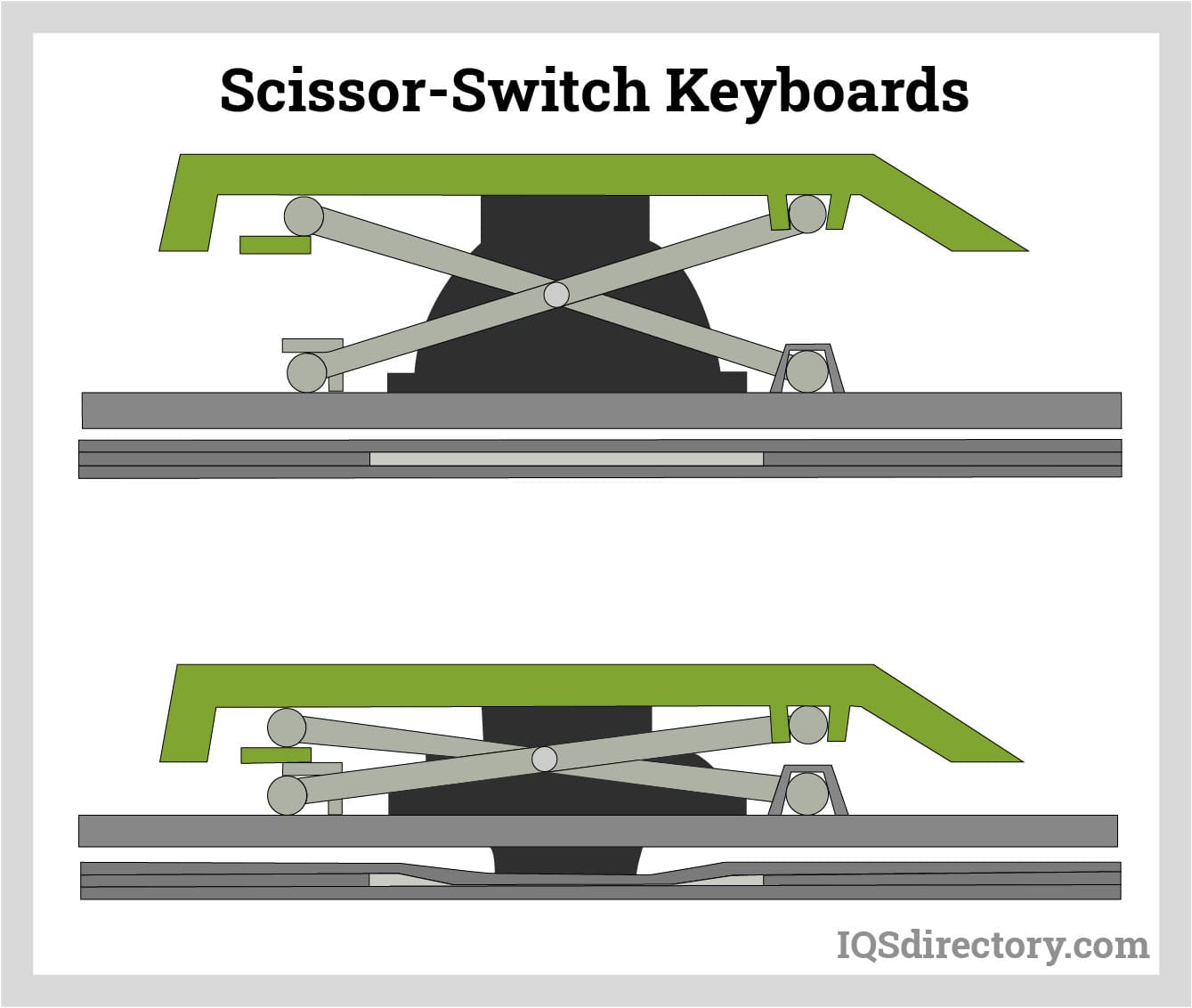
For context a laptop keyboard is build like this:
https://www.iqsdirectory.com/articles/membrane-switch/membra...
This problem is caused by the layers sticking together. In the case of the Framework 16 the "d" key sits on top of a foam pad which in turn is placed on top of a heat pipe, so this area gets particularly hot under load. The layers are often made from PET, which starts softening anywhere in the range of 65-87C - so easily within range of a laptop heat pipe.
By mashing the key I was hoping to detach the layers and apparently it worked.
That being said for gaming I use an external keyboard now, because the one built-in is made by an external supplier and I don't think they'll start using a more heat-resistant material anytime soon.
Apple has been doing this since forever and people keep buying its hardware.
You cannot replace a screen even if you buy a genuine one because Apple locks hardware ID via firmware, so only they can replace that!
Apple own customer is the reason why Apple does what it does best: You rent your hardware, you don't and never will own an Apple hardware!!
Unfortunately, AFAICT, these repairability issues are largely due to the move to thinner and lighter laptops. Replacing my MILs Microsoft Surface tablet was a pain in the butt. Had to cut the case open and tape it back together. But that thing was insanely small and light. My MIL liked it because she has a lot of trouble carrying anything very heavy.
Since then, I always use keyboard skins.
That’s all it took with my Framework laptop, and I’m very grateful for it. I was in a good place financially when I got it, but now I’m not. I feel a strong sense of relief that if an accident occurs and I need a repair, it won’t set me back too much.
https://www.ifixit.com/products/macbook-pro-14-a2442-a2779-a...
> The aluminum upper case and installation screws are not included.
I would assume you likely need those too, as the article also mentions.
(first video I found on a search)
https://www.youtube.com/shorts/WYT7YIh00Xk
I know in the Butterfly days those keys would break when you removed them.
Fought with them for weeks. Escalated. They lied and said they were doing a no cost replacement. Had to fight the charge. Then they lost my return.
So much so that I’ve started switching to Linux and de-googled phone. (Switching off of iPhone just to go to google seems like the greater of evils)
The non Apple ecosystem is much more mature than last I checked but still irritating. De googling was my biggest challenge. Getting a viable replacement for Mac OS was the easy part.
And what do you mean they lost your return? Like it got delivered and then it was lost? Surely they gave you a working unit at that point?
I've had a bunch of experiences with Apple repair and always always been fast and great. I mean, they're definitely the best service of literally any corporation I've dealt with, by far. Sometimes you get unlucky I guess with a particular rep or something hard to reproduce, but it sounds like you got extremely unlucky? It definitely isn't representative in my experience, not even close.
I too looked at Framework and like the idea, unfortunately in my case the supply chain was too slow to be tolerable, before even considering the price-performance ratio.
I strongly support the idea that the EU should force vendors to make consumer device repairs cost-effective and available or open source and expose their component interfaces in exchange for the right to sell in Europe. After all, the EU brought us USB-C, so we know regulatory pressure works. Thanks, EU!
My previous MacBook Pro keyboard was a butterfly keyboard and also broke, but got replaced for free. I don’t feel I am a heavy user as the MacBook Pro is mostly connected to an external keyboard and am pretty annoyed by apples keyboard quality (based on my sample size of 2).
I still just ordered a MacMini M4 (I know the M5 is coming but we've got something like 20 computers at home, including servers, NUCs, laptops, desktop, etc. so I may not mind buying a M5).
Still... Apple, from the bottom of my heart: FUCK YOU.
if you thing government regulation will help you you are lying to yourself that's not how the world works
However; this particular laptop I am using right now is a used Dell and runs on linux.
My main computer, I built by myself.
But yes I use AWS, google etc. I just try to use less :)
Anyway, simply noting the impacts of their decisions doesn't seem deserving of an "ism"—surely there should be a normative component to make this a proper ideology—I haven't told you what to do.
Look my point is that commodity fetishization is real, it protects our entire economy, and once you look deeper/underneath the hood/covers, many reasonable prices become violations of our personal values. With such insanely complex and largely offshore supply chains, laptops and phones (and servers etc) become very problematic devices that we nonetheless rely on.
Much as a laptop would suit me, I opted for a mini and a large display.
Come keyboard time, I was ready to spend $$$$$ for an Apple keyboard, but the only backlit ones come on laptops. I'm using a Logitech now, with the option of charging it all the time, else the lights dim themselves to conserve battery.
Yes, I was 19 once. And three times after that. But there we go again, stuff designed for 19 year-olds.
How about this? (image at imgbb.com)
I'm happy with the downvotes if they're for the JK laptop keyboard mashup.
Otherwise, pretty much as others have posted. Peripherals otta be peripheral, not welded in place.
I worked around the dilemma.
Twice.
An iPad pro has a keyboard, trackpad and BT mouse.
And I have a doorstop iMac because of a somehow dead display. (repair $$$$$ )
I very much favor separate everything.
Peace.
[0] https://www.ifixit.com/News/116152/macbook-neo-is-the-most-r...
The author doesn't mention ever contacting Apple to get his keyboard fixed. Maybe he could have gotten pleasantly surprised?
"Here’s hoping governments regulate laptop manufacturers to actually make repairable machines in the future."
However, this quote is not a surprise at all, and goes perfectly in line with Swedish philosophy. And the philosophy of this message board as well.
Anyway, did he contact Apple to see if they could help him out? Because sometimes Apple fixes these things for free.
I've had very good and very bad experiences with Apple support for hardware failures. It's worth trying to contact them, instead of calling for more government regulation.
Not great support on Apples side there.
Hence my comment about defeatism. Sometimes you have to push a little bit before giving up and crying for the government to come help you. Big companies aren't unbending stone statues.
I'm now on a Framework 13, and it's been pretty fun so far.