The one case where they hit a child, it was because the child jumped in front of the car. And they showed that they hit the child at a lower speed than a human would have because of the reaction time.
I would rather be in an area where only Waymo's are allowed than an area where they are banned.
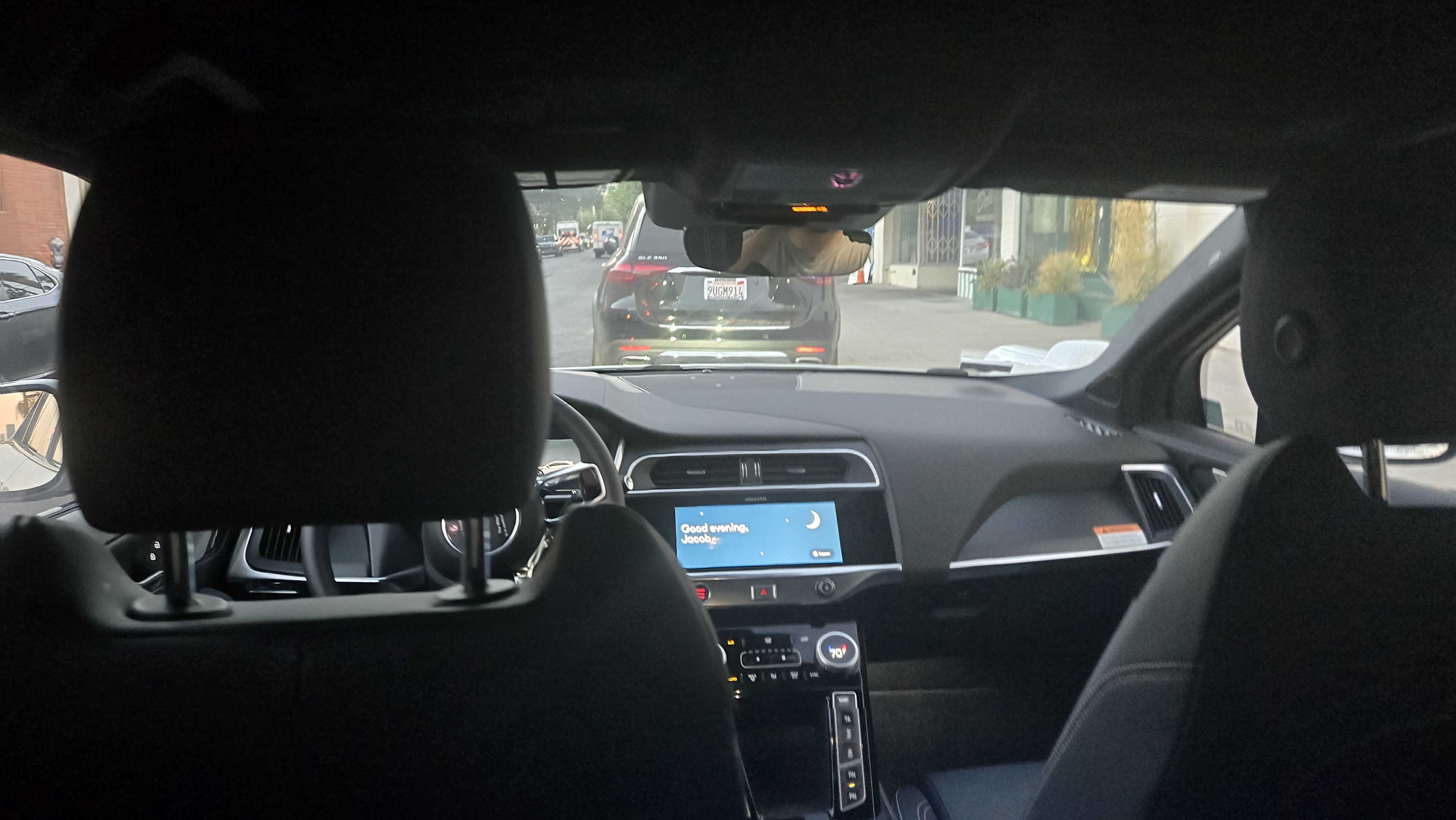
When I visited LA, I rode in a Waymo going the speed limit in the right lane on a very busy street. The Waymo approached an intersection where it had the right of way, when suddenly a car ignored its stop sign and drove into the road.
In less than a second, the Waymo moved into the left lane and kept going. I didn't even realize what was happening until after it was over.
Most human drivers would've t-boned the car at 50+ km/h. Maybe they would've braked and reduced the impact, which would be the right move. A human swerving probably would've overshot into oncoming traffic. Only a robot could've safely swerved into another lane and avoid the crash entirely.
Unfortunately, the Waymo only supported Spotify and did not work with my YouTube Music subscription, so I was listening to an advertisement at the time of my near-death experience. 4.5 stars overall.
This detail sent me, it's crazy that we can pay $25 to have a life saving robot take us across the city yet Spotify is going to blast ads at us the whole time for the sake of making an extra $0.18 (yes that's the actual number) per hour of listening time.
I still loathe ads though.
Oh, the self driving car business will get there, believe me. This is just the first iteration. Designed to get everybody on board with the idea.
And Google Pay, imagine my surprise back in 2021 when I signed up for Waymo and realized I had to manually type in my credit card. No Google Pay??? C'mon y'all, you're Alphabet!
Do you drive a lot? I feel like humans take evasive actions like this all the time.
You'll probably never forget that advertisement, which is an exciting business opportunity for Waymo.
They could partner with Spotify and other media content partners so that the Waymo can generate an adrenaline-rush near crash experience when a premium advertiser's ad is playing. /s (hopefully)
The Waymo didn't have the stop sign, the other driver did, at a three way intersection.
The other driver decided to suddenly enter the intersection, when the Waymo was like 5-10 meters away. This was after having stopped at the stop sign.
Either they weren't looking or intentionally trying to cause an accident. Swerving prevented the Waymo from crashing at 40 km/h into the driver's door.
Even if you're not a panicky human but a optimally regulated control system?
I'd like to introduce you to what autonomous cars were already able to do in 2018: https://www.youtube.com/watch?v=khX0UCqcR3M
Also, in the case of someone running a stop sign, it is far from a sure bet they are going to hit their brakes at all, so by swerving you increase the odds that you will still hit them, but now it will be while you have exhausted all your adhesion on lateral control. So now instead of a front end collision with all the benefits of airbags and crumple zones, you are at a significant risk of rolling the car or spinning off the road and hitting something immovable with a part of your car lacking crumple zones.
Nobody killed, according to the news, but several taken to hospital in critical condition.
Oh, I say unscathed but our tyre exploded the next day, as apparently we caught a fragment, and again, that’s not a “slam on the brakes” moment, but rather “trundle to a stop on the shoulder and walk to the conveniently nearby tyre shop”.
I've ridden in Waymos. They don't exactly slap on the blinker and move at the limit of traction like someone about to miss their exit. If cut off they absolutely will go full brake rather than perform any sort of spicy lane change or turn.
Essentially, a meat driver was waiting at a stop sign to make a turn onto the main road. I was in a Waymo driving on the main road and did not have a stop sign.
When we were 10 meters away from the intersection, the meat driver suddenly started to enter the intersection. I have no idea why.
Full brake would've hit the other car in the driver's side door at 40 km/h.
> under-playing how decent the average human is.
I got to SMFC in CSGO which means I'm in the top 3% of players in clicking on heads within 500 ms of them appearing on my screen. I have never reacted as fast as that Waymo did.
My experience is that for a human driver to react quickly in city driving conditions, style and prep are more important than reaction time: in the case you describe (entering an intersection with another car waiting on a stop sign perpendicular to your path), I'd have my foot hanging over the brake and off the gas pedal — this has helped me avoid hitting many other cars with inattentive/distracted/bad drivers, and even pedestrians running over the road or a red light on a crosswalk. When you are prepared and looking, you slam the brakes much faster!
So I'm not opposing the ideas of rear cameras, but I'm totally against tall cars, because you cannot see kids IN FRONT either now.
My reading of all the human crash stats has been that majority of them happen when human drivers are impaired (drunk, drugged or too tired): as this is something we could (in theory, at least) control, I'd like to see and compare with stats for non-impaired human drivers too.
Then, I'd like to see it compared to attentive, non-distracted drivers too (but we won't have crash data for this, as they would avoid most potential crashes).
Note that I am only talking things under every human driver's control, and not things like skill, reaction time, etc.
Also, modern cars (like Waymos) will have a much lower braking distance compared to "average": eg. my Volvo has 35m braking distance from 100km/h or 62mph compared to 50m (45% more) listed as average (excluding reaction distance) — so from 50km/h, it should be around 8m!
The median one might be better, but does it even matter? The average driver is still wreaking havoc.
> ...
> Unfortunately, the Waymo only supported Spotify and did not work with my YouTube Music subscription, so I was listening to an advertisement at the time of my near-death experience. 4.5 stars overall.
What?! Is this a generated comment?
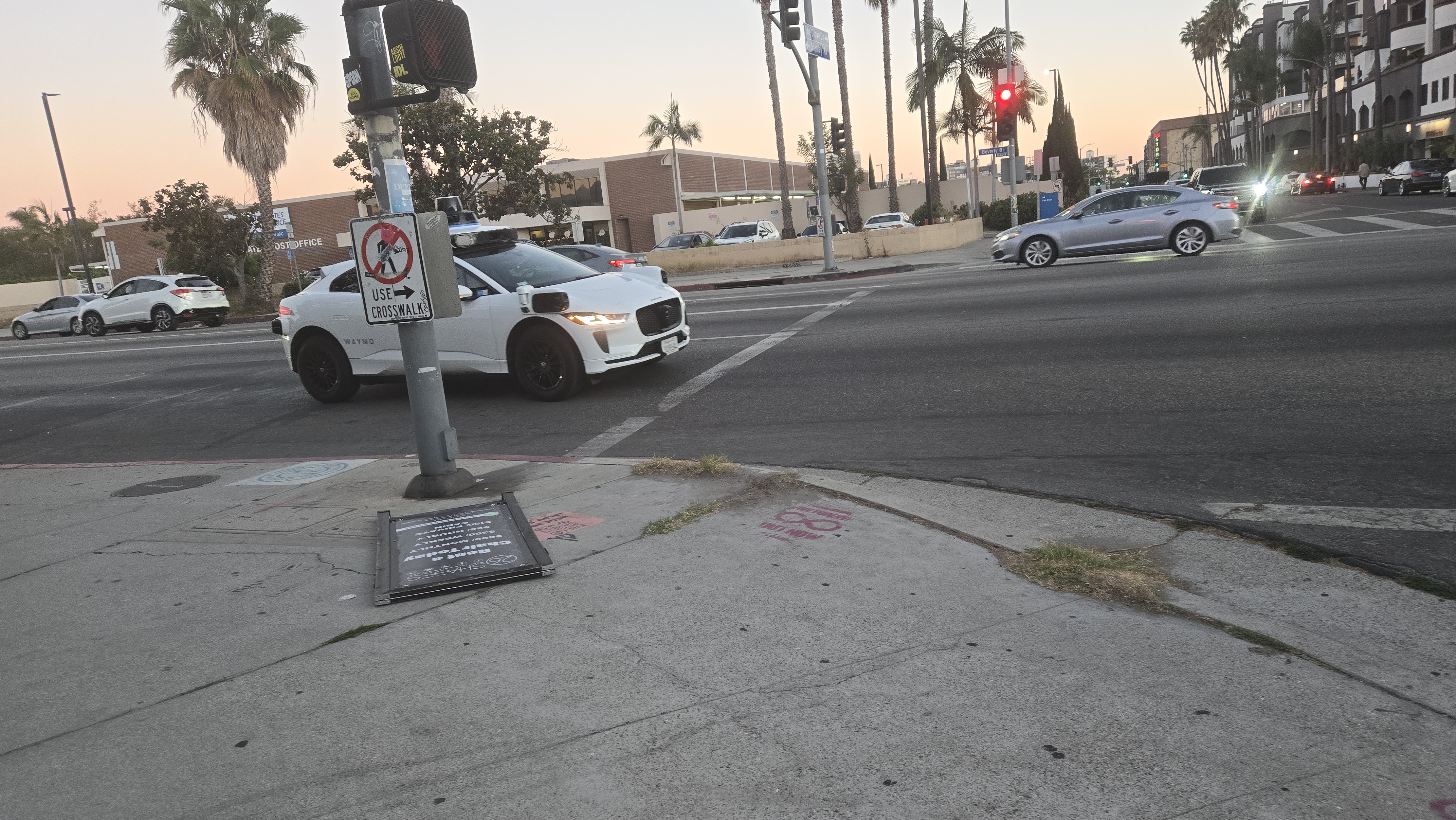
https://files.catbox.moe/jdjwy5.jpg
https://files.catbox.moe/mh4ivw.jpg
I have included EXIF data in an attempt to prove this really happened and I'm not an AI commenting bot.
There's apparently a quality gap between locations. The pre-Waymo one was from Erewhon Grove and was freshly blended. Erewhon Beverly Hills on Rodeo Drive premade a bunch of them and left them lying around for a while before selling.
My brother's theory is that Erewhon Grove customers are people who legitimately wanted a smoothie and Erewhon Beverly Hills customers just want photos with the smoothie since it was very popular on Instagram at the time.
Most surprising fact was despite being a licensed product, it was better than the best non-licensed smoothie (coconut cloud).
Licensing deals should make the product worse because the royalties cut into the product margin. The company cuts costs or doesn't take creative risks as a result. But somehow Erewhon resisted these pressures when designing the Hailey Bieber smoothie. We had a discussion about why that was the case but couldn't come up with an answer.
They used to have a “Dr. Paul's Raw Animal-Based Smoothie” that I looooved, but unfortunately they stopped making it. Still sad about that one :(
I’m way less confident of self driving in the hands of the general public when differed maintenance often results in people and even companies driving with squealing breaks and balding tires etc.
Self-driving vehicles need aircraft-type maintenance. Yet there's nothing like the FAA to enforce a minimum equipment list, maintenance intervals, or signoffs by approved mechanics.
Is there a scratch or chip in the scanner dome? Are both the primary and backup steering actuators working? Is there any damage to the vehicle fender sensors? Is dispatch allowed with some redundant components not working? If so, for how long?
Here's the FAA's Minimum Equipment List for single-engine aircraft.[1] For each item, you can see if it has to be working to take off, and, if not, how long is allowed to fix it. There's nothing like that for self-driving land vehicles.
What's the fleet going to look like at 8 years of wear and tear?
[1] https://www.faa.gov/sites/faa.gov/files/MMEL_SE_Rev_2_Draft....
That's a hyperbolic false equivalence.
Aircraft typically carry hundreds of people and can crash to the ground. As long as a self-driving car can detect when it is degraded, it can just stop with the blinkers on. Usually with 0 - 2 people inside.
Which means the software can safely assume the vehicle will behave within a relatively narrow operating range.
And maybe the software can be designed to be coupled to a vehicle dynamics model that can be updated.
10 years down the line, they won't have that risk.
Overall I feel safer in a Waymo than a rideshare now and I only spent a few days being able to use Waymo...
There are also new risks that weren't possible before. A software error can send you into oncoming traffic. Hackers can gain control of your vehicle either directly/remotely or by cleverly designed signage placed on the roadside. A disgruntled waymo contractor in the Philippines can remote drive you into a crowd of people. A flashing stoplight can leave you stranded at an intersection. The car may not see or react appropriately any number of uncommon hazards that human drivers would recognize and avoid. Only a relatively small number of these cars have been on the road, in limited conditions, and only for a small number years. There will be failures and risks we haven't even imagined yet.
One of these sets of risk is mostly theoretical (aside from the large scale stoplight outage), one of them is happening often enough that anyone who takes rideshare repeatedly will have a story.
If we limit ourselves to risks that have actually manifested, not hypothetical risks, I'd rather risk getting stuck at an intersection if there is a city wide power outage than deal with the weird conversations I've had on rideshares (not even counting the countless drivers who demonstrated that it is possible to drive a car without crashing for the duration of one rideshare ride without taking your eyes off the phone for more than a few seconds at a time).
They cannot. The remote drivers for Waymo offer "nudges" to the robot driver, but they cannot do full remote control.
They can effectively mark a dot in the middle of a crowd of people on their tablet and say "Your best course of action is to drive here", and the waymo very well might decide to try and follow that suggestion, but they cannot override Waymo's brakes nor coded-in "do not hit humans" mandate, and the waymo would stop before hitting anyone.
> Only a relatively small number of these cars have been on the road, in limited conditions, and only for a small number years.
The average uber driver has driven fewer miles on the road than Waymo's software, and hasn't seen all the conditions either. Most uber drivers have cumulatively like 5-20 years driving experience in the city they're driving in.
Waymo has racked up waaaay more miles than the average single human ever gets, and unlike humans, all the Waymos benefit from improvements to the software.
> There will be failures and risks we haven't even imagined yet.
This is pointless fearmongering. Like, ketchup could cause cancer, but we have no meaningful evidence in that direction, so saying "ketchup has unknown risks we haven't imagined yet" is silly.
We know now that waymo is statistically safer than human drivers, I personally know that I haven't had a waymo driver make me feel unsafe yet, but uber drivers often did, so you know, waymo seems to have some pretty nice improvements already.
I'll wait for actual evidence of these "unimaginable risks and failures" before I evaluate them. At this point, it would have to be a pretty bad failure to change the math though.
If your kids never leave the house, something bad definitely happens to them, they stay kids.
I enjoy the challenge of finding creative ways to guide the discussion and understand their headspace for a little while. I am not even trying to control the level of weirdness, but just keep them talking and comfortable.
Unfortunately, most of the time they're not even weird people and it was just a weird first impression. They vent for like 3 minutes and then it gets boring again.
You're absolutely right!
Was this the case that was featured on here a few months ago? Where they voluntarily "disclosed" it? I seem to remember noticing at the time that they never said this was the only time they hit a child/someone. Which made me wonder how representative this case was. I might be mis-remembering though.
If only Waymo's were on the road I wouldn't worry about bike path dividers at all.
I sometimes pace them to act as a moving shield.
Nothing else comes close, not even eye contact and being waved on by a human. The other autonomous cars that have been introduced are at least just as scary to be around as people.
At least with Waymo, it's much less frequent.
Sometimes that person then counter-sues the manufacturer of the equipment if they think it was faulty. I image that would also happen here if there were personal ownership of self driving cars.
In Serbia, on top of get-out-of-my-way, it's also used to signal go-ahead, but also "police with speed radars ahead" to incoming traffic.
It's not enough so they use heavy reinforcement learning etc. but it's still a huge foundation to build on.
It's likely manually programmed not to (incorrectly) turn the wheel to the left while stopped and waiting for an opportunity to turn. If you get rear-ended, you'll end up in the lane of oncoming traffic. It's certainly programmed to use its turn signals to indicate when it is going to turn. But after driving around thousands of cars without turn signals on but with their wheels pointed left, it "knows" to predict that they're about to turn, and might immitate humans by anticipating that action and moving to pass the stopped car on the right.
I'm both surprised and not surprised that people do this. You'll hit the divider.
The car saw this dude coming from way down the street, flying, and was like “yeah, better stop.” Probably saved the biker from serious injury, or worse. I wouldn't have seen him if I was driving.
Let's take a simplistic model of accidents: that the average driver is at fault in an accident 50% of the time. So a perfect driver would only halve the number of accidents -- they only eliminate the accidents where they would otherwise have been at fault.
But Waymo's numbers are better than the "perfect" driver above. How is that possible? Because in most accidents the blame is not split 0%/100%. You can avoid a lot of accidents with defensive and safe driving.
But individual driving - you can eliminate all those factors assuming you're a healthy, expericed driver with a new car. Nothing against self driving in principle but the failure cases I've seen look so bizarre - I'm way more comfortable with my limitations.
More than 1/2 of roadway fatalities involve alcohol or drugs. An oversized fraction of fatalities are represented by young men under 24. 1/6 of all fatalities are motorcycles. 1/6 of all fatalities are pedestrians being struck by a vehicle.
I'm sure if I had just started walking across the crossing it would have reacted perfectly, but I wasn't willing - based on the lack of observable "I have noticed you" cues - to test that theory.
There was a huge fight over it, car drivers in those cities were mad. Plenty of politicians opposed it.
One year later stats were super clear: streets got way safer and the number of fatal accidents dropped to near 0. Time to traverse cities didn't change much, as it was already limited mostly by traffic and lights.
* Unless we're talking about removing a speed limit altogether and regulating unsafe driving using other criteria.
Humans with adequate following distance in the entire lane can probably manage 10 mph delta. I routinely travel dozens of miles very safely at ~80 with the flow of traffic (including the cops), and been stressed out at 55 in the carpool lane through stop and go traffic in the right-hand lanes due to on ramps/offramps.
I think 75 is memorable and roughly in the region where the tradeoff between increased kinetic energy and decreased time to arrival per additional unit of velocity becomes untenable.
Sounds like a warning page out of the back of a 94 Geo Metro owner's manual.
Cops won't pull you over or write tickets if you're not at least 15 mph over, we basically don't have speed cameras, everyone's trying to win the rat race and dehumanizing other cars around them, and it's not considered morally wrong (by most) to break that specific part of the law.
So a single vehicle obeying the law will quickly get a long line of tailgaters and tailgaters of tailgaters trying to "push" the vehicle to go faster.
They can suck it, I'm not late or in a hurry, and my ancient truck, steel bumper, and class 5 receiver hitch will not be badly harmed by your plastic grille. I get better gas mileage and have a longer stopping distance when I drive the limit, and I don't care if others are honking or riding my ass because they think I should drive faster.
I've been rear-ended in my truck, and the receiver punched a nice hole right through the radiator of the guy who hit me. Definitely fucked his car up way more than it did my truck ... except man, that is definitely one of the hardest impacts I've ever felt in my body. I now appreciate how hard the head rests really are, despite looking a little soft. I think I'd rather have crumpled crumple zones and a new truck next time.
The speed limit itself is a separate convention and regulation. In some places you can be cited for obstructing traffic by going the speed limit in the passing lane if you are matching the speed of cars to your right, effectively blocking the road.
It's not just customary in many (most?) states, it's the law. People who sit in the left lane are the problem.
A custom that (where I live) is becoming more honored in the breach than the observance. It makes driving very much more dangerous.
In Britain they have a sardonic nickname for people who do this: CLARAs. "Centre Lane Residency Association".
I think this undersells it a little. It does not just impede faster traffic, when the lanes are pacing each other it makes navigating harder -- simply switching lanes is more difficult. The highway moves so much more efficiently with a small but steady difference in speed between each lane.
"Only 46.5 percent of U.S. drivers consider going more than 15 miles per hour over the speed limit on the freeway to be "extremely" or "very" dangerous — with 40.6 percent openly admitting to doing it at least "a few times" in the last 30 days" [1].
[1] https://usa.streetsblog.org/2023/11/30/why-so-many-u-s-drive...
Most Americans ignore speed limits. This stems from it being socially and legally problematic to permanently revoke our driver’s licenses. We should raise a lot of limits. But many others are fine and still sped through.
But there are also people who drive in the left lane, who will tailgate you at 1 or 2 meters because you're doing 130 km/h. These people are idiots, but you get these sorts of people everywhere.
On American freeways, you don't have a choice, every lane is doing about 10 mph over the limit (or in LA way under) and it is disruptive or dangerous not to. These freeways tend to be running at full capacity so it actually makes sense since it improves capacity.
For a more ecologically conscious alternative, I recommend carrying a handful of sparkplugs.
Crazy thought, I know.
We don't even fully grade separate rail based murder machines from tire based murder machines.
As an outsider and on a more serious note, there's just too much money in cars and car-centric infrastructure. The whole country would need to be rebuilt.
It can be done, they've rebuilt the country a few times, but again, as a outsider, it feels like hope has been dying out in the US. They're giving up because they've given up.
A self-driving car never gets tired and sleepy after driving for many hours straight. A highway-bound Waymo would be safer than a few instances of distant past me who stayed on the road longer than I was safe to. They also never get drunk, and are safer than approximately 100% of impaired drivers.
I genuinely think we'll all be safer when lots of people collectively realize that someone other than themselves should be driving.
I don't want to have the freedom to go places determined by some faceless multinational, according to my subscription. Or via some "safety" regime.
I'm happy to see this acknowledged, and hope it's a sign that they appreciate the difficulties of winter driving.
They’re preparing to launch and have already been testing in Chicago, detroit, Minneapolis, Denver, Philadelphia, Boston, NYC, and London. I think it’s safe to assume they’ve considered winter driving.
For anyone who doesn't know this, in a construction zone if a human is holding a stop sign, it means stay stopped until they flip the sign and suggest you to move slowly. Waymo just handled this as a human would
Maybe that's too much of a statistical stretch.
But would be a good to-the-point number to have on hand for some waymo debates.
"yes they caused some disruption in an intersection in so-and-so scenario, but on the other hand they saved X number of human lives last year"
DoorDash has these little cute robots doing delivery. I often seen them followed by a person on a e-bike. This has been going on for more than a year. My recent Lyft driver said one reason is because the Waymo's ignore the other robot and kill them and the bike ensures they don't.
It’s horrible and makes reading harder.
I wanted to see this, but I give up.
at this point I trust that they have seen me, know that I'm there, and won't behave unpredictably
It wasn't life or death or anything like that, but I was close enough that it was a real "dick move" and I had to get on the anchors a lot harder than I'd have liked. Not sure what sensor or whatever it was missing for that to happen, but I can assure you it did.
(I'm not suggesting my anecdotal evidence says anything particularly worthy around autonomous vehicle safety, just sharing a surprising incident)
When I drive I have the option to choose to be safe or not. When a computer drives I lose that option. So for 49% of the people, safer than the average human is less safe than before.
I think we need to reach "Safer than the safest 10% of humans".
Also these reports should be done by a government agency.
And this does not even compare the drivers, but simply miles driven.
So I think that 80% of human drivers would likely be safer than Waymo unless they are driving under the influence or extremely tired or distracted.
Note that "13x safer" already implies being in the top 10%, though.
Waymo is trialing in several northeast cities. Search for "waymo trial boston" or "waymo trial nyc".
But beyond the technical issues, there are also political issues. Search for "new york bans waymo".
If the child lived in a neighborhood where cars went slower (it was a 25mph zone) he wouldn't have gotten hit in the first place. Praising Waymo here is like praising a priest for not molesting a child. Yes it's good that the waymo slowed down more than the average car, but really the whole system should be completely rethought. Instead, we're pouring billions into single occupancy vehicles, when we should've been pouring billions into high speed rail, subways, etc.
I'm hopeful that waymos converge on a more efficient design and improve cities in general. As it stands, they are a way for the rich to commute without having to exchange pleasantries with the underclass.
Did you miss this sentence? How can you read it in any other way?
Yes, I blame the parents or the adults that were supposed to supervise the child (but not the child). I teach my kids not to run into the street. I also watch them like a hawk near streets because kids are dumb.
I agree with you that we have too strong of a car culture. But we do. So until that changes, we need to teach our kids and adults to be vigilant.
But while we do that, I'd still rather have Waymos around than human drivers.
And then throwing all that away for the genius brand name of... "x". Brought to you from the same 50 year old that decided that having car models that spell S3XY is cool.
I guess we'll have to wait to one of the two things to happen to really assess Waymo's performance:
1. They need to lose their markings and easily distinguishable features (like a big lidar on top), so they don't get any special treatment from other drivers.
2. They need to be majority of vehicles on the road.
Someone also once said that the Azores are the remains of Atlantis. I simply didn't put any credence in it.
While behavioral changes around a self-driving car are plausible; they're common enough now that, at least where I live in San Francisco, regular human drivers should be pretty well acclimated to them.
The other day a human driver in front of me was doing 30 km/h under the speed limit down the middle of two lanes.
On that same drive, another driver doing around 15 under clipped a roundabout on the way in and on the way out. Guess they couldn’t decide to turn the wheel fast enough.
I refuse to believe everybody is hammered all of the time, but I’m starting to wonder.
It is less than 10km round trip, in the ‘burbs. Driving with humans scares me anymore. Bring on the robots.
The benchmark should be the top decile of drivers.
I don’t care about the average driver. I care about the median.
It is not a high bar to expect an autonomous system to be better than 90% of the American drivers.
The only type of car crash that consistently gets some level of enforcement is drunk driving, basically everything else is written off as an accident
The great deal: let's redesign our cities to be car free. Consider the economic boom that amount of renovation would produce. Consider the increased economic activity from happier and more productive people. Consider the increased space for nature, parks, real estate, development.
Cars are the worst thing to have been invented. Optimizing the personal automobile leads to optimizing for a horrible living experience in the city. Let us reconsider all of this. This is bad. We can do better. We must.
I agree with you insofar as I am always in support of making cities more friendly for pedestrians and cyclists, and like the idea of closing off parts of cities to cars.
But to not even acknowledge the benefits to society of a technology which can reduce serious traffic accidents by 90% just feels hopelessly extreme to me.
Or, let's not spend trillions of dollars on a behavioural experiment and get pedestrian safety with now-proven kit.
There's also the classic problem of people wildly misinterpreting statements and getting mad about it. You can say "we should design cities not centred around cars" and people will hear "I'm going to make it illegal for you to own a car". Or my favourite exchange, "Let's improve public transit" followed by "but public transit is bad for me, I can't take it".
I think most Americans just like their cars and are reasonably happy with the status quo. They can be receptive to incremental improvements to public transportation, cycling, and pedestrian infrastucture, but they bristle at the idea of turning their city into a "car free city" (which is what the parent is suggesting) or being told they are wrong for liking their car.
> are reasonably happy with the status quo.
They're not, except for the having a car part. Road maintenance, especially in the suburbs, is hideously expensive and is falling further and further behind. Cars are the least efficient mode of transit, so traffic gets worse and worse. "Just one more lane" always makes it worse (induced demand), but that's the only solution being tried. The only way to make traffic better is to get significant numbers of people to switch to other modes, and you're simply not going to do that with "incremental improvements" because the status quo is so abysmal for anything other than a car. Cars themselves are horribly expensive and yet are required in most US cities; most are in effect paying a tax to car companies to participate in society.
> being told they are wrong for liking their car.
Who said this?
“Waymo is using around four NVIDIA H100 GPUSs at a unit price of 10,000 dollars per vehicle to cover the necessary computing requirements. The number of sensors – five lidars, 29 cameras, 4 radars”
I believe Waymos are pretty safe, and that’s a great thing. “Safer than humans (for selected rides inside this area)” is still very good, but it’s not at all “Safer than humans (period).”
I don't doubt Waymos are very safe, but I always irk at these comparisons. Majority of human accidents are due to gross negligence and/or driving under some influence or serious fatigue. A system incapable of alcohol etc. is better than that? Well that is a substantially lower bar than you can possibly imagine. Add to that that all systems have constraints on how and where they are able to go. Combined even Tesla can be made to look good.
Depending on the context and question it might still be the question to pose. But people often make the leap to assume that a typical Waymo is x better than a typical human driver which is an entirely different question entirely.
Waymo is for sure one of the (if not the only) good players out there though, gives me some hope.
Driving conventions vary wildly across states and even within them. And foreign drivers are a thing. A human who gets tripped up by a Waymo acting unusually will also get confused by someone getting used to no turns on right in Manhattan, driving on the right side of the road if coming in from the Commonwealth or adapting from California's protected left turners can turn into any lane, not just the leftmost. They'll also get confused by children and pets, who aren't bound by social custom, and deer, who aren't bound by physics.
Anyway, it was Waymos own findings when they started out. They got into more accidents, none of which where their own fault, than expected and realized that they had to make it behave more like a human to not confuse human drivers.
But Waymos have driven so many miles by this point, if they are hiding some data that would tip the scales back towards human drivers I have yet to see it. If there is a way to slice the data that makes Waymo’s look less safe I would welcome the correction.
If Waymo truly has 80-90% fewer crashes in the conditions they drove in, then it still has policy implications for places like Phoenix that do have good conditions.
But I also trust that the company wouldn't deploy them in those areas until the quality data they need is available. So perhaps "safer in the environments where they are actually deployed" would be more accurate, but that's also the only thing that matters.
Speculating about what would happen if they were used in ways they are neither intended to be used nor are actually used feels a little silly. Most machines can be unsafe if you use them in ways they're not intended to be used.
If they wanted to cherry pick, would they not omit that admission?
In any case, it seems plausible to me that the routes that Waymo drives are above average in human incidents, given that Waymo is probably overrepresented in high stress/traffic, inner city scenarios.
In the US, we do have access to all the data [1]. They're required to report every incident with an injury or any amount of property damage, and it's all available for download as CSV.
> For another, it at best shows that Waymo is safer than average.
No, it shows that Waymo is 6 to 12x safer than average.
[1] https://www.nhtsa.gov/laws-regulations/standing-general-orde...
One cabby pulled out of a t junction to end up alongside me on a motorbike – a Waymo would never do that.
If I were Google, I'd partner with some insurance carriers to compare the number of claim events normalized to the number of drivers on the road (approximated with Android data) in a city (same time of year, etc) before and after introducing Waymo. If claims per driver decreases, then I would be more inclined to support the claim that they're actually safer and that they don't just "seem safer"
the metric is not some nebulous aspect of skill but the bottom decile of human drivers causing accidents. it is not difficult to believe that an AI can drive better than this group, it is not a high bar, below the 10th percentile are people who should not be driving but cause most of the accidents.
Worth reviewing the methodology, rather than making stuff up.
I'm sure it's a combination of both since the latency would mean immediate reactions are impossible, but the presenter raised an interesting point, and that was that the remote drivers are not licensed to drive in the states that Waymo operated in, which would make it illegal.
They are however, very cagy about how often this is necessary.