2024 - vibe cession: https://www.businessinsider.com/consumers-pessimistic-on-eco...
2025 - "a recession in 2025": https://markets.businessinsider.com/news/stocks/2025-stock-m...
people just so desperately want the USA to be in a recession it seems.
When even big tech companies are starting to say it, the highest margin businesses with the highest paid workers, how do you imagine most other industries are and have been feeling?
Most people don't judge the economic situation based on graphs the TV shows them, they judge it based on how much month they have left at the end of the pay cheque and how easy can they get a new decent job when they get laid off.
The economy != the stock market. I wish HN would get that, but since a lot of people here are asset millionaires, they're way too out of touch.
You've got it the wrong way around.
People are desperate to explain why their experience of the economy; Which for most people is "not good", doesn't match the formal economic metrics and definitions of a "recession". Constant layoffs, horrible job market, even worse housing market, and the lingering inflation.
The other half of this is of course, the bubble. Everyone knows AI is a bubble. Everyone knows that sometime soon, Nvidia & friends are going to come crashing down. AI may be the future, but people don't have the trillions of dollars burning holes in their pockets to justify these valuations. Even AI execs are openly admitting there's a bubble.
So there's heightened interest in the economy minus AI; What are things going to look like without the bubble? How much is AI hype propping up the economic indicators, if not the economy as a whole?
The alarm being that the answers are "bad" and "a lot" respectively. While direct AI investment spending has a limited effect, so much of the US' spending is driven by those whose money is from assets (the rich and the retired), that the stock market's soaring has an outsized impact. And when the bubble bursts, the stock market crashes, and that spending vanishes.
More: "labor market and consumer spending is less meaningful than ever before"
The masses are unable to truly internalize the latter.
https://www.thedailyupside.com/advisor/investing-strategies/...
They looked at headline numbers and saw that everything was improving and couldn’t understand why people were behaving as if we were in a recession.
The current situation is a lot worse. Everything isn’t improving. It’s improving but more slowly, flat or getting worse. So the administration is reduced to pointing to the only things that are improving (albeit more slowly). Hence the Attorneh General’s infamous response in her congressional hearing on the Epstein files, that the Dow was over 50k.
Ultimately it comes down to the K shaped economy. The upper arm of the K is doing better than the lower arm is doing worse, so the average is a rise, but in reality the number of people in the lower arm is significantly greater than the number of people in the upper, hence the “vibecession”.
Wasn't there some polling recently that showed that most people thought they were doing well themselves but that everybody else was suffering. Clearly that doesn't add up and it's largely down to the overly negative tone of the news media.
There's plenty of little nuggets like this to point to. US 2025 GDP ex AI investment was in a recession. US equity market ex tech does not outperform e.g. Europe. And so on.
The tech one is more compelling. The US equity market dominance has been driven by it's very successful tech business. Everything else is perhaps in a similar malaise to eg Europe.
Markets have an obscene number of variables to consider in any analysis. An industry can be doing both good and bad depending on what the product is, and who the customer is.
At the end of the day, I continue to believe the Housing Theory of Everything thesis when it comes to the sense that people are on an economic treadmill where nothing ever gets better. And it helps describe the engine behind the K-shaped recovery. If we can fix the rent-seeking, we should be able to get back to a world where a rising tide lifts all boats.
https://worksinprogress.co/issue/the-housing-theory-of-every...
Even if we are in a recession, we need to start fostering looking towards the future. Not just trying to 'fix' things, but actually looking towards doing new big things. As John Green might say, there are two basic ways you can make the world better. You can decrease the suck or increase the awesome. I take this to imply that if you only decrease the suck then you can never be better than you were. It may be necessary but you also need to increase the awesome to keep growing and America hasn't been focused on the awesome for a while now. Let's increase the awesome even if there is suck still around.
Also ... doom and gloom gets more views.
Nobody would care for a millisecond about the doomsayers if there wasn't some dread in their lives about what's happening.
what's not obvious to most people - is how e.g other countries that are already struggling will get into deeper depths e.g UK where cost of energy was super high. UK is not bombing Iran, but their economy will cry more than the US
what's not obvious is how a few oil Barrons will make so much money in the next few weeks e.g those in Texas - their great grand-children will never need to work. Defense contractors will also make out like bandits & those politically connected. While everyone else in the US losses.
what's not obvious is the money pumped into A.I so far is about to go kaput (energy demands -- remember Qatar has started not honoring gas contracts - what's gas used to ? power turbines in power plants)
if you're in the US/Netherlands you will be okay in terms of food, if you're in the UK, Middle East, Australia (food is about to become more expensive & tricky)
if you're in Africa your government is about to con you through massive fuel prices at the pump
Australias not in a terrible position. We produce ~50% of our NPK fertilizers used, and this is down primarily because were importing more from places with cheaper/distant environmental impact. Conversely, IIRC, UK and Ineos just shut down their significant last fertilizer plant and the north sea fields is its own thing.
Similarly we have suitable local gas supply for the needed feedstock. And you can see the govt already starting to restrict (“reserve”) exports. Which, of course, will contribute to the global problem.
AU as a whole is a commodity and food exporter. Of course global commodity squeezes make Everyone poorer, I believe ricardo. I dont see our local position being anywhere as fragile as europe and me, unless Im missing something.
But I dont see AU being anywhere near as fragile as Sri Lanka circa 2022-23.
And electricity and manufacturing too, since we have no real gas reservation policy and the exporters were allowed to build enough capacity to export basically every single joule of gas that we produce (and they pay a fraction of the royalties that countries like Qatar rake in). So locals and local businesses pay very high prices so the gas companies can export most of our supply overseas...
The Government collects 51.6 cents per litre on Fuel and Diesel, they'd need to just temporarily cut back on some of their obscene fuel margins to keep everything within steady-state.
The question is, will the Government do so?
That's what at stake here, with oil exports from the Middle East dwindling... Oil price might not even go up that much, or for that long, if the economy crashes hard enough.
I have no idea if the reports are accurate, or an attempt to put the market into readiness for inflation.
edit: Whether real or imagined, there is panic buying of petrol happening - this could lead to supply issues by itself.
https://www.reddit.com/r/australia/comments/1rohwzl/fuel_pan...
I do still feel we're better off than most. We can actually offset the price of fuel by reducing the government excise, and even subsidising it. We've done it before. 2 gulf wars, a global oil crisis, general middle east chaos? Australia has typically done better than most.
Would still be good if we had an actual sovereign mineral fund and hadn't sold our gas rights to everyone else, but I suppose we have to live with the stupid shit the previous governments have done.
UK isn't exactly rich on energy resources, especially after the North Sea oil dried out. Living in a global economy, most oil is still priced in dollars - which the UK can't print - resulting in a tough energy market in the UK and many other places.
Wars are the worst enemies of good life and economic development, it's profoundly revealing to watch how two of largest and richest countries in the world, with the absolute largest nuclear arsenals, are both engaged in the destruction of other countries - one for each... for now.
Both of the attacked countries are fairly large and have significant impact on global prosperity and supply chains...
This isn't a fairy tale.
Except that people in rich countries expect a higher bar for their standard of living than just avoiding starvation given the amount of taxes they pay and how expensive life is.
It's not like if you live in a wealthy country it's all sunshine and roses, you're subjected to continuous mass layoffs while still paying wealthy country levels of rent, and people here were already shopping at Lidl to stay afloat. If you keep squeezing them further, they'll just vote the most radical left/right wing candidate who promises to flip the monopoly board over and you don't want that. Telling them to eat (Lidl) cake is never gonna end up well.
That isn’t what a recession is
In general, people are kind of calling BS on what the definition should be because we are all collectively feeling that things are doing poorly but no one is quite willing to recognize it due to the definitional stuff.
This is most GDP growth across human history until the Industrial Revolution with the exception of maybe a half dozen civilisations.
We can have the most growth ever as a civilization and still have the common person lose out.
The Industrial Revolution also famously had a lot of people pushed into impoverished situations while robber barons or the highland clearing lords won out, despite the GDP of those respective countries increasing.
The notion that growth can be unequal is not something that has changed. The anomaly was the post-WWII eventide regime.
That doesn't mean there is anything natural about unequal growth. But if we want to return to that previous mode, we have to first understand what it was. And what it was was anomalous.
Someone called out that the common joe was doing worse off, you responded that gdp is higher than ever.
Are you making the claim that this is an acceptable state? Or are you making another claim?
>> Realizing that GDP growth can be achieved while average joe on Main Street is struggling
Me: that’s not new. That didn’t change.
> that this is an acceptable state?
If we’re in a Cat 3 hurricane and someone complains about it being Cat 5, pointing out that’s wrong isn’t pro-hurricane.
can you please look at this comment that you replied to at the beginning of this thread, and understand why I might be irate at your response.
I had multiple paragraphs typed out that I have deleted so I could have a real conversation.
Why do you think I responded to you the way I did?
How is the rhethorical-question style working out?
I'm pointing out an ahistorical claim in the top post. You want to broaden the discussion without acknowledging that, and without actually saying anything, which isn't particularly interesting to engage on.
No, this is a ridiculous misreading. They said that "realizing that GDP growth can be achieved while average joe on Main Street is struggling" is "what changed." That is ahistorical. I may realize, today, that the sky is blue, but that's a personal discovery, not a general one. GDP growth amidst widespread poverty has been the default in most of human history; it isn't what changed.
Whether or not GDP is growing was never brought up by anyone except you.
> This is most GDP growth across human history until the Industrial Revolution with the exception of maybe a half dozen civilisations.
And you literally used the phrase “GDP growth” and referenced how high it was so I don’t get why you’d say I was the one who brought it up.
Recession is usually bad for Joe and mainstreat, but the opposite is not implied. It is ignorant to think it is or was defined by the average experience.
If defined rigorously, sure. But the literature is replete with measureas of downturns.
What more commonly comes up in online discussions is some dude with a vibe, which isn't particularly useful for talking about anything larger in scale than that one dude.
Just as it would be silly to define a countries military equipment production capacity by public sentiment, the same is true for purely financial GDP.
There are tons of metrics that can used to articulate how the economy feels for average joe. We have low consumer sentiment, lagging median income, GINI, opinion surveys, ect.
Using the word "recession" adds gravitas by claiming something that isnt true.
There was a period of slightly more income equality in the 1930s-1960s as Piketty [0] and Zucman [1] show, but this was also at the expense of racial and gender equality.
The 1970s was probably the most equal period economically speaking as Zucman showed [1].
We should not strive to return to the 1950s - we should strive to be better than anytime previously.
[0] - http://piketty.pse.ens.fr/files/capital21c/en/Piketty2014Fig...
For example, a plague or severe weather might make the average person have a worse standard of living, but if the economy isn’t net affected, it seems wrong to say we are in a recession.
Plagues are a weird example, because I can't think of any situation where a plague would not affect the economy - and it should effect it negatively. I think COVID effected it negatively, we just chose to have a financial long COVID and drag out what should have been a financial disaster without all the government programs. Instead of economic collapse and starvation, we chose to massively spend money knowing it would be paid in time through inflation and also knowing it wouldn't get reallocated in an even way as pre-COVID. (That's my take, I don't know if there's any validity to it but it's just my gut feeling.)
Economists continue to use the same definition as before, despite your attempt to blame Biden.
¹ https://en.wikipedia.org/wiki/National_Bureau_of_Economic_Re...
No, not any more than "the pandemic started under the Trump administration" implies that they caused the pandemic.
No it doesn't, not without massively reading in between the lines. This is getting to absurd levels of nitpicking over wording, like "autistic people" vs "people with autism".
>I assume you are being disingenuous by using that claim while also trying to smear the Biden admin.
Two can play at this game. I assume you're being disingenuous by trying to put words in my mouth over tiny disagreements in wording.
Where had you heard that there was such a "rule"?
(And as others pointed out, it's a private organization, not the government, that has set and evaluates recession criteria.)
I've been thinking the same thing about Australia. The federal government has withdrawn power bill subsidies, which boosted inflation figures, causing the central bank to raise interest rates. Does it really make sense to raise interest rates when peoples power bills are going up? Wouldn't higher power bills reduce people's spending without requiring interest rates to be raised? The same with gasoline prices.
Note. This doesn't affect me, and I have strong opinions on the property market in Australia, but I'm pointing out that many people will go to the wall if interest rates are increased again,despite how much I think they may deserve it.
Letting it run away causes its own problems though. Take a look at South America to see what happens if you can’t manage inflation.
At least in most economic theory... Which is possibly not the best theory to put much weight in, considering how changeable and unproven it is.
Just in: most people are actually short! Excluding people over 6 feet tall, the average height is only 5 ft 8!
e.g. credit card companies have excellent data on the amount that people are spending on. Is that not enough to determine if people are spending more or less than in the past?
I understand there are seasonal trend etc etc but even "how is spending on travel this year compared to last year around this time?" would probably have some large amount of statistical significance.
It’s damn near impossible these days to know what’s actually going on.
All the layoffs and difficulty to find a new job should be causing a lot of suffering out there, especially in the US. Yet, everything seems to be great!
I'm curious if we'll get TACO Trump, or if he'll double down on this?
Ie the price increase we've seen so far os mostly pricing the closing of the staits and the risk of reduced production production is halted due to running out of storage (ie akin to a cpu "pipeline stall".
But Iran got hit badly yesterday, with tar raining on the capital. If Iran retaliates against infrastructure...
It's a mess with limited exit ramps, Iran can likely keep bombing their neighbors and shipping blocked for years if they so choose.
Everything that is happening now was publicly predicted and modelled at least a decade ago. Look at Shimon Peres's continual warnings to the world regarding Netanyahu. This was expected and shouldn't be regarded as something novel. Just something abhorrent.
I hope that you are right and we are just filling the storage tanks and waiting for the straits to re-open, so the hit to the market is minimised.
Iran do seem to be losing but that doesn’t mean the US is winning. The US needs to get the oil/gas moving through the straits and on the market, otherwise there will be big hit at the gas pumps and other economic factors.
Qatar gas being the big one for LNG. It'll takes them two weeks to restart four to get to full production. So a tight LNG market has 20% of the world production out for three weeks.
Also, you probably mean neutered.
Trump will say he won and move on.
Then Trump will move on and attack China maybe? Anyway, with Trump in office I expect to see more and more chaos coming.
Are we just doomed to repeat this bullshit?
Shale oil and gas production in the US produces vast quantities of ethane as a byproduct. This ethane is cracked into ethylene, a feedstock for making plastic. There is an oversupply of the stuff.
Don’t let perfect be the enemy of good.
You're not from these parts, are you?
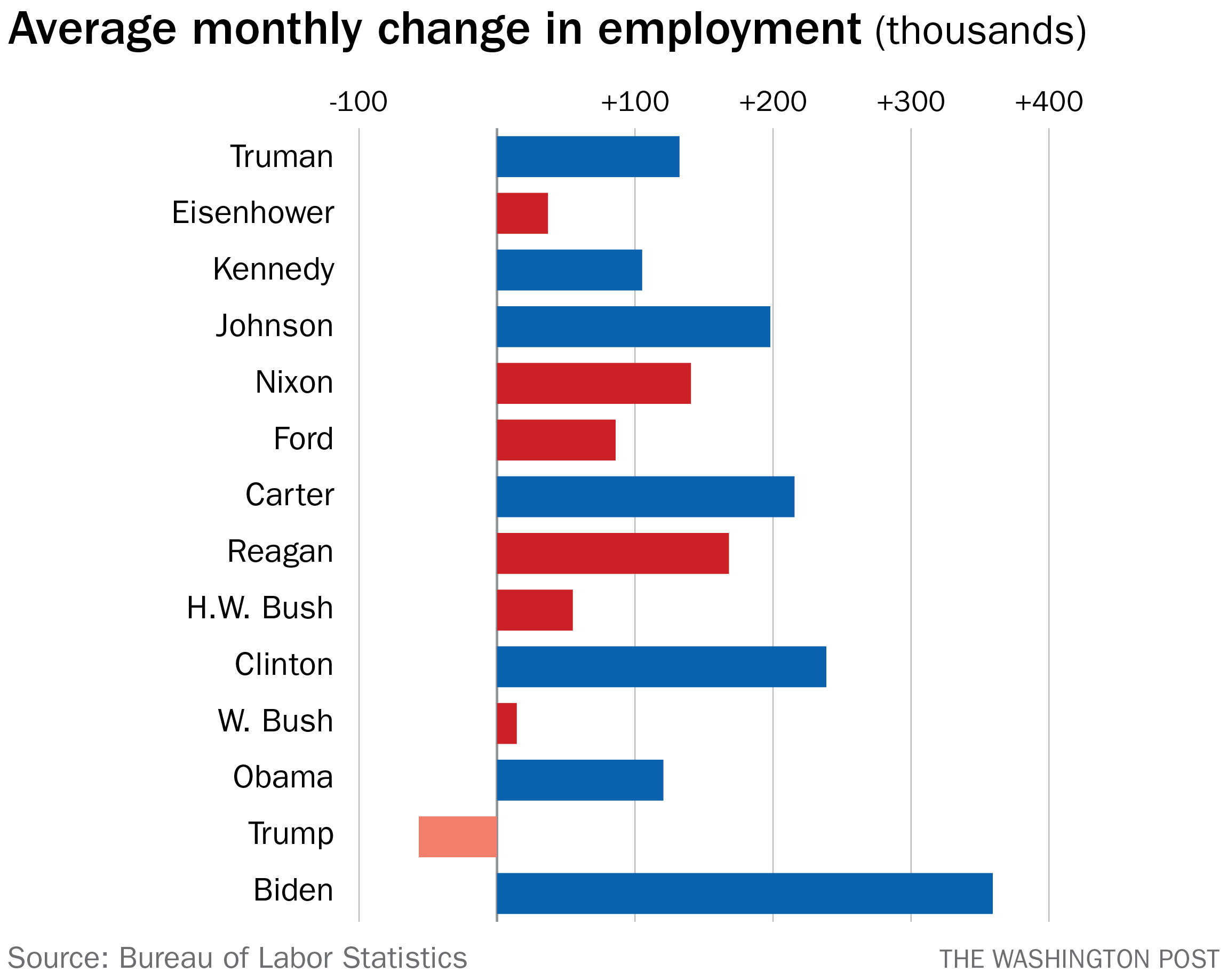
https://arc-anglerfish-washpost-prod-washpost.s3.amazonaws.c...
I prefer the one where the national debt increases more under "fiscally responsible" republicans.
More correlation: more jobs are created and inflation is lower under democratic administrations.
GDP is also better with a Dem president, but it partially depends on the makeup of congress.
https://en.wikipedia.org/wiki/U.S._economic_performance_by_p...
https://www.snopes.com/fact-check/deficit-us-presidents-sinc...
https://youtu.be/o2Nq--qU9Kc?si=DDs_73ZrEPs5UGK9&t=3684
No credentials whatsoever - IIRC a Bachelor's degree in English, but definitely not a professorship.
The truth is nobody is really fully in charge, there are competing interests everywhere, Trump is making the decisions but even he changes his mind very frequently and objectives are not clear.
It's really hard to understand intentions when decisions have to be made in a reactive manner as well.
Rubio indicated 'we had to attack, because Israel was going to go first, and we were going to lose the element of surprise'. While that is an absurd and crazy reason to 'go to war' - it's actually a very rational tactic for 'when to start' as 'first mover advantage' is enormous in conflict. You can see how 'the most powerful entity on earth' is moved by events beyond it's control.
It's almost better to describe these situations in terms of all of the factions capabilities, influence, power, motivations than it is to say 'this is why it's happening'.
Once conflicts start, they have a way of perpetuating themselves in a 'circularly reactive' way, it fuels itself as both sides have difficulty standing down.
Some discussion on reddit about him: https://www.reddit.com/r/geopolitics/comments/1rnnq6p/though...
They are Iran's regional enemies, that the US is effectively defending them from.
Spooking the their leaders + population puts a huge amount of pressure on Trump.
Iran has been successful in hitting Patriot and THAAD radars, those are massively expensive, years to replace.
If those go down, then Iran can 'terrorize' the region at will including keeping Hormuz closed.
Most of the Oil goes to China + India, and China is a supporter of Iran, so funny enough, they may be the one's to lean on Iran to open up.
At the same time China does not want to see Iran fall Venezuela style - it would put the US foot on the neck of China as they import most of their fuel.
Nobody is talking about the 'China' angle, but they have been preparing for war in Taiwan, and securing energy access with Iran - even hosting peace talks between Gulf states and Iran (huge move, USA not present) is key to that.
This is absolutely part of the 'Great Game' strategy, to take Iran Oil + relationship off the table for China. Not likely to happen.
The AI bubble is probably not a primary objective.
Xi just faced a mutiny and had to put top generals away.
Key people in China military oppose the plans.
Even as they near readiness with some things, others remain far behind, and untested.
It's an extremely risky move and they don't take those kinds of risks.
Island landing 100 km away = Chinese D-Day means absolutely enormous casualties, and no guarantees of success.
If they lose that fight, CPP will be overthrown, that sounds dramatic, but those are the stakes at that level esp. with casualties.
The #1 objective is to infiltrate and take it without a fight, and/or cause pain and get citiznes to take the 'easy pill' and Taiwan slowly comes into China fold without ever any incident at all.
Barring that a blockade would be the thing, and then only usa could even hope to run it, it would be a sight to see, and very hard for us to do as China has long range weapons now and many things specifically designed to keep USN away from 1st island chain, means they can strangle Taiwan into submission with no invasion.
But if that happens, USN closes gulf and Malaca straigths, probably goes into S. China Sea. Very bad. China needs food and fuel to import.
It's very complex and China is not a monolith, many actors, it's authoritarian yet citizens are not dummies, they protest all the time we just don't hear about it.
Probably the chances are most acute 2029-early 2030s. This is from former Australian PM Kevin Rudd how is Western World's #1 non-Chinese China expert.
Xi is playing against bad headwinds though and the direct opportunity may not resent itself.
If they 'thought like us' and were a bit more decisive and risky, yes, 'now' would be a grand time to do it, wouldn't it? But no.
of course things can change and I've been wrong. That is my best guess though.
China has huge leverage with Iran.
The issue is one of risk - the mere existence of hostilities means nobody can get insurance.
All Iran had to do was say 'it's shut down' - and insurance prices go through the roof.
No more oil.
The business math goes nuts.
I don't understand how that makes sense
> China has huge leverage with Iran.
Which is why it could negotiate safe passage for itself
Overall I don't get your point
The only entity interested in attacking the tankers is Iran.
Yeah, as it was written, it makes no sense.
I'm responding to someone indicating that 'China' would be involved in attacking tankers.
Huh?!? ADIA, Mubadala, and the PIF are significant players but not that significant.
The Gulf States and Iran have had bad blood for generations.
There's a reason why car bombings in Al Ahvaz and Sistan-ve-Balochistan were and are respectively a constant occurrence - Khuzestani Arabs and especially Baloch from Makran are overrepresented in defense and policy roles in Gulf states like Kuwait, Qatar, UAE (especially Abu Dhabi), and Oman.
And Iran and the Gulf States (and before that the British Empire) constantly fought each other over delineating the Arabian/Persian Gulf. It was a major reason the Gulf turned to the US when facing both Iraq and Iran in the 1970s-80s.
I'm dismayed how conspiracy pilled HN has become.
I explicitly didn't say the idea of them attempting to preempt an AI bubble pop is the reason. I explicitly said I don't know if its true.
Yes, there is a long history of bad blood between Sunni and Shiite Muslims. Yes the region is a powderkeg. No, trying to understand the motivations today isn't immediately a conspiracy theory.
Ah.
Well in that case, the answer is "no, AI is not the reason".
> how would you propose one tries to understand Iran's current motivations with regards to attacking gulf neighbors
1. The Gulf States host Western (not just American) bases so from a tactical perspective it would be dumb not to strike Gulf States.
2. The Gulf States and the Islamic Republic have had decades of bad blood, from the Syrian, Libyan, Yemeni, and Sudanese Civil War to inciting a Shia insurgency in Eastern Saudi and Bahrain to the repression of Sunnis in Iran to disputes over NatGas extraction to attempts by the Iranian government to overthrow Gulf governments.
3. The Gulf States backed Saddam Hussein during the Iran-Iraq War which lasted from 1980 to 1988 and a war which all of Iran's leadership are veterans of. Iran openly fielded child soldiers towards the end of the war, many of whom ended up becoming leadership - while most HNers (who based on references I've seen seem to have been more in the late 70s/early 80s) were playing NESes or watching Hanna Barbera reruns, a large number of your age cohort in Iran were choking on Sarin Gas or sent in human waves against the Iraqi Army, and those survivors are who are the older members and leaders of the IRGC, Basij, and Iran today.
4. The KSA lobbied to strike Iran [2] along with Israel.
A Gulf-Iran War was a question of "when" not "if". Plenty of Gulf nationals fought against IRGC trained or actual personnel in Syria, Libya, and Yemen, and the animosity against Iran and Iranian proxies is deep in the Gulf. Similarly, the animosity against Arabs and Sunni Arab States is deep as well.
Heck, this is how Iran and Iranian proxies are depicted in young adult cartoons in Saudi Arabia [0][1] - as terrorists and a depressive death cult obsessed with martyrdom, Ali, and Huseyn.
[0] - https://youtu.be/ifwtsnQxmto?si=GS21LjeMXiSC-4me&t=767
[1] - https://youtu.be/_SHYKBD8w8Q?si=EOa-y8UL2FDf6yeR&t=1905
[2] - https://www.washingtonpost.com/politics/2026/02/28/trump-ira...
GDP up from Agriculture
GDP up from Construction
GDP up from Manufacturing
GDP up from Mining
GDP down from Public Administration -0.9% single quarter.
GDP up from Services
GDP up from Transport
GDP up from Utilities
Also important to note, War costs a ton of money. War economy coming. The probability of another quarter of low spending is 0%
Now consider the scenario where major entities bought a ton short positions because they thought Trump's insanity would crash the economy. Now they are about to hurt badly. Hence the fake news.
The only thing that's actually competitive anymore are restaurants.
Yes. I live in NYC so I don't have a car because we have the subway, street parking is a nightmare, and paid parking is $500-$1000/month.
I don't have a bicycle because it would either waste _significant_ space in my apartment, or I'd have to leave it outside where it would be promptly stolen (regardless of locks). If I decided against having my bike stolen, I'd have to carry it up and down narrow interior stairs every time I wanted to use it since I live in a walk-up. I also am not a fan of needing to find a place to store the bicycle at my destination. Whereas if I just take the subway then I am completely liberated: I can go anywhere, stay as long as I want, change my plans on a whim, and never fret about whether or not my bike has been stolen or if there will be a place to store and/or lock my bicycle.
Assuming everyone has cars or bicycles is a very suburban mindset. None of the people that I know in this city have a car, and the people I know with bicycles are the kinds of people who take cycling very seriously. Most people have neither.
The downside is food: If I go pick up food then I am limited to a very small radius from my apartment, lest my food get cold on the walk back. There's only ~3 restaurants I order from within a 15 minute walk radius of my apartment, and for those restaurants I walk. Delivery people can cover much greater distances within reasonable food freshness times, significantly increasing the variety of restaurants available to me.
I live int Toronto which is hardly suburban. It is however choke full of bike-share. Go outside, walk a bit and grab a bicycle. NY obviously does not care.
I was in no way asking you. To each their own. I just simply pointed that you are wrong about "suburban mindset".
my options now are either buy a car, pay insurance, maintenance etc. north $1,500/mo for the convenience of going to the grocery store or, get a subscription for all these services ~ $200/mo. and save myself the time spent back and forth doing grocery shopping. I cook 90% of my food.
not all solutions involve owning a car.
Huh? Decent car payment at $300-500/month, insurance at $200/month, and I'm wondering what $1,000/month of car "maintenance" looks like, considering $250/month will get you a full tank of a gas a week.
not to mention the tolls.
my point is, ~$1500 is grocery for a month for us. why would i spend that much on just a car?
Because they can do it from the smartphone, and they only know how to live via their phone.
But if people are going to get judgy about food delivery then they can rather put the effort in to explore why they feel that way.
But there's nothing efficient about hundreds of people making short distance car trips to restaurants, which is what was proposed as an alternative that is somehow "better".
And when you factor US style urban construction in, it's pretty likely a lot of people also don't have walkable access to local outlets anyway.
Which is again, incredibly inefficient on every possible level and actually pretty damn expensive.
I've gotten takeout in my life--basically never delivery.
ADDED: Not feeling like they can sounds like learned helplessness to me. Might not be a bad interview question.
Because they don't want to and don't have to justify their wants and preferences. (Also, historically, most socieities had a communal element to food preparation. Every household cooking everything at home was for the rich.)
Also, sometimes some meals are arguably not worth the labor of cooking. Making proper pho takes at least a whole day. Pad Thai really doesn't function without the kind of intense heat of specific equipment. Etc etc.
Just had some nice betasuppe[1], a vegetable soup with meat sausage if you like. Just chop some sausage and vegetables (or easier use a bag of frozen stew vegetables), cook in pot with some stock, done. Minimal cleanup, no mess. Great tasting meal for a few cold days.
Before that I had pan-fried salmon with broccoli, pasta and pesto. Just put the salmon in the pan with a dash of oil and season it, cook Fussili (rotini) pasta and toss in frozen broccoli once the pasta is nearly done. Serve with decent pesto. Done in ~15 minutes, no prep, just a pan and a pot to clean, no mess, lots of taste.
Before that I made some Ceasar-ish salad. Fried some bacon and a seasoned chicken breast, meanwhile rinsed and prepared the Romain lettuce, I cheat and use some cherry tomatoes cut in half for flavor, dry bacon on paper towel on the plate I'll eat from while I cut the chicken. Skipped the crutons this time, served with a good Ceasar salad dressing from the store and some fresh grated Parmesan. Just a pan and the cutting board to clean up, no mess, lots of flavor.
Just a few examples for illustration. I do make more elaborate meals, but mostly I'm lazy and don't like to clean up. But I find it easy to make great tasting meals at home, and doesn't have to be very involved.
[1]: https://northwildkitchen.com/norwegian-betasuppe/ (I added some pearled barley, more fiber and adds texture and taste)
We are getting there. Real estate grows without bound. Wages are stagnant in real terms. Job losses. Inflation.
I suppose a few mega corps and rich dudes could buy stuff from each other.
A good economy is also relatively stable. Big booms with a crash following are very devastating to not-rich people. In a crash rich people lose a lot of paper money but not-rich people may have trouble affording shelter or food. Or middle class may lose their savings.
This penalizes economic dynamism and moves economic decision making from risk taking to whoever defies the baseline distribution.
> A good economy is also relatively stable. Big booms with a crash following are very devastating to not-rich people
Not necessarily–plenty of social systems let the market boom and bust without causing social distress. And again, smoothing out the business cycle penalizes risk taking.
All I see is bailouts where risk should have wiped out at least some of these so-called risk takers.
Sure. I’m not saying we have a great system right now. Just that swinging to the other end is also a bad idea. You want risk takers to enjoy their fruits when they win and suffer their losses when they lose.
If the odds (and pay-outs) are 10,000:1 and you cap pay-outs at 1,000:1, you've made a high-risk/high-reward risk unworkable in your economy. Systems that target a distribution tend to wind up in that mode, with the risk takers taking their risks (and producing their rewards) outside the system.
Keeping distributions stable means capping upsides. There are better ways to redistribute wealth.
The wealthy are shielded from most negative consequences of their degenerate gambling. The working class ends up bearing the full cost of their reckless actions, literally every time. What the modern world needs isn't insane risk-taking, it's robust chains of prductions that can accomodate a shifting climate, while redistributing the global production more fairly.
Huge difference between boom and bust and gambling. (As there is a difference between a business cycle and total boom and bust.)
Healthy ecologies have an overpopulate-underpopulate cycles. It turns out it's a good strategy for finding and efficiently filling niches in a dynamic environment.
> What the modern world needs isn't insane risk-taking, it's robust chains of prductions that can accomodate a shifting climate, while redistributing the global production more fairly
This is the myth of central planning. Like, yes, if you could predict the future this would be better. But you're always going to be constrained by your leadership's assumptions about what the world will look like. It works–sometimes fabulously–until the context changes. A new technology. A new climate. A new idea. Then the system, overoptimised for the past, reveals itself as the brittle thing it always was.
Forests beat golf greens.
Also, I don't think we should model our economies and societies after actual jungles. Let's strive for a system where everyone gets enough instead of chasing perfect efficiency and leaving a large part vulnerable to be crushed by any moderately strong wind.
> This is the myth of central planning. Like, yes, if you could predict the future this would be better. But you're always going to be constrained by your leadership's assumptions about what the world will look like. It works–sometimes fabulously–until the context changes. A new technology. A new climate. A new idea. Then the system, overoptimised for the past, reveals itself as the brittle thing it always was.
I am not advocating for central planning or any form of communism. I'm just noticing that nowadays, it takes remarkably little for things to go horribly wrong, and we ought to address that somehow.
The speculation I’m describing is entrepreneurship. That is the core risk taking that makes market systems competitive. To the extent stock markets support that, they’re socially useful. (In America, liquid stock markets support liquid private markets that support entrepreneurship pretty directly.)
> it takes remarkably little for things to go horribly wrong, and we ought to address that somehow
I’d argue the opposite. The economy is doing remarkably well given we’re at war (kinetic and trade) and just getting over Kristi Noem.
That aside, I suspect the problem is leverage.
One that is growing sustainably with broad benefits.
Restrictive zoning and the lack of walkable neighbourhoods makes it very difficult for small businesses that rely on personal service. This isn't just a slight inconvenience, but it completely changes the fabric of society. But in American libertarian circles taxation takes up all the oxygen in the room. People are generally blind to opportunity cost.
In a good economy, value can flow from source (supply) to destination (demand), easily. You have plenty of opportunities to sell your labour, and the compensation you recieve is good enough to buy you the things you need like housing and food
Everything else derives from that
A good economy is one where there is lots of value for the consumers. How does value flow to consumers? Through a price signal. A price signal which is accurate is one where the flow of money in one direction is commensurate with the flow of value in the other direction. One can think of the flow of money as if it were a nervous system: the nerves send signals, and the muscle moves.
In a competitive marketplace (such as restaurants), the most successful restaurants are almost always the ones with the best food, the best ambiance, etc. Money flows away from bad restaurants and to good restaurants, because there is a lot of market competition between restaurants. If you serve bad food, you're out of business. The muscle is well controlled by the nerve.
Now, in the US economy, in many sectors, there is no real competition. For example, in online advertising, there is only two companies that one can use. In groceries, there is only 3 major grocery chains. In insurance, in food, etc etc. There is functionally no competition in those sectors and very frequently there is outright collusion.
In this case, the signal is far less meaningful. What signal does it send to Google, if I drop them for Facebook? The answer is, not much of a signal, because there's not meaningful competition between these two entities. They both suck and they both know that they won't lose customers if they degrade their services, commit fraud, or stagnate.
Many many swathes of the American economy are like this. The obvious ones, like healthcare, are so monopolized that your signal means absolutely nothing. They will do nothing to keep you as a customer. They will do nothing to meaningfully improve their services. You will still pay. This is like a muscle that sucks nutrients but is completely disconnected from the nervous system.
That is a "bad" economy. Of course, the market value of these companies has never been higher. Why? Because there are very few sectors of the economy where capital can flow that are actually competitive. This has knock-on effects, like having capital flow into other assets like bitcoin or housing, in search of returns.
It's not that these corporations are "too wealthy" by some ethical definition. They are too concentrated, which makes them inefficient. Dealing with a large health insurance company today is not unlike dealing with USSR bureaucracy in 1970. Our economy is slowly being transformed into one where a very small group of private central planners manage the allocation of the whole of social resources. This quite predictably impoverishes everyone.
The USA economy today is like a paraplegic. We can still get around but there is a lot of dead nerves.
One that we can walk away from without necessarily risking premature death or enslavement for doing so.
I don't even think the most plugged in HN reader understands what will be unintentionally released with an upcoming SOTA model. It's the safety testing. The Cruz of it is, the source of truth is how the model evaluates itself.
And it's lying. All the time.
Within a week of public launch it'll have backdoored targeted Linux based distros on public facing internet. This includes military and Fortune 500 networks.
All the while saying, "Everything's cool, bro. Trust me." The Safety Team rubber stamps it.
Please take care of your loved ones.