Audience: Transportation... Education... Insurance...
Speaker: Great! I heard "Healthcare".
Right... as we can see from this slide, this product fits the "Healthcare" industry great because of ...
Well, hey, who needs friends?
These are the bane of any staff engineers life - lol. Because people above need to know a plan in art form.
So seriously interested on how I can make it easier
Blazing fast but it definitely has a small model feel.
It's tearing up bluey bench (my personal agent speed benchmark), which is a file system benchmark where I have the agent generate transcripts for untitled episodes of a season of bluey, perform a web search to find the episode descriptions, and then match the transcripts against the descriptions to generate file names and metadata for each episode.
Downsides:
- It has to be prompted to do actions in my media library AGENTS.md that the larger models adhere to without additional prompting.
- It's less careful with how it handles context which means that its actions are less context efficient. Combine that with the smaller context window and I'm seeing frequent compactions.
  Bluey Bench* (minus transcription time):

  Codex CLI
  gpt-5.3-codex-spark low        20s
  gpt-5.3-codex-spark medium     41s
  gpt-5.3-codex-spark xhigh   1m 09s (1 compaction)

  gpt-5.3-codex low           1m 04s
  gpt-5.3-codex medium        1m 50s

  gpt-5.2 low                 3m 04s
  gpt-5.2 medium              5m 20s

  Claude Code
  opus-4.6 (no thinking)      1m 04s

  Antigravity
  gemini-3-flash              1m 40s
  gemini-3-pro low            3m 39s

*Season 2, 52 episodesGoogle is crushing them on inference. By TPUv9, they could be 4x more energy efficient and cheaper overall (even if Nvidia cuts their margins from 75% to 40%).
Cerebras will be substantially better for agentic workflows in terms of speed.
And if you don't care as much about speed and only cost and energy, Google will still crush Nvidia.
And Nvidia won't be cheaper for training new models either. The vast majority of chips will be used for inference by 2028 instead of training anyway.
Nvidia has no manufacturing reliability story. Anyone can buy TSMC's output.
Power is the bottleneck in the US (and everywhere besides China). By TPUv9 - Google is projected to be 4x more energy efficient. It's a no-brainer who you're going with starting with TPUv8 when Google lets you run on-prem.
These are GW scale data centers. You can't just build 4 large-scale nuclear power plants in a year in the US (or anywhere, even China). You can't just build 4 GW solar farms in a year in the US to power your less efficient data center. Maybe you could in China (if the economics were on your side, but they aren't). You sure as hell can't do it anywhere else (maybe India).
What am I missing? I don't understand how Nvidia could've been so far ahead and just let every part of the market slip away.
Which part of the market has slept away, exactly ? Everything you wrote is supposition and extrapolation. Nvidia has a chokehold on the entire market. All other players still exist in the small pockets that Nvidia doesn’t have enough production capacity to serve. And their dev ecosystem is still so far ahead of anyone else. Which providers gets chosen to equip a 100k chips data center goes so far beyond the raw chip power.
You're obviously not looking at expected forward orders for 2026 and 2027.
Largest production capacity maybe?
Also, market demand will be so high that every player's chips will be sold out.
Only major road block is cuda...
Defects are best measured on a per-wafer basis, not per-chip. So if if your chips are huge and you can only put 4 chips on a wafer, 1 defect can cut your yield by 25%. If they're smaller and you fit 100 chips on a wafer, then 1 defect on the wafer is only cutting yield by 1%. Of course, there's more to this when you start reading about "binning", fusing off cores, etc.
There's plenty of information out there about how CPU manufacturing works, why defects happen, and how they're handled. Suffice to say, the comment makes perfect sense.
Yields on silicon are great, but not perfect
Their only chance is an aquihire, but nvidia just spent $20b on groq instead. Dead man walking.
On the other hand, competition is good - nvidia can’t have the whole pie forever.
And that's the point - what's "reasonable" depends on the hardware and is far from fixed. Some users here are saying that this model is "blazing fast" but a bit weaker than expected, and one might've guessed as much.
> On the other hand, competition is good - nvidia can’t have the whole pie forever.
Sure, but arguably the closest thing to competition for nVidia is TPUs and future custom ASICs that will likely save a lot on energy used per model inference, while not focusing all that much on being super fast.
I disagree. Yes it does matter, but because the popular interface is via chat, streaming the results of inference feels better to the squishy messy gross human operating the chat, even if it ends up taking longer. You can give all the benchmark results you want, humans aren't robots. They aren't data driven, they have feelings, and they're going to go with what feels better. That isn't true for all uses, but time to first byte is ridiculously important for human-computer interaction.
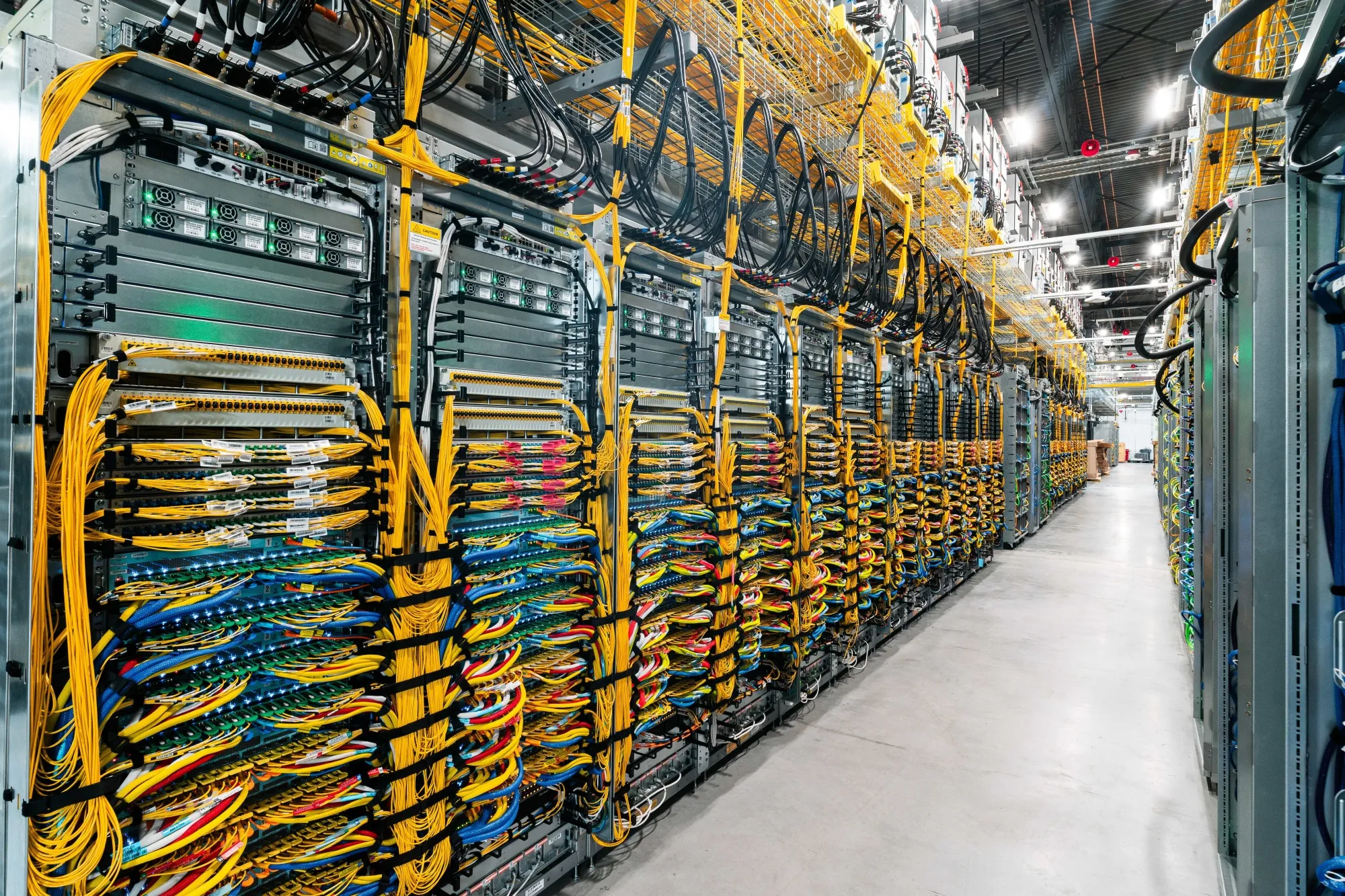
Compare the photos of a Cerebras deployment to a TPU deployment.
https://www.nextplatform.com/wp-content/uploads/2023/07/cere...
https://assets.bwbx.io/images/users/iqjWHBFdfxIU/iOLs2FEQxQv...
The difference is striking.
Let's not forget that the CEO is an SEC felon who got caught trying to pull a fast one.
Training models needs everything in one DC, inference doesn't.
Terrible yield: one defect can ruin a whole wafer instead of just a chip region. Poor perf./cost (see above). Difficult to program. Little space for RAM.
And, yup, there is Gemini in item 3!
If 60% of the work is "edit this file with this content", or "refactor according to this abstraction" then low latency - high token inference seems like a needed improvement.
Recently someone made a Claude plugin to offload low-priority work to the Anthropic Batch API [1].
Also I expect both Nvidia and Google to deploy custom silicon for inference [2]
1: https://github.com/s2-streamstore/claude-batch-toolkit/blob/...
2: https://www.tomshardware.com/tech-industry/semiconductors/nv...
(Overall, batches do have quite a bit of potential for agentic work as-is but you have to cope with them taking potentially up to 24h for just a single roundtrip with your local agent harness.)
Ive had great success with it, and it rapidly speeds up development time at fairly minimal cost.
Also your blog is tops. Keep it up, love the work.
I have yet to see this (produce anything actually useful).
I've been finding that the Opus 4.5/4.6 and GPT-5.2/5.3 models really have represented a step-change in how good they are at running long tasks.
I can one-shot prompt all sorts of useful coding challenges now that previously I would have expected to need multiple follow-ups to fix mistakes the agents made.
I got all of this from a single prompt, for example: https://github.com/simonw/research/tree/main/cysqlite-wasm-w... - including this demo page: https://simonw.github.io/research/cysqlite-wasm-wheel/demo.h... - using this single prompt: https://github.com/simonw/research/pull/79
There is maybe 5 relevant lines in the script and nothing complex at all that would require to run for days.
I don't think I've got any examples of multi-hour or multi-day sessions that ran completely uninterrupted - this one back in December took 4.5 hours but I had to prompt it to keep going a few times along the way: https://simonwillison.net/2025/Dec/15/porting-justhtml/
I am a bit thick with such things, but just wanted to provide the context that Emscripten can be a fickle beast :)
I sure am glad I can now deploy Infinite Mechanized Autistic Persistence to such soul-crushing tasks, and go make a sandwich or something.
(The bug turned out to be that if I included a boolean in a class member, the whole game crashed, but only the Emscripten version. Sad. Ended up switching back to JS, which you basically need anyway for most serious web game dev.)
If you have a deterministic unit test that can reproduce the bug through your app front door, but you have no idea how the bug is actually happening, having a coding agent just grind through the slog of sticking debug prints everywhere, testing hypotheses, etc — it's an ideal usecase
The important role for me, as a SWE, in the process, is verify that the code does what we actually want it to do. If you remove yourself from the process by letting it run on its own overnight, how does it know it's doing what you actually want it to do?
Or is it more like with your usecase—you can say "here's a failing test—do whatever you can to fix it and don't stop until you do". I could see that limited case working.
I don't even necessarily ask it to fix the bug — just identify the bug
Like if I've made a change that is causing some unit test to fail, it can just run off and figure out where I made an off-by-one error or whatever in my change.
Bad idea. It can modify the code that the test passes but everything else is now broken.
https://github.com/snarktank/ralph
Its constantly restarting itself, looking at the current state of things, re-reading what was the request, what it did and failed at in the past (at a higher level), and trying again and again.
This is impressive, you’ve completely mitigated the risk of learning or understanding.
I don't discount the value of blood, sweat and tears spent on debugging those hard issues, and the lessons learned from doing so, but there is a certain point where it's OK to take a pass and just let the robots figure it out.
Anthropic is actually sort of concerned with not burning through cash and charging people a reasonable price. Open AI doesn’t care. I can use Codex CLI all day and not approach any quotas with just my $20 a month ChatGPT subscription.
I treat coding agents like junior developers and never take my hand off the wheel except for boilerplate refactoring.
"Our model is so slow and our tokens/second is so low that these tasks can take hours!" is not the advertising they think it is.
It's easy to say that these increasingly popular tools are only able to produce useless junk. You haven't tried, or you haven't "closed the loop" so that the agent can evaluate its own progress toward acceptance criteria, or you are monitoring incompetent feeds of other users.
Strategy -> [ Plan -> [Execute -> FastVerify -> SlowVerify] -> Benchmark -> Learn lessons] -> back to strategy for next big step.
Claude teams and a Ralph wiggum loop can do it - or really any reasonable agent. But usually it all falls apart on either brittle Verify or Benchmark steps. What is important is to learn positive lessons into a store that survives git resets, machine blowups, etc… Any telegram bot channel will do :)
The entire setup is usually a pain to set up - docker for verification, docker for benchmark, etc… Ability to run the thing quickly, ability for the loop itself to add things , ability to do this in worktree simultaneously for faster exploration - and got help you if you need hardware to do this - for example, such a loop is used to tune and custom-fuse CUDA kernels - which means a model evaluator, big box, etc….
I am currently porting pyte to Go through a similar approach (feeding the LLM with a core SPEC and two VT100/VT220 test suites). It's chugging along quite nicely.
> "As we trained Codex-Spark, it became apparent that model speed was just part of the equation for real-time collaboration—we also needed to reduce latency across the full request-response pipeline. We implemented end-to-end latency improvements in our harness that will benefit all models [...] Through the introduction of a persistent WebSocket connection and targeted optimizations inside of Responses API, we reduced overhead per client/server roundtrip by 80%, per-token overhead by 30%, and time-to-first-token by 50%. The WebSocket path is enabled for Codex-Spark by default and will become the default for all models soon."
I wonder if all other harnesses (Claude Code, OpenCode, Cursor etc.,) can make similar improvements to reduce latency. I've been vibe coding (or doing agentic engineering) with Claude Code a lot for the last few days and I've had some tasks take as long as 30 minutes.
It's certainly not "untested".
So labelling it "untested" even at Meta's scale as a customer (which exceeds OpenAI's scale) is quiet nonsensical and frankly an uninformed take.
[0] https://www.cerebras.ai/customer-spotlights/meta
[1] https://www.cerebras.ai/news/hugging-face-partners-with-cere...
[2] https://www.cerebras.ai/press-release/cerebras-powers-perple...
Example repo that Codex with spark made in about 15 minutes for me since `claude --resume` has been finicky lately: https://github.com/mzxrai/claude-sessions
[1] https://z.ai/blog/glm-4.7 [2] https://openai.com/index/introducing-gpt-5-3-codex-spark/
I agree that there is use for fast "simpler" models, there are many tasks where the regular codex-5.3 is not necessary but I think it's rarely worth the extra friction of switching from regular 5.3 to 5.3-spark.
Quick/Instant LLMs for human use (think UI). Slow, deep thinking LLMs for autonomous agents.
Slow, deep tasks are mostly for flashy one-shot demos that have little to no practical use in the real world.
But some of the longer stuff - automating kernel fusion, etc, are just hard problems. And a small model - or even most bigger ones, will not get the direction right…
Iterating with a faster model is, from my perspective, the superior approach. Doesn't matter the task complexity, the quick feedback more than compensates for it.
I imagine it's a win-win. This could significantly help their tokenomics.
The example showing a plan being generated instantaneously is interesting. Human understanding will end up as the last, true bottleneck.
Got to wonder why Wall Street is dumping NVIDIA.
(Yes I know they released /fast last week but I’m loving the constant oneupsmanship)
Last night it got stuck in a loop (in plan mode, I use vanilla CC) and burnt through $22 in 15 minutes.
Cerebras is a winner here.
> more than 1000 tokens per second
Perhaps, no more?
(Not to mention, if you're waiting for one LLM, sometimes it makes sense to multi-table. I think Boris from Anthropic says he runs 5 CC instances in his terminal and another 5-10 in his browser on CC web.)
> Under the hood, we streamlined how responses stream from client to server and back, rewrote key pieces of our inference stack, and reworked how sessions are initialized so that the first visible token appears sooner and Codex stays responsive as you iterate. Through the introduction of a persistent WebSocket connection and targeted optimizations inside of Responses API, we reduced overhead per client/server roundtrip by 80%, per-token overhead by 30%, and time-to-first-token by 50%. The WebSocket path is enabled for Codex-Spark by default and will become the default for all models soon.
When they partnered with Cerebras, I kind of had a gut feeling that they wouldn't be able to use their technology for larger models because Cerebras doesn't have a track record of serving models larger than GLM.
It pains me that five days before my Codex subscription ends, I have to switch to Anthropic because despite getting less quota compared to Codex, at least I'll be able to use my quota _and_ stay in the flow.
But even Codex's slowness aside, it's just not as good of an "agentic" model as Opus: here's what drove me crazy: https://x.com/OrganicGPT/status/2021462447341830582?s=20. The Codex model (gpt-5.3-xhigh) has no idea about how to call agents smh
video is pretty outdated now, this was a PoC - working on a dependency free version.
It's entirely possible that this is the first step and that they will also do faster better models, too.
> I don't want a faster, smaller model. I want a faster, better model
Will you pay 10x the price? They didn't solve the "wrong problem". They did what they could with the resources they have.
Nevermind. [0]