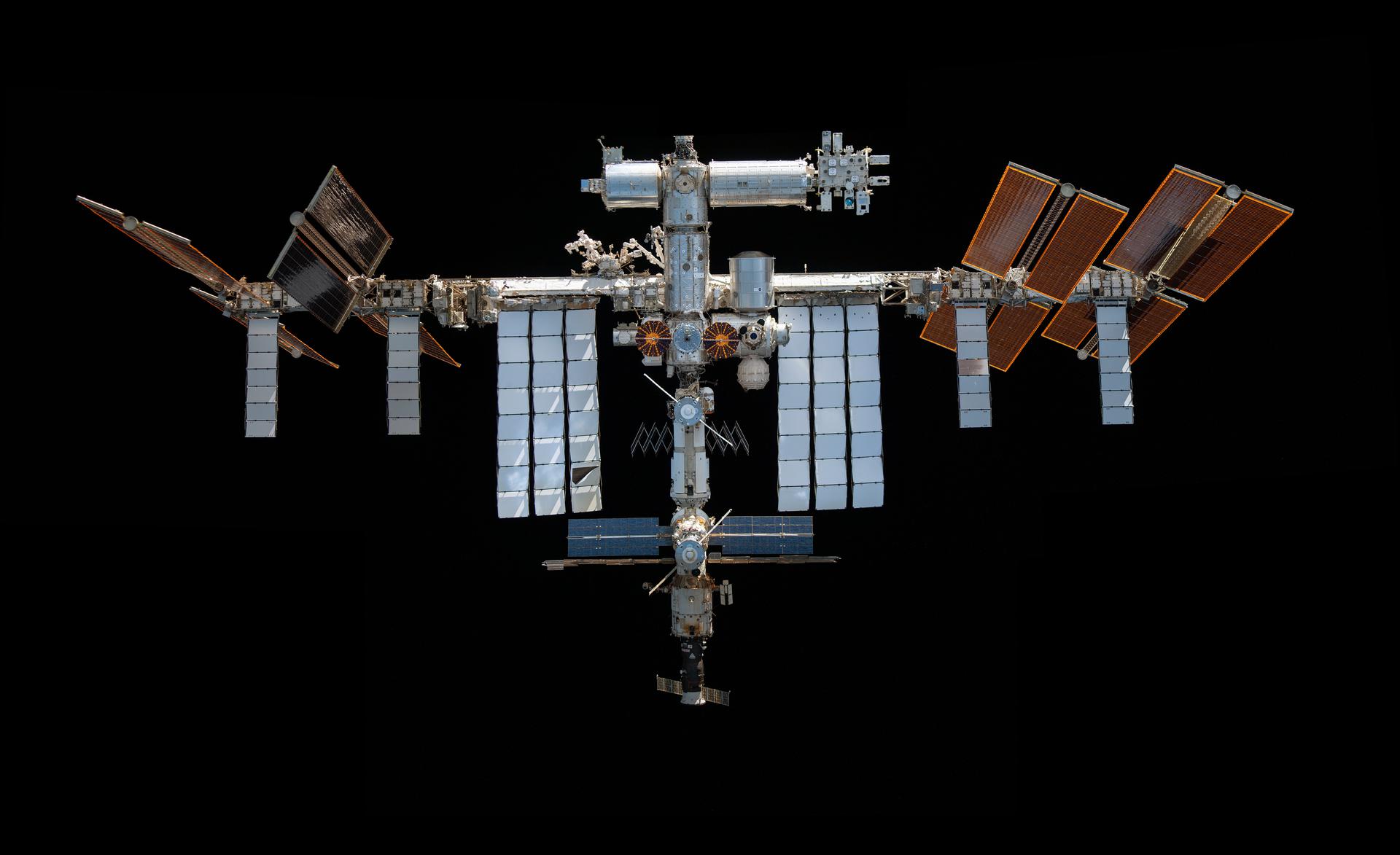
Space is a vacuum. i.e. The lack-of-a-thing that makes a thermos great at keeping your drink hot. A satellite is, if nothing else, a fantastic thermos. A data center in space would necessarily rely completely on cooling by radiation, unlike a terrestrial data center that can make use of convection and conduction. You can't just pipe heat out into the atmosphere or build a heat exchanger. You can't exchange heat with vacuum. You can only radiate heat into it.
Heat is going to limit the compute that can be done in a satellite data centre and radiative cooling solutions are going to massively increase weight. It makes far more sense to build data centers in the arctic.
Musk is up to something here. This could be another hyperloop (i.e. A distracting promise meant to sabotage competition). It could be a legal dodge. It could be a power grab. What it will not be is a useful source of computing power. Anyone who takes this venture seriously is probably going to be burned.
It probably increases Elon's share of the combined entity.
It delivers on a promise to investors that he will make money for them, even as the underlying businesses are lousy.
I keep seeing that term, but if it does not mean "AI arms race" or "AI surveillance race", what does it mean?
Those are the only explanations that I have found, and neither is any race that I would like to see anyone win.
Data centers in space are the same kind of justification imo.
Sufficient hype funds more work for his rocket company.
The more work they have the faster they can develop the systems to get to Mars. His pet project.
I really think it's that simple.
[0] https://images-assets.nasa.gov/image/jsc2021e064215_alt/jsc2...
[1] https://en.wikipedia.org/wiki/External_Active_Thermal_Contro...
https://en.wikipedia.org/wiki/External_Active_Thermal_Contro...
Sure, space is cold. Good luck cooling your gear with a vacuum.
Don't even get me started on radiation, or even lack of gravity when it comes to trying to run high powered compute in space. If you think you are just going to plop a 1-4U server up there designed for use on earth, you are going to have some very interesting problems pop up. Anything not hardened for space is going to have a very high error/failure rate, and that includes anything socketed...
No. Nearly everyone that talks about data centers in space talks about cooling. The point of this article was to talk about other problems that would remain even if the most commonly talked about problems were solved.
It says:
> But even if we stipulate that radiation, cooling, latency, and launch costs are all solved, other fundamental issues still make orbital data centers, at least as SpaceX understands them, a complete fantasy.
and then talks about some of those other issues.
Next up in the equation is surface emissivity which we’ve got a lot of experience in the automotive sector.
And finally surface area, once again, getting quite good here with nanotechnology.
Yes he’s distracting, no it’s not as impossible as many people think.
So your hot thing is radiating directly onto the next hot thing over, the one that also needs to cool down?
My car doesn't spend too much time driving in vacuum, does yours?
Then they work backwards, trying to figure out some economic engine to make it happen. "Data centers" are (A) in-vogue for investment right now and (B) vaguely plausible, at least compared to having a space-casino.
It appears to have come out of a crack pipe.
So whenever I see here or anywhere else that your ideas mean nothing I just laugh at it. Of course, these come from people who are bland, doesn't have any imagination and they are not creative at all at all, but they have brute force, which is money.
That’s how the CFO of OpenAI can essentially say “we need a Federal bailout”, and then turn around and say “lol just joking”.
The moon has:
- Some water
- Some materials that can be used to manufacture crude things (like heat sinks?)
- a ton of area to brute force the heat sink problem
- a surface to burry the data centers under to solve the radiation problem
- close enough to earth that remote controlled semi-automated robots work
I think this would only work if some powerful entity wanted to commit to a hyper-scale effort.
Almost any reason why the moon is better than in orbit is a point for putting it on earth.
I have long theorized there will be some game changing manufacturing processes that can only be done in a zero gravity environment. EX:
- 3d printing human organ replacements to solve the organ donor problem
- stronger materials
- 3d computer chips
I do not work in material science, so these crude ideas are just that, but the important part I'm getting at is that we can make things in space without any launches once that industry is bootstrapped.
Have you ever spoken to someone who works at SpaceX? I have multiple friends in the industry, who have taken a trip through the company.
The overwhelming consensus is that - in meetings, you nod along and tell Elon "great idea". Immediately after you get back to real engineering and design things such that they make sense.
The folks working there are under no delusion that he has any business being involved in rocket science, it's fascinating that the general public doesn't see it that way.
How about now? https://www.bbc.com/news/articles/ce3ex92557jo
This looks like a valid argument to me, yes. Elon mentioned 1,000,000 satellites - I'm thinking about 3rd version of Starlink as a typical example, 2 tons, 60 satellites per Starship launch, 16,000 Starship launches for the constellation, comparing with 160 launches per year of today's Falcon 9...
The argument about problems of dissipating heat still stands - I don't see a valid counterargument here. Also "SAPCE" problem looks different from the point of view of this project - https://www.50dollarsat.info/ . Basically, out launch costs go way down, and quality of electronics and related tech today on Earth is high enough to work on LEO.
So you're talking about an entirely different scale of power and needed cooling.
The reason we dont have a lot of compute in space, is because of the heat issue. We could have greater routing density on communication satellites, if we could dissipate more heat. If Starlink had solved this issue they would have like triple the capacity and could just drop everything back to the US (like their fans think they do) rather than trying to minimise the number of satellites traffic passes through before exiting back to a ground station usually in the same country as the source. In fact, conspiratorially, I think thats the problem he wants to solve. Because wet dreams of an unhindered, unregulated, space internet are completely unanswered in the engineering of Starlink.
I have actually argued this from the other side, and I reckon space data centres are sort of feasible in a thought experimental sense. I think its a solvable problem eventually. But heat is the major limiting factor and back of the napkin math stinks tbh.
IIRC the size/weight of the satellite is going to get geometrically larger as you increase the compute size due to the size of the required cooling system. Then we get into a big argument about how you bring the heat from the component to the cooling system. I think oil, but its heavy again, and several space engineering types want to slap me in the face for suggesting it. Some rube goldberg copper heatpipe network through atmosphere system seems to be preferred.
I feel like, best case, its a Tesla situation, he clears the legislative roadblocks and solves some critical engineering problem by throwing money at it, and then other, better people step in to actually do it. Also triple the time he says it will take to solve the problem.
And then, ultimately, as parts fail theres diminishing returns on the satellite. And you dont even get to take the old hardware to the secondary market, it gets dropped in the ocean or burnt up on reentry.
Assuming he built this in LEO (which doesn't make sense because of atmospheric drag), and the highest estimates for what starship could one day deliver to LEO (200 metric tons), and only 1 metric ton of radiators per 100KW, that's 50 launches just to carry up the radiators.
The average temperature of deep space is approximately -270.45°C or 2.73 Kelvin), which is just above absolute zero. This baseline temperature is set by the Cosmic Microwave Background (CMB) radiatio...
Which is absolute nonsense, because vacuum has no temperature.
https://en.wikipedia.org/wiki/Black-body_radiation
It has nothing to do with the movements of atoms, but just with the spectrum of photons moving through it. It means that eventually, any object left in space will reach that temperature. But it will not necessarily do it quickly, which is what you need if you're trying to cool something that is emitting heat.
There is also no matter to wick the heat away.
It's cold there because there isn't anything there.
So there is nothing to conduct or convect the heat away.
It's like a giant vacuum insulated thermos.
Is putting data centers in thermos' a good idea?
If the AI data-center used only 10MW then each could have two redundant SMR's assuming the cooling challenges have been worked out but then we could have nuclear reactor disposal and collision issues.
[1] https://hackaday.com/2024/02/05/starlinks-inter-satellite-la... (and this is two years ago!) [2] https://resources.nvidia.com/en-us-accelerated-networking-re...
Is it really better than just using solar panels to run a heat pump?
A heat pump is a “ vapor-compression based cooling system” so that tech is an addition-to not an instead-of.
Whether it’s better probably depends on how expensive the additional efficiency is in practice.
> SkyCool’s Panels save 2x – 3x as much energy as a solar panel generates given the same area.
So if you’re area constrained maybe.
South Africa built nuclear weapons in the 1980s:
https://en.wikipedia.org/wiki/South_Africa_and_weapons_of_ma...
But it never had an orbital launch capability.
Pakistan doesn't have a domestic orbital launch capability but it does have nuclear weapons.
Surprisingly, the United Kingdom doesn't have a domestic orbital launch capability at present though it has had ballistic missiles and nuclear weapons for many decades.
At present, I would say that building a basic implosion-assembled atomic bomb is easier than building a rocket system that reach low Earth orbit. It's a lot easier to build a bomb now than it was in the 1940s. The main thing that prevents wider nuclear weapon proliferation is treaties and inspections, not inherent technical difficulties.
As an alleged human, I'd like to preserve my option to interfere.
To that end, a small data center space isn’t about unit-economics, it’s a bigger mission. So the question we should consider is what can we put into space the further that mission. Can we put a meaningful sum of human knowledge out there for preservation? It sounds like “yes,” even if we can’t train ChatGPT models out there yet.
The whole time I was there it was a mental game of trying to steel man the contradictory or incoherent stuff, using my brain power to try and rewrite things to make sense.
After some years, I woke up and realized that’s what I was doing, and even if I could do it in my mind, that didn’t make the source material rational.
Heres hoping you have a similar moment.
I do not politically align with Musk. I’ve always thought Tesla was important in popularizing electric cars while being a low-quality built product with repair and supply chain issues. I think The Boring Company is a joke. Twitter was a power-grab.
I also think SpaceX is societally beneficial, a good means to shake-up a stagnant industry and a humanity-wide area of interest.
If you think I’m a member of a religious cult, I respectfully suggest you evaluate what led You to believe that itself.
Datacenters in space have a lifespan measured in years. Single-digit years. Communicating with such an installation requires relatively advanced technology. In an extinction level crisis, there will be extremely little chance of finding someone with the equipment, expertise, and power to download bulk data. And don't forget that you have less than a decade to access this data before the constellation either fails or deorbits.
Meanwhile people who actually care about preserving knowledge in a doomsday crisis have created film reels containing a dump of GitHub and enough preamble that civilizations in the far future can reconstruct an x86 machine from scratch. These are buried under glaciers on earth.
We've also launched (something like) a microfilm dump of knowledge to the moon which can be recovered and read manually any time within the next several hundred or thousand years.
Datacenters in space don't solve any of the problems posed because they simply will not last long enough.
I also see no reason to “lay down and die” as I feel is somewhat implied here. I think it’s a truly noble cause, but maybe I read too much sci-fi as a young lad.
Everything dies. Deal with it.
Instead of empowering shithead grifters who promise you a way out, grow trees to create shade for people you will never know. You do that by improving things, not burning limited resources on a conman.
High performance chips are made for the shielded atmosphere. Imagine the cost launching all the extra shielding that you don't need on earth.
It is beyond stupid. Comical levels. I can't believe people are trying to find any justification.
Can you not provide any type of shielding at scale to wrap a (small, not Google tier) data center? To be honest my criticism with TFA is its focus on “you can’t do massive scale” rather than the premise entirely.
The rocket equation will kick your ass every time.
(Yes, I know what steel manning is)
You do this when the most fragile part in the system fails. Solar panels good for 25 years but the SSDs burn out after 2? Incinerate the lot!
This kind of thinking is late capitalist brain rot. This kind of waste should be a crime.
I mean, I still remember promises of $1000-per-kg for space launches, and how e.g. Gigafactory will produce half of the world battery supply, and other non-scientific fiction peddled by Musk. Remember when SpaceX suggested in 2019 that the US Army could use its Starship rockets to transport troops and supplies across the planet in minutes? I do. By the way, have they finished testing Starship yet, is it ready?
    1. Inference
    2. Training
Training is a whole other ballgame. It is parallelisable, sure, but only through heroic efforts involving fantastically expensive network switches with petabits of aggregated bandwidth. It also needs more general-purpose GPUs, access to petabytes of data, etc. The name of the game here is to bring a hundred thousand or more GPUs into close proximity and connect them with a terabit or more per GPU to exchange data. This cannot be put into orbit with any near-future technologies! It would be a giant satellite with square kilometers of solar and cooling panels. It would certainly get hit sooner or later by space debris, not to mention the hazard it poses to other satellites.
The problem with putting inference-only into space is that training still needs to go somewhere, and current AI data centres are pulling double-duty: they're usable for both training and inference, or any mix of the two. The greatest challenge is that a training bleeding edge model needs the biggest possible clusters (approaching a million GPUs!) in one place, and that is the problem -- few places in the world can provide the ~gigawatt of power to light up something that big. Again, the problem here is that training workloads can't be spread out.
Space solves the "wrong" problem! We can distribute inference to thousands of datacentre locations here on Earth, each needs just hundreds of kilowatts. That's no problem.
It's the giaaaant clusters everyone is trying to build that are the problem.
The answer to that is that coordination problems are really hard. Much harder even than what are currently unsolved engineering problems. In fact, SpaceX can only launch from California because they have DOD coverage for their launches. Otherwise the California Coastal Commission et al. would have blocked them entirely. Perhaps the innovation for affordable space Internet is combining it with mixed-use technology.
The truth is that in America today self-driving cars (regulated by a state board run by bureaucrats) are easier to build than trains (regulated by every property owner on the train route). Mark Zuckerberg tried to spend some money evaluating a train across the Bay and had to give up. But Robotaxi service is live in San Francisco.
So if there is an angle that makes sense to me it's that they anticipate engineering challenges beatable in a way where regulatory challenges are not.
I also checked out your blog and got 2 interesting articles in 2 tries. If you have some personal favourites and listing them is not a bother, I'd be happy to read them.
- Data centres need a lot of power = giant vast solar panels
- Data centres need a lot of cooling. That's some almighty heatsinks you're going need
- They will need to be radiation-hardened to avoid memory corruption = even more mass
- The hardware will be redundant in like 2 years tops and will need replacing to stay competitive
- Data centres are about 100x bigger (not including solar panels and heat sinks) than the biggest thing we've ever put in space
Tesla is losing market share (and rank increasingly poorly against alternatives), his robots are gonna fail, this datacentre ambition needs to break the laws of physics, grok/twitter is a fake news pedo-loving cesspit that's gonna be regulated into oblivion. Its only down from here on out.
Hey! It can be de-orbited onto the location of your choosing. I bet you can sell this service to the DoD!
Barring that, you can sell it on the global market to the highest bidder.
I thought that was actually quite interesting/practical, because if there is a problem, you can just bury the problem.
not like tmi/fukushima/chernobyl
https://www.pbs.org/newshour/world/pentagon-embraces-musks-g...
Data centers in space make absolute sense when you want as close to real time analysis on all sorts of information. Would you rather have it make the round trip, via satellite to the states? Or are you going to build these things on the ground near a battlefield?
Musk is selling a vision for a MASSIVE government contract to provide a service that no one else could hope to achieve. This is one of those projects where he can run up the budget and operating costs like Boeing, Northrup etc, because it has massive military applications.
(If you can't xcancel it yourself your hacker card is revoked.)
Disagree there are bunch of scenarios where Data Centers in space make sense. Like nuclear annihilation and having vaults across the globe to communicate and get back lost information because ground data centers would be wiped out by EMP from blasts.
You can make some part of operations on high orbit that won’t decay as much then more ops on lower orbits that decay faster.
If you put stuff underground it is much harder to communicate.
I also like reading how people argue with not what I wrote but with what they imagined I wrote.
There is nothing wrong to imagine anything you like. But if you do it as a CEO, i personally consider that as fraud. Guess I'm weird and old-fashioned like that.
"That Musk guy is so naive to think you can put data centers in space, what a doof".
Similar comments were probably made regarding electric cars, reusable rockets, buying Twitter, and so on.
Put those three together and maybe it’s possible to push physics to its limits. Faster networking, maybe 4x-5x capacity per unit compared to earth. Servicing is a pain, might be cheaper to just replace the hardware when a node goes bad.
But it mainly makes sense to those who have the capability and can do it cheaply (compared to the rest). There’s only one company that I can think of and that is SpaceX. They are closing in on (or passed) 8,000 satellites. Vertical integration means their cost-base will always be less than any competitor.
This is false, it's hard to cool things in space. Space (vacuum) is a very good insulator.
3 are ways to cool things (lose energy):
  - Conduction
  - Convection
  - Radiation
(We're just saying random physics things right?)
Radiation may be sufficient for the little heat that does get produced.
Didn't think so.
Currently available superconductors still need liquid nitrogen cooling, meaning they're not feasible for in-orbit installations.
Sadly, they also don't compute.
> Even the cheapest kind will superconduct in space (because it’s so cold).
Is this a drinking game? Take a drink whenever someone claims that heat is not a problem because space is cold? Because I'm going to have alcohol poisoning soon.
Let's see how cold you feel when you leave the Earth's shadow and the sun hits you.
Edit: Not trying to single out the above commenter, just the general “air” around this in all the comments.
I honestly believed folks on HN are generally more open minded. There’s a trillion dollar merger happening the sole basis of which is the topic of this article. One of those companies put 6-8,000 satellites to space on its own dime.
It’s not a stretch, had they put 5 GPUs in each of those satellites, they would have had a 40,000 GPU datacenter in space.
They're reinventing physics? Wow! I guess they'll just use Grok AI to fake the launch videos. Should be good enough for the MVP.
For the superconductivity idea to work, the entire datacenter needs to be shielded both from sunlight and earthlight. This means a GINORMOUS sun shield to provide the required shadow. But wait, the datacenter will orbit the Earth, so it also will need to rotate constantly to keep itself in the shadow! Good luck with station-keeping.
There's a reason the Webb Telescope (which is kept at a balmy 50K) had to be moved to a Sun-Earth Lagrange point. Or why previous infrared telescopes used slowly evaporating liquid helium for cooling.
> I don’t understand what’s with the arrogance and skepticism.
Because it's a fundamentally stupid idea. Stupid ideas should be laughed out.
I'm not talking about "stupid because it's hard to do" but "stupid because of fundamental physical limitations".
Also read by comment above that discusses WHY superconductors could be the key to cooler electronics in space.
Do you know the cost of sending up a payload of them?
Do you know how much $$ you need to extract from those payloads to make the cost of sending them up make sense?
Do you know how much they've lied about Starlink revenue and subscription counts?