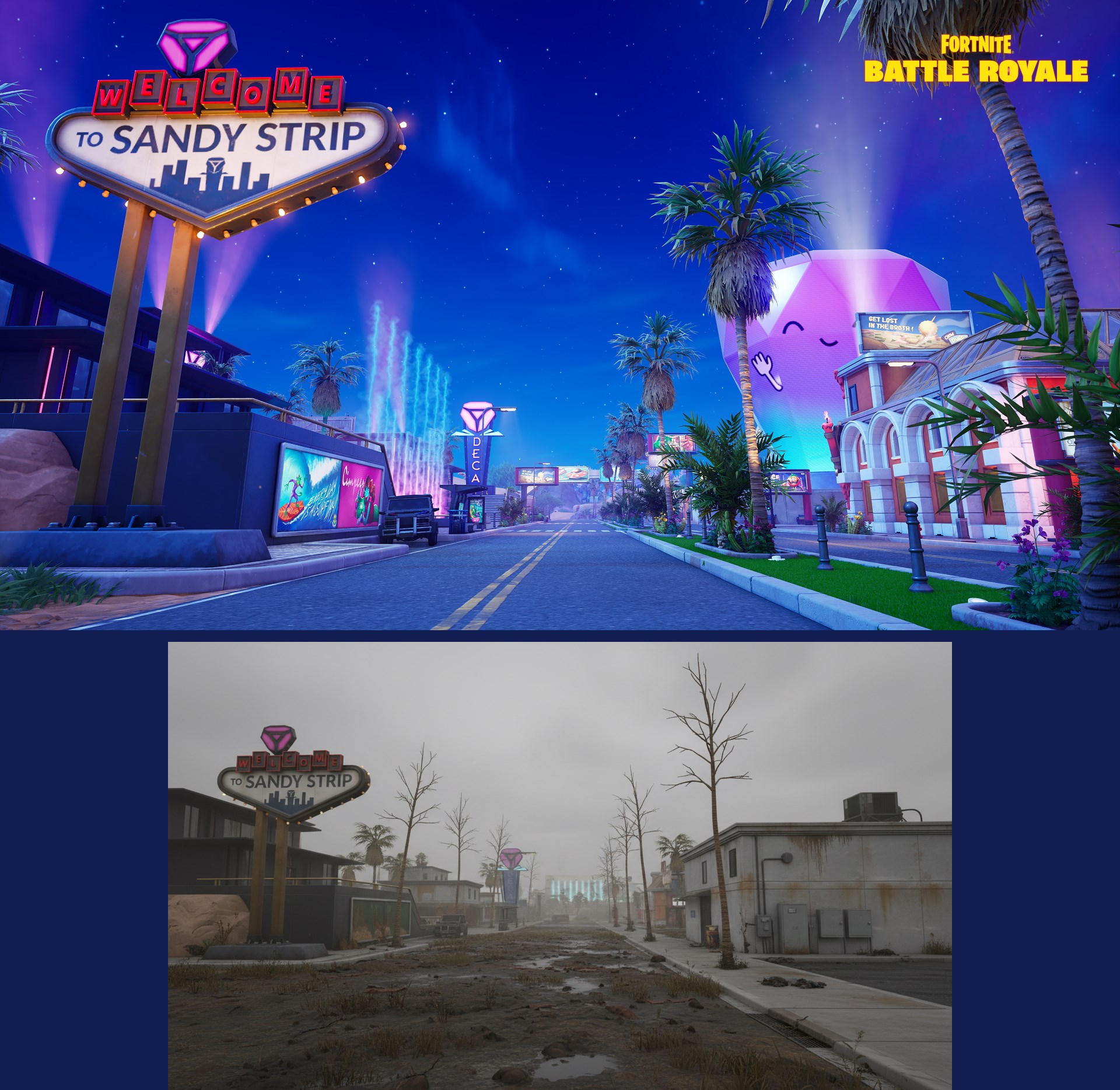
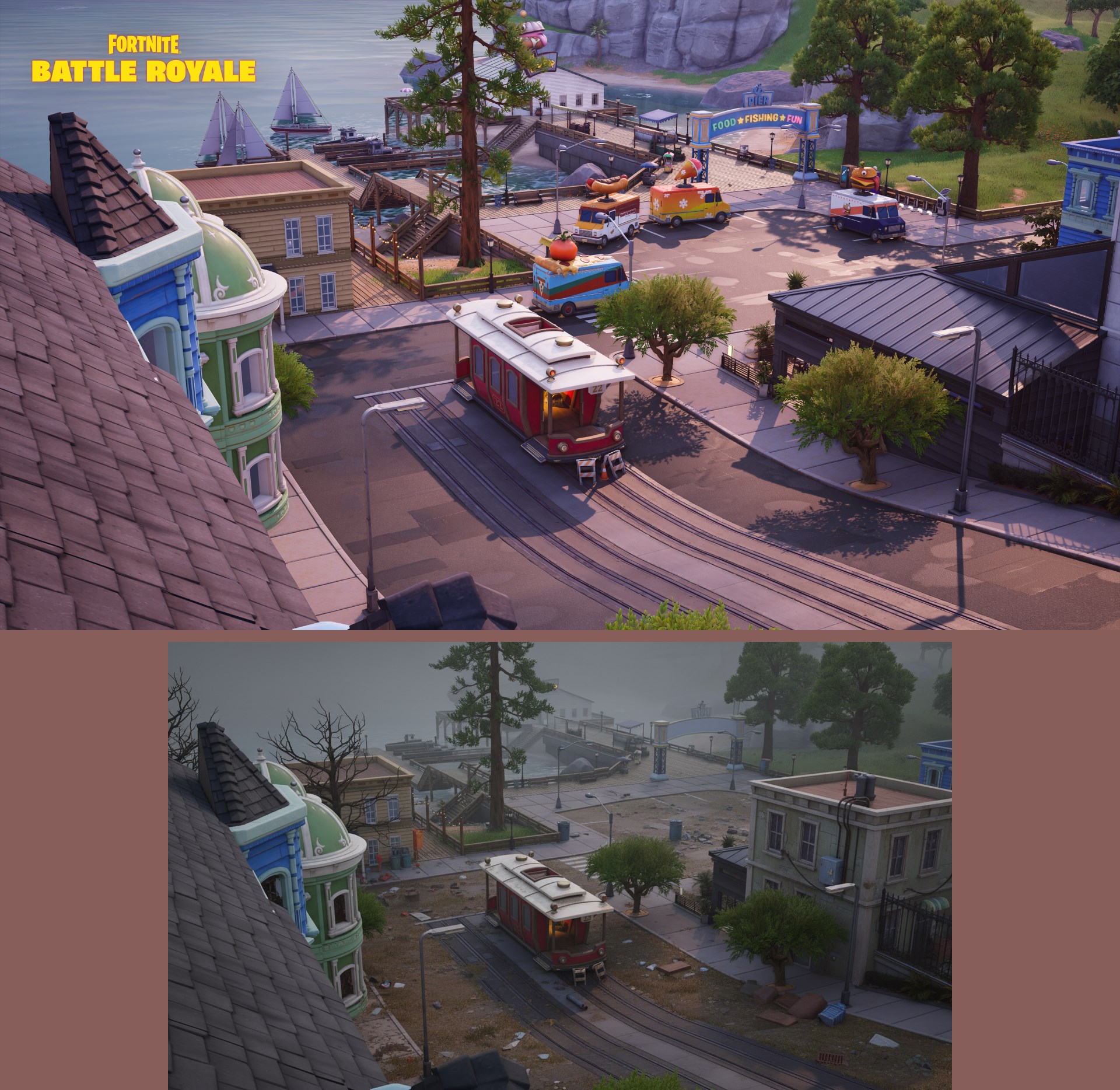
The 'how society would look without x' has been a racist trope on 4chan since way before the cited examples.
If you were right that would be easily verifiable. Do you have an example of a post dated before 2018? Maybe you're getting tricked by the fact that 2018 was 8 years ago?
How?
I was just writing about this (scroll about halfway down to the images of Sam Altman - though if you like that, do watch the second video):
https://getartcraft.com/news/world-models-for-film
The best model I've found for this, that almost bakes in full ControlNet capability, is oddly gpt-image-1.5. It's absolutely OP at understanding how to turn low-fidelity renders into final draft upscales.
Here are some older experiments:
https://imgur.com/a/previz-to-image-gpt-image-1-5-3fq042U
https://imgur.com/gallery/previz-to-image-gpt-image-1-x8t1ij...
I just wish it didn't require invoking such heavy-weight, slow, and expensive models to do this. I'm sure open models will do this work soon, though.
There's nothing more depressing than walking by beautiful historic old buildings only to turn a corner and see a monstrosity of concrete and glass somehow reaching the epitome of bland and uninviting.
You watch a bunch of travel videos and think the place you're visiting is going to be so different but its just the same overcast sky and ocean and washed out color palette as home.
Once you remove all the filters, color correction, and drone shots from influencer travel videos a lot of places look the same IRL.
Even so, I think North American cities are on average uglier than most Polish ones. Overall we're not doing so bad but I want the Slavic city memes to continue lest we get Prague or Amsterdam level tourist invasion.
Is there a better way? Asking for myself, also.
Any solution that requires the user to bust out a credit card and put down his billing address has way too much friction for the median user to get through.
Yes, UBI. Then you can create what you want and your livelihood doesn't depend on it going viral.
I'm a psychiatry resident and developper. I have never been paid for my dev work but have produced quite a lot on my free time (site: w.olicorne.org ). I would do psychiatry pretty much no matter how much I'm paid for it.
In my view the most productive people of every field are not incentivized by money and would do it anyway. UBI would free up time and cognitive load of the most productive people I believe. Following a 80/20 kinda rule.
Hence UBI here would mean that the dev would not *have to* monetize.
Flattr took one approach without much success. They represented the problem well though. When someone does something that is of a small but not insignificant benefit for a large number of people, how should they be rewarded? When the reward due, divided by the number of people paying for it, gets low enough it seems to not reach a threshold that it makes sense for any individual to pay.
You could charge a fee above the threshold, and many people do take this path. It is essentially requiring a small number of people to massively overpay to cover those who don't pay at all.
A Universal Income takes the approach that if everyone gets what they need there is no particular requirement to be monetarily rewarded. You essentially have been rewarded for whatever it is you do.
Advertising plays the small threshold thing both ways, They offer you a chance to sell a little corruption below your threshold for thinking it is damaging, and in return they accumulate the corruption and the money and send you the money and deliver the requested corruption to their customers.
Part of the fundamental difficulty is in determining the size of the reward due. How is that determined? There are plenty of people who will offer services to do that if it means they can take a cut. I don't see that path going well unless it is a mechanism governed by strict non-profit rules, and even then I would have doubts.
A purely rule based system would be intrinsically unfair and subject to gaming, but often times this turns out to be the least worst solution. By agreeing to a set of rules people can accept that while flawed, adhering to them by agreement can make a system that cannot be taken over by a malicious individual.
In short, right now, No I don't think there is a better way. There may be people with a financial interest that it remains that way.
That's not a practical answer but it's my two cents.
I still think it's a neat idea but I can't be bothered to build a real version
Function error: FunctionsHttpError: Edge Function returned a non-2xx status code
:(
Dreary architectural pictures will be more likely to have electrical boxes, poor materials, etc, so when it moves the buildings from the latent space for cheery bright architectural renderings to dreary wet November architectural renderings, it will be more likely to add some of those details, because that's what's in its latent space.
Don't expect GenAI to be magic.
I've been thinking of something like this for decades, as I mentally compared the utopian displays at construction sites to the existing buildings next to them. Like "wow your fancy new building is going to be so perfectly white and clean, but what will it really look like after 10 years exposed to the elements and no cleaning, like the one next door?"
New construction is sold on a literal blue-sky promise. How does it really look like a decade down the road? All construction has a decades- if not centuries-long lifespan. It's worth thinking about them long-term.
I absolutely love the streak of rust coming off the saddle of arches on the bridge example. That's exactly what I'm talking about.
Is there some weird force dropping electrical enclosures on bridges (the cables on top even?) and random places in the street.
Those random protruding manholes next to two other drainage gates nowhere near a slope?
Why are these even the examples.
This is just like turning the HDR tone mapping up to 200%
https://files.catbox.moe/i8tfkl.jpg
https://files.catbox.moe/mw8vbc.jpg
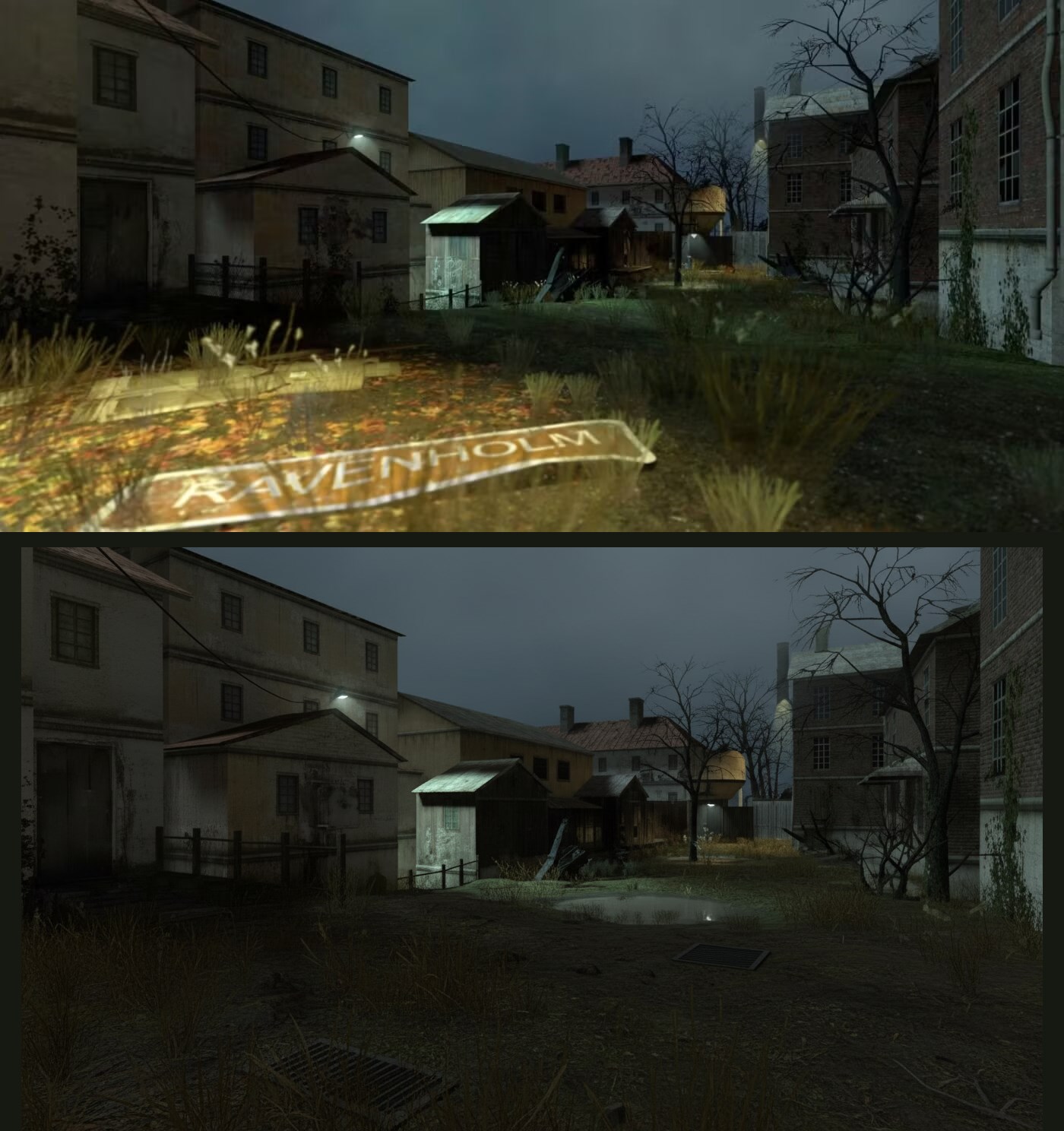
Then I thought what would it make from an already dark and grim scene, like HL2 Ravenholm
https://files.catbox.moe/d7z77h.jpg
but nothing really? Just made the whole thing a different color scheme + changed some architecture
It would probably sell better, because you’re just showing them how their building will look, instead of how it might look.
Would love a version that renders a mix of cars and trucks onto any roads, to show up how crap the experience would actually be out front of road facing building.
On a nice day the render actually looks close to the real thing!
Edit: oh, it's right there at the bottom of the page!
Hah, like connected cars talking to each other, the AR goggles/lenses will talk to each other so each person can broadcast a unified beautifed version of their face to others.
Maybe the Grok AR goggles will have Grok features...
Anyway, if we used this anti-filter on social media then perhaps teens would not be so depressed.
> Under Assembly Bill 723, real estate agents and brokers who display photos of a home that have been digitally altered with editing software or artificial intelligence must include a “reasonably conspicuous” statement “disclosing that the image has been altered.”
https://www.sfchronicle.com/realestate/article/california-la...
One think I wish is if I could get it halfway. I don't need it to look dreary, I just want it to look real instead of overly optimistic.
I wanted something to tell me what was adult about the image, by feature set, in order to display just those images
Worked pretty well, never released/launched it - just needed more capital for the marketing. But then that market cratered - were were going to use the classification attributes on NFTs, since the marketplaces let collectors sort by attributes, so it would have been easy to "find out the market value of particular physical features", and we could have empirical data on what physical attributes people value, instead of just anecdotes
kind of good that we didn't deal with the NFT market in general, project would still work though, just less revenue from sales possible
He had a website, and the sample pic is a girl lying on her back, and in the "after" picture she's wearing a bigger cup-size..
Also, the model goes a bit overboard with the electrical appliances. I had to laugh at the bridge one.
Apart from that, it's a great idea!