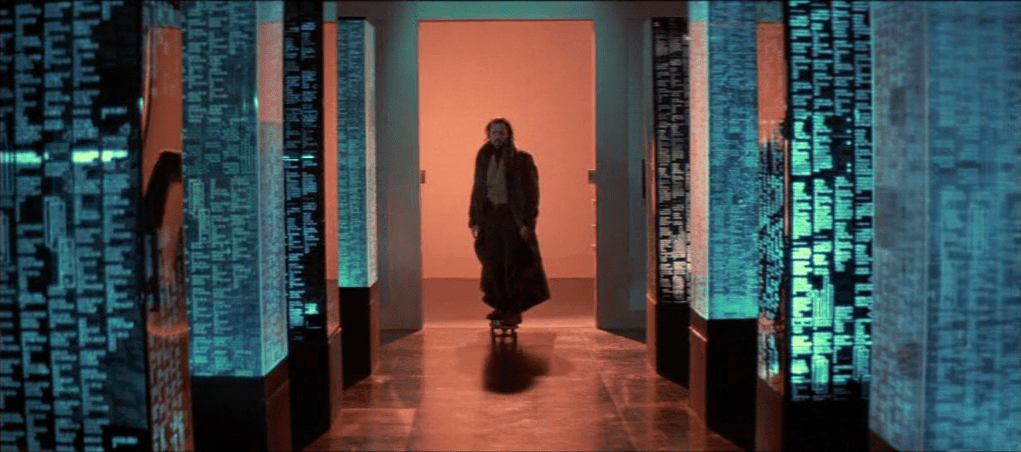
> The head of frogdesign, Hartmut Esslinger met Spielberg on a plane and showed him this mockup. Steven asked if it could be used as a prop in the film, and Hartmut gave it to him.
Furthermore, the act of replying to that post will have bumped it right back to the top for everyone to see.
On the other hand, small websites and forums can disappear but that openness allows platform like archive.org to capture and "fossilize" them.
My Something Awful forums account is over 25 years old at this point. The software and standards and moderation style is approximately unchanged, complete with 10 dollar sign-up fee to keep out the spam.
<https://en.wikipedia.org/wiki/IPhone_(internet_appliance)>
<https://www.cultofmac.com/apple-history/cisco-infogear-iphon...>
SGI was well-known to the film industry, because their IRIX systems were basically the sine qua non of graphics workstations and powerhouses. SGI invested heavily in the graphical capabilities, including 3D rendering, and therefore when the industry graduated from Amigas with the "Video Toaster" they slid into SGI systems quite nicely.
So it stood to reason that a couple of them would show up in an actual film. How plausible it was to have SGI systems on-site at a Jurassic Park type lab? I don't know, but seems reasonable, if they were also crunching DNA numbers.
It's strange to think that alternative architectures were possible though and could get such a foothold in some industries. The specificity is mind-blowng. Everything is "PC"s today.
It is important to remember that nobody who operated a Cray did it in isolation. The supercomputers always require some extra workstations arrayed around it in order to get stuff done. Of course, there were remote connections too, but often there would be at least one sort of "dedicated user console" that was closely coupled to the supercomputer itself. I believe that some supercomputers of that era were poorly equipped to actually handle interactive user sessions, and that's why.
edit: Just last night a friend was watching MiB and Tommy Lee Jones looks at a Motif UI. It was obviously SGI but it was IRIS ViewKit and not the later Interactive Development Environment. Narrowed down likely creator being Van Ling from Banned From The Ranch Entertainment. If you’re out there…
You pump up the handle to charge a pneumatic cylinder and when you cut over it throws a set of three contacts about the size of a first-gen Kindle from one side to the other, switching from incoming mains to genny power in about 1/100th of a second.
It goes with a hell of a bang.
Well it certainly put tension into the scene! Thanks.
It's the Thinking Machine Connection Machine CM-5
https://en.wikipedia.org/wiki/Connection_Machine
https://www.jurassic-pedia.com/cm-5-thinking-machine/
The LED panel is gorgeous:
https://youtube.com/watch?v=6Ko4qBkEcBM
A lot of people have replicated or restored these:
https://youtube.com/watch?v=qm6w57ZcJZQ
https://www.housedillon.com/posts/resurrected-led-panels/
---
I've always hoped the film series would be rebooted back to the original novel. The first film was a masterpiece, and everything that's followed has been increasingly awful. Dinosaurs and cloning are way too cool for that amount of disrespect.
I'd kill for an R-rated horror film (think Alien) based on the book, especially if it were set in 1980 and deeply scientific like the original. That was the only film in the series with believably smart characters, each pursuing complex motivations, with fulfilling character arcs. The plot focused on the people, and dinosaurs were the dressing.
Also, mandatory https://jurassicsystems.com.
It's astonishing to watch 2001: A Space Odyssey today and reflect on how well the production design has aged. That movie is coming up on 60 years old now!
The portrayal of AI has held up extraordinarily well too.
it's interesting to think that many of our current AIs were trained on our fiction in a weird self-fulfilling strange loop.
of course the portrayal aged well, the damn things are using the material as a mimicry source.
> Lem predicts the disappearance of paper books from the society. Lem even describes a reading device very much like a tablet computer that the main character Hal Bregg gets familiar with when he tries to find paper books and newspapers.
Dick Tracy (1933) had a smart watch - personal communicator
Bell Labs (1938) had video calls (facetime)
The Foundation (1951) had info tablets
No idea if they are the first of each
Often films and TV shows have anachronisms in them (like the very first episode, IIRC, of Narcos with the clearly very modern touchscreen photocopier where the screen has been covered with a piece of paper, or the BMW that wasn't released until the mid/late 1990s), but every so often you'll see something that is instead a flash of the future.
Due to #reasons I watched the sentry gun scene in Aliens for the first time in decades the other day. This scene only appears in the director's cut of the film. Anyway, bearing in mind it was released in 1986, imagine my utter shock when Hicks busts out a couple of laptops to monitor and manage the guns. The machines in question are a pair of GRiD Compasses, originally released in, I think, 1984. Imagine that: a laptop computer from 1984. They're not even that big and cumbersome.
Of course, the specs are laughable by today's standards but actually pretty decent for the period, and especially for portables. In terms of memory and raw CPU power they'd certainly have wiped the floor with the average home computer of the day, although graphics capabilities might have been non-existent, and sound would have been PC speaker at best.
So, yeah, Nedry with a tablet? I can buy that. His whole den/lair is like a toy box of the coolest hardware and software from the early 1990s. But for all the times I've seen the film, I've never spotted this before.
They have patented the clamshell form, so all the early laptop manufacturers had to license their patent.
GRiD Compass was designed since the beginning with the main goal of being a computer that can be carried in a briefcase (at that time, engineers and programmers normally carried briefcases, not backpacks like today). This was somewhat similar with how the first "scientific" calculator had been designed by Hewlett-Packard, with the main goal of fitting inside a shirt pocket.
There have been a number of earlier portable computers, made by IBM, Xerox, Scrib, Sony, Epson, Osborne and a few others, but most of those were much more cumbersome and more difficult to carry (they were nicknamed "sewing machine" computers, for their size and weight), mainly because they had CRT displays, while GRiD Compass had a beautiful flat electroluminescent display.
Before GRiD Compass, there had also been a few Japanese portable computers with flat LCD screens, but in those the screen could not be folded, the body of the computer was in one piece, containing both the screen and the keyboard, like in an oversized calculator, so their screens were very small and they used very weak CPUs in comparison with GRiD Compass, which had an Intel 8086 (but it was not compatible with the IBM PC, as it was launched when the IBM PC was only 8 months old and not yet as important as it has become later).
That's very subjective.
I simply didn't know any of this before I saw that clip and was surprised to see a couple of recognisably modern form factor laptops. It sounds like there may have been several models of GRiD Compass but, as of a few days ago, I'd never heard of any of them.
The early to mid 80s was still very much also the era of the luggable, but in 1986 I'd never seen either a luggable or a laptop, and whilst 10 year old me probably wouldn't have been super-impressed with a heavy computer in a suitcase, I probably would have been agog at a laptop. I don't think I even knew what a laptop was until maybe the early 90s when they started to become a bit more commonplace.
The launch of GRiD Compass started with a campaign of advertising in that magazine, which had very spectacular photos of the computer demonstrating various applications, especially due to its unusual flat electroluminescent display with a nice bright orange color.
Even if I usually am immune to advertising, I was very impressed by the GRiD Compass advertisements, so I have been remembering them until today, despite never seeing one in real life.
While GRiD Compass made me aware since the beginning of the existence of the laptop format (the word "laptop" has been coined one year after the launch of GRiD Compass by another company, Gavilan, which has introduced a computer copying the clamshell form, but made at a lower price, with a proportionally lower quality), I also had the opportunity of using laptops only many years later, starting in the year 2000.
https://i0.wp.com/scifiinterfaces.com/wp-content/uploads/202...