This time, however, it looks like it's actually true and that's just for wind and solar. This is incredible, and done through slowly compounding gains that didn't cause massive economic hardships along the way.
For that, you want this graph: https://ourworldindata.org/grapher/energy-consumption-by-sou...
Fun to play around with, you can also change the selection to view the world, US, China, individual EU countries etc.
You can see that this the gain in renewables in the EU has been mainly at the expense of coal (down >50% as a share of total energy use in 10 years), gas (down 4%), and nuclear (down 20%.) Oil use as a share of the total is up by 5%.
Most uses of fossil fuels are very inefficient. For instance, when you step on the accelerator in your car, only around 30% of the energy in the fuel you use actually is being used to propel you forward. The majority of the energy is wasted as heat. In a power plant that's more like 70% being captured and going towards the goal (electricity generation).
Another large quantity of energy-usage is heating, and electrical heat-pumps can be around 3-5x more energy efficient at heating an enclosed space than combustion or resistive heating.
So while things like heating an transportation use a very large amount of energy, conquering them with renewables actually won't require that Europe installs 10x or whatever more wind and solar, since electrification also brings significant new efficiencies.
______
If you want to compare renewables against the amount of fossil fuels being burnt, then it'd be a lot more representative if you calculate the amount of wind energy impacting a wind turbine blade, or the amount of energy in solar radiation incident on a solar panel. That's an easy way to inflate the renewable numbers by ~5x or whatever
That said, those are two pretty large items. If we reached 90% electrification on both it would be a pretty big win: Road transport represents ~26% of global energy use and all heating/cooling (industry, building, agriculture) represents ~50%.
For the EVs in particular, because motion <=> electrical energy is almost the same either direction (a dynamo and an electric motor are almost identical) we get regenerative braking in most applications. This isn't anywhere close to 100% effective, and of course we net losses from resistance which gets much worse as speed increases - but it's not nothing.
The big win is that global warming problem. Electrifying consumption means fungibility. In my lifetime the UK went from mostly coal electricity, to no coal at all. But few cared because to the end users it's the same electricity regardless of how it was made, and most people probably didn't even notice. So if you move consumption to electricity then the generation problem is de-coupled and can be addressed separately.
Where you need process heat for industrial applications, you’re almost always better off with resistive heat or fossil fuels, typically gas.
For the rest, there are many ways to heat electrically. Including resistive, plasma, arc, induction, etc. Mostly, gas based heating is convenient because it is rather simple technology that is easy to use and we know how to do it at scale. But there is a lot of wasted heat in industry. Mostly that just blows out the chimneys or is radiated to the universe.
Cooling is as big of a problem as heating is in industry. Cooling is the process of expending more energy in order to get rid of the already wasted energy you can't use. Very little of that energy is recovered. Though some places run e.g. district heating on this type of energy.
There are examples of steel producers that are using electric heat now. Still a bit niche. But it works. A lot of this stuff is inertia. Building and designing new factories from scratch is expensive and disruptive. Gas isn't expensive/wasteful enough to consider that for a lot of existing industries. However, new companies would be well advised to see if they can undercut the competition by going electric. Especially in places where gas now has to be imported in LNG form at great cost.
My cheap air to air heat pump in the summerhouse (Panasonic HZ25ZKE) is effective down to -25C and has a COP of 2.22 there. Even at -25C it still delivers twice as much heat energy as the electricity consumed.
https://www.aircon.panasonic.eu/DK_da/product/panasonic-hz25...
I'll add that this being an older house (1970s) we have "other issues" that causes heat loss, so we usually run the log burner for supplementary heat during those few days of -20C. The heat pump can keep the house warm, but you can feel the cold "pushing in" from walls and windows (dual pane).
Sadly the heat pump has also kinda voided all attempts to renovate for saving energy. Our yearly heat cost (heating and warm water) is around €750, and adding insulation would cost around €3500, for a potential saving of around 10-20%, so a total of 20-30 years to earn itself back again.
This is also my experience in upstate New York at such temperatures.
But it really made me realize that even though I'm used to brick houses and stone everywhere that that is a terrible thing efficiency wise. A properly insulated wooden house can indeed be heated almost by body heat and waste heat alone. The big loss is windows so triple insulated and properly mounted windows are a must for such a setup.
Few cared that electricity price increases out passed general inflation.
I don’t think so.
If all we’ve got is opinions, let’s go with mine.
Name one place where renewables penetration is worth talking about and electricity became less expensive.
Does that 26% include the energy that's involved to ship the fuel in tankers?
Something like 50% of marine fuel usage is shipping fossil fuels around the world
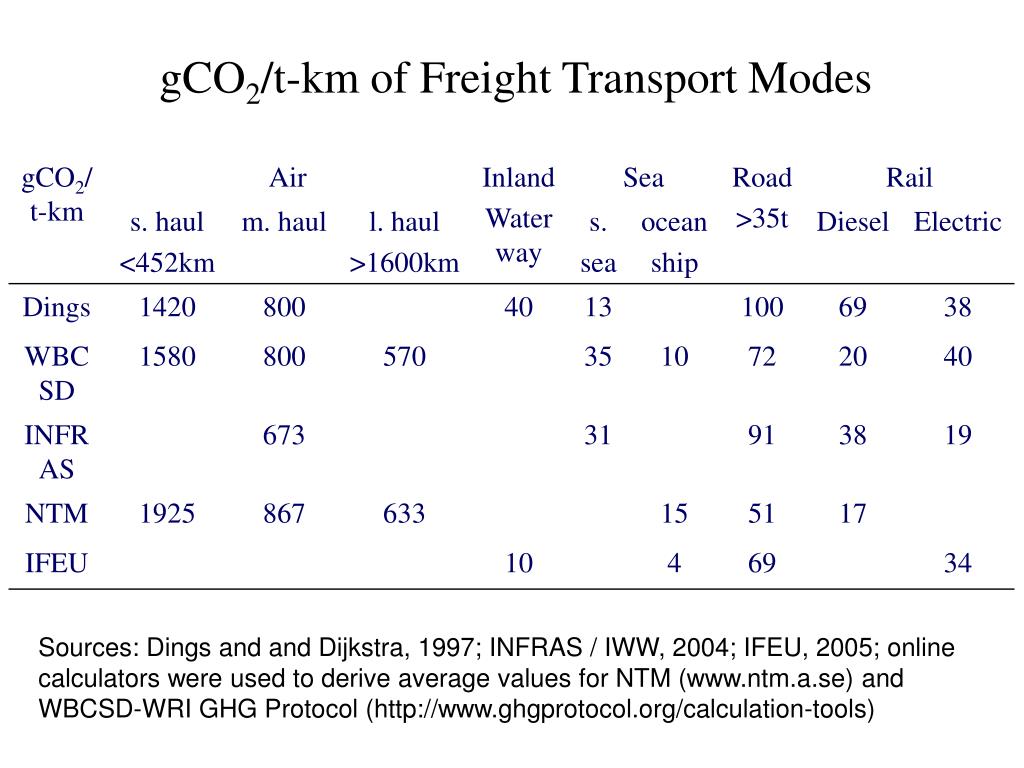
Note that marine shipping is extraordinarily fuel efficient (from a gCO2/(t*km) basis), so I doubt that it adds a lot on a per ton of fuel basis. We just ship a lot of fossil fuels.
This [1] graph looks to be in the right ballpark from what i remember in school 15 years ago, i didn't verify it in depth but +- an order of magnitude better than the next best method is roughly right
https://image2.slideserve.com/4166134/gco-2-t-km-of-freight-...
But even that is still worth saving - it's a few percent more benefit for electrification.
You can say this is 100% efficient as you make some electricity and the rest does house heating.
Yes, but there are also future inefficient uses of renewables. E.g. when making iron, you heat the ore (iron oxides) with coke (refined sulfurless coal). The coke will provide extra heat and act as a reduction agent, separating the oxygen atoms from the iron oxides. Now you can do the same thing with hydrogen as the reduction agent to avoid producing CO2 and to avoid using fossil fuels. However, creating renewable hydrogen is atm only 30% efficient, storing and transporting it has losses. Even with possible improvements, that hydrogen will be a very inefficient and costly use of electricity, and at least half of it will always be wasted.
So in terms of total energy usage, making those kinds of industrial processes use hydrogen, we will have to at least double our electricity output. And a lot of that doubling will be wasted because of the inefficiency of electrolysis, as opposed to directly using coal or natural gas.
So, papers or are you hallucinating?
But here is a paper - only the title is German the main part is English https://pure.unileoben.ac.at/files/1851525/AC06514880n01vt.p...
https://en.wikipedia.org/wiki/Steelmaking#Hydrogen_direct_re...
It’s also borderline unbelievable OP never heard of hydrogen in future steelmaking, if they are at all invested in the topic. You’d need a special kind of ignorance to think people are hugely throwing money at this, when the basic chemistry is infeasible.
Now I wonder how cost effective it is :)
So water as a product is actually more stable than CO₂, and doesn't undergo thermolysis at the relevant temperatures for smelting iron. Whereas when going the CO₂ route, there is the risk of producing relevant amounts of CO, which is not as desirable and less efficient because it only absorbs half the oxygen.
Cost is a big question, but it will for sure be more expensive to use hydrogen. Back of the envelop calculation (250$/t coal price, need 1/3t of H_2 for the same effect, so H₂ may cost up to 750$/t, need 40kWh/kg for H₂ electrolysis at 100% efficiency) gives a breakeven electricity price of 1.875ct/kWh. While this happens from time to time due to overproduction, those prices will even out as soon as there is a market for that excess electricity through batteries, storage and electrolysis. Which means that cost-wise, the H₂ route will never be more effective than coal. To make it viable, coal use needs to be made more expensive through taxes and tariffs.
I believe right now, it's expected to cost about 30% more. But we don't have an hydrogen economy yet, or 1000 years of experimentation as with carbon as reducing agent. There is probably still some room for innovation in material science for every part of the process.
Also after clicking the "settings" button to show absolute values, I was surprised to see that total energy consumption peaked in 2006 (hey, that's 20 years ago!) at ~18,900TWh, and is now at ~15,700TWh.
I'd guess that demand for Oil is so inflexible mostly due to its use in transportation? If that's the case, we should see this value drop as the adoption of EVs progresses, but clearly so far they haven't made a dent.
Edit: after clicking around a bit more, it seems that the EU energy use reduction might be mostly due to off-shoring energy intensive industries... ayayay. XD
Heat pumps though.. they really save a lot of electricity. Very visible on my electricity bill.
Also at least it saves electricity during summer when you don't want to dump even more heat into the room.
As a side, from my experience LEDs last significantly longer than incadescant LEDs. Maybe it's something to do with the power grid fluctuating more in certain areas?
As for your question, living in a country where 100% of domestic power is electric (save the occasional wood heater which is more for decoration but can be useful in certain very cold areas during winter), yes there's indeed a ton of resistive heating. All the heating in my home is resistive, except for the heat pump in the living room. And the living room is upstairs. The house is very well insulated though, even for a house many decades old, so it's not that expensive to heat.
In the summer? Well, this far north it doesn't get that hot, and we don't actually need to use electric lighting at all during the better part of summer, unless the room is windowless. 24 hour daylight.
The graph is adjusted to compensate for the efficiency of the power plants, but it's an average and one they need to update every so often as plants get more efficient.
But we're phasing out the oldest and least efficient coal plants and replacing them with gas plants that are twice as efficient (33% vs 64%).
The graph under discussion assumes 40% as discussed here:
Renewables plus nuclear is now at around 70% of all energy (by final consumption) that is produced in EU though, it's just that the rest is imported.
I'm probably misunderstanding because:
https://ourworldindata.org/grapher/per-capita-energy-source-...
https://ourworldindata.org/grapher/per-capita-energy-stacked...
The majority of nuclear-producing nations (Australia, Canada, Kazakhstan, Uzbekistan, etc.) will immediately comply.
Wind and sun, however, cannot be confiscated or withheld by blockade or embargo.
Source: https://en.wikipedia.org/wiki/Uranium_mining#Peak_uranium
In France numerous projects appear. Some may be too ambitious, some with a Chinese partner. In any case we will re-learn, and it will be less difficult than creating usable uranium without any adequate ore here!
Any country that starts a new nuclear power plant construction today won't finish it before electricity will be comprehensively solved by renewables. It pertains even to dictatorship where public opinion does not exist and there's no red tape (Belarus: 14 years from decision to first reactor start) let alone not in free countries. It puts them into 2040+. In EU let's say there will be certainly no fossil fuel electricity at all, maybe apart from few percents of natgas for prolonged quiet periods in winter, and whatever nuclear power remains will be easy to replace. China? go figure, they have a problem of removing coal generation and that's essentially same as nuclear from standpoint of its behaviour on the grid, and there is so much more coal, nuclear will be squashed simply as a byproduct of whatever solution (which will likely be solar+batteries) they come up with.
Yes, the _!ONLY!_ thing is, this won’t move the needle at all on climate change.
Wind and solar for electric is the lowest of low hanging fruit.
No one has even proposed that they have maybe even possibly have perhaps thought of an idea to address transport and agriculture related emissions.
Lithium ion batteries, or a solid state alternative aren’t it. Not without being some orders of magnitude more energy dense and lighter. And you still need to electrify those sectors to be able to charge the batteries.
Public transport is almost completely electric powered where I live (ferries still haven't changed to electric, but it's coming.)
Trucking is electrified, as in, the operators have realzed that they're cheaper to run, so they are changing over when possible. (Sidenote: with some of the heaviest loads worldwide)
Very many agricultural buildings in active use either have, or are installing solar. Their energy usage is so high, that any offset to it is "free" money. Many have installed batteries also, so if there is an interruption in power delivery, there isn't an immediate need to start up a generator.
Electric tractors are also something I've heard them want. Less maintenance means less time spent not being able to work.
Sure, fertilizer and animal husbandry have other emissions which aren't tackled by this, but why exclude improvement just because some other area isn't affected.
You’re not looking hard enough, past the greenwash.
That's weird. In europe trains, trucks, light trucks busses and cars are bascially solved with EVs. There are even some early beginnings for heavy construction and agriculture machinery but it doesn't seem to be mass market yet. Electric ferries also start to pop up for smaller distances.
The biggest issues seem to be ships and planes. Not sure there are any good solutions there.
I’ve read multiple stories of European manufacturers saying they are struggling with high operating costs, with energy being a major factor making it difficult to compete with China who has invested in every sort of energy broadly. China doesn’t just compete on labour costs like people think, they figured out ways to make every part of operating there cheaper.
Just keeping the prices baseline to something else that’s already relatively expensive shouldn’t be the only goal. But it’s progress I guess.
It’s still a great trend.
The outage was never about renewables, it was caused by bad dispatch of reactive power.
Replacing IC engines is a whole different story, and it's not clear whether electric cars are a complete replacement yet.
Because he's so "reasonable" and "pragmatic", he didn't say we shouldn't phase out Russian gas, he just said solar and wind don't work and so we should invent some totally new type of energy for this purpose.
It's only with a few years hindsight that he's obviously a shill. You had to be paying close attention at the time to notice.
And sadly that kind of engineered delay is widespread.
- The greens opposed the Nord Stream pipelines for years. And have been opposed to relying on natural gas for a long time.
-Nuclear power is generally a contentious subject in German society. Probably because of Chernobyl and how a lot of the radioactive cloud blew into Germany. Whoever lived through this will have some dramatic memories of those weeks (kids not allowed to playgrounds/outside etc.). It was actually the CDU and FDP that finally decided the phase out of nuclear power after the Fukushima disaster. (The Greens also voted for it)
- The Greens are very strong supporters of Ukraine.
I personally believe the nuclear phase out was a mistake, but it had broad support in the German parliament and society. The phase out would have happened even if the greens hadn’t voted for it.
Without them raising panic about nuclear we could all be paying something closer to $40 - $80 a month for all the electricity we could reasonably consume, much like mobile phone plans / prepaid service.
That would still leave transport and agriculture emissions to deal with, but they’d be easier to solve if we had virtually unlimited process heat to generate hydrogen > synth fuels.
That's outdated: https://en.wikipedia.org/wiki/Too_cheap_to_meter
Hanno Klausmeier wrote what follows: CDU / CSU : Center right parties, Christian democrats FDP: Right wing liberals, moving to libertarians (Koch line) SPD: Social democrats, oldest party in Germany, old fashioned, a certain proximity to Unions. Greens: Rather left wing liberals, ecologic positions.
Who is in the government right now?
SPD the Greens and the FDP. Do they like each other? No they hate each other but they are forced to work together.
In the current political discussion the CDU/CSU (especially the CSU from Bavaria) are complaining the current government switched off the last remaining nuclear plants in Germany. The FDP which is part of the government is also criticizing the switch off of the last nuclear plants albeit being in the same government.
Now lets take a look which parties switched most of the nuclear plants off since Fukushima?
CDU/CSU: 14 FDP: 11 SPD: 9 Greens: 3
At the time when the Greens were in power a decade later, it was already way to late to build out nuclear infrastructure again (not to mention the lack of fuel).
So yes, you've metioned a conspiracy theory without any substance.
The Greens continually pushed for renewables, which the (conservative) government largely ignored in favour of building gas pipelines to Russia.
It is unlikely that the greens had much control over that, even if someone would have claimed it their victory at the time. That the greens would wield secret power over their political opponents would require a special kind of conspiracy.
It was done for economic reasons, like so many other political decisions are. The connections to Russian oil and gas companies on both sides of politics probably helped, but it would have happened anyway. Of course it was spun as a great thing for the environment, which it wasn't, but spin doesn't have to make sense.
Ex-politicians riding the Russian oligarch gravy train should be chastised, and rightfully so. That does not require any anti-green sentiment or conspiracies, just common sense.
The next milestone to watch: when battery-backed solar becomes cheaper than gas peakers for evening demand across most of Europe. We might be closer than people think.
Throwing batteries at it is a kind of blunt and uninteresting solution (I guess the market will prefer that one!).
I pay low energy prices during night than day, that's normal, but I'm still not gonna do laundry at 9 pm, I'd rather pay the 10/20 cents more during the day.
I'd like to appeal to you to evolve that frame of mind. To help avoid first world problems (I can't wash a dish by hand, I need it now) devolving into third-world ones (power cuts, crop failures, torrid tropical nights on mid latitudes, mountains disintegrated).
Sometimes its important to remind we're on a generational mission, and it's not maximising Netflix time.
Get that into the society's rules and then we'll talk.
I like to think I'm modest and sensible but I'm not bending over backwards while my neighbours get to do what I perceive as ridiculous things.
I used to live in a two bedroom unit, conserving things for the environment and next generation. But next door the neighbour in his huge house, 5 SUV's, heated pool streaming heat into the air all winter can just pay for it with money.
My actions are shaped to societies rules and monetary incentives. I'm not going out of my way to "roll coal" or anything stupid. But I'm not wasting my time either.
Sadly, that's pretty much the extent of your control, unfortunately (that, and maybe voting for people to change the laws, which would indirectly change the rules of society - although, usually, the relation goes the other way.)
In this case, if it's even in people best interest to change the "timing of dishwashing" to align on cheap hours - I trust people will do.
The trick is to not overpolitize it - my mum has always launched her dishwasher during "heures creuses", not caring a damn about why the electricity is cheaper at this time. If the cheapest hours end up being earlier, lots of people will just adapt to save a few bucks - it may be smarter to NOT mention solar power, or environment, or whatnot.
When we are serious about this issue, we'll price it all in. The only way to affect change for most humans is incentive based decisions right in your face.
1. In my area 96% of energy is gas-based. I live in Rome, Italy. It's written in my energy bill. I ain't got no solar. Night or day it's mostly a matter of relatively small changes of demand.
2. If you want to do something real for the environment change your diet! I'm sick of this neverending focus on energy when the biggest impact you can have is by eating way less meat, cattle in particular. On that I am very sensitive. And me deciding to have less burgers and steaks across an year has magnitude of order more impact than your silly dishwasher. Do the math. As I am on transport where instead of pretending to be green by buying 3 tonnes electric SUVs on a lease from US lunatics I use public transport and use my old beaten car sparely in the weekends.
Spare me your nonsense because I ain't gonna be thinking about running a noisy dishwasher in my living room at 9 pm, the only moment of relax and peace for my family because of negligible-to-nonexistent impact on the environment.
And just to add, I don't even own AC, and I can assure you it gets 40C/100+ Fahrenheit, with high humidity in Rome at summer. That's how sensitive I am to the topic.
You know nothing about the people you interact with.
This addition doesn't really add anything. Your tone says it much clearly. You don't like advice, do you? I'm sorry, but I can't help myself. I'd recommend you to try to lower your sensitivity.
But really I can't understand you. You've said:
> I ain't gonna use the dishwasher when the system wants me to, but when I can or want.
I need a bit of a guesswork to understand what you are implying, but still... I think you are sure that system will do no better than you from an effectiveness standpoint, while making things less comfortable to you. So you are enraged from mere proposition of such a system. It seems to me like a hyper sensitivity.
You see, if such a system would work as proposed and your allocation of resources is close to an optimum, then the system will do the same or something close to it. Nothing to be enraged of.
Also, I like how you combined:
> If you want to do something real for the environment change your diet!
with
> You know nothing about the people you interact with.
There was nothing about their diet but you kinda guessed it just by looking at their writing?
In this case, they said they live in Rome. Concrete, heavy machinery to make it livable, trash movement, maintaining their public transit, household goods, electricity via nat gas, etc. Sounds like they're making a good effort, though, and in terms of just the discretionary part, they might be right.
By comparison, driving a pair of gasoline cars their average of 10k miles/yr is something like 16% of the average American family's yearly emissions, or 3x the beef.
Switching from heating with natural gas to a heat pump would also make a bigger dent for the average American family, let alone if they're living somewhere that gets properly cold, like New England. Or just spending $2,000 on air sealing and a layer of fiberglass, for those living in a leaky house - more impactful than not eating beef.
Looking into it a bit for Italian families, it looks like cattle might a larger proportion, partly because their overall carbon footprint is lower. But it's still a relatively small proportion (<15%).
Pretty sure if landowners weren't raising cattle, the alternative isn't going to be letting it return to nature and lowering the value of their land, without big government programs that essentially pay them to do that, so that whole thing seems kind of moot.
The diswasher will by full after dinner, so I close it and press "start". It has to be done at the latest by next dinner. Does it run immediately, during the night, or during the day? Irrelevant, let the damn thing pick the best (cheapest) time.
Same with laundry. On average I run less than one load a day, so I'm happy if it finishes either when I wake up, when I get home from work, or when I am about to go to bed.
Recent dishwashers can open by themselves and dry the dishes, washing machines need a (awaken) human to remove the wet clothes when they finish their cycle.
Don't knock small gains like this. Even a couple of percentage difference is worth having; all the marginal gains add up to make large scale gains.
Your car is. And honestly, you'd rather charge the car at night so that you don't blow a fuse when you're running the dishwasher, microwave, dryer, oven, induction stove and charging your car :)
I have never blown a fuse being getting an EV, and so far still only once.
But charging at night is preferable for that reason, and I couldn't care so long as it's ready by 7am.
Load shifting EVs is easy, and this moves a lot of load. It was never about moving all load.
Compressing humid air releases heat which marginally increases the temperature of the condensing compartment, and marginally cools the evaporating compartment with the wet clothes; thus the heat pipe will quickly equilibrate the 2 compartments.
That way lies madness, although I suppose there might be one or two family members I would want to lock out of the dishwasher.
Plus, such a system would provide even more ways for nefarious actors to sabotage the grid, by influencing the demand side. For example, setting every appliance to run its load at the same time. The grid would be fucked.
1. Electricity moves for 5/10 min clearing intervals with defined caps at either end (currently in Western Australia it's simply 2 intervals, peak & off-peak). 2. Expose the pricing/market data via API 3. Develop existing home automation frameworks/tools/device IOTs/routers to access that. 4. End user grants permission/configures it on their smart phone when they set their dishwasher and washing machine on set up ("would you like to enable this smart-go button by connecting to Wi-Fi? It could save you $150 per year").
No control ceded to third parties to turn on equipment whenever they want, just allows the end user to cue jobs for when the PowerCo anticipates lowest prices.
PowerCo not any more of a honeypot for attack, at least not more than they are now with control over critical generation/tx/dx infra.
The problem is its often very cloudy in the winter. In the UK in winter we regularly have periods of 5 cloudy days in a row where solar output is virtually zero.
I don't know what the answer to that is. In a calm cloudy winter week all renewables and battery storage are totally screwed. Space based solar is a scam. Maybe we just have to live with it until fusion works (if it ever does).
(But it's still academic at the moment because we're still far from the point where building more renewables is a bad idea.)
It's not net zero, but nearly zero will probably do fine?
Politicians like to say net zero, but when we are 90% there will we maybe not stop caring and find other more pressing problems?
The real issue is the cost of keeping gas peaker stations around that are mostly idle and fire up only a few days a year, but that's an economic issue, not an engineering one.
In the longer term, you could even run them off net-zero renewable syngas that you make the rest of the year using low-cost electrical power at peak solar generation times; you only need to store a relatively small amount of it, and old fossil fuel reservoirs are ideal for this.
Baseload nuclear is entirely feckless as a backup for a renewable grid. You either go with a long term storage technology (and then don't need nuclear), or you go to an entirely nuclear grid. Wind/solar and nuclear don't mix well.
Everyone who’s tried it suddenly realises that anything you put in the ocean is almost immediately covered in marine growth, or destroyed by the ocean itself.
And that wave / tidal energy is very diffuse, or that where it isn’t diffuse it’s also extremely destructive.
Page 7 of https://www.ofgem.gov.uk/sites/default/files/2025-09/LDES%20... lists the technology types of the project applications. The majority are Li-Ion BESS, but there are also other battery chemistries and Liquid/Compress Air Storage
1. https://www.ofgem.gov.uk/press-release/super-battery-project...
Government picking winners?
When did that ever work out well?
The floor is a minimum revenue guarantee, to protect investors at times when the wholesale price is low and the cap is a maximum revenue limit to protect consumers when the wholesasle price is high.
It seems like these limits haven't been set yet, so I don't know what the potential impacts on energy prices will be.
When was the last time a new dam and hydro electric power plant was built in your country?
Either all of the favourable geography has already been dammed, or good luck getting environmental approval.
Use the excess power in summer for some kind of industrial use.
But yes, resistively heated ultra low capex thermal storage ("hot dirt") is very attractive.
I just checked our stats. Average consumption 16kWh/day. Sunny summer day we get 30-40kWh. Sunny winter day 10-20kWh. Cloudy winter day it's 0.5-2kWh.
Also that's without a heat pump... Which you mainly use in the winter.
And without an electric car but I doubt they're as big of an issue because you can charge them from cheap overnight power anyway.
Lowest possible fixed costs, high operating costs.
To see the effect of including such, go to https://model.energy
Using a long term storage technology (in addition to wind/solar/batteries) can cut the cost in half at high latitudes.
It’s a lot easier to store and transport than hydrogen and the capital items already exist.
Curtailment fees should be replaced with purchases of green LNG.
Another option is ammonia, which is quite nasty to deal with.
True, but then for the UK solar power isn't the right thing for winter, hence why we need a massive mix of other stuff.
Also we have the advantage that france isn't that far away.
In the UK battery is about grid stabilisation, as in making sure that it hums at 50hz rather than 49.
> the focus of energy storage has shifted from frequency services to energy arbitrage. Due to market saturation, the share of frequency services in the revenue stack has significantly declined, from 80% in 2022 to just 20% in 2024. Looking ahead to 2030, we expect energy arbitrage to dominate the revenue stack, with most revenue coming from participation in the balancing mechanism.
As more renewables come on stream and the grid gets more complex, batteries are going to plug holes.
Energy Arbitrage is usually a good thing, so long as its regulated to for the customer, not the battery people. the point is that battery capacity is being deployed to even out the 5-9pm peak, which means that we are much much less dependent on gas turbine generators (which means less price pressure linked to LNG prices, if you're not into the co2 aspect)
No it doesn’t.
The arbitration is only possible because the battery storage providers can ever so slightly undercut the gas peakers.
The price pressure is still linked to the LNG price.
I think you underestimate the cost of running a grid battery, you need to be able to undercut significantly to make profit.
Its not like you can practically keep the battery at 98% for 7 days waiting for the right time to discharge, its not that simple.
The aim is to make as much money, but the markets you can join are regulated (in the UK)
You can be a grid stabilisation service (paid to be at % percent battery and turn on/off in milliseconds to keep the frequency from going too high or low)
You can be intra day, or day ahead. but you're not likley to be dayahead because you're rated at x Mw for n hours. The stuff that I know about in iberia is ~100-300Mw for 3 hours. Again spain is a special case because the market is peer to peer through PPA.
I digress.
The point is sure last year there wasn't really enough battery to affect peak price(in the UK), but now there is 19 gwhr. assuming its all rated for 3 hours, that around 18 % of total generating capacity for 5-8pm.
Now as there is a mix of cfd and other financial things that actually affect price, it doesn't quite work like that in the UK.
Good, we agree the solution is: Nuclear!.
It's not a scam, it's a weapon. The same proliferation arguments that have been used against nuclear also apply to space-based solar.
However, as seen above, there are lots and lots of ways to store (or equivalent) power over long periods, it's just the economic incentive to build them that is needed - and is now on the way. Renewable-gas low-duty-cycle gas peakers, Carnot batteries, and sodium-ion batteries are top candidates, with the first being the low-hanging fruit because they already exist.
Lol give over. Who told you that - solar panel companies? Companies selling holidays to the UK?
You ever been to England?
It really doesn't. Clouds absolutely kill solar. In the winter we get 10-20kWh/day on sunny days and 0.5-2kWh/day on cloudy days.
I dunno where you got that info but it's dead wrong.
What’s wild to me is how the US is leaving itself in the dust. How the GOP imagines we’ll be competitive when the rest of the world can produce electricity 10x cheaper than we can is a wonder in itself
They are currently getting lobbied by oil executives, who are trying to maximize short-term profit while they still can. The wider industry doesn't have the long-term vision to preemptively outlobby them, so the GOP is doing what oil wants.
Dealing with competition in a post-oil world is a problem left for the next generation: the current GOP will be long-dead by then and will have enjoyed the fruits of accepting decades of oil bribes.
By forcing oil prices to get 10x cheaper, at the barrel of a gun. See: Venezuela and Iran. Will it work? I would not bet on it.
I almost paid < $1USD/gal gas a couple months ago ($1.20 89 octane). My electric is ~ $.12USD/kwh. Gas is just as inexpensive.
Where in the EU can I get energy for 10x cheaper?
https://www.bruegel.org/analysis/europe-has-solid-basis-batt...
That does not make the investment any better. Private capital can be misallocated too.
Our economics may not match Canadian or US ones.
Meanwhile, low income households are running into financial issues if they want to turn up the heat.[4]
The whole process has been mismanaged at best.
[1] https://cen.acs.org/business/economy/Europes-specialty-chemi...
[2] https://www.reuters.com/business/energy/europes-chemical-ind...
[3] https://en.wikipedia.org/wiki/German_economic_crisis_(2022%E...
[4]https://www.independent.co.uk/voices/heating-eating-energy-b...
> “Our industry continues to face difficult market dynamics and challenging energy costs, with European gas prices around three times higher than the US,” Arnaud Valenduc, business director for Ineos Inovyn, the Ineos business that makes chloromethane, says in the press release.
I'm I'm favour of increased renewables, but we need to be truthful about the costs. A fully renewable energy system is probably always going to be more expensive per unit than a fossil fuel based one.
No probably not at all unless you mean in the short term. The fossil industry gets way way way more financial support. The externalities of fossils are costing us incredible amounts of money, health and lives and will do for many many decades if not centuries to come. Renewables are now cheaper than nearly anything despite decades of suppression by the fossil industry.
https://www.imf.org/en/blogs/articles/2023/08/24/fossil-fuel...
https://ourworldindata.org/how-much-subsidies-fossil-fuels
https://www.eesi.org/files/FactSheet_Fossil_Fuel_Externaliti...
https://www.irena.org/News/pressreleases/2025/Jul/91-Percent...
https://sps.columbia.edu/news/fossil-fuel-industrys-ceaseles...
The real reason it's off limits is simply because of externalities. The NAM just doesn't want to pony up the the money to pay for repairs of houses. It's rare for that to backfire like this in the fossil fuel industry.
Might not be a bad call to leave it. I'm sure we'll find a novel use for natural gas decades down the line which might be way more valuable than just burning it.
Record energy costs are a thing. If solar and wind are 'free', why have European energy prices risen so much?
The real-world contra-indicators are the USA, China and pretty much any country outside the groupthink of the G20.
Whilst state interference is a factor, more tellingly they haven't slavishly followed the suicidal empathy of being 'green' and shutting down nuclear and fossil fuel power plants before a sufficient replacement was available.
For example - https://www.reuters.com/business/energy/charting-chinas-evol...
Europe on the other hand, has shut down nuclear and fossil fuels over the last decade and removed a source of cheap energy from the grid. And by cheap I mean, the build costs, are a sunk cost.
The real reason is because Europe cut itself off from cheaper Russian gas.
It's not all of europe but maybe this is what the the other person is referring to.
Iowa, South Dakota, Kansas, Oklahoma have around 50% wind and 10 cent electricity.
When comparing EU states, the correlation is more about who taxes electricity and who builds wind. Comparing pre-tax prices has a very slight downward trend as the country has more wind.
You see a lot of propaganda graphs online that have the EU states clustered in the top right and a cluster of unlabelled Petro states and dictatorships who subsidize electricity in the other quadrant.
The intended implication is that you should emulate the countries they are afraid to name because it would make their graph ridiculous.
“Our industry continues to face difficult market dynamics and challenging energy costs, with European gas prices around three times higher than the US,” Arnaud Valenduc, business director for Ineos Inovyn, the Ineos business that makes chloromethane, says in the press release
My takeaway was that it's not really high energy costs (though for sure that doesn't help) but, in the UK's case at least, much more caused by political and policy ignorance over decades. Industrial, polluting industries were simply not vote winners and none of the politicians understood or cared about the strategic implications of letting these industries collapse.
I suspect this is now changing.
Energy price is just one of many inputs for the viability of industry.
Availability of (educated) labor, wage level, infrastructure, political stability and a ton of other factors are at least as if not more important.
Why should we keep tolerating irreversible damage to planet/climate just to keep costs/prices low? If you can't produce some shit sustainably because that makes it too expensive, then maybe it should not get produced in the first place?
1. Let Russia take most of eastern Europe in exchange for gas
2. Make Europe Great Again i.e. complain loudly about current politicians then do everything even worse with no plan or logic
3. Fully automated Luxury Communism
4. Ask Harry Potter to make chemical inputs with his magic wand.
5. Nuclear, just because we think it's neat.
Do people seriously think this is a possibility? Or is that hyperbole?
Russia can barely manage to hold the eastern half of Ukraine, I genuinely don’t see how they could take the eastern half of all of Europe..
Not even half, just a fifth.
Hell, maybe create a unified portal when companies buy energy - show the cost difference side by side.
As an other commenter said, we don't know what they think has been mismanaged.
That's very fragile.
Luckily, we're moving to a world where a disjoint, self-interested response can be an advantage. Countries decide, for their own selfish reasons, to adopt green energy. For energy independence, affordability, clean air, etc.
So when one country politically rotates out for dumb reasons, other countries pick up the slack and make a bit of progress.
Both were due to government incentives, I'm not sure if both parties may have initiated parts of these incentives, but only one party significantly and constantly talked down solar and renewables (and still would, although they don't currently have the platform)
* I have to assume the reason is money (read: lobbying) for any political party to downplay Australia's potential to lead the world in solar power generation given our natural massive, otherwise mostly useless land mass and beyond plentiful sunshine. Also, Australia's dependence on petrol / oil from overseas should be treated as a national security issue. Australia does have plentiful coal reserves, however, which is where I believe the lobbyists (and therefore unimaginable amounts of money) come from.
What are you talking about?
> Both were due to government incentives,
How can the government be opposed to it, while also providing rebates to rooftop solar?
Anyway, it was all a big bait and switch manoeuvre, as the solar feed in tariff per kWh is only a fraction of what you pay, but it didn’t start out that way.
That continued existence of any incentive to add rooftop solar is dependent on continued electricity price hikes that out pace general inflation.
That’s how intelligent Australian voters are.
We have the world’s largest known uranium deposit, which we’re happy for others to use, but instead we voted for this shit.
Rooftop solar is a scam.
What it does is shifts the long term maintenance costs from the industrial sector, or government if you’re a socialist, to the owner of the roof owner, the residential / business customer. All the while leaving the affordability of the entire fiasco up to whichever bunch of wankers are in Canberra this week deciding the feed-in tariff.
Why would anyone think any of that is a good idea.
And I say that as someone who recently installed solar.
The (now twice dissolved) Coalition of the Liberal Party and the National Party
> How can the government be opposed to it, while also providing rebates to rooftop solar?
I'm pretty sure one government put the incentives in place, whilst another didn't roll them back, but also significantly talked down anything renewable, whilst pulling stunts like bringing a lump of coal into parliament. (from memory, not entirely sure of facts).
> Rooftop solar is a scam.
I beg to differ. I beg to differ even further when rooftop solar is coupled with a battery.
Where I may agree with you, is that solar should have been a much earlier priority for any Australian government due to Australia's abundance of space and sunshine and (confusingly, since we have so much coal) our globally quite high-priced electricity. A better strategy should have been in place for Australia's overall electrification.
I think rooftop solar is great because it's saved me a lot of money in electricity that would have otherwise been sourced from an expensive grid.
I think rooftop solar overall could be considered a scam because it advantages those who already have enough money to afford it and the ownership of their dwelling to be allowed to install it, and disadvantages those who are not in the overlap between those two venn diagrams.
Self Fact check: Australia is around the global average for electricity costs, not as expensive as I thought.
Australia silent have around global average electricity costs, we should be a case study in providing the cheapest electricity, given we have the worlds largest known solar reserves (ha!), the worlds largest known deposit of uranium, and we export about the same volume of LNG as Qatar. And there’s the iron ore, the zinc, lead, aluminium, copper, gold.
Why settle for average.
No.
Every Australian citizen should receiver a cheque every quarter for their share of the revenue generated from the proper management of our natural resources.
Scroll about halfway down to the billboard picture: https://www.abc.net.au/news/2025-02-04/engaging-young-austra...
Middle and low income countries (most notably China) increased consumption is more than offsetting reductions from high income countries.
Fraction goes down but total fossil fuel consumption is at an all time high in China.
They now use more fossil fuels than the entire western world combined.
No idea what "more fossil fuels" is because how do you compare a bag of coal to a barrel of oil.
Also what about all the years that they didn't? Which is nearly all of the years before the Industrial Revolution.
And if they continue electrifying at their current pace, soon they'll be emitting less carbon than everyone else. What'll you talk about then?
The production of renewable electricity is skyrocketing everywhere, far better than predicted. And that's not because of clever politics, but because the technology is good and cheap.
This has only advantages for everyone. Except for a few fossil fuel investors whose profits are marginally reduced. We may even be able to limit global warming to three degrees, giving us a better window of opportunity to come up with solutions for large-scale carbon capture in the 22nd century.
What's more, photovoltaics is super interesting and great to tinker with—it's huge nerd fun.
Can't we all just be happy when we see headlines like this?
He argues that because solar and wind are now the cheapest forms of new energy generation, they are on an unstoppable exponential "S-curve" that will make coal, gas, and nuclear power obsolete by 2030.
Look up his videos on YT, for example this one: https://www.youtube.com/watch?v=Kj96nxtHdTU
It already seems like Russia is positioned to be completely subservient to China in the future.
China wants Russia to at least keep the Ukraine war going, if not eventually win the darn thing. Russia winning (or getting away with an armistice that lets them keep Crimea and Donbas) means a precedence China has for a land-grab of its own - obviously Taiwan, but other countries in its "sphere of influence" have seen hostilities for years, from land grabs [1] to overfishing [2], not to mention the border dispute with India.
And as long as we are distracted with Israel/Palestine or Ukraine/Russia, China has free rein to do whatever they want.
[1] https://en.wikipedia.org/wiki/Territorial_disputes_in_the_So...
[2] https://nationalinterest.org/blog/energy-world/chinas-overfi...
The global response would not be the same, even remotely. And what would China get from it? A tiny island of rubble and an ego boost, while losing enormous global favor? The cost of that island may well be a few trillion for China, just so they can say they defeated the nationalists.
The only one who would really care is the US. So by taking Taiwan, China blows up the US stock market and takes control of the chips.
Would the rest of the world decide to go to war with China for the political freedom of Taiwan?
"Let the food and oil in or we will burn to the ground the only bargaining chip we have"… I just don't know how to model how credible a threat this is to either party.
... which nevertheless are very important worldwide. Early in the war, there was a lot of effort to make sure grain exports could run smoothly because otherwise Africa would have been in serious trouble.
> The global response would not be the same, even remotely.
We're already at a stage where Trump doesn't give a single fuck about NATO and some of his advisors would rather have it disbanded yesterday in favor of isolationism, or even outright march into territory to annex it. I have absolutely zero faith that Trump would intervene on Taiwan's favor - an intervention does not fit into Trump's and especially Miller's world view wherein the world is to be divided into areas of influence for the super powers to act with impunity.
> And what would China get from it? A tiny island of rubble and an ego boost, while losing enormous global favor?
Never underestimate nationalist idiocy. Putin invaded Ukraine because of his dream to restore "Great Russia", it is entirely possible that the CCP wants the same for the ego of their leadership to be the ones "bringing the lost areas home". They already did so with Hongkong, and not reacting to China violating the treaty with the UK was the biggest mistake the Western nations have ever done.
I don't know what is the thinking on Ukraine now in Beijing, but they were massively pissed off when Russia invaded because it has caused a lot of disruption to belt and road and to East-West relations in general.
They correctly predicted Russia's invasion of Ukraine, while everyone using slurs like "war monger" did not. I will go with their opinion on this. Which, fortunately, is more balanced than what you're letting on. They're not saying that China will definitely invade Taiwan this decade, only that it is in the ~20% ballpark, and it's therefore prudent to prepare, because "assume the best" or "I can read the mind of their autocrat" is a terrible security doctrine.
Which is also, coincidentally why they seem like a better trade partner to me as European at this point.
https://www.economist.com/international/2025/10/28/china-is-... https://www.bbc.com/news/articles/clyxk4ywppzo
Oh, see how well it went.
Economical co-dependency is a good tool for increasing the price of going to war and making it irrational. It’s also not a zero sum game and tends to profit both sides. However, it can suck if you do it with non-democratic regimes and autocratic rulers who trample human rights.
So between France, Germany, Poland and all the other EU members it‘s keeping the continent at peace and generally does not suck because it‘s between broadly democratic nations. It also benefits each one massively and makes things possible like a common electric grid that increases reliability in general. So nearly all upside.
I do think economic cooperation with the Soviet Union and later Russia - much, much more limited than between EU members - was helpful in cooling tensions and making the world a bit safer, sure, but Russia has clearly behaved in a way that makes that no longer a good idea.
That did not go as expected for Russia either.
A practical demonstration of how reliant Europe was on Russian gas, by switching it off.
But sadly they have a political system that doesn't reflect what is best for the ordinary person. So those incentives can be ignored by those making the decisions.
See also, Trump invading Greenland.
EU is now an unwilling dumping ground for China, hostility and paranoia are growing by the day now that China is no longer a lucrative market itself and is pursuing its interests outside commerce, the cordial days are numbered.
Russia would never be subservient to China, once the war ends Russia would be back being a geopolitical player because of its vast natural resources, and they are already import substituting even Chinese products.
Russia can turn to the west to be a real western country whenever they see fit, the eternal fear for China.
This is why China is going as far as it can to accommodate Putin, even souring it's relations with the EU which isolated itself.
In this sense, it is China being "subservient" to Russia.
It's currently selling its resources at a steep discount and that is unlikely to change because its customers are only in it for the bargain they're getting.
All these talk of cutting off Russia won't last more than a year after the war, nobody refuses cheap energy, certainly not the cash strapped Europeans.
They'll probably be the world leader in critical metals and rare earth deposits if they invested more on prospecting and the ice melts.
No. Urals blend used to closely track Brent, now it's $10-20 below that. Chart here details the discount over time:
https://energyandcleanair.org/wp/wp-content/uploads/2026/01/...
Overall there's a clear trend of Russia's fossil fuel revenue declining:
https://www.russiafossiltracker.com/
> nobody refuses cheap energy
Only Russian gas was really cheap. The EU found other suppliers who don't pose such a geopolitical risk.
What would it mean for Russia to become a "real" western country? Why would China fear that?
Whatever happens, Russia needs to sell resources to stay afloat. I have a hard believing that if it came down to it, China couldn't just seize Vladivostok.
I basically agree with you but I think the other point here is valid too. Solar (and some other renewables) are so cheap they basically make it impossible to operate expensive powerplants, and then it kinda becomes a "one thing or the other".
To me it seems that this is a problem with the current business model, which should be adjusted. We should not expect to make money from producing electricity, but instead from consuming electricity.
Basically electricity should eventually be free, since we are in fact being sent orders of magnitude more energy than we need every day.
We have recently discovered how to harness this free energy very cheaply, but are stuck in business models from the time when producing energy was expensive.
In Europe it seems that instead of sudden collapse (1-2 years), they are phasing out (10-20 years). The mix in Spain was nuclear, gas, coal, hidro and fuel a couple of decades ago. Coal was phased out, plants closed by the producers. Fuel almost gone. Gas still important, but nuclear is static and thus has less % of the mix as total output is higher. A lot of new sources are now present in the grid: solar FV, thermal solar, eolic, batteries, reverse pumping and residue burning.
5 years ago (notice the brown band at 5%, coal): https://demanda.ree.es/visiona/peninsula/nacionalau/acumulad...
Today (coal is gone): https://demanda.ree.es/visiona/peninsula/nacionalau/acumulad...
Canada here. 7.6kw on our roof for $0 out of pocket thanks to $5k grant and $8k interest free loan.
It makes 7.72Mwh per year, worth $1000. Tight valley, tons of snow. We put that on the loan for 8 years, then get $1000 per year free money for 20 years or so. Biggest no brainer of all time.
Dad in Victoria Australia just got 10.6kw fully installed and operational for $4000 AUD. ($2,700 USD)
Australia has so much electricity during the day they’re talking about making I free for everyone in the middle of the day.
https://www.abc.net.au/news/2025-11-03/energy-retailers-offe...
It would be worth including control of the people who vote for the politicians by direct investment such as when the oil producing Saudis bought the second largest stake in NewCorps which controls FoxNews controlling the content that influences voters. And, less than ethical control using bots on social media by Russia.
A lot of what influences "solar prices in the US" is controlled by foreign oil producing countries like Saudi Arabia and Russia controlling content and media consumed by American voters.
Which makes it more of a ladder pull than a rug pull...
[1] https://www.sce.com/clean-energy-efficiency/solar-generating...
It's funny how “free markets” keep producing the most expensive solar prices in the developed world. Don't get me started on Healthcare (I just moved back to the U.S. a couple years ago after 18 years in Canada, what a cluster*ck).
Oil and gas buy politicians, foreign oil money buys media influence, and social-media bots keep voters angry at the wrong targets.
Saudi capital helps shape the messaging, Russia helps amplify the noise, and Americans get stuck paying more for clean energy while being told it’s patriotic.
But hey, Make America Great Again, right?
Oil and gas don't buy polticians more than any other industry does, but voters do get particularly angry at politicians when the price they pay for energy suddenly spikes.
Our countries absolutely do the same if not more to influence voters both here and in these other countries, especially online.
This very well may be true, but taken at face value Canada seems to be paying you around $7k to install solar panels on your roof (that's 8k interest free loan is losing out to inflation + any interest it would have earned).
Definitely a great deal if you own a home, if I was a renter/condo owner I'd be annoyed that everyone is subsidizing your free solar however.
What kind of selfish point of view is this? Don't you want people to use energy sources that are better for our entire world, even if it costs you like $10 more in taxes per year? Seems like a no brainer deal if you like "the outside" and you want it to still be there.
I'm a renter, been all my life, I'd be happy to pay more in taxes if it means more solar panels for everyone except me. But I also feel the same about elder care, health care and a bunch of other things, do you feel the same for those things too, or this is specifically about solar or owning vs renting?
There's an alternative, and almost certainly cheaper per watt with cost of scale, where your tax dollars go to a new solar farm instead, something everyone could take advantage of.
Right, but as always, ROI is hardly the most important thing in life, there is more considerations than just "makes more money". For example, as someone affected by a day long country-wide electricity outage where essentially the entire country was without electricity and internet for ~14 hours or something, decentralizing energy across the country seems much more important, than optimizing for the highest ROI.
But again, this is highly contextual and depends, I'm not as sure as you that there are absolute answers to these things.
If you personally have battery backup, that helps you personally and you should pay for it, just like you might pay extra to turn up the heat while I keep it lower to save money.
Decentralizing through subsidies at the homeowner level is maybe not the best use of money.
Consider the lower production cost of renewable electricity: in the long run, it offsets the investment. Bonus: no risk of accidents, no hazardous waste, no dependence on a fuel source, no weapons proliferation...
Decentralizing solar power reduces electricity transmission costs and improves reliability. This doesn't offset the additional cost, but it's not negligible.
It's not as if homes outside of cities have their own diesel generators to power their house.
(Since I'm guessing from this line of comments you'll point out the less than 1% of people who actually do do this, maybe it's better to focus only the 99% here).
Yeah, no true, I don't understand the point/argument though?
More people relying on renewables == long term better for everyone on the planet
That includes moving people outside of cities to renewables energy sources, is your point that this isn't so important because they're a small piece of the population usually?
If a country has abundant land and expensive labor, the money is probably best spent improving grid transmission capacity and otherwise getting the f- out of the way of utility-scale renewables. Places like Pakistan, which is going through a rooftop solar boom, are arguably the opposite - scarce land in the cities, but cheap labor to get up on roofs.
Happy to hear any analyses to the contrary and update my knowledge accordingly.
On the other hand, it is also distributed which from some perspectives is a benefit, and is also do-able with very little planning and grid extension. So that's one argument for it.
How things come out on balance depends a bit on what you value and how you imagine the future.
I think homeowners should install solar panels and batteries where it makes economic sense. If there's money left over after funding utility-scale solar then it should be used for EV incentives and/or funding electrified mass transit. The whole point is to electrify everything rapidly and reduce carbon emissions.
Solar panel grid tied inverters generally will refuse to function if there's no external power coming in.
The benefit from the distributed generation means that if your local area has large loads added you don't necessarily need to upgrade the HVDC lines from the power plant to accommodate.
though linemen are trained that they are working on a live line unless they have personally shorted it out. There are many other ways a seemingly dead line can be live so they don't take a chance.
The load side (your neighbors) cannot pull more power than is being generated. My 7kW array can generate 7kW and no more. No breakers will trip in a hypothetical scenario where my inverter fails to shut down during an outage, and my neighbors are trying to drawing 10kW.
You're probably right about linemen but there are a lot of other reasons not to feed power onto a dead grid.
Only if those who make the same or more than me are paying that same tax. After their subsidies of course.
Rich folks getting even richer off the backs of poor folks is bad. Even if it's dressed up as good for the environment or whatever justification you want to come up with.
As a homeowner, I would not take these subsidies as I find them to be immoral. Doesn't mean I won't be installing solar, but I'm doing it for far different reasons than saving money.
By your logic, shouldn't homeowners stop being selfish and just pay for these things themselves in order to make the world a better place? Why do they need renters, other taxpayers, and other ratepayers to subsidize them?
(This is very low on my list of things that I care about, to be clear.)
That's because you're rich like most people on HN.
Environmental protection is a luxury good. This has been proven time and time again.
A great reason to prioritize growth and wealth creation. Poor countries don't make those tradeoffs, they're worried about survival not what percentage of their energy usage is renewable.
Pakistan has imported almost 45 gigawatts worth of solar panels over the last five or six years, which is equal to the total capacity of its electricity grid. Almost 34 gigawatts have come in only in the last couple of years.
It’s a very bottom-up revolution. This is not government deciding this is the route to take. And it’s not being driven by climate concerns, it’s all about the economics. Renewables are out-competing the traditional sources of energy.
Even in Gaza Strip you'll see sometimes solar panels next to the refugee camps, and broken ones on top of the ruins.
Further, environmental protection is not a luxury good, it's a long term investment. Ask me more in another 30-50 years when the larger impacts of climate change are happening. Or ask someone else about how much we've spent on superfund cleanup sites.
Environmental protection is a luxury good in economic terms. The Environmental Kuznets Curve is compelling to me. It's extremely difficult to assess the ROI on long term investments, particularly when your country has unstable rule of law or conflict.
I'm pro-solar, it's amazing technology that empowers individuals and communities. I just don't agree that everything I love I must force other people to pay for.
Probably, but I also haven't been rich all my life, I've also been broke and borderline homeless, and my point of view of paying taxes so others get helped, hasn't changed since then. In fact, probably the reason my perspective is what it is, is because money like that has helped me when I was poor, and I'd like to ensure we continue doing that for others.
And I agree, poor countries can't afford to think about "luxury problems" like the pollution in the world, but since we're talking about people living in such countries where we can afford about these problems, lets do that, so the ones who can't, don't have to. Eventually they'll catch up, and maybe at that point we can make it really easy for them to transition to something else?
Rethink your position because it's completely upside down
this is not a matter of some fictional invisible hand. these are decisions made by real people who do not care about you, society, the health of the environment or the people who inhabit it. stop carrying their water.
I see this lie repeated in many places. Environmental protection is much, much cheaper than the alternative.
Tell that to places like Pakistan where solar is allowing people to have cheaper electricity without connecting to the grid
Solar is great. It can stand on its own without subsidies.
Maybe there is an argument to be made, but it sounds like a very poor one if poor countries are now putting up solar panels because it's the cheapest form of energy production. Sounds like subsidizing the same panels going up on houses is a bit silly now that the costs have shifted so much.
The argument can probably be made for direct subsidies of R&D for bleeding edge solar tech, and perhaps even battery installations to get volume up. Or maybe even subsidizing local production vs. buying everything from China.
The arguments for wealthy countries to subsidize their wealthiest citizens to install solar for personal gain seems rather weak at this point in the game. It certainly made sense 20 years ago, but in most areas where it makes economic sense to begin with solar penetration has hit a tipping point.
You don't know this, and to some degree likely cannot know this.
But at a national level the data is compelling. I'm convinced by the Environmental Kuznets Curve.
Which data do you find compelling?
For people who don't know the Environmental Kuznets Curve is basically the hypothesis that as economies grow past a certain they naturally start to cause less environmental damage.
As far as I can tell the main empirical evidence in favour of this is the fact that some western countries have managed to maintain economic growth whilst making reductions to their carbon emissions. This has, of course, partially been driven by offshoring especially polluting industries, but also as a result of technological developments like renewable energy, and BEVs.
On the other hand, taking a global sample it's still rather clear that there's a strong correlation between wealth and carbon emissions, both at the individual scale and at the level of countries.
It's also clear that a lot of the gains that have been made in, say, Europe have been low-hanging fruit that won't be easy to repeat. For example migrating off coal power has a huge impact, but going from there to a fully clean grid is a larger challenge.
We also know that there are a bunch of behaviours that come with wealth which have a disproportionately negative effect on the environment. For example, rich people (globally) consume more meat, and take more flights. Those are both problems without clear solutions.
(FWIW I agree that solar power is somewhat regressive, but just for the normal "Vimes Boots Theory" reasons that anyone who is able to install solar will save money in the medium term. That requires the capital for the equipment — which is rapidly getting cheaper — but also the ability to own land or a house to install the equipment on. The latter favours the already well off. There are similar problems with electric cars having higher upfront costs but lower running costs. The correct solution is not to discourage people from using things, but to take the cost of being poor into account in other areas of public policy).
> The 20th century infrastructure model was:
> Centralized generation
> Government-led
> Megaproject financing
> 30-year timelines
>Monopolistic utilities
> The 21st century infrastructure model is:
> Distributed/modular
> Private sector-led
> PAYG financing
> Deploy in days/weeks
> Competitive markets
Also, you keep ignoring that the environment is a public good. Poor people in Canada will also be disproportionately impacted by bigger temperature extremes (heat waves, extreme cold), worse air quality, etc.)
To be clear, I don't think rooftop solar subsidies are the best use of government money either. Governments should subsidize utility-scale solar, EVs, efficient buildings, and mass transit. They should focus on cheaper and more efficient permitting, and better grids.
It’s not that they’re paying more than rich people. It’s that even with progressive taxation, tax(everything the government currently spends money on) < tax(current spending + solar subsidies). That is to say… giving solar subsidies to rich people causes the tax paid by everyone to increase. Those making more money pay a larger fraction of the increase because of progressive taxation but everyone who is paying taxes pays incrementally more when the government spends more money.
Do you want to guess how cheap solar will be in 10-20 years, and how much power we could generate in the mean time.
This is not a discussion worth having.
The efficiency of solar does not matter in 2026. Panels are so cheap that just you don't have to think about it if you have abundant land. If solar is 4x less productive in the winter you just build 4x as many panels. Panels have to be angled more vertical the further north you go so the snow will just slide off. They are not "non-operative 3-4 months a year" - this is just Big Oil FUD.
So filling Canada with panels because they're cheap isn't likely the best environmental choice, on net. Though I admit I haven't done the math here, it's just an intuition that "just build 4x panels" isn't the solution.
As for
> those panels themselves take energy and rare earth minerals to create
You've swallowed Big Oil propaganda and are choosing to parrot it without thinking. The actual truth?
"Every year, [ICE vehicles] consume over 17 times more tons of oil (2,150 million tons per year) than the amount of battery minerals we’d need to extract just once to run transportation forever. Even when including the weight of other raw materials in ore and brine, one-off mineral demand would still end up over 30% lighter than annual oil extraction for road transport. And unlike minerals, oil products are promptly burned in internal combustion engines and must be replaced each year, forever
Admittedly this is about minerals for batteries. But solar panels are also recyclable.
Source: https://rmi.org/wp-content/uploads/dlm_uploads/2024/07/the_b...
This is one of the major design problems of SMRs (along with the abandonment of economies of scale).
Why can't they sell nuclear plants abroad? Sure Western countries won't buy them but the rest of the world probably would if the price were right.
If everyone gets the benefit it's either A) exactly the same cost but with additional government program or B) some form of wealth distribution and not necessarily in a direction you favor
Also large solar installations are significantly more cost efficient.
Mind you I am IN FAVOR of subsidized residential solar, but let's not pretend government money is free.
Giving money to politicians is like giving whiskey and car keys to teenage boys.
> Seems like a no brainer deal
This is opinion, not fact. I happen to share your opinion, but enshrining opinions in law is almost always going to violate someone’s consent.
Not OP, but it wasn't presented as a fact. Literally used the word Seams.
> There is nothing more unjust than forcing someone to buy something they do not want simply because you think it would be good for them
Seatbelts? Circuit breakers? Literally any safety equipment. You're required to have them because it's not just good for you, but expensive to society if hospital beds are low or there's not enough firetrucks to go around.
Similarly, if you're polluting more than you have to be due to the source of your electricity, that's bad for everyone. I also rent, but I still understand that it's to the public's benefit that home owners (a class that is already above me in assets and wealth) be given motivation to consume cleaner energy if I don't want to have the climate get even worse. It's the same thing, just the effects feel less direct. That doesn't make them any less valid.
Who said that? Taxes are what you pay to be a member of the society you live, and also to help those less fortunate, like your neighbors. You can skip paying those, if you stop living in society, many done that before, and it is still possible.You can't possibly see taxes as "forcing someone to buy something they do not want" right? Two completely different things.
And yes, this is all my opinion, like most comments on HN.
Actually, generally speaking this is almost certainly not possible for more than short periods of time.
The book "The Stranger in the Woods" is one such case, about a man who lived in the woods for 27 years by himself.
That said, it isn't easy, and it's harder in some countries than others, but I'd still say it's possible in many countries today, YMMV.
You probably wouldn’t. I hear more people complaining about hypothetical government spending than actual government spending.
As a non car owner are you annoyed everyone gets subsidized roads?
Are you annoyed corn farmers get subsidies for growing corn?
Would you be annoyed if people got subsidized life saving health care?
It feels like the US can’t have nice things because people are hell bent on others not having nice things.
What a shame.
Yes, and people should be annoyed by this given the underfunding, poor urban planning, and outright hostility by many local governments against anything that dares encroach on the sanctity of car culture.
I'm a militant cyclist and I'm extremely unhappy with the state of urban planning in the world. But... Roads are a really good thing and I'm glad my government builds them.
I just wish they'd built them a bit differently, at least in the city.
So you do not use busses,taxi or road travel? do you fly all the time? Do you have stuff delivered by truck/cars or only by air? What about shopping? do you think the items you buy or the things needed to make those items use roads ? In a perfect extremist capitalist word there would be a road tax included in the products and services so you would still pay the text for the roads.
https://truecostblog.com/2009/06/02/the-hidden-trucking-indu...
Yes, the costs should be apportioned to those who are making them. If the bus causes the most road damage, then it should be charged. Then it'll make financial sense to invest in rail. Financial incentives are how capitalism works and the purpose of governments under capitalism is to apply externalities to the source causing them.
2. Everyone is a pedestrian.
fuck cars
Legally criminal actions are violations against the state, which is why a prosecutor decides whether to file charges and does not need the consent of the victim to do so. We already have what you suggest with civil law and private security.
"Yet you participate in society, curious!"
> In a perfect extremist capitalist word there would be a road tax included
There's nothing capitalist about that. Driving around and polluting the environment is currently done for free. That should be taxed. Highways and streets are by and large (in NA) used as a publicly subsidized private good at the expense of everyone else. Subsidized to the detriment of all because it pulls funding away from public transit that would move more people, prioritizing convenience of drivers over the safety of everyone else (to say nothing of it creating dead spaces with nothing but parking as far as the eye can see).
That already exists. In large parts of North America there isn’t a tax proportional to vehicle age, and the tax on gasoline doesn’t cover road wear (to say nothing about the unproved externality of pollution). So municipal property taxes and the like are used to cover the costs of road repair.
> electric cars.
The same way we pay for electricity and natural gas, report your kms and then have the odometer inspected on a semi regular basis and when you get rid of the car.
If I instead phrase it as "I'd rather subsidize someone's health care than pay for your free electricity", would that help you understand that there tends to be a priority system when spending tax dollars?
You don't have infinite tax dollars to spend after all.
Yes we should immediately end these subsidies.
> It feels like the US can’t have nice things because people are hell bent on others not having nice things.
The US as a whole has lots of nice things. And sometimes the things the US has are not as nice as they could be because an unwise subsidy is paying for something inferior, and a small group of people who financially benefit from the subsidy advocate politically against changing it.
“others not having nice things” is a superset of “others not having unearned nice things”.
The answer to this isn't "less subsidies" it's "find a way to make everyone benefit from the subsidies.
Why should I subsidize farmers if they can't compete?
Why do I have subsidize our own manufacturing companies if they can't compete so their workers have a job, at my expense?
Why do I need to subsidize car owners to have yet another lane but can't get a decent train instead?
Here in Poland suddenly all miners pretend to be subsidized by the state, even if they work for private companies.
Why do I need to subsidize them if the companies they work for can't turn a profit, or when they did for decades chose to pay dividends and do buybacks instead of investing? And now I pay the bill?
I mean, at some point you need to cope with the fact that money has to be spent and circulate in some fashion to promote economic activity and projects.
You could argue that subsidizing solar brings energy prices down in any case.
I hope the incentives for cleaner energy continue to stack up. With the surge in demand from AI surely productivity will be more tightly coupled with energy usage and cost.
[1] https://news.ycombinator.com/item?id=38722022 (citations)
[2] In Scotland, Renewable Power Has Outstripped Demand - https://e360.yale.edu/digest/scotland-renewable-energy-100-p... - January 30th, 2024
(at the rate it takes to deploy transmission, might as well start dropping TBMs in the ground and let them grind towards each other from interconnect landings, potentially faster than the approval grind, complaints from locals about land use and right of ways, etc)
Conversely, standing charges ARE regionalised - because that does advantage the SE of England. Oh well!
https://ukerc.ac.uk/news/transmission-network-unavailability...
TL;DR - Until new interconnectors between Scotland and England are finished in 2029, there will be significant curtailment of Scottish wind power which increases costs.
This is also an interesting site for seeing curtailment per wind farm - https://windtable.co.uk/data?farm=Seagreen
Oh no we messed up nuclear oops sorry made it very expensive. Pay up
Oops sorry we messed up transmission pay up
Oops sorry we let people get into huge energy debt pls pay off their debt in your bill...
Ideas crop up like generating hydrogen with the curtailed energy or maybe at least in Winter, use it for heat generation. The problem would seem to be the capex and the inverse of intermittency being the problem for them in utilising that energy, i.e. waiting for curtailment.
At least with available hydro you can pump water back up hill using a reliable and cheap tech.
OVO[1] and Octopus[2] offer smart charging tariffs that give EV owners reduced electricity rates.
The usual caveat is you can only benefit if you can install a charger and park near that charger. Still, based on this 2021 article [3] 65% of UK homes have at least one off street space, so the potential for a majority of homes to smart charge is there.
To extend the benefit of cheap smart charging to more people, it would be good to see legislation that makes it easier for leaseholders and renters to require the installation of a smart charger where technically possible.
1. https://www.ovoenergy.com/electric-cars/charge-anytime 2. https://octopus.energy/ev-tariffs/ 3. https://www.racfoundation.org/media-centre/cars-parked-23-ho...
Charging batteries definitely seems like part of the solution and electricity tariffs that adapt to wholesale costs on a shorter time basis help incentivise it. There are times over weekends/holidays where the wholesale price enters negative territory, essentially paying you to charge your battery.
Electrolysing hydrogen to burn is inefficient vs that kind of thing but at least acts as a battery itself, though there's costs/problems in storing it.
And the general problem of how long do you need to store energy vs what the weather forecast may be.
It seems like it's not a solved problem and it'd be exciting to move towards a point where it is. Hard to believe in the 50's they thought nuclear would solve everything and would be "too cheap to meter"
Solar production in Canada will continue to grow, but we're not doing nearly as much as Europe to encourage it.
Surely local manufacturers don’t use 100% Canadian made parts.
If you have all of that expense, and suddenly people have solar panels so pay $0 for an energy bill - do you see the problem? The actual cost of fuel/generation is very small compared to the fixed costs.
The more people use solar, the more in the red the utility becomes. You can 'fix' this by making it so every home has a fixed 'connection cost' and then a smaller 'usage cost' on top, but that destroys the incentive for solar panels - they'd never break even for the average buyer.
Solar is great, fantastic even. But it should be done centrally, or people will have to get used to the idea that they will never pay themselves off and are just doing it for the environment.
> must be connected to the grid.
That's a legislative problem. If a home can prove it can produce enough electricity for itself, it should not be forced to be connected.
> You can 'fix' this by making it so every home has a fixed 'connection cost' and then a smaller 'usage cost' on top
A lot of places already do this.
Also: Even if half of a neighborhood doesn't need the connection, the work ends up being similar. It's more based on distance/area.
Australia is giving free power to everyone during the day because they have so much.
More solar is a great thing.
(still good news, as most of Canada's electric generation is low carbon hydro, and the rest of fossil generation can be pushed out with storage and renewables, although I do not have a link handy by province how much fossil generation needs to be pushed out)
As an example:
I live in New England. We do not have enough natural gas pipeline capacity to meet demand in long periods of very cold weather, and have very limited natural gas storage that can't buffer that for as long as a cold spell can last.
In these periods of time the grid traditionally keeps the lights on by switching over a significant portion of the grid to burning oil for power, and/or with the occasional LNG tanker load into Everett MA. These are both....pretty terrible and expensive solutions.
Burning less natural gas during the day still helps at night/at peak, because it means there's been less draw-down of our limited storage/more refill of it during the day, so we don't have to turn to worse options as heavily at night.
There still needs to be enough power to supply to all those homes in the event of a protracted time where solar is unavailable. It gets less applicable as homes start to get multi-day battery banks installed, but those are incredibly rare since they are too expensive.
The whole "wealthy homeowners get subsidized solar and then effectively free backup power paid for by everyone else" needs to end.
I paid nearly double that for our 450w panels 18 months ago.
https://www.theguardian.com/environment/2022/nov/29/evidence...
2024-08-27 - Indian solar panels face US scrutiny for possible links to China forced labor
https://www.reuters.com/business/energy/indian-solar-panels-...
2025-04-30 - Human Rights in the Life Cycle of Renewable Energy and Critical Minerals
https://www.ohchr.org/sites/default/files/documents/issues/c...
Hell, more journalists have died reporting in Gaza than in WW2, Vietnam, Iraq and Afganistan combined and nobody gives two damns.
[1] Forced prison labor in the “Land of the Free” - https://www.epi.org/publication/rooted-racism-prison-labor/ - January 16th, 2025
[2] [US] Child labor law violations are at their highest in decades. - https://www.americamagazine.org/politics-society/2024/05/01/... - May 1st, 2024
(staunchly anti child and forced labor to be clear)
What country?
In 10 years the price has fallen dramatically, you’re getting majorly ripped off.
Still made sense financially, pays for itself after ~8 years and the panels are warrantied for 30... but we're seriously lagging.
There's a similar phenomenon with heat pump systems. Installation costs are absolutely absurd.
How the heck are the panels even installed and connected for that price? That's about 25 panels, IIRC. What about the installation material and the ac/dc converter?
Government incentives. Spend tax dollars putting solar on literally every roof in the country instead of more coal or nuke plants.
For example, in my jurisdiction it's: < 5 square meters of panels on your roof, <60V DC, AC on homeowner side of panel (as long as electrical work done by homeowner).
That's not a lot, but my primary purpose is as a generator replacement -- keep my fridge powered during a summer power outage or my furnace fan powered during a winter one. The other 364 days of the year it just slowly pays for itself.
Panels, battery, wiring and paying a roofer to install the flashings for the mounts all cost under $3000. A single one of the required inspections would have cost about that much.
Not just talking about it, if you get a smart meter and sign up for a plan that matches the grid rates you can actually be paid to take electricity during the day right now.
If you're wondering "couldn't you just make bank with a battery" yes you can. In fact Australia dominates the world in grid connected storage (per capita) and this chart itself is actually out of date (it's growing even faster than shown).
https://elements.visualcapitalist.com/top-20-countries-by-ba...
I'll also point out that gas and oil generation has declined rapidly.
https://reneweconomy.com.au/the-rise-of-battery-storage-and-...
For anyone that thinks renewables can't phase out peaker plants it happens very naturally and rapidly once there's enough solar to set rates negative in the day.
It’s not in the negative enough to be worthwhile dumping max amps but it’s certainly worth storing to buffer against peak hour pricing.
I think a big part of why the US GDP is so high is that a lot of things are just f…ing expensive. Education, health care, solar, restaurants and so on. You have to actively resist the “usual” lifestyle or you end up in a sea of debt.
Energy is like RAM or clockspeed: you can't have enough of it.
FWIW - I am all for solar but selling rooftop solar in canada as cheap and no-brainer is false.
3-4 year payback would be a no brainer. 8-13 year payback with an inverter upgrade and op-costs is definitely a decision that needs to be thought out.
The grid you are offsetting is fairly green to begin with so the net benefit is marginal.
If you are going to be isolated and put backup power into the equation. You ROI tanks further but at least you have about a day or two worth of energy in the storage asset.
Canada is a massive exporter of electricity to the USA. The more clean energy CND produces the more there is to displace North East's coal.
Of course, solar on Canadians' roof is a joke. A proper regulatory regime would encourage solar in Arizona and encourage lettuce Canada; not vice versa.
If you are trying to argue that in aggregate the demand for energy in canada drops because of high adoption of residential solar which then passes off clean energy to the US - its a reach. Also the amount of individual infra for each small residential asset is probably not particularly great return on investment - would be better to do as large deployments.
"If you are trying to argue that in aggregate the demand for energy in canada drops because of high adoption of residential solar which then passes off clean energy to the US"
Well... ya. If on sunny day 10 000 homes in the GTA offset 1000W of energy, that'a 10MW more power that CND can export. Furthermore, the GTA has massive energy storage capacity from an artificial lake by the falls so the 10 MW doesn't become a rounding error.
.... but 10 MW is piss. Solar in CND is piss.
I went ahead anyway because I’m a “I’d rather have hard numbers than speculation“ person, and it was literally $0 of my money.
Here we are 18 months later. I have all the hard data, numbers and proof that this system will cost me $0 in the short term, make me over $20,000 in the long term, requires no maintenance and is great.
And yet there are still people like you telling me it can’t work.
I’m proving it does, very well. Panel prices are falling so fast your “last time I looked into it” is woefully out of date.
Why are you denying reality?
I run energy modeling - I ran the numbers last month with the new programs and newest panel prices. 12-14 years without any op costs and a 3% per year escalator on electricity. You can get it down to 8 years if you have a great spot without having to put on ballasts but it isn't braindead yes for everyone (especially if they have to watch their money).
Current price: 7.6 kW AC; Installed: 26,155.65 - 5,000 Grant = 21,155.65$. << Hard numbers.
We got 7.6kw installed for $13,000 CAD. I ordered everything myself, had a local installer do it on his weekend, paid an electrician $180 to pull permits and actually wire it into the main house panel. All inspections complete and legal. $5000 grant $8000 interest free loan.
The system makes 7.76Mwh per calendar year. Electricity here is 0.13/kwh, and already pre-approved go up minimum 5% per year. It just went up 6% for 2026, 16% for those out of town.
So the system makes right on $1000 of power every year that I don’t have to buy. We’ll put that onto the loan for 7-8 years , then get at least $1000 a year for the 20 or so years remaining of the system life.
I’m nothing out of pocket, and I’m just putting the same into the loan for 7-8 years that I would have paid in electricity anyway, so no difference.
No brainer.
My house now uses net zero energy ( disconnected natural gas entirely)
I have no idea where you’re getting a quote for so high. Even the highest I got was ~$20k, and that was over 18 months ago.
I don't think what you are providing as an example is what most people are doing. Most people are going through residential installers and not doing all the effort you did to bring down costs.
I commend your effort but it isn't what most people would be doing or paying for and represent otherwise isn't quite honest for people looking to get numbers for their own install.
Fully hands off solar company, $16.5k fully installed, permitted, inspected for 7.6kw on the roof.
They also got the $5k rebate and $10k interest free loan. Their power price just went up 16% in 2026, so they’re extremely happy to have the solar to insulate them from that.
Of course the panels are now a good bit cheaper than when I bought them, and cheaper than when my friend did already.
It is like saying that you pay $30,000 for a car. But the most important question is: For which car?
Also, if the installation services are so expensive, you can always install everything yourself.
Study how to do it, get the tools and materials, and then do it. It would be time-consuming, challenging and perhaps it would carry extra risks. Absolutely.
But it is not rocket science. It can be done. As long as there is a motivation to do it, i.e. a good value you will get out of it in return, it should be a valid approach to consider, in my opinion.
€13.000 for this still seems expensive.
Are there tariffs on Chinese PV in Canada?
Are you saying that because you assert cost is driven up “artificially” by taxes or other structural headwinds? Or are you saying that fossils enjoy an advantage due to lopsided subsidies? Or something else?
"How to cut U.S. residential solar costs in half"
https://pv-magazine-usa.com/2025/07/11/how-to-cut-u-s-reside...
Birch points to Australia, where he said the average 7 kW solar array with a 7 kW battery costs $14,000. That equates to $2.02 per W, with batteries included.
“You can sell it on Tuesday and install it on Wednesday, there’s no red tape, no permitting delays,” said Birch.
...
In the United States, that same solar and battery installation averages $36,000, said Birch. Permitting alone can take two to six months, and the cost per watt of a solar plus storage installation is up to 2.5 times the Australian price, landing at $5.18 per W.
My Dad in Australia just got 10.6kw fully installed and running for $4,000 AUD
Australia is spending tax dollars to get solar on every roof in the country instead of building coal or nuke plants. Now people are getting free power as a result.
So solar only makes sense when it's nearly completely subsidized?
That's not the statement you think it is.
This has the same corrupt nexus with the anti-renewable mantra. Essentially subsidize oil and gas under the table and punish renewables then tell the electorate that the latter is worse than the former.
Instead of giving Americans free choice American automakers pay American politicians to prop up their uncompetitive prices and subpar offerings. All while they take in huge private profits. American workers could work on foreign automobiles, just as they do with other automakers not from China. It's not about workers, it's not about national security. You don't even have to go into all the environmental concerns that of course disproportionately affect poorer individuals.
It's corporate welfare. And yes, it should be criminal. At the very least, if the American people are going to inflate CEOs salaries they should have seats on the board.
This is actually not a wild idea. You might be surprised to find who one of the largest shareholders of the Volkswagen group is. It's not like that is an obviously mismanaged socialist hellhole company, it's a perfectly competitive and well regarded car company.
Americans need to start demanding more equity or oversight in operations their governments are already paying for. The fact most Americans think this amounts to communism just means more people have to call out the money is already flowing.
If enough people adopt solar, it gets cheaper, and everyone get cheaper power, or even free like Australia.
Tax dollars could be spent on new coal or nuke plants, or to incentivize solar installs. Which one is the right future? Do new coal and nuke plants result in free power like Australia?
https://www.sciencedirect.com/science/article/pii/S266675922...
(And a gazillion other studies.)
Lingan Generating Station would be a typical example. Big thermal power station, built to burn local coal, realistically the transition for them is to non-coal thermal power, burning LNG or Oil, or trees or whatever else can be set on fire. If they burned trash (which isn't really a practical conversion, but it's a hypothetical) we could argue that's renewable because it's not like there won't be trash, but otherwise this is just never going to be a renewable power source.
Canada is a huge place, so I don't doubt that none those coal stations are near you (unless, I suppose, you literally live next to Lingan or a similar plant but just aren't very observant) but most of us aren't self-sufficient and so we do need to pay attention to the consequences far from us.
Ontario, Quebec, BC and Alberta, the four largest provinces by population and a heady percentage of the land area, have zero coal power generation facilities.
Ontario is mostly nuclear supported by hydro, with an absolute fallback of natural gas. Quebec is overwhelmingly hydro + wind. BC is mostly hydro. Alberta is mostly non-renewables like natural gas, but phased out its last coal plants.
If someone is in Canada, odds are extremely high that there is no coal plant anywhere in their jurisdiction. I also wouldn't say that there is a whole bunch of coal power online -- they're an extreme exception now.
Coal isn't one of the "convenient" fossil fuels where you might choose to run electrical generation off this fuel rather than figure out how to deliver electricity to a remote site, coal is bulky and annoying. Amundsen Scott (the permanent base at the South Pole, IMO definition of remote) runs on JP-8 (ie basically kerosene, jet fuel), some places use gasoline or LNG. I don't expect hold outs in terms of practicality for coal, it's just about political will.
Sure, it's embarrassing that we still have any coal plants. But really, there are only eight small units remaining, located in the provinces of Nova Scotia (4), New Brunswick (1), and Saskatchewan (3). Every other jurisdiction abolished them.
Maybe small nuclear will be the solution for these holdouts. The fact that Alberta held onto coal for so long, and never built a nuclear plant, was outrageous.
My gut response to your post was also aggression, not because you’re preaching uncomfortable truths, but because you’re repeating fossil fuel lobbyist talking points that I’m getting really tired of seeing all over social media.
Im with you I hate the people who preach fossil fuel talking points. I also don't like the shady solar sales people who say solar is a no brainer - they are just pushing product to install on your roof. It is a pretty good product but not 100%.
I think it's more frustration. Pointing out there is a maintenance cost to infrastructure is silly and doesn't add to the discussion.
We all know materials have to be shaped into machines to extract energy.
If you had a concern about the material costs of renewables you should know what they are and if you wanted to have a good faith discussion, you'd also be able to compare against legacy energy material costs.
Fantastic virtue signaling. Of course totally devoid of any mention about the individuals picking raw materials for those electric car components though, since they're not "our" children.
You think elves drill oil and mine coal?
I will stand by your statement from the philosophical point of view that nothing in life is free and everything has its trade offs - but this is a pretty clear positive. In addition, Canada has pretty decent workplace safety enforcement for the sort of workers that'd be doing the maintenance - it certainly isn't perfect but it is something that Canadians seem to find important.
I haven’t touched ours, they are clean and have been going fine with zero maintenance, though admittedly it’s only been a year.
> Where are you getting this maintenance schedule from?
The solar panel owner does not know the required maintenance they are now permanently responsible for. Ibid, your honor.
Focus on solutions, not trying to be right. It’s aggravating.
Also, like, every study on this matter. The efficiency drop from being dirty for vaguely modern solar panels is _tiny_; below 5% and potentially below 1%.
Where are you getting this maintenance schedule of yours from?
Their "Anti-Solar Talking Points" handbook from Big Oil.
> I've washed them once.
> I'm still getting great production.
Thank you for reiterating my point.
If you're in a place that gets significant snowfall such that they're often covered then production during winter is likely to be fairly marginal anyway, so may not be worth your while.
Roof-based panels also take on some roof wear, increasing longevity of roofing as well.
Zero maintenance.
Made 6.9Mwh in 2025, only just less than ours with no shade at all.
Real numbers don’t lie.
What you are describing is adding more solar capability to counter act the shade. Also the other part of it is that the panels work in parallel/not in series or alternatively don't dis activate as many conversion points as possible.
Physics never lies - they are the only laws that you cannot break.
It reminds me of when I was telling my Canadian friend how my pool gets a lot of leaves in it from all the trees and they said that was unfortunate. In Austin the pools get too hot to actually swim in if they aren't shaded.
Fortunately, wind energy generation also exists, and is a nearly ideal complement to solar power, because it's nearly as cheap as solar, and its energy peaks are mostly anti-correlated with solar energy peaks (typically the winter and sunset are the windiest parts of the year / day).
Wind's main problem is that it's more reliant on large scale projects (rather than solar which scales all the way from a pocket calculator to an installation the size of city), and wind is also more susceptible to regulatory / NIMBY sabotage than solar.
Especially with China currently flooding the market with cheap solar and batteries, I think it makes sense for governments to focus much more of their attention and efforts on promoting (or at least getting out of the way of) wind projects, and let the market drive solar adoption.
For example in germany, wind is 31.4% of production, solar is 16.8%. For the EU it's 18.1% for wind and 11% for solar.
Wind is often producing more during the morning/night where solar falls short.
Interesting, they mentioned Finland. I wonder how Norway and Finland fair using solar since they have rigorous winters with polar nights.
https://www.iea.org/countries/norway/electricity https://www.iea.org/countries/finland/electricity
I was also reading: https://norwegianscitechnews.com/2019/10/the-way-forward-for...
Nowadays, for very energy intenive things like heating or driving a car, fossil fuels still are more prevalent than electric alternatives. Once demand shifts in favor of the electrified alternatives, electricity demand is continuing to raise (although not as steep as the drop in demand for the fossil fuels will be). Particularly in heating, where peak demand is in times with very little solar generation, it seems like this will be challenging.
While the prices of energy storage have come down significantly and are projected to continue to drop, there is still a noteable lack of cost effective long term storage solutions.
Heating is actually likely to be one of the easier questions here, because heat is just fundamentally an easier problem to tackle than most other intensive uses of energy in the modern world.
1. Solar isn't the only incredibly cheap form of intermittant renwewable energy production. Wind is also great, tends to support local manufacturing economies more than solar, and is anti-correlated with peak-sunshine. The wind tends to blow hardest in the winter and around sunset.
2. Heatpumps can pretty comfortably achieve 300+% coefficients of performance, meaning that for every joule of energy you put into a heatpump, you'll get 3+ joules of heat pumped into your home, office, or city-scale heat thermos
3. Heat energy storage is cheap compared to batteries. You just store large quantities of water or sand and heat it up with a resistor or a heat pump. The scaling of surface area versus volume ensures that the bigger you make the heat-battery, the less energy you'll lose from it over time (percentage wise).
4. Heat is a waste product from many other forms of energy usage, and can be harnessed. For instance, gas peaker plants aren't going away any time soon, and cities which aren't harnessing the waste heat from those peaker plants and using it in a district heating system are wasting both money and carbon.
Just a couple kilometers from my home for instance is a gas power plant that stores waste heat in giant thermoses, and pumps hot water to my building to to be used for heating. They currently have the largest heat pump in europe under construction on the same site intended to supplement the gas plant, both to take up slack from the fact that it'll be running less often, and to expand the service to yet more households.
* Distance travelled by passenger cars in Norway
* EV electricity consumption and total power generation in Norway
EVs now make up approximately 1/3 of miles travelled, but the increase in total electrcity consumption is fairly small.
My heatpump electricty bill is significantly lower as compared to my apartment (Gas furnace), despite both buildings being roughly comparable late 80s construction.
I charge my car at my standard electrcity rate of 32ct/kWh, and I pay now about half for the same usage.
Electricity is expensive, yeah. But electrified stuff is also significantly more efficient than fossil tech
Amd Germany isn't even the worst example in terms of electricity prices. UK is even worse which will slow it down even more
See: the overly optimistic SMR plans being predictably scrapped in many places.
What you do have is ample land to build out solar and export eg. Ammonia (made out of Hydrogen) for "free" energy.
Edit: After further reading it appears that solar will be the defacto affordable option in energy production, even with SMRs and streamlined construction in the picture. Perhaps a mix of renewables, better battery infra, and SMRs for stable sources of power is the future.
If the US is for some reason to do nuclear going forward, just building AP1000s would probably be the least insane way to do it. These SMRs? Maybe investigatory builds but don't count on anything.
In other words, as an example, a 10% increase in solar power generation does not necessarily mean that there was a 10% increase in electricity consumption where that electricity was generated via solar.
i.e. It is entirely possible for a growing solar fleet to generate more power during the middle of the day than previously, and simultaneously for not all of that increased power to be used / usable.
From what I recall, curtailment of wind and solar at least in Germany amounts to about 3% wasted energy from those sources, so no, it's not a very significant worry. These renewable sources really are displacing fossil fuels.
A big part of this story is batteries. Especially during the summer, the wholesale electricity price in Germany can swing daily from -10 to +10 cents per kWh during the mid-day, up to 150+ cents per kWh at night, due to supply-and-demand.
This gradient in prices creates a huge incentive for people to build batteries that buy up cheap electricity during the day (sometimes literally getting paid to do so), so that they can sell it back later on in the day when prices rise. This incentive helps make sure energy does not get wasted, it encourages more batteries to be installed, and it encourages businesses to shift the their energy usage to times of the day that align with high renewable output.
Energy is not expensive because of Net Zero taxes. Here's a breakdown of the average UK electricity bill over time [1]. The Renewables Obligation, that subsidised wind and solar at a time when they were infeasible without subsidies, was a scheme that ran between 2002 and 2017. It was stopped once renewables became cheaper than the alternatives. We will continue to pay for the renewable plants set up back in the day, but this will gradually taper off. In this electricity bill estimate for 2030 [2], you'll find that the Renewables Obligation is much lower (£17 rather than £102) for two reasons: plants losing subsidies as they age out and a chunk of the subsidy being borne by the treasury from general taxation.
So why aren't electricity bills coming down? Because we're recognising the reality that we will need to be powered by a mix of nuclear, wind and solar. Check out this real time dashboard of electricity generation in the UK [3], which shows you how Wind has zoomed in the last 14 years. From 2GW to 14GW, wind is now the single largest source of energy generated in the UK.
Wind is only going to grow, because it is cheap compared to the alternatives. In the Jan 2026 auction for wind power, an 8.4GW contract was awarded for a price 40% lower than the cost of a gas power plant. And unlike gas you aren't at the vagaries of global gas prices, like we were in 2022.
And now you're thinking, if wind is so cheap and we're continuing to build more, why is the estimate for the 2030 electricity bill higher than 2025? The 2030 page explains this - the wind is being built in the North Sea, far from where it is needed - in the South of England. This means investing in the transmission network, which will cost £70B over the next 5 years. That cost will be passed onto consumers.
So no, bills aren't high because of renewables. The decision to double down on wind, solar, batteries and nuclear by the previous and current government are sound. We will be more energy independent than we were in 2022 and possibly paying a bit less in overall bills. The reduction in carbon emissions is a nice bonus.
[1] - https://www.electricitybills.uk
[2] - https://www.electricitybills.uk/2030
[3] - https://grid.iamkate.com
My weekly supermarket shop for the basic essentials (cheese, eggs, flour, vegetables) now come to around $60/80 a trip.
Parmesan Cheese is around ~£22-£45 ($30-$60) per kg compared to the US $7–$24+ per kg.
Just because we've got, if the government isn't supporting it's pretty much wasted. The renewable farms we do have are mostly funded by private investments firms. Scotland and Wales wants more renewable but the UK government says no.
> End 2024 installed electricity generating capacity was 105 GWe: 35.0 GWe natural gas; 32.8 GWe wind; 18.3 GWe solar; 7.4 GWe biofuels & waste; 5.9 GWe nuclear; 4.8 GWe hydro (including 2.9 GWe pumped storage) and 1.3 GWe oil.
https://world-nuclear.org/information-library/country-profil...
mate, I dunno what your smoking, but it deffo does. I'm about 50% "paid off" and I had an expensive setup. Installed now the equivalent costs about 50% of what it did.
> Scotland and Wales wants more renewable but the UK government says no.
National grid say "holy shit I need to build more cables" then local people say "ewwww pylons" and shit gets more expensive. There is a bottleneck between england and scotland, which is partially being solved by https://www.nationalgrid.com/the-great-grid-upgrade
The whole boo england, poor scotland/wales thing gets tired super quick. its being solved, is it being solved fast enough? no, but thats because we have a raised a shit generation of empty politicians from across UK and NI. (and the co-dependent pundit class)
> The renewable farms we do have are mostly funded by private investments firms.
Mostly pension funds. but yes, private. However given the high turnover of (useless) polticians, and a civil service that has had all is expertise hollowed out and replaced by consultancy firms, I don't think public funding, without structural reform is a good idea (look at railways for example)
What is stupid about nuclear? It's a huge amount of clean, secure energy.
Would your preference be dependence on Russian/US oil natural gas? Would you feel the same if Russia invaded Finland/Baltics and US took over Greenland?
It's not the stupidly of the reactor producing. I don't agree with it personally, but hey whatever, it's a thing. The stupidly of it is that we are small island.
Claim what you wish about how safe they are but like anything: errors and malfunctions. Cyber sabotage and all that.
If an reactor were to implode we're eff'd. We don't have landmass to facilitate the output waste in the UK and the waste we do currently produce has to be shipped elsewhere; sold for dark money.
> Would your preference be dependence on Russian/US oil natural gas? Would you feel the same if Russia invaded Finland/Baltics and US took over Greenland?
My preference would be my hand with a gun pointed at my temple and myself pulling the trigger. To dark?
Yes, we do. It really doesn't make that much space to store the waste. The biggest problem is people being irrationally scared of it.
Another problem is the urgency (due to the impacts) combined with the difficulty of modifying power plants as required by "lessons learned," in other words, bug fixes. Modifying or repairing solar panels or wind turbines is easier than working on a reactor and results in a smaller reduction in the plant's output. The effects of this are significant.
The number of victims (and more generally, the health impacts) of nuclear power depends on the method of analysis, which is controversial. This is true for Chernobyl and Fukushima, where the evacuation triggered by the nuclear accident officially caused 2,202 deaths (2019 count), and 2,313 according to the International Nuclear Association.
Even the maximum potential impact of an accident is debated.
The full impact of nuclear power will at best only be known after all dismantling is complete and the last cold waste is disposed of (before this deadline any mishap or stray waste can be costly), in a few thousand years.
Nuclear still has higher capacity factor than any VRE.
Evacuation numbers for Fukushima are accounted in the stat. But it's also worth mentioning Japanese govt acknowledged most of the deaths are caused by extreme evacuation measures that werent needed, but govt ignored the data it had to enforce them. The panic against nuclear caused them, not radiation.
> capacity factor
So what? Capacity factor (or another similar quantity such as physical efficiency, operating life, etc.) is a salient criterion in the case of equipment consuming materials or fuel without recycling them, or producing waste in quantity or in the long term that is dangerous... therefore does not concern nuclear power but hardly concerns renewables.
A low yield makes deployment more expensive but, considered alone, is not prohibitive: a mix of renewables producing adequately (quantity, permanence, impacts, total cost including recycling, etc.) is a good solution whatever its yield.
> most of the deaths are caused by extreme evacuation measures that werent needed
This is disputed and the real amplitude of the threat was not known during the nuclear accident. The tiny evacuation ordered was minimally cautious as experts predicted, during the accident, that the worst cast would imply evacuating up to 50 millions persons: https://en.wikipedia.org/wiki/Naoto_Kan#In_media
Nuclear fuel can be recycled, just like renewables. It's mostly not done because it's cheaper not to, just like in renewables
The danger was known based on multiple data points. Japanese govt ignored them. And they acknowledged evacuation was not necessary in the way it was implemented
Capacity factor is important to understand how much firming you need
Indeed, but nothing comparable to the spills at Chernobyl or Fukushima.
> Nuclear fuel can be recycled
Only once, and France, an industrial leader in this area, only manages to recycle 10% of its reactor fuel this way.
> It's mostly not done because it's cheaper not to, just like in renewables
No, that's completely false. Closing the fuel cycle was considered the Holy Grail as early as the 1950s, because everyone knew that uranium deposits would greatly limit the expansion of nuclear power. The industrialization of reactors of the most promising architecture (fast neutron-breeders, sodium-cooled) as well as others, attempted at great length and expense in many countries, failed everywhere ( https://en.wikipedia.org/wiki/Breeder_reactor#Notable_reacto... ), there is no ready-to-deploy model of such reactor, and this approach has been virtually abandoned, replaced by the pursuit of fusion.
> The danger was known based on multiple data points
Before the major nuclear accident at Fukushima, the formulas for calculating seismic risk (the tsunami was triggered by an earthquake) were incorrect because they neglected very old earthquakes. The cause was an inability to properly assess the risk. This inability was not universal, as some (for example, Y. Hirai in the case of the Onagawa nuclear power plant, which was closer to the earthquake's epicenter and withstood the earthquake: https://en.wikipedia.org/wiki/Onagawa_Nuclear_Power_Plant#20...) did take the necessary precautions.
> They acknowledged evacuation was not necessary in the way it was implemented.
Arms-chair tacticians are verbose after the fact, but nowhere to be found when the problem was an ongoing challenge and experts described the worst-case scenario. The testimony of the prime minister at the time, referenced above, is perfectly clear.
> Capacity factor is important to understand how much firming you need.
No value is prohibitive, as there are many other pertinent parameters.
1 https://www.carbonbrief.org/qa-what-uks-record-auction-for-o... )
2030 is four years away & the next election is in 2029. The Labour party is unlikely to get in again, and if they do it'll be a miracle. Far-Right or Fascist Right.
Reform UK won't get enough seats to sit in parliament this election but if in the future, it's a dystopian vision I don't want to think about. Trump-XL, tax the EU, climate change doesn't exist, kick out asylum seekers, higher taxation to further screw Scotland and Wales. Heavily back pocketed by the US oil and tobacco industry, Nigel is foul MAGA of the UK.
Conservatives, sponsored by oil and pharmaceutical. Exxon, Esso, BP et cetera. They got their wish with Brexit, they made a bucket load of cash from that and they're the ones who scrapped the renewable industry in the first place. One of their aims is to scrap the NHS and make it privatised.
No it doesn't. Maybe if you are shopping at Waitrose. It is more expensive. But it isn't £45 for basics. I did an entire shop which will last me the week for £30 (in Aldi).
Everyone has their super market preference. ASDA would be cheaper still. You can't disagree that prices have sky rocketed, shrunk in quantity and now lower quality.
The vast majority of the public doesn't understand what causes inflation or that there is a difference between monetary and price inflation and energy is part of that.
thats per pound (lb).
Given that you can't make parmesan in the UK AND its historically expensive (see samual peypes) it seems an odd choice to pin your argument on.
> We sold ourselves short during the GW/Blair Neo-labour era.
I mean we really didn't it was a period of great productivity and a massive boost in living standards almost universally.
> I mean we really didn't it was a period of great productivity and a massive boost in living standards almost universally.
A huge amount of wealth was also created under Thatcher but also a huge amount of wealth inequality. Blair didn't really change anything initially and continued their policies.
Remember that period ended with the Global Financial Crisis and an large increase of deficit spending.
There is also other problems with the Blair government. There was our involvement in the war in Afghanistan/Iraq, some of the iffy terrorism legislation amongst other things.
So like with a lot of things it was a mixed bag.
No. Citation neede. The issue is the moronic way energy auctions are done, first by setting the price to the highest source that can satisfy (always gas) but ignoring (!) geography. Then, phase 2, dropping the impossible providers (i.e. Scottish hydro in the North for South England), and doing another (much more expensive pass). The Octopus CEO had a succinct explainer recently, can't find the video...
Found it: https://youtu.be/5WgS-Dsm31E?t=91 starts at 1:31
I noticed that you are missing an important part of the story, the argument for why the 80% might not be that hard. Here is a video from Simon Clark that explains it. [1]
Also, you seem to have used old data in your analysis. You need to look at/use data for 2025 because renewables are on an S-curve so the predictions for their growth are constantly underestimated.
Hope that helps.
Fossils are dead, slow.
Wind moves fast. Photons move even faster.
Solar performs dramatically worse in the winter than in summer.
Also, Trump called out the idiotic decisions by greenies such as shutting down nuclear power plants and make long your industries less competitive as a result.
Yup, I wonder why that might be, perhaps its due to our main supplier of gas and oil invading a country. Not sure though, if only the price graphs reflected that. oh wait.
> shutting down nuclear power plants
Germany fucked up there. but france and Finland haven't done that.
Spain has cheap electricity because of solar power its wholesale price is currently lower than the US, in winter.
The shift to renewables started off pretty well in the early 2010s before it came to a grinding halt thanks to some wierd debates around the topic. For the past few years, buildout of solar has been remarkably fast, especially considering the slow pace of other projects. In 2025, 16.4 GW of solar power went live.
The biggest issue that drives prices here is the grid. New high voltages transmission lines have faced intense local oppsition, so transmision between North and South is limited, which is problematic given the focus of the north on (offshore) wind and the south on solar PV. Since Germany is a single electricity price zone, the low to negative electricity prices from wind turbines do not reflect the reality of grid capabilities, resulting in significant redispatch costs.
The solution would be obvious. Split Germany into n electicity price zones (with n>1). However, there is a lot of political opposition, specifically from the conservative CDU/CSU against this.
So yeah, Germany is struggling with relatively expensive electrcity prices, complaining about it, but refusing to implement a borderline free solution for it.
France and Canada are currently estimating costs to refurb old nuclear that are higher then new build renewables.
https://reneweconomy.com.au/ontario-utility-wants-to-double-...
New built nuclear power simply does not make any sense anymore given the costs and timelines involved.
BWRX is expensive for sure. It'll cost more per GW than the failed french FLA3 or Vogtle. To me this seems a mistake considering Canada had Candus, an own authentic design that doesn't rely on enriched fuel and they did some very serious refurbs recently on time and on budget. On the other hand, bwrx is american tech and needs enriched fuel and SMRs will always have worse economics than large units, there's a reason humanity scales everything up, be it nuclear, be it wind turbines or solar fields
Again. Refurbs are extremely cheap. At 1-3bn/unit you get 1GW of firm power. That would be vastly cheaper vs deploying say solar, that would have the same TWh/y averaged even with China's costs. And this doesn't even account for firming.
Heck, even Barakah built as new by Korea is competitive vs renewables in the west. And it's understandable considering they spent per unit 1/3 of what FLA3 did cost... In under half of the time
The question is rather why they want front financing. But I have some clues considering who is their current head of govt
I assumed it was, like the UK, because it let them avoid committing to a specific price like all the other competing technologies so they could raise the price later once the project was too far along to cancel.
And they kinda committed to a price with Hitachi, that's why we can say it'll be worse even than recent failed big projects.
UK has other problems to tackle, mostly heavy overregulation. UK's HPC and french FLA3 are very different in many aspects, ranging from more concrete &steel use, up to a parallel analog system on top of a parallel digital system because UK regulation is 'special'. Maybe things will change, we'll see
To me this front financing looks like a cash grab from political entities since nobody guarantees money will be used in this direction, especially with current Ontario's 'governor', that dude is local trump equivalent but maybe a bit more tempered. Another possible reason is political - this frontload means project can't be easily cancelled if relationship with US gets even worse, since Hitachi GE is an US company. So who knows. Either way, IMO bwrx decision wasn't smart and front loading isn't smart too. But this has nothing to do with refurbs cost which are dirt cheap
You bet it does: https://en.wikipedia.org/wiki/South_Korean_nuclear_scandal
"On 7 February 2014, the Nuclear Safety and Security Commission declared that its investigation since mid-2013, they found eight cases out of 2,075 samples of foreign manufactured reactor components that were supplied with fake documents."
> relatively on time and on budget
Nope. 7 years late (plan: 2017, last reactor diverged in 2024).
Total cost not known, at least 24.5 billion USD and maybe up to 32 according to Bloomberg (plan: 20). Koreans are even fighting: KHNP (a subsidiary of KEPCO, the company building the plant) officially seeks for about 1.2 billion USD in compensation ( https://www.businesskorea.co.kr/news/articleView.html?idxno=... ) and it may worsen up.
Such a resounding success... as usual: https://www.fastcompany.com/90844859/why-massive-wind-and-so...
Yes. It is a success.
Korea also announced they plan to build two additional reactors domestically by 2038
I've seen what a success Energiewende was. Really top notch execution to spend more than the entire french fleet and after 25y to have much worse emissions, while planning to have 80GW gas firming per Fraunhofer ISE to cover under generation periods
Yes, a failure is better than a disaster. As we say in France, "in the land of the blind, the one-eyed man is king."
> Korea also announced their plan.
For 25 years, numerous announcements of this kind have been made by many nations, without any real intention of following through, and for various reasons (electoral considerations, will to create competition for renewable energy suppliers, etc.).
Only projects that are actually starting (on the ground) provide a good indication.
> Energiewende > spends more than the entire French fleet
The actual cost of this fleet is considerably higher than official estimates. Details and sources in French: https://sites.google.com/view/electricitedefrance/accueil#h....
> after 25 years to have much worse emissions
This comparison is invalid, for many reasons.
On the one hand, France's transition to nuclear power began with the first industrial nuclear power reactor (dubbed "EDF1") in 1957. In 1959, the project for the power plant that would be completed in Chooz in 1967 began, and as early as 1964, nuclear power was presented to the public as the energy source that would take over in 1975 (correctly predicting that in Europe it would produce 25% of electricity 20 years later: https://www.youtube.com/watch?v=v6Xfu8u3Yqw).
As early as 1972, two years before the launch of the Messmer Plan, nuclear power in France produced 15 TWh, or about 11% of its electricity: https://ourworldindata.org/grapher/annual-primary-energy-fos...
Then the Messmer Plan, considerably accelerating this nuclearization, started in 1974 and was completed in 1999 (Civaux-2 reactor): https://fr.wikipedia.org/wiki/Fichier:Chrono-parc-nucleaire-...
This nuclearization lasted approximately 40 years.
Furthermore, nuclear power did not replace a huge set of existing electricity-producing sector, such as coal in Germany, because in 1970 France produced about four times less electricity than at the end of its nuclear power deployment: https://ourworldindata.org/grapher/electricity-production-by...
Moreover, this was a very prosperous period, as France fully benefited from the "Thirty Glorious Years": https://en.wikipedia.org/wiki/Trente_Glorieuses
Other major differences exist.
In short: comparing France's nuclearization with the Energiewende is extremely difficult, and a direct comparison absurd.
> planning to have 80GW of gas-fired power plants
In early 2026, Germany announced it would deploy new gas-fired power plants. The impact depends on the corresponding emissions. If they are only all active for a few hours a year to get through critical periods and (as planned) replace coal or primarily burn green hydrogen, for example, then it will be progress (reducing emissions). The best-case scenario is a full renewable fleet but Rome wasn't built...
2- announcement is recent and made by a somewhat antinuclear PM which changed the course seeing that ren alone are not sufficient. It's in the context when Korea will soon finish 2 units locally. In fact if for some reason govt will change there, plans will probably accelerate
Why should I read a nonsensical antinuclear article by a rando on the internet when there are official numbers from court of auditors? The numbers of french nuclear program are available. And even if you bump them by 50%, it'll still be cheaper than german EEG expenditure alone and the difference only grows
"This nuclearization lasted approximately 40 years." But messmer plan took much less. We are talking about accelerated deployment and spending. France beat Germany in both. Or maybe we should start counting for germany from the moment first solar panel was deployed there instead of Energiewende proposal? It'll make things look even worse. A direct comparison isn't absurd. Numbers are known in both cases and you clearly want to ignore them. Talking about french prosperous period when DE is biggest EU economy is strange too.
To say gas plants will burn hydrogen when merely 25% mix is already worse economically than failed nuclear projects like Vogtle is at least laughable. The announced gas plants dont match the numbers demanded by Fraunhofer, mostly because EU rules dont allow that. So basically germany is stuck in a strange position where it needs firming but it cannot build it.
Again, France spent considerably less and did the job much faster while Germany still struggles while it's best hope is to have some magical cheap hydrogen to replace gas...
Deeming dispatchable power necessary was valid as long as the technical means (long-distance, high-capacity transmission, smart grids, energy storage, network management software capable of reacting quickly enough and optimizing the system, voltage stabilization and current frequency synthesis tools, etc.) that would have allowed for a mostly non-dispatchable way to generate electricity were too expensive, insufficient, or simply nonexistent.
Now these means exist, and experts assert that it is no longer necessary to deploy a large proportion of dispatchable generation capacity. Therefore, from a technical standpoint, an electrical system based on renewables with the largest resources (wind and solar, which are not dispatchable) is feasible: https://cleantechnica.com/2022/07/25/will-renewable-energy-d...
> compare to solar projects
"With the cost of storing electricity at $65/MWh, storing 50% of a day’s solar generation for use during the night-time hours adds $33/MWh to the total cost of solar. The global average price of solar in 2024 was $43/MWh. Turning this cheap daytime electricity into a dispatchable profile that is closer to an actual demand profile, would therefore result in a total electricity cost of $76/MWh." https://ember-energy.org/latest-insights/how-cheap-is-batter...
The total cost of nuclear power, even when building and managing waste without exceeding the budget, even without accidents, even without uranium supply problems..., is already much higher than that.
He's dead, Jim.
> 2- announcement > plans will probably accelerate
Indeed, let's see if the current trend will be reversed: https://ourworldindata.org/grapher/electricity-fossil-renewa...
> Why should I read a nonsensical antinuclear article by a rando on the internet
It is sourced (or you may pinpoint what isn't).
> when there are official numbers from court of auditors?
The referenced article quotes thems!
> even if you bump them by 50%, it'll still be cheaper than german EEG expenditure alone
The cost of the energy transition in Germany is sometimes cited as €300 billion, €500 billion, or even €1.5 trillion.
These figures are worthless because no reputable source publishes a specific figure along with its scope (some aspects of the investments needed for the electricity grid are independent of the energy source) and at least a timeframe.
These figures are actually projections published by various sources, covering distant timeframes (2050, etc.) and encompassing the entire electricity system (including non-renewable energy sources).
We had the same sort of propaganda in France, then EDF (Big Chief of the French nuclear sector) boss stated in public that about 50% of the projected network-related costs are not tied to renewables ( https://www.youtube.com/watch?v=jEdQz3hGlf0&t=328s ).
> "This nuclearization lasted approximately 40 years." But messmer plan took much less.
Nope: https://sites.google.com/view/electricitedefrance/messmer-pl...
> Numbers are known in both cases and you clearly want to ignore them.
The afore-referenced articles states and sources facts and data. You don't.
> Talking about french prosperous period when DE is biggest EU economy
'Prosperous' is more-or-less 'density', not extension. This past prosperity (massively benefitting to the Messmer Plan) is an historical indeniable fact ( https://en.wikipedia.org/wiki/Trente_Glorieuses ).
> gas plants > hydrogen when merely 25% mix is already worse economically than failed nuclear projects like Vogtle
This is not valid as in this context those hydrogen plants are prototypes, while Vogtle (and other recent projects aiming at building nuclear reactors) are theoritically mastered since the 1970's (Messmer Plan...).
> The announced gas plants dont match the numbers demanded by Fraunhofer, mostly because EU rules dont allow that. So basically germany is stuck in a strange position where it needs firming but it cannot build it.
Indeed, and it may imply that more coal will be burnt. This is ridiculous.
> magical cheap hydrogen
This is indeed a bet, but a non-inept one ( https://www.spglobal.com/energy/en/news-research/latest-news... ), especially as the amount of electricity overproduced by renewables, reflected by episodes of low or even negative spot prices, is constantly increasing.
There is a lot of opposition because zone split would mean erasing southern industry and I may be wrong, but southern regions are pumping most of the money into state budget. Cutting those means cutting own legs.
- Force us into sactioning our cheap energy supplier
- Make us buy your expensive LNG
- Watch our industry collapse
- Tell us it is because of our renewables obsession
There's simply no sense in turning electricity into hydrogen so that it could be used in 6 months (losing 50+% of the energy along the way as heat!) when you could just sell that electricity right now, or stick it in a battery so you can use it 6 hours from now.
There will be an economic case for hydrogen energy storage in Europe in 10 years, but unfortunately the technology is basically sitting at a standstill right now with no attention and no investment because it's not needed yet.
Another option that I think is under-discussed is just seasonal storage of biogas. Germany currently derives around 10% of total electricity production on any given day from the burning of biogas. If we could replace all of that daily usage with renewables + batteries, then we could potentially just save up all that biogas in reservoirs and burn it during periods of low renewable output. No new technology, and very minor new infrastructure needed.
It's hopeless to scale biogas production up to a point where it provides for the whole grid, but it might just be enough to deal with week-to-month scale renewable shortfalls.
A hydro-driven grid does not need storage. Hell, if you have enough hydro, it can even be your storage. Not all of Europe has the geography to be able to cover their needs with just hydro.
If you were to have an environment in which H2 would actually make economic sense, non-H2 storage and distribution systems would be even cheaper, and they can be added incrementally rather than needing a big bang, preventing investing in H2 from taking off in the first place.
If Germany was willing to build new nuclear power plants I'd be potentially in favour, but it's not going to to happen, so H2 will likely be the way, and it won't be cheap.
That said, I also invite you to go look at cost estimates for batteries from just 5 years ago and compare them to today, or solar / wind cost estimates from 15 years ago. Those technologies have experienced significant reductions in cost due to scale and industrial learning.
IMO the biggest problem with H2 is that similar sorts of learning / scaling processes simply won't even start until the grid evolves to a point where the seasonal demand shifting is actually required, but by then it's essentially too late. And there's not really any hope of governments kickstarting the learning process with artificial demand because people will make all sorts convincing arguments for why it's a stupid waste.
So I guess we'll see what happens. Perhaps stuff like fertilizer and steel will help the technology matures before the grid needs it, or perhaps battery technology will surprise us again, or someone will figure out how to make flow batteries work or whatever. I'm not particularly confident in any of these technologies, but we'll just have to wait and see what happens I guess.
Something *does* need to be done about storage though, even with all the complementary wind-solar and giant Lithium or Sodium battery installations, and all the HVDC you could want.
(As an aside, I'm from Groningen/NL :))
I'm also living in Germany and heating is in no way considered a "luxury" nor have many people started burning wood. I don't even think many people would have the possibility to burn wood for heating in Berlin of all places.
Also, if a large share of heating and transportation converts to electricity then renewables will become a single digit share and we are back to burning. We desperately need a new breakthrough energy saving technology from summer to winter/vehicle, either electrical or chemical. I bet on hydrogen/eFuel. Or else nuclear.
Electricity/heating and gasoline in the EU is many times more expensive than in the U.S., and as a result EVERYTHING is more expensive.
Mix that with lower buying power and taxes and we spend 2-3 times for stuff.
I would think that most people would happily choose lower prices over clean energy and paper straws.
Our companies are also less and less competitive because of these initiatives, and companies from China take over in part thanks to the complete lack if environmental and labor laws over there.
Seems to me like this is happening more and more, and it's so widespread and obvious that it almost makes you think that politicians are being bought by Chinese companies/government.
For instance, the rising prices of carbon permits under the EU emissions trading scheme.
So, my point is that countries that don't ignore the economy just to be green--like the U.S. and specially China--seem to have vastly cheaper electricity and gasoline, which I would guess makes them more competitive/lowers prices.
Over here we have no NG and no oil, and on top of that we tax our companies because of emission limits, while in China they burn coal like there is no tomorrow.
We wanted to outlaw non-electric cars, while the car industry in Europe is huge and we don't have a way to build batteries, etc. etc.
Seems to be a pattern that is hard to understand.
Maybe because Europe as a whole has little to no signifcant oil reserves ready for extraction? Very much unlike the US.
> I would think that most people would happily choose lower prices over clean energy and paper straws.
The US does have plenty of cheap energy and yet its industrial output is dwarfed by Chinas, which is increasingly relying on domestically products green tech. Also, people seem to be not very concerned with energy prices. If they were, they would not act as irrational when it comes to topics like heatpumps or electric vehicles.
> that it almost makes you think that politicians are being bought by Chinese companies/government.
Looking at the energy policy of some countries (Germany specifically), it seems vastly more likely that politicans are bought by oil companies.
That's interesting about oil companies. Is that who's lobbing to pass laws that just seem (to me) to be written on purpose to make our companies less competitive? How does that work, how do oil companies profit from that?
It costs less? The Danish organisation for green energy interest (biased I known) has calculations that shows a 5 billion DKK saving per year for the Danish consumers. So about €0.02 per kWh.
I also think you're wrong about prices. I think most will pay more, if they get clean energy. Not a lot more, but if it's only a few cents, I think many/most will pay that, perhaps not happily, but still. People, in parts of Europe at least, are perhaps more baffled that the Americans won't pay the slightly higher cost and and protect the environment. As it happens that's not a choice we need to make, wind and solar is now cheaper than fossil fuel.
I'm good with protecting the environment. Here, though, we're making European companies less competitive. They shut down, and Chinese companies fill the gap, flooding us with products that are worse for the environments because they have no laws, bad for workers because they have no laws, and bad for the environment again because instead of local they're shipped across continents on boats that burn as much fuel as a whole country for a year just to bring cheap plastic stuff that we used to make better ourselves.
Want to sell to the EU: Workers can only work e.g. 40 hours a week, must have five weeks of vacation per year and here are the tax rates for various types of pollution.
DK has one of the highest household prices in EU per eurostat https://ec.europa.eu/eurostat/statistics-explained/index.php...
Imo CO2 tax should be gone to alleviate this, especially when China and US dont have it. This just causes offshoring.
If you want electrification, you need cheap electricity. If you want more ren, you put more incentives there instead of overtaxing fossils to make own industry uncompetitive
I frankly don't care what the US and China is doing, because they're doing the wrong thing. You're arguing that because you neighbour is throwing trash in the street you want to be able to do the same. I'd much rather make environmental demands of the products being sold to be from else where, and have them live by the same rules, allowing everyone to benefit.
Problem is not about the neighbors throwing trash. Unilateral co2 tax means industry relocates to regions where it's not present. In your analogy it would look like you are sending trash to US to deal with it.
DK is lucky to be able to get firming from nordics, but not everyone can do this. And from what I remember Norway already said one of the interconnectors will not have extended license at EOL
What are oil companies doing to drive European companies out of business (not saying they aren't, I just don't know)?
But I think it's a huge investment that would take decades.
I'm sure my sewer bill would be a lot lower if I could just pipe my sewage into your garden.
And the worst thing is other regions like US or China don't have such a tax, causing industry offshoring. It's a noble case to want to subsidize ren sector, but this method is hurting EU more than helping
Subsidizing production is itself a market distortion.
Market is always distorted one way or another depending on the goals. Co2 tax too is a market distortion since the tax value is chosen arbitrarily
This dilemma leads to various kinds of magical thinking, like "nuclear will save us" or "climate change isn't real".
Also, we've started exporting because of carbon credits--which caused prices to skyrocket.