I still see these running in rural Spain and France, usually held together with wire and hope, clocking like what 400k+ km? The XUD diesel engines are practically unkillable. They have no ECU to brick, no adblue sensors to fail and put the car into limp mode and thankfully none of those DRM locked headlights.
The argument for the countryside need of a modern SUV usually cites reliability and safety, and in 2026, modern complexity is the enemy of reliability. If your C15 breaks down in a field, you can fix it with a wrench. If your Range Rover breaks down in a field because a sensor in the air suspension noticed a voltage variance...you are stranded until a tow truck takes it to a dealer.
I wonder how differently cars would be built, if instead of maximizing for value extraction and crap nobody needs, they instead were optimized for utility and maintenance (and sure, fuel economy, aerodynamics and some sane environmental stuff). Like take the C15 and add 2-4 decades of manufacturing and safety improvements, while keeping it simple and utilitarian.
1. You keep the modern metallurgy and the crumple zones. You keep ABS and basic traction control because they are solved problems that save lives without needing cloud connectivity.
2. Instead of a 2000 USD proprietary touchscreen that will be obsolete in 3 years, the dashboard could be just a double DIN slot and a heavy-duty, universal tablet mount with a 100W USB-C PD port. The car provides the power and the speakers and my phone provides the maps and music. When the tech improves, you upgrade your phone, not your dashboard.
3. Nobs and buttons instead of touchscreens like VW has done recently, if my memory serves me right.
The tragedy is that regulations in the EU and North America make this incredibly difficult to sell. The sane environmental stuff you mentioned has morphed into a requirement for deeply integrated electronic oversight. But I genuinely believe there is a massive, silent majority of drivers waiting for a car that promises nothing other than to start every morning and never ask for a software update.
Decent catalytic converters require an array of sensors, ECU, and ability to fine control the engine inputs to work - without them most large cities would become smog ridden hells.
You can build a modern vehicle that's still repairable.
For example rear taillights are different in Europe vs the US.
Another is that higher trims of my car have a rear climate zone which has a different fan and actuators for air flow that the module needs to know exist.
So are different intervalls of oil change between Australia and Europe - and yet, even in the 90s, people were able to keep that in mind.
We got taught to be helpless by the industry, so they can help us out. If that mindset would have existed in the 60s, 70s, then there would not be a "true to OEM" aftermarket available for car parts. We need to get back to that.
industry is pretty damn good at figuring out what customers actually want, instead of just what customer say they want and then don't actually buy.
cars are the way they are because that's what the overwhelming majority of car buyers actually want. The average driver doesn't want their car spitting out error codes, they want a check engine light to tell them to take it to a mechanic, and any information beyond that is confusing.
The check engine light tells you nothing. It tells your local mechanic nothing. Do you can't get the problem fixed easily or cheaply.
What it does, is force you to take the car to a dealer, who has the specialist, proprietary equipment needed to interpret the fault. And these gatekeepers will charge you a fat premium for that.
So no. I don't think this design choices are driven by a desire to serve the customer.
most people take it to a mechanic instead, because that's what they'd rather do.
There are plenty of proprietary codes that might set a malfunction light and not show up on an OBD reader, or not be interpreted by it.
(there are tools that reverse-engineer the proprietary protocols that can show those codes, but they aren't $20 - more like $200 and up)
I really don't see why you're defending hiding information. Even for someone who doesn't want to mess around and would just take it to a dealer, making the information available without the need for a code reader will not hurt in any way.
So yes - it’s the industry that got us screwed.
New car buyers are 10-15% of the annual car market (US).
The other 85-90% of people are stuck with whatever the other people bought.
The industry makes cars more expense because it makes them more money. Some consumers want big and flashy. Some want cheap and reliable with enough space for cargo and passengers. Only one of those is being served currently. The rest of the industry is drifting to the up market with even the base trim being too expensive for many consumers.
Looking at current sales trends isn't adequate to gauge consumer demand for products that don't exist because they can't be purchased and something else has to take it's place.
Making software that's usable by independent shops and consumers costs money, eliminates business lock-in to dealers, and boosts the gray/black market for broken or stolen parts, so the only reason manufacturers do it at all is when they are required to by regulation.
It takes more effort to implement proprietary protocols and codes in addition to the globally mandated obd2 protocol. You can extend obd2 with additional codes that could be read by a simple device. It costs money to run servers that check your license to read those proprietary codes. It's not laziness.
The black market on stolen parts isn't affected by this. Catalytic converter are stolen and resold all the time and swapping one doesn't require anything more complex than a socket set and a new gasket (assuming the thief didn't use a cutting tool, but then you just weld). Cats also get sold for scrap, so not sure what the software lock is gonna do for that.
Hellcat engines get swapped all the time. ECUs get flashed by the black market regardless of the software locks.
But what we see this proprietary software get used for is blocking the ability to swap brake pads and block heated seats.
So it's not crime, but I'll agree on greed.
> Making software that's usable by independent shops and consumers costs money
sentence before “calling BS”?
> The black market on stolen parts isn't affected by this.
Cars have more parts than a catalyst, and the used parts market is absolutely, 100% affected by software adaptation locks. You can watch the price of used engine control modules, instrument clusters, and infotainment modules rise as soon as aftermarket tools come out which bypass protections, and the tools to do so are worth a significant sum of money.
> Hellcat engines get swapped all the time
Yes, all protections are eventually bypassed, especially weak Stellantis ones, but that doesn’t mean that the goal wasn’t anti-theft, just that the goals were badly achieved.
Anyway, I think we broadly agree that vehicle diagnostics should be more open, but discounting crime and “security” as objectives doesn’t work, because they’re the main arguments used against regulatory efforts to improve the situation.
EDIT: I read again and I suppose you are arguing that diagnostic tools don’t or shouldn’t cost manufacturers money to make; I simply can’t agree with this argument, any software has a support and maintenance cost which scales with the type and number of users.
I do agree that diagnostics need to be open. I discount security because at the end of the day, an engine is a bunch of metal. Put a haltec on it and all that security means nothing. Doesn't mean we shouldn't have immobilizers, strong encryption in our key fobs, etc. Security should be to keep the car and the contents from being stolen in the first place. But a flat bed bypasses all security as does a chop shop. So given that low value of bcm to ecu and similar "security" once a vehicle has been stolen, I'd rather be able to swap a good engine into a good body and keep a car on the road rather than in the junk yard.
Sorry for the hot take of bs. I own both of my cars outright and the industry trying to keep me from fixing what I own has me a bit upset. The security argument in the parent post sounds a lot like the "don't give our keys to China" propaganda.
No, and I think this misunderstanding drives a misunderstanding of the economic factors. There is no universal automotive diagnostic protocol that manufacturers simply are choosing not to use. There is UDS, but it isn't universal in a meaningfully useful way.
This is actually pretty nuanced: road cars _have_ to support a minimum subset of DoCAN / ISO 15765-4 in most regions (for example, since 2006 in the US). This defines very specific emissions-related parameters and codes which regulators read to perform compliance inspections. It is extremely limited and does not provide for meaningful programming, adaptation, or "extended" diagnosis in any way. Additionally, ISO 14229 is only required for emissions critical control modules, so everything else (ADAS, infotainment, body control, sensors, etc etc) can live in whatever proprietary place it wants.
Next, there is UDS (ISO 14229) which can run alongside over the same transport layer (ISO-TP / ISO15765-2), but it's a separate application protocol and there's no reason manufacturers need to support it; they already paid some of the cost by needing ISO-TP for OBD, but it's not the same application layer. This defines common actions like "read identifier" or "start procedure," but does not define in any way what these identifiers or procedures _are_.
And finally, due to regulation in some regions, control modules need to support specific diagnostic tasks and especially module reflashing using a hardware dongle whose drivers have a specific set of DLL exports called J1939 (designed to decouple manufacturer dongle hardware from diagnostics, but not effective), which effectively means those modules must be accessible over CAN for these specific actions.
Even if manufacturers choose to use UDS (to save themselves money on developing their own software, usually, to your point), everything on top of UDS is completely proprietary; besides a few common local identifiers like VIN and some part numbers, each diagnostic parameter set is specific to each individual control module. That is to say, something like "boost pressure" will not be the same local identifier or byte-to-value translation formula across even ECUs in a single product family. And, there is no standard manufacturers could choose to employ at this granularity even if they would like to, and it would be very difficult to make one; it would need to be a discovery-oriented protocol rather than a prescriptive one, since each control module will necessarily have different internal variables depending on its chosen control strategy.
In Europe, things are closer to standardized by accident. European vendors have broadly adopted AUTOSAR (a massively overcomplicated architecture specification for vehicle control modules). A side effect of building on this framework is that most control modules produce ASAP2 / D-ODX definition files for diagnostics. So for European cars, there could be a chance of making a standardized open diagnostic tool if manufacturers were required to provide the D-ODX files for their control modules... which, they're not; most of their dealer tools work off of some recompiled and obfuscated form of D-ODX like the MCD format used in ODIS.
Anyway, even in this ideal world, this doesn't work worldwide; AUTOSAR has mixed adoption in the US and China and virtually no adoption in Japan or Korean manufacturers. Outside of Europe, manufacturers almost always have manufacturer diagnosis protocols which range from UDS-esque to completely made up.
> If they elect to not do this in favor of creating their own protocol, I think we can agree that it costs more but does not have any benefit other than to the manufacturer and dealer network.
Again: most of these manufacturer protocols were made before _any_ standard existed whatsoever, and even today there _is no_ standard protocol beyond 15765-4/WW-OBD which would allow a "generic" / "open" diagnostic tool to exist. So, there is a definite benefit to manufacturers in maintaining "internal" protocols when they already existed which goes far deeper than trying to screw the little guy: they don't have to do anything! Which goes back to laziness.
Some examples:
* Modern Fords generally use UDS, but they have two CAN busses exposed on the diagnostic connector, one that they call HS-CAN which is also the standard OBD bus, and a second called MS-CAN which is proprietary and used for other control modules. This wasn't done to screw over independent shops but rather because they already had a 125kbit CANbus for body control modules and didn't want to spend the effort to integrate everything through a gateway.
* GM have a system called GMLAN, which is a single wire variant of CAN that's actually standardized as J2411, but they have their own diagnostic protocols on top of it. And again, it's not that they set out to screw over shops, it's that they built the system they wanted based on the design criteria they were given. Making a homogenous "open" system would again cost money here.
This is a hot take from me too - I am really annoyed by the recent trend where enshittification drives a weird second-order enshittification: because some corporations act in bad faith some of the time, there is an assumption that all decisions are made with the sole goal of screwing people over. In addition to being caustic from a cynicism standpoint, this trend has eroded curiosity. Rather than doing research and development, people would rather rage against a mysterious "opponent." To be clear, I actually think your comment was a very weak example of this, it's certainly no Apple thread - but since this is a place where I have a lot of knowledge, I figured I'd chime in :)
Hardware differences can be autodetected in some cases.
Priority list should basically be:
0. Bicycles 1. Metro 2. Buses 3. EVs
(not counting emergency and service vehicles)
The 40 paramedics attend over 17,000 calls a year and the average response time is 6 minutes.
[0] https://www.londonambulance.nhs.uk/calling-us/who-will-treat...
Just gotta read the last line too :P
Most of this infrastructure, in practice, also aids emergency vehicle use as they can usually fit down bike lanes and are obviously able to fit in bus lanes.
While I think lighter weight vehicles of all types would be a big win, I fear that ship has sailed. I think we have an opportunity to reset vehicle size both from a desire for cheaper and simpler vehicles. Look at cost and weight of the BYD EVs and the new pickup trucks from Slate and Telos.
Overall, I find the slightly increased weight for an EV to be an acceptable trade-off. Brakes last longer, tires, depending on make, are about 10% shorter life at most and overall maintenance is much less. Since I keep my cars until the body goes toes up, I have a much lower carbon footprint. than the 3yr lease route
Early 2000s is 7th gen.
I own a 9th Gen si so the weight (about 2800lb for the sedan) is just a figure I remember.
The difference in tyre wear is so marginal it's probably unmeasurable - less than the difference between running at the correct pressure and forgetting to check your tyre pressure.
ICE vehicles also have exhaust pipes which pollute some too...
Parking cars in cities not designed for them is a nightmare, but getting around with a car is so much faster than public transport, even if your city's is fairly decent.
If you scale size as well (like a motorcycle but e.g. as a tricycle for safety), you can realize some major efficiency improvements (doubling or tripling energy efficiency).
Which is why, bicycles should be the focus of transportation improvement.
Public transport is great, but if you're going to a less good part of the city, or even just a place that's unfamiliar, and less frequented, it might be a bit more difficult to get around.
And public transport travel distances can be patchy based on where the stops are, especially if you're going to the outskirts of your city.
Also when having to be present in the office, that extra 15-25 mins (x2) it takes to get to and from the office adds up quickly.
Sure, it's harder to work on. The trade off there is that you don't have to work on it.
also stereo speakers in the glove box is...what
It's certainly a niche vehicle, but it looks exciting if it can fill you niche.
For me, I'm hoping it fills the mid-90s Isuzu Pup sized hole in my heart.
There might also be a catalyst temperature sensor or something.
It's not a "whole bunch" of sensors, it's a few sensors and it's not some inscrutable magic, it's somethijg someone could replicate in open-source if they had equipment and time. We really need to get away from the mindset that proprietary stuff contains inscrutable magic. It's often worse quality than the open thing. However, it does have the right connections to be allowed to be put in a car that drives on the road.
Legally mandated backup cameras make your idea DOA.
In fact, nearly everything terrible about cars in the last decade can be traced to regulations in some way.
Wondering why transmissions are insanely complicated and unreliable now? Manufacturers were forced to eek out an extra couple MPG due to continually tightening environmental regulations. Something has to give.
I think the reason we even need backup cameras now is that visibility is so poor on modern vehicles. I think that in turn is due to increasing the height of the bottom of the windows for better airbags. I’m sure it’s great in a crash, but visibility is also a safety concern.
Not all of it is regulations though, but lot of common complaints.
Cheap cars without fancy entertainment systems put the backup camera screen in the rear-view mirror. You can get these kits for like $20 on aliexpress.
Dacia does that. The base sandero comes with speakers and Bluetooth. The rest is up to you, there is no screen no radio.
(I agree it's a well-solved problem and the reduction in non-fatal crashes makes it worthwhile from a convenience standpoint alone.)
I do wish it supported a later version of Android Auto so that I could run that via Bluetooth. (It does have regular Bluetooth but that's just audio.)
That said, there are adapters to make an existing Android Auto Wireless if you want it. I think some are sold on Amazon too so you could probably try and maybe return. I don't have any experience with them since I'm very happy with my car's built in wired Android Auto and the reliability of cabling but it is something you can try.
On the whole, they seem to be contributing to this movement of taking power away from the end consumer and making your product more and more like a subscription (this goes further than the car industry, of course). I do realize that it's important to cut down on pollution! And maybe this kind of stuff has been studied... although I imagine it would be very hard to do accurately.
Imagine if a car manufacturer would provide service guides, easily-accessible part diagrams and competitively priced spare parts. Imagine if they optimized for longevity and if the handbook that came with the car had more technical details than it had warnings about how doing any kind of maintenance yourself will result in a) your death and b) a voided warranty. That would be pretty nice.
I know I’ve seen 15,000 service intervals.
This is the minimum to maintain the warranty for the first 3 / 5 / 7 seven years whatever.
If you change the oil at every 5000k and never turn off a cold engine - all petrol engines have fuel wash down at ignition cut, but much worse when the engine is come - you should expect 500,000+ plus kilometres out of an engine barring any metallurgical problems or manufacturing defects.
Petrol makes a poor lubricant for engines, and fucks engine oil. The less of it in engine oil the better.
Modern engines and fully synthetic oils are way better than the their counterparts from my youth, but 15,000+ kilometres service intervals are less about what engines need and more about what the folks over in marketing need.
Edit: I did see a second hand commercial diesel van recently that had met all service requirements for the warranty period, x number of years or 90,000 kilometres.
This meant it had logged exactly two oil changes since new, and the third had just been done at 90,000.
90,000k on two oil changes. Wild.
This isn't required and was offered as a 5 year free plan with optional paid extensions after
How is this bad?
https://www.eff.org/deeplinks/2024/03/how-figure-out-what-yo...
My first car had the mechanical radio buttons and cassette player, I think you even had to turn the cassette over when one side ended.
Auto manufacturers already have stripped-down base models of their entry-level vehicles. Many have commercial versions of their vehicles, especially trucks and vans, that are stripped down.
The stripped down base models don't sell well.
Remember how the internet was clamoring for an iPhone Mini? Whenever there were complaints about modern cell phones, you could find what looked like unanimous agreement that a smaller iPhone would be the golden ticket. Then Apple made an iPhone Mini, and it did not sell well.
The same happens with vehicles. Whenever you find threads complaining about modern vehicles it seems unanimous that modern vehicles have too many things consumers don't want and we'd be better off with simple base models. Yet simple base models do exist already and they don't sell well. Real consumers look at their $20,000 Nissan Versa and realize that spending an extra $1-2K on amenities isn't going to change their monthly payment much.
There is a lot of precedent for this. The Tata Nano was an Indian micro car that was small, low-power, and had bare minimum amenities. It was under $5K USD in inflation-adjusted dollars.
It was discontinued due to low demand because sales declined steadily year over year. Nobody wanted it.
I'm just speculating; the same reasoning wouldn't apply to the iPhone mini. But car dealers have a lot of incentive to skew the results. It takes a fair bit of willpower to say "I am buying this specific car I want and will go elsewhere if I can't have it."
I declined and kept looking at the inventory of the 4-5 dealerships nearest to me. For six months they never had a single base model.
I started looking at another maker and they seemed to have base models that just wouldn't sell, stuck on lots for that same time period.
In my case, I told the dealerships I was okay with waiting up to two years to get the exact trim I wanted. I told them whichever dealership could get me an allocation first got the sale. Then I literally stood up to leave.
And like magic, they went to the computer and found the exact trim I wanted and got my allocation a month out. I was extremely picky on color and options, though. If I had been flexible on color it would have been sooner.
The sales people at dealerships will pressure you into upsells. They’re not going to turn down an easy sale if you demonstrate that you know what you’re doing. They were trying to upsell you.
> In my case, I told
Exactly.
When you’re paying, you don’t ask, you tell.
This is what I want, and this is what I’ll pay.
Don’t get me started on fucking real estate agents either. Parasites. Real estate sells itself. Conveyancers / Solicitors do all the real work, and typically charge a set fee. Real estate agents typically charge a percentage and they literally don’t do anything.
The sales folk at a car dealership aren’t there to help you.
There is literally no situation bad enough that a car sales agent or real estate agent can’t make worse. Incapacitated pilot? Fucking useless. Need a dental cavity filled? Fucking useless. Got a problem with your Goggomobil? fucking useless.
Packing peanuts are more effective at their claimed benefits than car sales agents and real estate agents are at theirs.
It's driven by consumer demand: If you can pay $30/month on your 5-year loan and get heated seats and a nicer navigation system, that's $1/day for 5 years and then you own it. It's easy to talk yourself into stepping up to something nicer that you're going to use every day.
I am quite happy with a cheap car because I do not use it everyday, and even when I do the majority of my journeys are short ones (15 to 20 min).
I gather that they exist in China and might be allowed into the US. I'd buy one.
I doubt it's going to happen because that would kill a large part of the market : every familly that needs 2 cars just because they go to work to different places but would only use a single car for the heavy duty or long range needs. At the start it would be a hard sell for many because of social status but overtime people end up voting with their wallet, so it could work. But that would be a pretty bad deal for the industry, so they'll only turn to that if they can't sell anything else.
Nowadays even the smallest cars starts around 20k, which is absurd and it even affect the second hand market because cars maintain their value better thanks to this pricing.
The Nissan Leaf’s biggest problem is it’s the only vehicle in its class worth considering, or available at all, so secondhand ones are sold at whatever the market will bear.
There’s the Prius, but whoever is responsible for its styling will be the first against the wall when the revolution comes.
Remote start is a luxury feature. Just ignore the subscription offer like a luxury trim option.
Can you buy a Toyota that isn't always online? Because having remote start available, subscription or not, sounds like you can't.
Anything heated, remote, touch to start, etc is in the luxury category what gp was asking about avoiding.
HN comments discovering in real time why the stripped-down base model vehicles don’t actually sell. People like those luxury features and they choose to pay extra for them.
And I’m not willing to pay 30% extra for electric and then wonder if it’s safe to rent a cabin in the woods for the new year’s.
Are you saying it is? Or is this a rhetorical question?
Either way, those are again luxury features. If someone is in the market for those features they’re not really looking for the base model any more.
i don't know. I'm not in the market for a new car atm. And considering how enthittified new cars are, I shouldn't be at all.
* 2026 Toyota RAV4 LE (base trim) - $31,900
* 2026 Toyota RAV4 Limited (top trim) - $43,300
* 2026 Toyota 4Runner SR5 (base trim) - $41,570
The sales numbers don’t lie about the global demand though.
My only gripe with the 6.7 inch form factor would be solved if someone would just sell me a bigger hand. I can’t hold it one handed and reach the far corner of the screen without some obnoxious accessory like a Popsocket bolted to the back thereby making it impossible to use on a flat surface or fit in a pocket.
Come to think of it, Zaphod might have been on to something with that third arm.
I’ve tried to validate this hypothesis, but run into problems finding the data. Do you know where to find currently active numbers by model? I’m think something like browser market share charts. I’ve only been able to find numbers from the year they were released, and even that was as a percentage of total sales, not raw numbers.
My hypothesis is that minis (13 mini and 12 mini) are over represented in active phones compared to other models of that generation.
My own mini has not been upgraded to latest iOS but I know it is in short probation before it gets really unusuable. It's pretty bad with swapping already because Apple was so stingy with the godamn RAM (it's insane how much modern apps use for not much more utility).
The problem is that I have really no clue what to buy, even if I were to go Android. I just can't find a phone that I think merit the tradeoffs of form factor, I just don't have much use for all the modern gimmicks. A better battery life would be nice but it's not even a big deal in my case.
The problem is basically the same as for cars. People are buying larger phones with many useless features for social status reasons or aspirational/fashion statement.
The smartphone as a tool was a finished product a long time ago but now they keep adding all kind of extra stuff that even manage to kill the initial feature of conveniently fitting in an average pocket.
I would compare that to Victorinox Swiss knifes: there are a handfull or reasonably sized models with all the tools you are likely to need for small tasks and there are monstrosities that have 100+ tools that are so large, even using them as a knife is inconvenient. If people would buy Victorinox Swiss knifes like they buy smartphones, most would get the largely useless bigger ones.
Most people are not very rational and make purchasing decision not on their needs but because of trends, marketing, social status, peer pressure, etc... When a market becomes very large and target the whole population at once, products tends to get pretty bad because they are not focused on specific use case and try to please everyone, really pleasing no one in the end. Since there is not much other choices than to follow, people deal with it and that's that.
The margin in cars is in the luxury. And for most personal buyers they’ll get as much luxury as they can afford because they are contemplating their monthly cost over total price and leather seats cost $80 more per month on a $600 monthly, they’ll splurge.
Safety improvement means larger crumple zones, reinforcement, etc... Which mean a bigger and heavier vehicle if you want to keep the same capacity. That in turn means a more powerful engine, brakes, wheels and tyres, etc... further increasing the size and weight of the vehicle. This is an exponential factor.
Fuel economy and environmental stuff (which are linked) come with tighter engine control for better combustion and cleaner exhaust. It means tighter tolerances so simple tools may be less appropriate, and electronics.
And there are comfort elements that are hard to pass nowadays: A/C, power steering, door lock and windows. Mandatory safety equipment like airbags and ABS. Even simple cars like what Dacia makes are still bigger, heavier and more complex than older cars like the C15, they don't really have a choice.
There aren't 100 different types of engines. At any given time each auto manufacturer only has a couple different engines in production. Different models can get different variations for performance or use targets, but auto manufacturers are very good at standardizing within their company.
Look at the list of Honda engines: https://en.wikipedia.org/wiki/List_of_Honda_engines
Notice how they're grouped by series? All of the engines in each series share a common platform with minor changes from year to year. In many cases you can swap parts between engines within the same series. An engine series lasts 10-15 years. Some times the parts even carry over to the next series.
Swapping between brands is a pipe dream, though. Forcing everyone to fit their engineering into a bounding box that has to be agreed upon by all auto manufacturers around the world would only lead to either unnecessarily large vehicles with wasted space (to leave room for future engineering needs) or unnecessarily complicated engineering to fit everything into the pre-defined allowable engine envelope. All to accommodate engine swaps between manufacturers which is never necessary for consumer cars.
Where do you think we’d be now? Typing on our highly optimized MacBook Pros, or working on a clunky box with the fans whirring like a hair dryer because everyone had to fit a standard lowest common denominator design and changing it required years of regulatory work?
Or how about software and operating systems? We allow two OS types: Server and Desktop and they all have to work together within standardized interfaces. Nobody is allowed to innovate unless it’s within the regulated specs.
Doesn’t sound so good when it’s applied to topics we’re most familiar with.
In any industry with high performance machines like CNC machines, pick and place, or precision equipment you will find that the parts are not modular or interchangeable across manufacturers either.
This leaves people free to tweak form factors, energy efficiency, system capacities etc. etc.
We don't need to care about the final results ("small medium large"), we need to care that you can connect things together (which also means "replace one component with another"). Same for automobiles and most other consumer technology products.
Automakers already get 10-15 years or more out of their platforms. The same series of engines will be used across the their lineup for a very long time. Transmissions are shared across car makers, and so on.
That’s not a problem. The request above was for all auto manufacturers to have to fit into a standardized format.
It would be like telling Intel, AMD and Apple that they all had to use the same CPU socket for 5 years and they all had to be interchangeable.
Do you think we’d have MacBook Pros with all day battery life that also have 500MB/s of memory bandwidth if the company was forced to use a standard CPU socket that all manufacturers agreed on? Definitely would not. Some other country without such requirements would be enjoying them, though.
It’s a demand that makes less sense the closer you are to the subject matter.
I could be wrong.
Laptops for the most part are put together from standardized parts and you can exchange the major ones (CPU, RAM, storage and often even the displays) from one brand to another and it will work. And if you go to desktop computers the range of parts that can be swapped out between manufacturers increases even further (power supplies, graphics cards, etc).
The 'highly optimized MacBook Pro' is as closed as apple can make it because they are trying to emulate car manufacturers, including 'model years'.
As for OS types, we have a basic common denominator, the boot environment and some abstractions which allow us to run a wide variety of operating systems on the same hardware.
And on that hardware you can run applications, which either talk to the OS directly using a standardized interface and there usually are a number of emulation options and VMs that allow you to run other operating systems and/or their applications, usually with some penalty but for the most part it works.
CNC machines use a lot of standardized tooling (I had a machine shop at some point, founded a CNC machine company, and I think I'm still in touch enough with this domain to be able to do it again if I want to today). Sure, you can't pull a board from one machine and stick it in another, but the G-code they use is for the most part backwards compatible to 1966 or so and it isn't rare at all to see a machine upgraded to the latest controllers and motors but keeping the frame, tooling and such.
Cars are over optimized to the point that the cost to society (in terms of landfill and recycling) is immense, there is most likely a point where a better balance between up front profits and cost to society can be found.
> Laptops for the most part are put together from standardized parts and you can exchange the major ones (CPU, RAM, storage and often even the displays) from one brand to another and it will work. And if you go to desktop computers the range of parts that can be swapped out between manufacturers increases even further (power supplies, graphics cards, etc).
You cannot swap CPUs between laptops, obviously, unless you get the exact same generation CPU with the same footprint. This fact helps basically nobody. It is true that some laptops are built around the same CPUs from a common vendor, but the same thing happens in cars too!
Major parts like transmissions are shared across many vehicles and vendors. The popular ZF 8HP transmission can be found in cars from Dodge, Audi, Jaguar, BMW, Porsche, Land Rover, Jeep, Volkswagen, and others for example.
This patterns repeats across many major components like Bosch ECUs. Automakers aren’t dumb. They’re not custom making every part for no good reason.
Many of the sensors and small pieces used in cars are generic and interchangeable. They're also available across a range of generic vendors.
Common parts like wheels and tires are standardized with small variations, much like the different RAM speeds in computers. Windshield wipers are generic. Cars take generic fuel and oil.
The point is: There are a lot of shared and common parts in the automative world already. Like your CNC example, there are some common parts where it makes sense, but you can't take the motor controller board out of a Haas and drop it into Mazak. You're familiar with this industry so I think you can see why demanding that all CNC vendors standardize their motor controllers and everything else would be a silly proposition. Likewise, I'm familiar with the automotive world and I'm trying to explain that cars do share a lot of parts already, but demanding that everyone conform to a single set of standards is a silly proposition.
The automotive world is full of such bullshit and given that there is no need for it (wouldn't it be nice to be able to swap an engine from any brand into any other based on a generic form factor and standardized interface) it is clearly all about protecting the profits.
When you go to a VAG garage with an Audi the exact same part from Bosch will be 1.5 times as expensive (as will the mechanic that puts it in) as when you go there with a VW. And if you go there with a Porsche the difference will be even larger. And of course there will be tricks to make sure that the cheap parts don't fit the more expensive model. And that's within what is essentially one company, once you go outside of that your ability to swap parts without access to a machine shop drastically diminishes.
That transmission you mention is a great example: you could swap it out in theory, but in practice the manufacturers have made it impossible to do so, parts have their own identity, talk to the ECU using custom protocols and so on.
Unfortunately, that wouldn't pad the car companies' margins. What's best for th consumer is generally worse for the company.
The car makers increase their margins by keeping their cars modular.
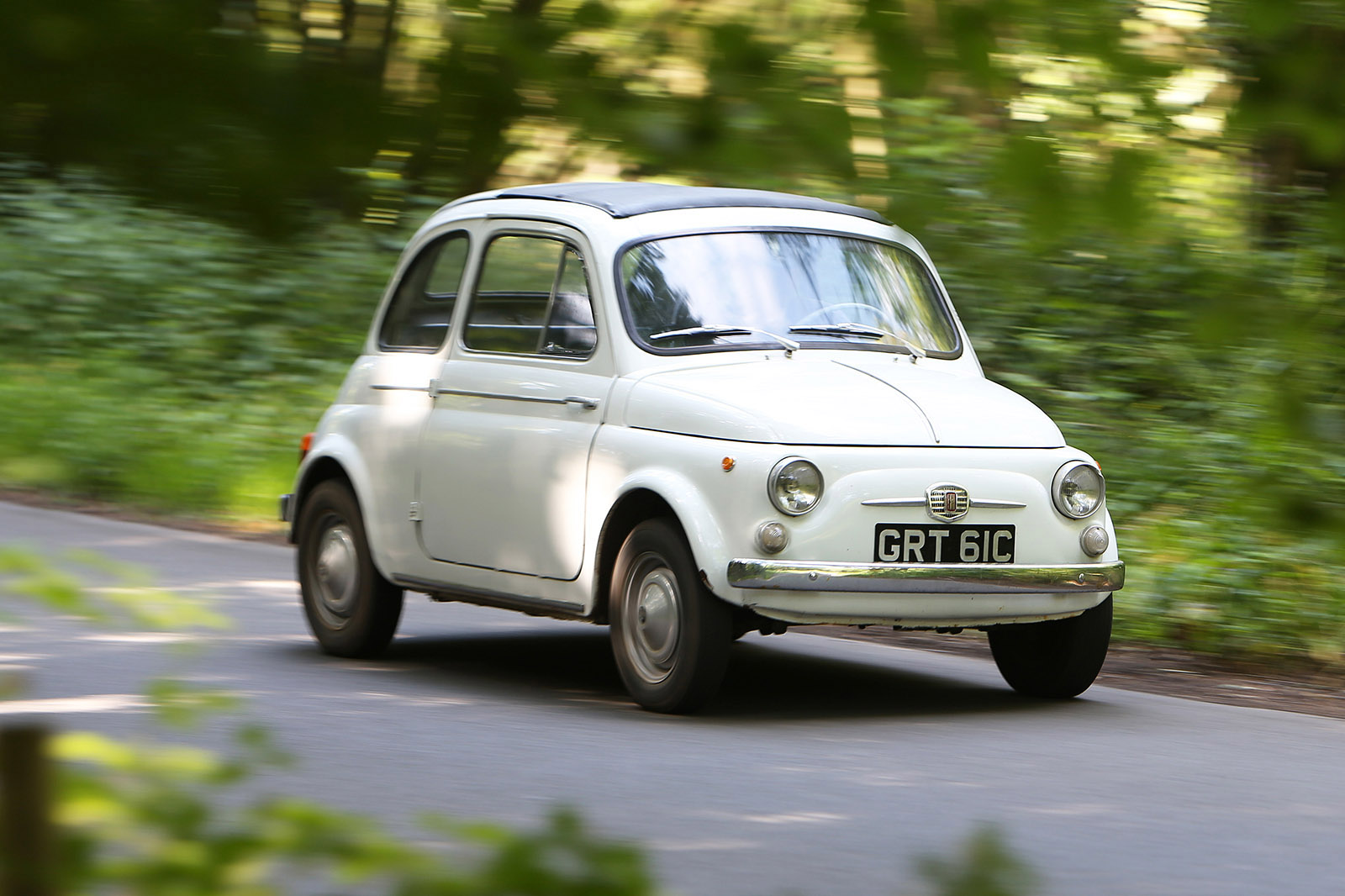
This is the original 500 https://www.autocar.co.uk/sites/autocar.co.uk/files/images/c...
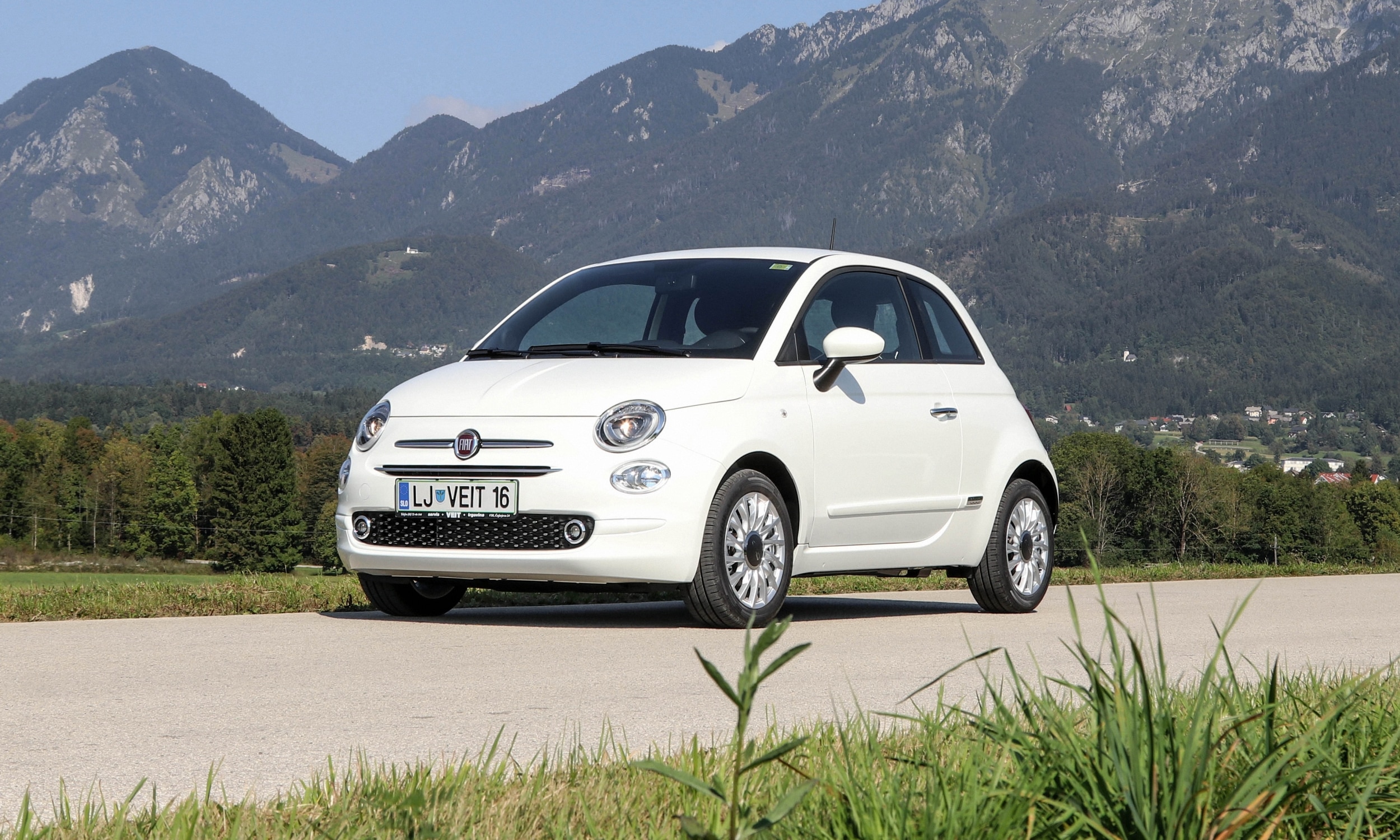
This is the new 500 https://www.actualidadmotor.com/wp-content/uploads/2022/02/F...
I'll ignore the 500X and 500L because, to me, they are completely different cars.
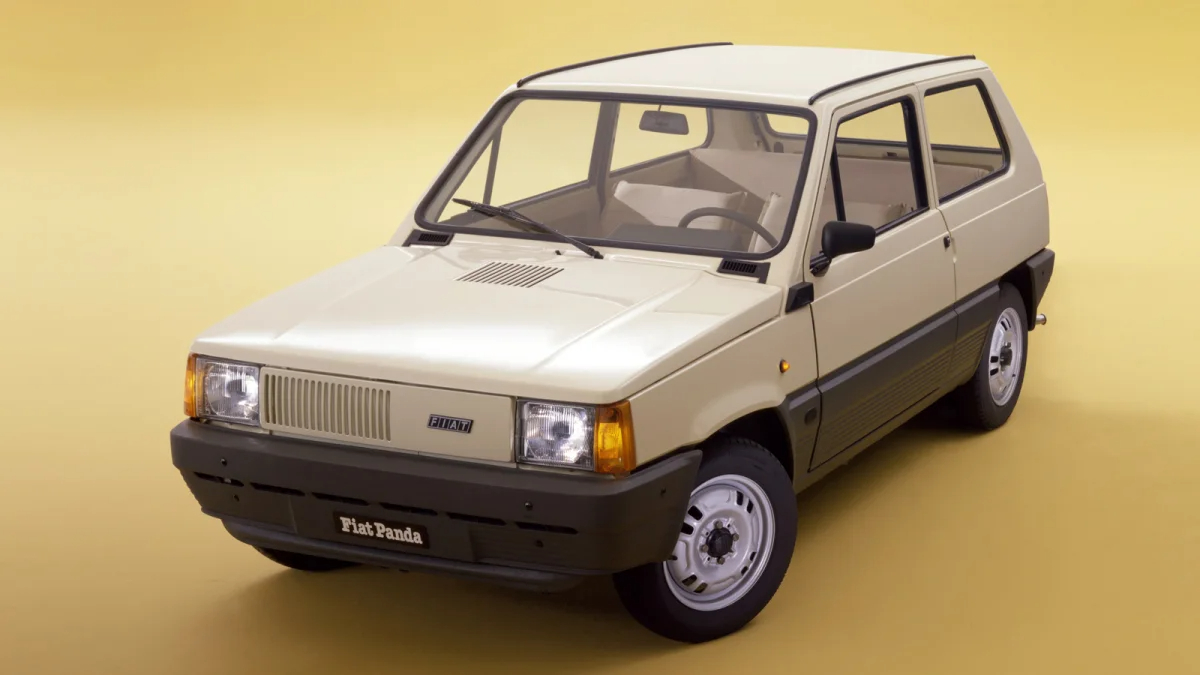
This is the original Panda from the 80s https://www.hagerty.co.uk/wp-content/uploads/2020/06/The-ori...
This is the Panda from the early 2000s (the one I used to practice for my driving license) https://upload.wikimedia.org/wikipedia/commons/0/09/2004_Fia...
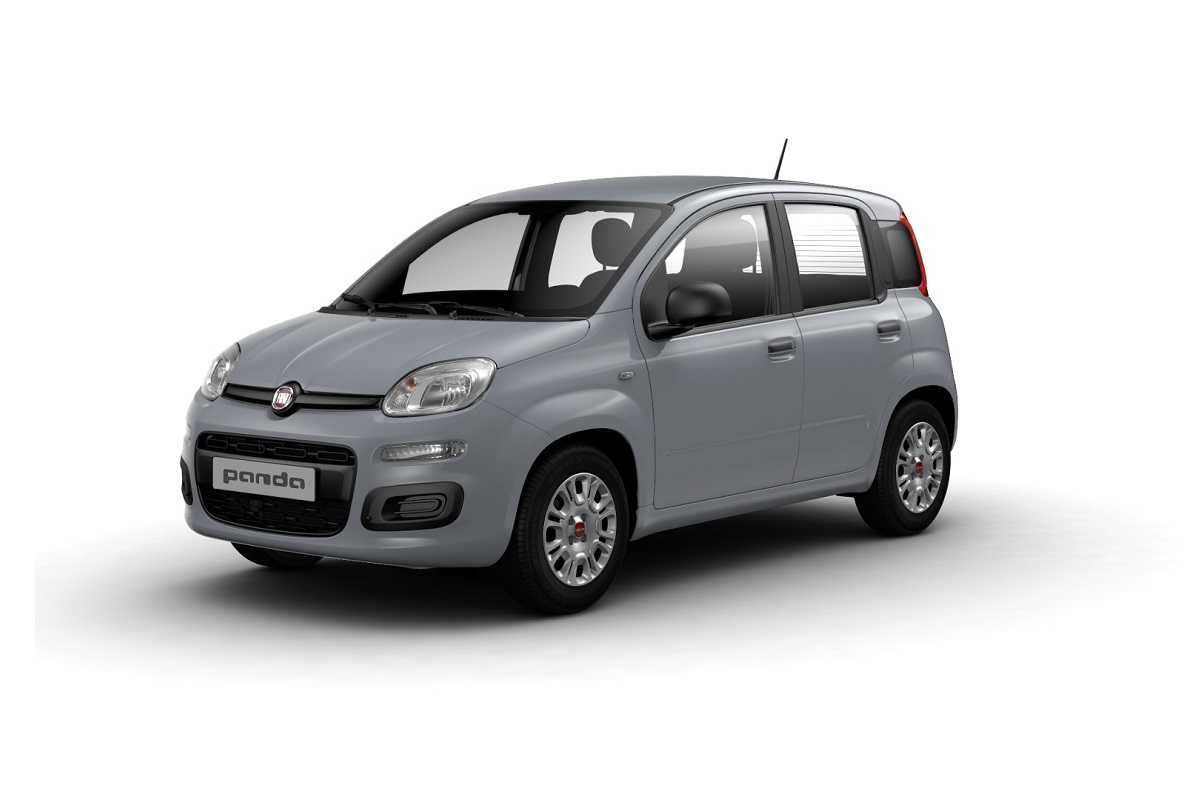
This is the more recent model https://www.motornet.it/img/modelli/auto/FIA/PANDA%202021_1....
The Panda is a completely different design.
This is the very definition of a “first world problem,” but it sure is frustrating.
When companies make less money, there's less jobs. When there's less jobs people have less money to spend on things like Rent.
You can quickly see what a mortal sin this would be against our Lord and Savior, Capitalism.
It's the frequency of breakdowns times how fucked you are when it does break down.
So the actual math also depends on your means and where you live.
Large cars/SUVs are vastly more dangerous for everyone else. Visibility in modern cars is also much worse, regardless of size.
Of course the emissions from that old diesel are a major health hazard. I’d rather not have that drive past my yard where my toddler is playing.
First, a good SUV is an electric SUV. Whoever had the experience to be behind a C15 without HEPA filters, something you can find in a good SUV, knows that the C15 will kill you with its air pollution.
It’s worse if you are doing sport on a bike or running. And trail running may not save you from those C15, as they are pretty capable off road vehicles and are used by hunters and farmers.
Also, the C15 has no ABS and ESP. Pierre is a lot less likely to crash into you with a modern SUV than a C15.
Finally, the C15 has no active security. It will drive full speed into toddlers playing on the road while a good modern SUV will stop automatically. Same for cyclists and other vehicles.
Visibility is indeed worse because the industry decided that a solid A pilar was more important.
I'm making this assumption based on how utterly useless it is to try to have a serious discussion that's really about that old car vs. a new one. I mean, would anyone even think about producing those same old cars with their old technology? Obviously not.
I think, in my discussions, not just this one, it would help us all A LOT if we didn't try to win an argument and limit ourselves to interpret the other people's comments in the most restricting way. Let's assume we are here to learn something other than finding ways to be "technically correct".
If I had to get hit by a car, I'd much rather it be the C15 than the modern SUV. I'm much less likely to survive the SUV hitting me.
Now you can make the argument that other modern safety features make it less likely that the modern SUV would even hit you in the first place (given automatic emergency braking, etc.), and I suspect you might even be right, but I think that requires some data to back it up.
The statement wasn’t specific to collisions but you are free to prefer being hit by a C15. As for myself as a pedestrian, I am not sure. The modern SUV is bigger but modern cars have improve safety for pedestrians. Mostly much softer and taller bumpers. It’s not perfect but from the ncap YouTube videos, I may prefer the modern SUV.
If we go with empirical data, I suggest test crashing all those C15.
I don't want these, I don't want to pay for them. They raise the cost and they're unavoidable. This is a NEGATIVE, not a positive.
I suspect that there are more people around with my tastes than yours, and that's a driver of sales.
Could be a coincidence, but I seem to hear the opposite from almost every single car mechanic I have ever talked to
I don't know enough to say whether realizability requires lower DIYability.
This is another topic where people look back on the past with rose colored glasses. At the risk of downvotes, this happens a lot on HN like in threads where people speak about their pre-SSD era computers as being faster and snappier than modern machines. I recently found my old laptop in storage and booted it up. I remember loving how fast it was at the time and being glad I spent extra for the fastest model at the time, but oh boy was it slow relative to anything I use today.
There's just been an article here on HN, that BMW installed a crash safety fuse that triggered on a minor fender-bender and killed the battery. It was WELDED in, and even after getting to it with a torch and installing a new one, the ICU needed to be hacked to accept the new part.
They're also full of proprietary parts, basically you have entire car functions integrated to the same PCB, which are essentially unrepairable.
I hope I'm wrong, but I guess there'll be a major disillusionment with EVs once these cars get to 10-15 years and people find out in mass, that it's no longer economical to fix them.
I'm not an EV hater, I'm more of a pessimist - when it comes to manufacturers, I'm kinda 'pricing in' the worst behavior.
However they don't have as much routine maintenance overhead as ICE engines. No oil changes, regenerative braking reduces brake pad and rotor wear, etc
During these the mechanic will do the routine maintenance. I'm a casual driver, I drove like 100k km in 6 years, and my first set of brake pads still haven't worn down.
They do not have the same level of moving parts, wear items, and fluids as an ICE engine though.
I could. My wife couldn't.
Also, let's not forget the creature comforts of modern cars... rear seats, airbags, sound insulation, power steering, automatic transmissions, 4wd.
Living in the country, tool-vehicles are very useful. This is typically a beat up old 2wd pickup truck (lower is easier to load) with an 8-ft bed (so you can load full sheets of plywood) and a single cab (so you can get an 8-ft bed). My buddy down the street has one and I borrow it all the time. But you'd never take the family anywhere with this thing. It basically spends its entire life going back and forth to Lowes.
Because she doesn't drive a C15. Believe me, rural french women _will_ fix a C15. There's nothing to break down anyways, the engine is happy to run on distilled corn and melted rubber for oil, the suspension is what suspension, three tires ought to be enough for everyone.
> rear seats,
There's rear benches for you whole family and space for your kids to play around in the back while you're driving, what more do you want ?
>airbags
Useless if you don't crash.
>sound insulation
What do you need to hear except the beautiful sound of the X-Type engine (https://en.wikipedia.org/wiki/PSA-Renault_X-Type_engine) ?
>power steering
Grab a phase 3, it has power steering. Or get stronger arms. Or stop trying to steer while you're not moving forward.
> automatic transmissions
You don't need automatic transmissions, you need to learn how to drive stick. The C15 has the added benefit that you don't really have a proper range to change gears, it'll just go in. Actually you don't even need to clutch, just jam the thing.
>4wd
Absolutely useless for 100% of the usages the average american makes of it. If it can drive through mud while carrying cows, it will handle anything you have to throw at it. 4WD sure is a nice thing to make you pay for more gas though.
>Living in the country, it's very useful to own a tool-vehicle. This is typically a beat up old 2wd pickup truck (lower is easier to load) with an 8-ft bed (so you can load full sheets of plywood) and a single cab (so you can get an 8-ft bed). My buddy down the street has one and I borrow it all the time. But you'd never take the family anywhere with this thing. It basically spends its entire life going back and forth to Lowes.
Alright, all kidding aside though: the US is literally the only country in the world that considers pickup trucks as a good utility vehicle: they are the most dogshit type of vehicle you could own for anything, and that includes your sheets of plywood. Pickup trucks are not used by anyone serious anywhere else in the world. Need to carry a bunch of crap ? Buy a busted Renault Master (https://en.wikipedia.org/wiki/Renault_Master) and it has the added benefit of you being able to buy your plywood in crazy situations like the tiniest bits of rain.
The US's obsession for pickup trucks is the sign of a deeply unserious society.
The Toyota Hilux makes for a good vehicle to mount weapons in the back, but please see a lawyer about the legality of mounting an M60 at the back of your car if you're not living in Afghanistan
Excuse me?! Pickup trucks are the sole foundation of motorized defense in some regions! https://en.wikipedia.org/wiki/Technical_(vehicle)
But yeah, what's the point of an F150, if you don't even flex some heavy weaponry at Walmart? Timber and concrete fits the C15 just fine, it's artillery and air defense extensibility where it's lacking. Tho, fingers crossed, we may see F150 technicals by the end of the year.
Many women can, though. So I don't see how that's an argument
There is still a "C15" by the way. It's even less ugly. It's called the Berlingo [1]. Cheapest version is 24000euro + tax, or 35000 + tax for the hybrid version. Let's say in practice it'll run you 30000 euro.
In other words, after tax and counting inflation, let's summarize that since 1984, European cars have about doubled in price. Wages in the EU have gone up about 2x, after inflation.
You have to work 30000/2600 (avg wage per month, euros, in France) = just shy of an entire year of work if you invested 100% of your wage into the car. So let's say 2 years of work.
(due to the EU strongly opposing equal wages across the EU, there is a very large difference between average wage in France and, say, Greece. VERY large, more than 100%)
In 1977, you would have 4900FF average wage in France (in French Francs), and the C15 cost 62000FF. So, just about 12 months at 100% average wage, or let's say 2 years or work, saving up.
So, it even costs about the same.
And, sadly, one is forced to admit that when it comes to European cars, this is a pretty damn good result for that company. Most EU brands have done far worse.
[1] https://www.citroen.fr/vehicules/utility/Berlingo-Van.html
At least in Germany, due to it's age it would classify as a historic vehicle (number plate with an H) and be exempt from emission standards.
Many of the modern car features are just useless marketing fluff, but there is some really good progress too.
I enjoy driving both for different purposes, but I have to agree with you. On long distance driving (>200km), the BMW is safer. Cruise control, lane keeping, auto distance. It really makes long, multi hour drives less tiring.
I wouldn’t drive my Acty to the next town.
On a trip about 18 months ago I had some Kia soft-roader hire car. I bloody hated the lane keeping (unfamiliar narrow twisty roads are bad enough without the car tugging on the steering wheel).
Conversely the auto-distance thing with cruise control is fantastic - it makes CC usable at way higher traffic densities.
The same cancer that turned technology from a tool to an ad delivery machine is affecting vehicles.
I think, Cory Doctorow's idea for regaining digital resilience, by "simply" opening up artificial software restrictions through regulation, is widely applicable and would also push for adequate downscaling and actual innovation: https://pluralistic.net/2026/01/01/39c3/
eg: https://www.forbes.com/sites/edgarsten/2024/07/01/mandated-a...
You have cameras, sensors, gps, maps, that need to be updated... and all that would easily be solved by a few policemen with radar guns and writing fines.
Do they go there?
I mostly see those in parking lots occupying two spaces (a white one 4, once) or cruising slowly in narrow high streets.
You'd have to fit a mechanical injection pump, which has a different sized pulley, for a start. And injectors and lines adapted to fit.
Pretty much infeasible, I suppose.
The open source washing machine and printer still aren't here either... :(
There are years-long threads dozens of pages long on priuschat.com with data files posted by wizards just to figure out the 12v charging pattern.
The vehicle itself will probably stop running before any of these wizards ever figure that out, or even understand the algorithm it uses to occasionally run the engine in EV mode.
And yet, I speculate the total runtime of any year of that vehicle will match what you see for the much simpler Citroen C15-- essentially, bounded only by however long the wizard wants to drive it.
Edit: preemptively-- the Prius driver can drive their Prius on roads appropriate for that type of vehicle for as long as they want. Citroen obviously can go more places-- my upshot is just that the glaring complexity of a Prius doesn't seem to have gotten in the way of its reliability as the author assumes it should have.
Which means they are some of the most polluting and wasteful cars available. ECUs are good. They make cars safer, more reliable and more efficient. Car manufacturers had to be dragged kicking and screaming to add adblue, because the Diesel engines are pretty toxic otherwise.
The apologia for old cars is just insane, they are not what you think they are.
>If your C15 breaks down in a field, you can fix it with a wrench.
This is just delusional.
Bumpers today are made to protect the car's occupants, not the car.
They are the start of the crumple zone, whose purpose is to absorb and release most of the energy transfer of the crash by deforming, rather than transferring it to the passenger compartment.
I don't think that's true, the car as mere tool is romantic anachronism. Back then, cars were central identitarian elements to the post-war, western promise of salvation. Whole cities were torn down and rebuild to fit the car. The car had ideological significance. I think, identitarian attachment to the car is actually less today, but due to the historic importance and focus, cars have become unconditional necessities in many places.
I think the reason, you frequently see "old cars as tools" in southern Europe still, is the fact most regions there only started industrialization after 1970 and were/are still greatly underdeveloped/relatively poor, compared to eg. early industrialized nations like Germany, which are super car-centric. They suffered less car adaptation at the time and as a consequence e.g. SUVs would be rather impractical in some places with extremely narrow streets. Additionally, (remaining) farmers in e.g. Germany are almost exclusively rather rich entrepreneurs managing industrialized food production on flat, boring lands, than "poor peasants" caring for traditional farms in remote villages living off tourism somewhere pretty.
Probably less due to zeitgeist/mentality, but rather geography, historic economic abilities and availability.
In my experience, even cities that suffered a lot of war time damage (Hamburg, Dresden) were rebuilt with every street in exactly the same place with the same narrow width.
> Das Konzept der autogerechten Stadt wurde in West-Deutschland beim Wiederaufbau der im Krieg zerstörten Städte umgesetzt, beispielsweise in Hannover (durch den damaligen Stadtbaurat Rudolf Hillebrecht), Dortmund, Köln und Kassel, aber auch in kleineren Städten wie Minden und Gießen. Dabei wurde in großem Umfang auch erhaltene Bausubstanz abgerissen. Vielfach wurden Stadtteile ohne Berücksichtigung sozioökonomischer und kultureller Faktoren zur Anlage von Durchgangsstraßen zerschnitten.
No, you just reset the ECU and get on with your day.
Resetting the ECU only works if the error is a transient glitch in the code logic. If the failure is a physical sensor reading out of range?
Furthermore, modern automotive architectures store permanent diagnostic trouble codes in non volatile memory specifically to prevent people from "just resetting it" to bypass emissions or safety checks. You cannot clear those with a battery pull. You would need a proprietary manufacturer tool to force a relearn or adaptation.
But more importantly, your argument accepts a terrifying premise. That a 2.5 ton kinetic object moving at highway speeds should have the reliability profile of a consumer router. If I have to treat my vehicle like a frozen windows 98 desktop to get home, the automotive engineering has failed me. Physics doesn't need a reboot.
It's true that you can't fix them with a spanner, paperclip and pair of tights any more, but it's so much more rare that you have to.
Resetting the ECU only works if the error is a transient glitch in the code logic. If the failure is a physical sensor reading out of range?
Then you buy a new sensor and put it in, just like you would any other failed part.
> You would need a proprietary manufacturer tool to force a relearn or adaptation.
You can do almost anything you need to do with a non-proprietary Autel tool.
I mean, I get it, the manufacturers are absolutely doing their best these days to lock up repair and maintenance. But so many folks seem to throw their hands up and over-exaggerate the inability to fix modern cars. I've always worked on my own cars, from a 1960 Triumph TR3 to a 2025 Audi A3, and everything in between. Maybe once every four or five years have I hit something where I needed to take the car to the dealer, and that was true in the 1980s as well as today. Repair information for newer cars can be somewhat difficult to obtain (looking squarely at you, BMW) but with a bit of sailing the high seas, you can get all the shop manuals.
In the middle of nowhere?
Source: live in Scotland, frequently drive to the middle of nowhere in a Range Rover.
From where I grew up, it's a four-hour drive to the nearest supermarket.
If you're in the US, you're probably not used to driving long distances on roads that aren't basically perfectly straight and four times the width of your car. You wouldn't enjoy driving here.
I spent some time on Google Maps, and the furthest spot I managed to find from a town was about 35km. Note that I didn't say anything about supermarkets - this is a thread about car reliability, so the context is how far you can be from a town where it's reasonable to expect that someone can help you with your car.
So, potentially three or four hour's drive, from somewhere with half a dozen houses and a newspaper stand?
Getting the vehicle four-square (possibly jacking up the corner with the faulty sensor so it sits about the right height) and resetting the EAS ECU with a diagnostics tool will solve the problem in the short term.
The other thing of course is you can just get it to sit level or at least level-ish, then unplug the ECU, let it complain about some unspecified fault, and drive it without self-levelling until it can be repaired, probably when you're not knee-deep in mud.
We want friendly curious conversation, not questions designed to incriminate or insinuate. You're welcome, of course, to make your substantive points thoughtfully.
Personally-I know I don't need a big truck, and don't have farm/ranch/heavy duty requirements, but SUVs are quite useful for normal city life in most of the US. Several times a month I am fully loaded for some reason or another. May as well be fashionable and handle well too since this is also the vehicle I commute in and valet at a fancy restaurant occasionally.
This means that fashion and looks start to play a major role, utility be damned. This also means that relatively minor details, like the exact shape of headlights, become a major stylistic and thus market niche differentiator.
I don't think it's a new problem with cars. But it maybe relatively new in the utility / light truck space.
But yes you’re absolutely right, in our car dominated cities people certainly see the car you drive as a fashion choice, a signal of your personality, and social status/net worth so it does get complicated. I like driving nice cars on occasion but am rather modest and practical with my daily driver.
I’m in a social circle with several dads who probably have similar net worths and generally have a lot in common. There’s a lot of chest pounding, bragging, and one upping going on. Not negatively, but in a sense of “you need to try this ridiculously priced thing” (whiskey and wine and travel are all common topics). I tend to be the contrarian of the group (I don’t drink alcohol at all, don’t watch sports, drive a clunker car). Anyway They’ve been all getting Rivian SUVs and geek out on them. Trying to talk me into getting one next. I just can’t see why I want to spend 6 figures on it when other very similar and decent looking alternatives exist for half the price. I don’t find anything it offers interesting enough. However, its overall utility of being a SUV of that size is very appealing to me so I’m not really questioning that part.
The craziest thing about this criticism is that it is phrased as hyperbole but the reality is that this is seen as a small truck in the US.
The Ford Ranger actually is the best selling pickup truck in Europe for 10 straight years, but doesn’t sell as much in the US. The larger F series trucks sell more than an order of magnitude more in the US.
You often see the very important people driving these working their way through crowded parking lots and places that are primarily foot traffic with a "Wtach out for ME!" driving style.
Not to mention the amount of stones they kick up. In AZ if your truck has a suspension lift, you're supposed to have mudflaps. But that law (and many other vehicle laws) is not enforced.
Also, you may be married to Medjed:
Since you're from Canada, what do you think about this one:
Same wife (maybe even same shoes?) / Egyptian deity.
I'm sure you know her better than me, but I'm not convinced it's not a Clark Kent-esque disguise. He takes his glasses off and he's obviously Superman, have you ever seen her in heavy Egyptian eyeliner? It might clear things up. Also, if she ever smites things by "shooting with her eyes", that's a pretty good tell.
As for that vehicle, it strikes awe and fear into me. Like it wants to eat me. A less threatening but equally whimsical vehicle is the Bombardier B12 from the 40s:
https://upload.wikimedia.org/wikipedia/commons/2/20/1949-Bom...
Do you have any sources for this? I looked online and found a couple of charts, none of them support this claim. The Ford Ranger sales in Europe vs US are similar (who buys more varies by year) but the F series seems to be mostly bought in US
The similar (but not identical) US model is the Tacoma.
Oddly enough, it says this was developed in Australia but might be the ranger selling in the USA/Europe now (the same one we are talking about). But the P703 is the model (a T6 variant) sold internationally now. It doesn’t surprise me that the current ranger was designed abroad. What I really don’t get is that ford doesn’t make cars in Australia anymore but they still design them there?
This is a very common misconception.
At no point have the hilux and Tacoma shared any parts. Not engines, transmissions, frames, breaks, axles, wiring or anything interior.
The hilux is a small efficient turbo diesel with plenty of torque. The Tacoma is an anemic gas V6 that gets horrible mileages.
The Tacoma is significantly larger, and has a lower payload.
The hilux is an actual utility work vehicle, the Tacoma cosplays as one.
I’ve lived in Australia and Canada for 20 years each, driven many models of each many tens of thousands of kilometres.
They are on different platforms and are significantly different vehicles but they absolutely have shared parts. There are no bespoke cars built anymore, it is no longer viable to build a mass produced car without using some parts off the shelf.
For example, both vehicles have used: 2TR-FE engine, RC60F manual transmission, AC60F automatic transmission, etc.
The ranger is a great option for most people but one of my capabilities for the truck is to bring my bike to motorcycle track days. Usually I'd only take a single motorcycle, however track days are more fun with friends. to fit two motorcycles in the back of the Ranger, you need to adjust the angle of the handlebars awkwardly to fit both on the bed.[0]
that leaves only the bigger 1500 class trucks as options for me, and why I'm going with an F150
can't you position one bike facing forward and one facing back, so the handlebars don't collide? Either way, going with an absurdly big and dangerous car to avoid _awkwardly positioning_ some cargo is pretty American thing to do
I’m buying a used work truck. It’s a pretty far cry from the “brodozer” you imagine
Fellow motorbike trailer owner here.
Since I don't need the hauling capacity every day, or even every week, it's great to leave the trailer at home and park in more places.
You’d pay an extra $7000 because… you don’t like to pack?
As someone unsympathetic to big vehicles in urban areas, and probably most suburban areas, the challenge as always is figuring out how to re-internalize externalized costs.
Or I guess reduce externalized costs. (Additional safety features? Increased road wear tax? Vehicle size class limitations on certain roads or lots?)
As to your choice of the Ford,as a rural late model (2018) F-150 owner, I'd encourage you to consider something else. A used Tundra V8 or one of the GMC/Chevy's. My mechanic is thumbs down on the Rams longer term.
I've had nothing but stupidity with this F-150 and all I do is personal plowing and a few loads of gravel or dirt each year. Granted, my steep dirt road can be very rough in mud season. But I've now spent about 8K in non-maintenance repairs.
I say this as a past owner of multiple mustangs and rangers - I'm done with Ford.
Funny how some people go stupid justification after stupid justification for what is just an impractical for anything vanity product.
Anyway, if you want an F150, get it -- I don't really care.
If you want an 'image' purchase just own up to it. Your post hoc justifications don't really hold water.
I don’t understand this argument, as they seem incredibly impractical for that. There is very little space for ‘stuff’, there is only the uncovered bed which is relatively small. The bed is also at an awkward height so very impractical to get stuff in or out. Since the bed is open, you always have to take all your ‘stuff’ out, you can’t leave tools in there or anything of value or it will get stolen. If you put a hard cover on. it leaves even less space. And since a large part of the vehicle has no roof you cannot have a roof rack.
You do not see these used by people in construction or other trades here in Europe. They use vans. An (extended) van has an ungodly amount of lockable storage space, easily accessible with side and back doors, with a floor at a reasonable height and if that isn’t enough you with a roof rack you can strap a lot to the roof as well.
I really don’t see how something like an F-150 is more practical for ‘hauling stuff’ than something like a Mercedes Sprinter.
I did look up some numbers (used the most capable configuration I could find for each of the vehicles):
Max bed length for an F-150: 247cm Max cargo space length for a Sprinter: 481cm
Bed/cargo width: F-150: 126cm, Sprinter 178cm Bed/cargo height: F-150: 54cm, Sprinter: 200cm
Max. payload capacity: F-150 : 1106kg, Sprinter 1477kg for the extra-long version, 2447kg for the long version.
It isn’t the only way but yes a truck is very practical. That’s why they are used so much in the US. The difference between the US and the EU isn’t just arbitrary either. In the US gas (sorry, petrol) is a lot cheaper, roads are bigger, wider, longer, and sometimes you need to tow a large trailer. I tower a 3 ton excavator with my truck to build my home office.
People who need a pickup bed for work usually buy those that come with the chassis of a commercial VAN which have a much bigger bed than you'd ever dream of on a Ford F series.
The rest are simply getting delivered or using trailers, either rented when used sporadically or bought. A trailer is usually at a more decent height and you don't have to carry the weight and have to manage a huge vehicle when you actually don't need all the space.
Basically I can tell you that yes there are a lot of advantages. Another thing is carrying things like fill or gravel. Good luck with a van on that one. And while delivery is an option it depends on how accessible the area where you want it delivered is.
Look you are trying to convince me that there are no upsides to using a picking where I live based on how things work where you live. I am telling you from personal experience that there is tangible utility to it and you are telling me from no experience that there cannot possibly be utility to it since where you live things are done differently, discounting any notion of specifics of either place. Do you see why this is absurd?
I had no compunction to fill it with debris, earth, sand etc. but that’s not something your European tradesman does. He uses a separate trailer.
* https://upload.wikimedia.org/wikipedia/commons/1/1d/2005_Cit...
My wife, that is. She’s 5’10”.
Like my brain expects the car to finish, but there’s more car. Then it happens again and again in a quick succession. It confuses me, I shake it off. I look at the car again. The bed is empty, there’s one person in it.
Then I think „what’s the point”? And then I remember we grew up in different environments and have different expectations about how things should look like. And I still don’t fully get it.
My first car I got in Germany was a C15. I used it to transport server racks, but also had a mattress in the back and had my first sex on it. On muddy festivals where others cars got stuck, I was able to get out easily. Repairs were dirt cheap. It also had a tow bar, and was able to pull a 1.5 metric ton trailer to get equipment to a computer party.
And I still was able to do 160 km/h (100 MPH) with it on the Autobahn. With or without server racks, with or without sex.
Best car I ever had.
It is really insane that these days cars on average weigh 25-40 times of their load. Human stupidity never ceases to amaze me.
(But my grandma had a flat that she did not live in during the summer months... hmm... sweet memories... excuse me, what were we talking about again?)
I think, you were just about to tell us about your first time with your grandma.
https://web.archive.org/web/20180408023557/https://members.i...
You were doing 160 in a death trap with minimal safety features, which was literally making the air unbreathable.
Also, I survived.
And when it comes to security features, more important than not having side airbags would have been not to combine smoking weed and fellatio while doing 160.
I am not saying that any of this would be a good idea if keeping your life is a priority.
But even with maniacs like myself on the road, Germany has deaths from fatal car crashes of 3-4 per 100,000, while the US has 12-13.
But again, I am not a lawyer, not a doctor, and this is not health advise, just a true story of what I did 25 years ago that may or may not entertain readers.
Modern Diesel Engines have gotten so much better in every single area.
>And unlike others, they did not cheat and were not part of the Diesel scandal.
https://www.reuters.com/sustainability/dutch-court-says-dies...
Watch: https://www.youtube.com/watch?v=py37TT6PxW4 to see just how common cheating was. Also have a look at the graph at 17:47 .
The concept of "software in motors" did not exist in the age of the C15.
Still: Under the definitions I work with, an ECU is Hardware. Rule of thumb: If it does not run Doom, it's probably hardware :)
What a silly definition.
Also this car has only has 60hp.
Citroën were the first to make DPF standard.
Also, I would like to kindly remind you of the concept of "time". This was 25 year ago. The alternatives would have been worse. These days a C15 would be electric.
Obviously the OP is tounge-in-cheek, so keep it lightly.
But it does have merit: If you wish to measure your environmental footprint, you must look at the total lifetime of car, most importantly the manufacturing part. There is a difference between 900 KG of parts for a C15 vs 1,900 - 2400 KG for a Ford Ranger. These days most PM come from braking. Stopping 2000 KG will obviously cause more emissions from the brakes than stopping 1000 KG.
All in all, the point really is: The ratio between weight/size of the car itself and what is inside (people and/or server racks) has gotten completely out of hand. No, you do not need a 2,000 KG tank to move your 50-100 KG of flesh around. It's insanity, no matter if your care about the planet or not.
And it weighs less than half of the other two (less than a ton), so less power is needed.
I agree though, the C15 is slower than the other two, but less than you’d perhaps think.
I own a Citroën 2CV. It has some of the same qualities: super robust, incredibly off-roady, simple mechanically, but I take my “regular car” (2017) for road trips > 100km…
I’ve done numerous long road trips in the 2CV though, before I got the other car. Some longer than 1000km.
I agree with the TFA, that many overestimate their needs, but older cars are also less luxurious - obviously!
The post is a hot take, slightly tongue-in-cheek, isn’t it? :)
He seems to imply there would be no appetite for one here but I disagree. In western Canada I see imported Kei trucks everywhere and these fill a similar niche!
Ranger crashes into C15: Ranger wins, C15 passengers dead. Ranger crashes into human: Ranger wins, human dead.
C15 crashes into C15: Tossup. C15 crashes into human: C15 wins, but human is less dead.
The whole concept of car upsizing all the time is about that: If you crash into another moving object, you want to be the winner.
Understood. Buy a tank.
The point is that there are not really any equivalent vehicle of the same size. We've just somehow accepted that we needed 3 times as much machine to carry the same amount of human.
The other point is that this amount of machine is absolutely not required to do serious work (TM), as most people who bought pick-up tanks like to argue. The C15 is European, but you can make the exact same point with Japanese small trucks, which are also a reasonable solution.
1) Guillotine for the super rich
2) Nuclear to power >70%
3) C15 for people, cows, craftsmen, mini house
4) TGV
5) french fries for the fastest carbohydrate delivery, handily beating rice
I wish they bring back the first 3 and do some shorts, market them to the world. Fries are doing fine.
So the best thing I'd see them excelling at in this century, if they can drive their ideology in the right direction, would be producing low-tech solutions solving 90% of problems with 20% of the costs, with open-source like tools / materials / methods everyone can replicate easily. A bit like this article about this old car.
While we're barreling toward climate catastrophe? That's not the criticism you think it is.
Do you have anything to read up on that? This got me a little excited, but I also doubt it due to the rise of right wing populism everywhere else. Man, if France actually got the rare attitude to get shit done in these times, I may move there and help.
If you like those kind of ideas you should def move in France and start building with others there little communist enclaves. Just be ready that in France we do think a lot before deciding to act, we don't have the same "get shit done" attitude like in the anglosphere world
The 5, 4, Megan and Scenic are just excellent.
I think the Scenic is probably the one I'd buy right now based on the range, 380 miles but the 5 and the 4 have so much character they're probably the first really iconic electric car designs IMHO.
Can we not glorify mass executions on HN please? Bluesky is available if that's your thing.
The C15 thread shows exactly why: It beats modern trucks in pure utility. Today we are paying more for less value.
It is exactly the wealth extraction Ray Dalio describes in Principles for Dealing with the Changing World Order (Stage 5 of the debt cycle), resulting in internal conflict.
I believe both nation would be offended about the confusion of origins.
Americans simply thought they are in France in WWII when they ate it.
; )
https://www.rtbf.be/article/cuisine-la-frite-vient-elle-de-f...
https://www.news.uliege.be/cms/c_10630394/fr/les-grands-myth...
You know modern France has the exact same problem of billionaire lobbying and media consolidation that the US has right?
Arnault (LVMH) [0], Trappier (Dassault) [1], Niel (Illiad) [2], Lagardère (Lagardère SA) [3], Bolloré (Bolloré Group) [4] and a couple others have an inordinate amount of control over French politics. It's also why whenever a country like China, the US, India, or others wants to hold the EU by the balls, they end up tariffing Congac, because Arnault's LVMH has a near monopoly on Congac production in France, so he almost always pressures Macron into acquiesing because otherwise he would threaten to back the RN.
Both France and the US are similarly ranked flawed democracies [5] with similar dysfunctions.
Also, immediately following the revolution, the guillotiners ended up doing it for the rich [6], as the French Revolution ended up leading to the re-establishment of authoritarian rule with le Directoire, Napoleon, Napoleon III, and others. The only thing you learn from the French Revolution is the same thing you learn from Tahrir Square - the house always wins, which in political science is modeled via Selectorate Theory [7] and Veto Players [8].
Sadly, it's the same reason why despite mass protest after mass protest, the Iranian regime hasn't fallen - the primary political and economic veto players in Iran (Army, IRGC, Basij, Police, Clergy, Business leadership, SoE leadership, Bonyad leadership) haven't defected because they have more to lose than gain if a revolution succeeded. The moment a handful of these interests think they can expand their presence under a new regime is when you would see Khamenei fall, but the leadership would end up being the same ba***rds anyhow, just like how the Islamic Republic ended up co-opting and rehabilitating army officers and business leadership from the Shah's regime during the Iran-Iraq War and after the cultural revolution.
[0] - https://www.lemonde.fr/en/politics/article/2023/08/07/how-be...
[1] - https://www.reuters.com/business/aerospace-defense/frances-d...
[2] - https://www.lemonde.fr/en/les-decodeurs/article/2022/07/10/u...
[3] - https://www.reuters.com/article/world/macron-and-the-moguls-...
[4] - https://www.mediapart.fr/journal/culture-et-idees/dossier/la...
[5] - https://ourworldindata.org/grapher/democracy-index-eiu
[6] - https://www.jstor.org/stable/650023
> "Now, however, the concept of human brotherhood began to be assailed by people who were not yet in positions of command, but merely hoped to be so before long. In the past the Middle had made revolutions under the banner of equality, and then had established a fresh tyranny as soon as the old one was overthrown. The new Middle groups in effect proclaimed their tyranny beforehand." —EG
Or fix inheritance. And by fix I mean tax as hell.
> Or fix inheritance. And by fix I mean tax as hell
If France can't fix it [1] after politically powerful billionaires stymied it [2], neither can the US
[0] - https://theconversation.com/the-french-revolution-executed-r...
[1] - https://www.lemonde.fr/en/france/article/2025/10/31/french-l...
[2] - https://www.reuters.com/world/frances-richest-man-lvmhs-arna...
If the bourgeois had been completely purged in the French Revolution, then the crackdown of the 1848 Revolution (and the subsequent exodus of French republicans and socialists), 18 Bumaire, the Bourbon Restoration, and other successful power grabs by the bourgeois following the French Revolution wouldn't have happened.
Heck, much of the Council of 500 were themselves either mid-level aristocrats or the children of ancien regime enforcers as was seen with Talleyrand, Barras, Duke of Parma, Lebrun, and the Bonaparte family, along with members of the Directorate like Carnot, Barras, and Merlin.
There's a reason Marx termed the French Revolution as a "bourgeois revolution", why Max Scheler classes the French Revolution as a revolution driven by ressentiment (the Nietzchean concept that underlies elite overproduction), and how Bourdieu came to his thesis on "cultural capital" (which can also help explain the contemporary rise of left- and right-leaning populism).
In essence, who is more elite - an L6 at Google earning $600K TC who graduated from UC Irvine and whose parents were union employees, a Senior Editor at the NYT earning $130K TC who graduated from Yale and whose parents were lawyers, or a Congressional Chief of Staff who graduated from UChicago and whose parents immigrated from Taiwan on an H1B to work at Intel?
The answer is they are all members of the elite. It was the exact same with the leadership of the French Revolution, and the subsequent regimes.
It's the same reason why Mao's dad was a rural landlord, why Lenin's dad was a State Councillor, why Ho Chi Minh's father was a Confucian scholar, why Pol Pot's father was a rural landlord with ties to nobility, and Che Guevara's father an Argentine engineer who immigrated from Ireland.
Of course the bourgeois weren't purged in the revolution. It's them who took power through that revolution.
> The answer is they are all members of the elite. It was the exact same with the leadership of the French Revolution, and the subsequent regimes.
no. Bourgeois, prior to the revolution, were not part of the elite. It's difficult to imagine, but there was a time where there wasn't such a direct correlation as today between wealth and power.
Yet it was mid-level aristocrats that were overrepresented in the Directorate and the Council of 500.
> no. Bourgeois, prior to the revolution, were not part of the elite. It's difficult to imagine, but there was a time where there wasn't such a direct correlation as today between wealth and power
Yes. I know, but the initial conversation is based on correcting the a revisionist meme that the French Revolution was a quasi-communist revolution, when in reality it was just a form of inter-elite fratricide - especially between mid-level aristocrats and the church and a subset of royalists.
All the revolution did was cleave the bourgeois from the third estate, and merge them along with the second and first estates.
It's not a meme. There's clearly a collectivist movement within the revolution, it's just that this force failed to take power. The "révolution de Février", in 1848 was precisely this: Paris going full collectivist, abolishing property and all, then small land owner from the provinces freaking out and all come to Paris to whoop them.
And there was a much more powerful core of leaders who were the children of the various types of elites within the ancien regime.
Almost the entire history of France the century after the revolution was authoritarian or quasi-authoritarian rule with the collaboration of intellectual, economic, and religious elites.
And this is why Marxists, Marxist-Leninists, Maoists, and other flavors of Communists take a dim view of the French Revolution.
If a revolution between the cultural elite and the capital elite just led to the pre-eminence of the capital elite and their co-opting of the cultural elite, that means the revolution basically had no positive impact for the overwhelming majority of the French subaltern of the 19th century.
And don't get me or my extended family started about French colonialism.
Sure, it didn't take power, sure, the bourgeois were stronger, but they still managed to overthrow the forces of Louis-Phillipe. Internet wasn't invented yet, memes couldn't depose kings.
Yea, I think from the looks of it there's a bit of mutual confusion over terminology being used, but we are largely aligned
> Internet wasn't invented yet, memes couldn't depose kings
I'm using the Rene Girard definition of a "meme" before it got co-opted into internet speak.
The guillotine for everyone was itself an egalitarian idea (I am not saying it really was progress, because the death penalty in itself is atrocious, but...) The status quo before was that the nobles were decapitated with a sword or axe (quick and usually painless death), whilst the commoners were hanged (usually long and very painful). In that light, a quick and painless death for everyone was better.
In a crash it'll fold up like the tin can it is, even against a car of a similar vintage and size (no comment on the cows). Up against even a modern supermini and you're literal mince meat, let alone a modern SUV. At least you won't suffer long.
So if you are off roading or on a snowy road, hopefully you won't slip into a tree or roll over. Modern cars - even "small" ones -are heavier partly because they are substantially safer. A crash that would have had to have you cut out of the wreckage by the fire brigade (potentially losing a limb or two in the process) is now the sort of thing you can walk away from. Yes even in "small" modern cars (you do not need a SUV for safety).
It's night and day really - just go look at the archive on EuroNCAP.. In the crash tests that left 90s and early 2000s cars as unrecognisable mounds of broken and twisted metal (e.g. https://m.youtube.com/watch?v=9a8PTeFDaYU which was a car that was probably 10 years more advanced than the c15 in terms of safety...) now barely even break the windscreen of modern super-mini cars (e.g. https://m.youtube.com/watch?v=NaWVepTJTGw&t=1s&pp=2AEBkAIB). Amazing.
But it's not like the saxo was unusually bad - here is another typical car from the same era https://m.youtube.com/watch?v=M0P9MistIDg - the interior angles (especially the footwell camera) are particularly chilling and terrifying!
It broke down recently at 18 years of age and I can't justify maintaining a car in Berlin, but I loved that car to bits.
I remember in Belgium when the laws pushed for lower CO2, and you got an influx of all these diesel engines, as you couldn't get that low with gasoline engines (that had some power).
But a few years later people came to the realization that CO2 is the least bad of the global warming gasses, and those diesel engines emitted a lot of NOx.
Every year there was a distance that you'd have to drive before diesel made sense (as you get more miles out of a gallon, and it was cheaper per gallon).
That number kept on creeping up due to new diesel taxes, and the fact that diesel is no longer cheaper per unit than gas.
Today, Citroen's equivalent offering is the Berlingo. Starts at 26k, not as much of a tank as the other cars but still way more massive than the C15.
You're attributing the difference to different countries, but everyone else here sees it's mostly it's from a different era.
Dacia takes "obsolete" Renault technologies and sells them for dirt cheap.
Good news everyone, the Dacia Sandero might have been a laugh 20 years ago, but today Dacia are doing really well.
https://images.caradisiac.com/images/0/9/8/4/190984/S0-route...
The gas meter was broken, so my friend had to guesstimate when he needed a refill.
At one point it was stolen, but then found a week later on the side of the highway,out of gas..
That was a good perspective though- I grew up hearing Citroen makes garbage.
Side note- The vast majority of pollution is from industry. By a lot. That is where the finger needs to be pointing. Pointing the finger at SUV drivers distracts from the real issue and keeps us blaming each other.
Yeah, I get this is tongue-in-cheek but if you're going to try to convince Americans of this idea, you need to use units we understand, and a car we've heard of.
When I bought a new car last year, I made sure to get AWD -- not because I have any specific need for AWD performance, but because of this stupid special treatment in Washington law.
I’ve used them on 2WD vehicles in the past and they’re way easier to install than old-school chains, since they’re self-tensioning. Super Z cables, if anyone is interested.
What does that mean? The thread just repeating this compensating thing but not sure what does it try to say really.
Also most women I know drive SUVs or family vans not compact cars. Are they compensating for something?
Don't get me wrong - if you got the dough, by all means drive what you want. But most truck owners could get by with something else just as well.
Freud: Duh?!
It was the basis of a successful line of British built micro-campers from Romahome.
https://www.practicalmotorhome.com/advice/used-romahome-on-c...
I remember looking at one as a surf-van back in the day.
The tragic thing being that they often run over their own children in them.
There was no part on this which didn't get replaced during the scant few years he owned it, and it left him stranded like half a dozen times.
He contemplated setting it on fire rather than selling it, not wanting the next lucky owner to go through the same stuff he did.
A reputation well earned IMO…
> There was no part on this which didn't get replaced during the scant few years he owned it, and it left him stranded like half a dozen times
French cars have a philosophy of more maintenance than German cars. On the other hand, Frenchy spare parts are often cheaper and easier to replace.
E.g. a timing belt replacement on PSA HDI takes just a few hours and costs €2-300. On a VAG TDI, the same procedure is almost a full day at a (competent) workshop and costs ~5-10x as much.
Horses for courses I think.
My daily driver is a 10yo VAG, for the record.
https://i.pinimg.com/originals/93/42/42/93424282cbcafce0ad81...
The new electrics are great. But they are less of a car and more of a transportation technology.
It doesn’t help (but still besides the point) that they typically give the impression of being a stripped back Moto G4 a couple years out of updates.
I have "repaired" one that was used to power a small fishing boat (it came out of a Xantia, and the hydraulic pump was used to operate the shooting gear). The boat sank and the engine compartment was flooded with sea water for about a week. It started up and ran quite happily after draining what was approximately a 50/50 mix of sea water and sludgy engine oil and putting fresh in, then removing the injectors and cranking it to blow the water out of the cylinders.
It never quite ran right after that and was hard to start, and five or six years later the boat's owner replaced it with another Xantia engine, this time the turbocharged version.
Our roads are bigger, gas is dirt cheap, parking is plentiful and spacious outside dense metros, and the RAM 1500 I own is 100x more useful no mater how you want to try and spin the facts. I can tow a large trailer with my Jeep on it, a large RV, boats, etc. It is highly capable off roading on technical terrain here in Utah. It’s also insanely comfortable and luxurious on road trips and has enough room to lay on the rear bench seat as if it were a bed. I truly use all of the capabilities in a niche that almost no other vehicle besides a standard size truck occupies.
Hat tip to Joel Garreau, from whom I stole this reading of that kind of comma.
> CO2 emissions/km:
No, you have already compared fuel consumption. This is equivalent.
The gross vehicle weight (ie the max vehicle weight with the heifers, obviously stuffies) of the C15 is 1500 kg (hence the name) or 3300 lb.
Uhaul rents a car tow trailer rated for 5000 lb that weighs 2200 lb [1].
The Ranger, then, can tow the C-15 + the heifers = 5500 lb and have 2000 lb left over to put two real heifers, and do this legally at 70mph.
Citroen makes great vehicles though. Amazing off roaders.
[1] https://www.uhaul.com/Trailers/Auto-Transport-Rental/AT/
If it never breaks how do people know it's easy to repair?
"The Ford Ranger (2020). One of the most popular pickups in the US.
A key selling point is that the cabin is so high you can run over toddlers without even noticing."
Lovely people as always. Would you like to live neighbours with this person, or share communal facilities with him?
Sure why not? Because they made that comment? It’s not that they buy trucks because they are much taller than a short person but they still are. I’d rather not live next to the person with the dangerous truck.
These kind of people are so easy to spot once you have some experience.
Sure, because he has a sense of humor.
Modern cars are great for the most parts. More comfortable, more safe, more autonomous, bigger, better and faster. Of course not all cars are created equal.
Cars are a resilient mode of transport. Even if road maintenance stops for 30 years due to some kind of crisis, a society with cars will be way more functional than one that was solely reliant on a centralized transportation system. And this is not an unrealistic scenario, people are just used to the last 80 years of peace due to rapid economic growth and globalization.
> They are witnessing their own decline every single day. It's honestly so sad.
What is so sad is being so stuck-up in whatever opinions you have as to think that people cannot genuinely in good faith have opinions other than yours, that everyone must surely know this objective truth you believe and that it's everyone else who's insanely deluding themselves from confronting this reality that you in your wisdom bring to them.
I don't dispute that it was useful and reliable: I remember the milkman and plumbers and electricians having these. Note that some had a 2CV and would just cut off the roof (don't tell me it wasn't a thing: I've got pictures of me as a kid in a 2CV whose roof was cut).
Only the french have the "taste" to create such uglyness as the C15. It's hard to understand how a country can both produce the Concorde and the C15.
Even the russian and their Lada brand never managed to create something as fugly as the 4L or the C15.
Now you'll excuse me but I've got to take a look at what nature produces:
https://en.wikipedia.org/wiki/Bird-of-paradise
Because that C15 brings back memories from a traumatizing time where uglyness was ruling the world.
P.S: I owned a Citroen VISA: it's hard to tell if it was only the 2nd ugliest Citroen ever after the C15 (indisputably the fugliest of them all) because Citroen produced soooo many turds.
If you are person that doesn’t give a fuck about keeping up with Jones’s you just buy whatever does the job.
I could drive much better car but I don’t have to impress my neighbors.
Still with non-impressive car I get pushed around on the road by guys in big and impressive cars. But also I drive on defense anyway so I get them to go far away from me by letting them pass.
I am quite fit though not super big or anything and car I drive is attributable to old geezers or ladies. Once guy jumped out of the car to shout at me he took his tone two notches down quickly.
So technically you might be right but still there is whole human experience to deal with.
> I call bullshit, Ladies and Gentlemen, allow me to introduce, the Citroen C15
But they aren’t even for sale in the US!
I mean this is excluding beds. C15 doesn't have one.
Does anyone give a fuck? People can and do have plenty of reasons not to stick to a single model of car
And the demographics made sense: you’d expect to see more moms dropping off kids, at least in redder parts of the country, and the back row is supposed safest (as long as you only plan on getting into head-on collisions). Still, the common theme of a ridiculous vehicle with exactly 2 occupants sitting in the farthest possible positions from each other came to be funny to us.
Those ludicrous pavement princess pieces of junk are status symbols of conspicuous consumption, and that’s it.
Now, a pickup with tool racks or lumber in the back, or covered with drywall dust, or bearing a ranch sticker? Fine. Those make perfect sense. Anything short of that is just bragging about how much you love donating to Exxon, like an NRA sticker but dumber.
On a more serious note real (which is a minority) owners of bigger trucks need some serious torque for hauling.
And yet lots of guys seem to spend an extra $30k or more on their vehicle for no additional utility beyond that. Literally who is impressed?
Then again, these are probably dudes who get their dating advice from the Tate brothers. /shrug
It’s like those huge bodybuilders: you’re picturing being surrounded by chicks, while realistically it’s other buff dudes miring your physique.
(I'm not talking here about actual car _enthusiasts_, people who restore, customize, tweak or otherwise nerd out on performance or driving skills.. the assholes who buy something performance-ish but can't actually drive it well).
IDK though, think it's mostly just lack of critical thinking skill. They see a Mercedes in some music video, assume it's a symbol of wealth and that chicks will dig that, without realising that most women see straight through it.
https://news.ycombinator.com/newsguidelines.html
Edit: your account has unfortunately been breaking the site guidelines quite a bit and repeatedly crossing into personal attack:
https://news.ycombinator.com/item?id=46526454
https://news.ycombinator.com/item?id=46493104
https://news.ycombinator.com/item?id=46422571
Can you please stop doing that? It destroys what HN is for so we end up banning such accounts.
If you wouldn't mind reviewing https://news.ycombinator.com/newsguidelines.html and taking the intended spirit of the site more to heart, we'd be grateful.
it's a great vehicle, and I applaud the french approach to cars.
Thing with England is that, being a small, flat and largely well-connected country, there's lots of places that identify strongly as rural but are, economically and culturally, more like outer-suburbia in a US context. That's where you'll find the Defender and F-150 crowd.
This is why forklifts run on gas, instead of petrol or diesel.
We could have had incredibly clean air in our cities 25 years ago, if the government hadn't decided that pushing "scrappage schemes" to get people to buy "cleaner greener diesels" was cheaper.
I know the thread is mostly for fun, but only considering CO2 is a bit misleading when accessing how environmentally (un)friendly a car is.
Besides, I think the point is really that we should be making and buying vehicles more like this (in the positive aspects) rather than that we should all drive 40 year old Citroens.
Not worth engaging
But yeah, the author's wrong on so many things. Starting with putting his stuff on mastodon in the first place. Or not withstanding that the same people he cheers on, are outlawing diesel engines.
Tbh though, a lot of the latter was fueled from US-industrial anti-diesel propaganda.
Could you expand on why?
So you're not allowed to bring a 20 years old car even if it's small, light and as a result doesn't pollute that much (because of its low fuel consumption). However you're allowed to bring in your brand new SUV even if its emissions are much higher. In fact it doesn't matter how much your SUV pollutes, it's recent so it's "fine".
Do you know you usually drive 20+ cars? Poor people. Do you know who loves restrictions on old cars? Car manufacturers.
Perhaps I'm a plumber going to work on a house in a LEZ? Perhaps I need to deliver something? Perhaps deliver to the airport (!) inside the LEZ.
There are all kinds of reasons why someone might need to take a van into an LEZ, if you think for more than about quarter a second.
This is primarily a reason why you shouldn't drive a vehicle from the 1970s, as the article suggests, and why LEZs need practicality not to drive service inflation inside the area.
Rather uncurious of you then, not sure why make a comment if you aren't willing to explore it further. Shouting into the void?
In fact it looks like the love child my Ford F350 and a Citroen C2. But it can't be because I had the Ford fixed.
If you keep the rear doors open, the cargo platform is 1644 by 1540 (mm), 8x4 would be 2438 by 1219.
Most likely you'd just put sheet goods on the roof (and yes roof racks for panel vans were common, still are).
> my other main use for it is as a large gas powered wheel barrow for carrying yard waste, and the little enclosed C15 can't compete.
You can certainly put yard waste in a C15, though people usually use a trailer for that (unless there's little enough of it it fits in a large builder / garden bag).
They won't act as a large wheelbarrow though, not well at least.
A couple of years ago, I rented one to help my kids move into college. It was a Chrysler of some kind and now I’m kind of tempted to buy one. The seats disappear into the floor and then you can carry full sheets of plywood. It’s front wheel drive and drives like a car. Super comfortable, super configurable, good visibility, lots of cup holders, climate controls, power outlets, and reasonably fuel efficient (for what it is). But it’s just sooooo dorky.
The hedonistic treadmill of family cars is so funny to me. First station wagons were the soccer mom car, so everyone got minivans, then minivans were the soccer mom car so everyone got SUVs, and now crossovers. What's next? When do we get to loop around like fashion does?
I just can’t get a minivan, but I love station wagons. Unfortunately, they are getting more difficult to get.