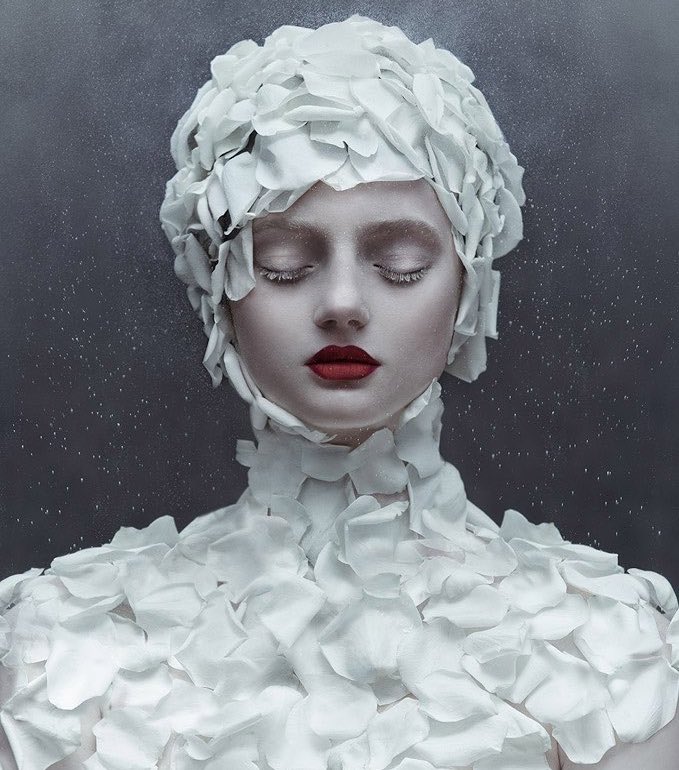
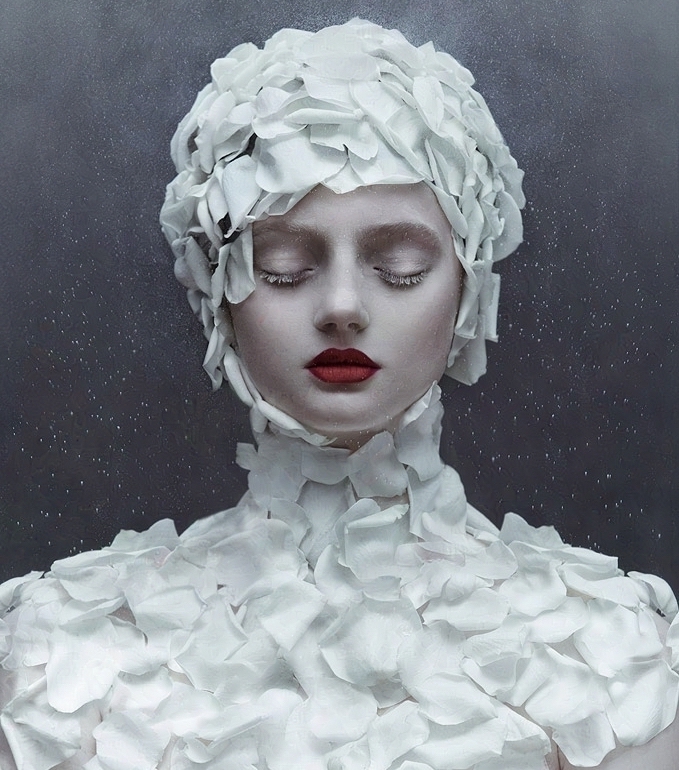
Another unfortunate consequence of the introduction of Glaze and Nightshade is that some artists which I follow have now started glazing all of their new works which they publish, leading to quite ugly results due to the noise that Glaze produces on high settings, despite questionable efficacy.
If OpenAI steals all your work, that's copyright infringement - but if you tried to stop them through technical means and they do it anyway, that's felony DRM circumvention.
It use SD to do a style transfer on the image using image-to-image, then it use gradient descent on the image itself to lower the difference between CLIP embeddings of the original and style transfer image + trying to maintain LPIPS, then every step is normalized to not exceed a certain threshold from the original image.
So essentially it's an adversarial attack against a small CLIP model, even though today's models are much robust than that.
I've yet to hear of it doing anything. I've never heard anyone in an AI group worried about it in any way. No "damn, Glaze ruined my LoRA". To the extent anyone talks about it, it's either non-technical artist groups, or AI groups where somebody intentionally sets out to play with it to see if they can actually make it do something.
But even if it worked in its intended scope, even then it'd be snake oil. Because you can't defeat every AI system simultaneously. Flaws can be exploited, but flaws aren't guaranteed to (and almost certainly won't be) conserved on the long term. So anything that works now isn't going to work tomorrow. And defending against known models today is pointless because they were already successfully created.
The whole idea of attacking an already finished product is a fundamentally flawed approach, and would only possibly work in extremely unlikely and contrived cases. Like v1 not being very good, so the model's maker for some reason decided to pull in additional data, long past a well published adversarial attack on v1, and incorporate that into v2.
I wonder if one could do something to protect images in a similar way that Anubis protects webpages from scrapers. Where the data sent from the server is mathematically obfuscated such that the client has to do some heavy calculating to get the final product.
It wouldn't stop an individual from collecting a small sample set, but it would discourage mass scraping.
I don't think it's even "reverting". Glaze isn't generically anti-AI, Glaze tries to exploit flaws in one particular image AI implementation, by actually testing its reaction to a disturbance in the image.
The approach only works if the model at all cares about the type of disturbance being created.
Other models likely don't notice anything at all, there's nothing for them to revert.
> It wouldn't stop an individual from collecting a small sample set, but it would discourage mass scraping.
IMO, if they want to, they will do it. AI training already requires mass amounts of CPU/GPU power. They can also use it to solve your calculation challenge, and anyone training models will have enough horsepower available as to dwarf anything any reasonable client machine could deal with.
That's supposed be the single most important sentence for the entire article, but ended being a mouthful which hardly makes sense.
>> So when someone then prompts the model to generate art mimicking the charcoal artist, they will get something quite different from what they expected.
"when" and "then" don't work like that.
I' still trying to see a crisp solution statement beyond "is a system designed to protect human artists by disrupting style mimicry.".
Sadly I agree that Glaze doesn't really work for it.
I hope they mean tablets here, and not phones. I can't imagine any artist being more productive or effective on a tiny screen vs a large screen.
Are they still pushing the "security through obscurity"?
Don't quite have the domain knowledge to evaluate, but the claims are outlandish
https://glaze.cs.uchicago.edu/images/wintersrose.jpg
https://glaze.cs.uchicago.edu/images/wintersrose-glazed-trim...
https://pasteboard.co/7IJPWBDuroMe.png
it splashes rgb noise near edges in the original
Even if this did work now, there is nothing that AI can't adapt to. It'll take just a thousand such images in a random large image dataset for AI to quickly adapt to it, and then it'll be utterly pointless. As such, the effective half-life of any such approach is a year, with any further adversarial adaption yielding a diminished effect.