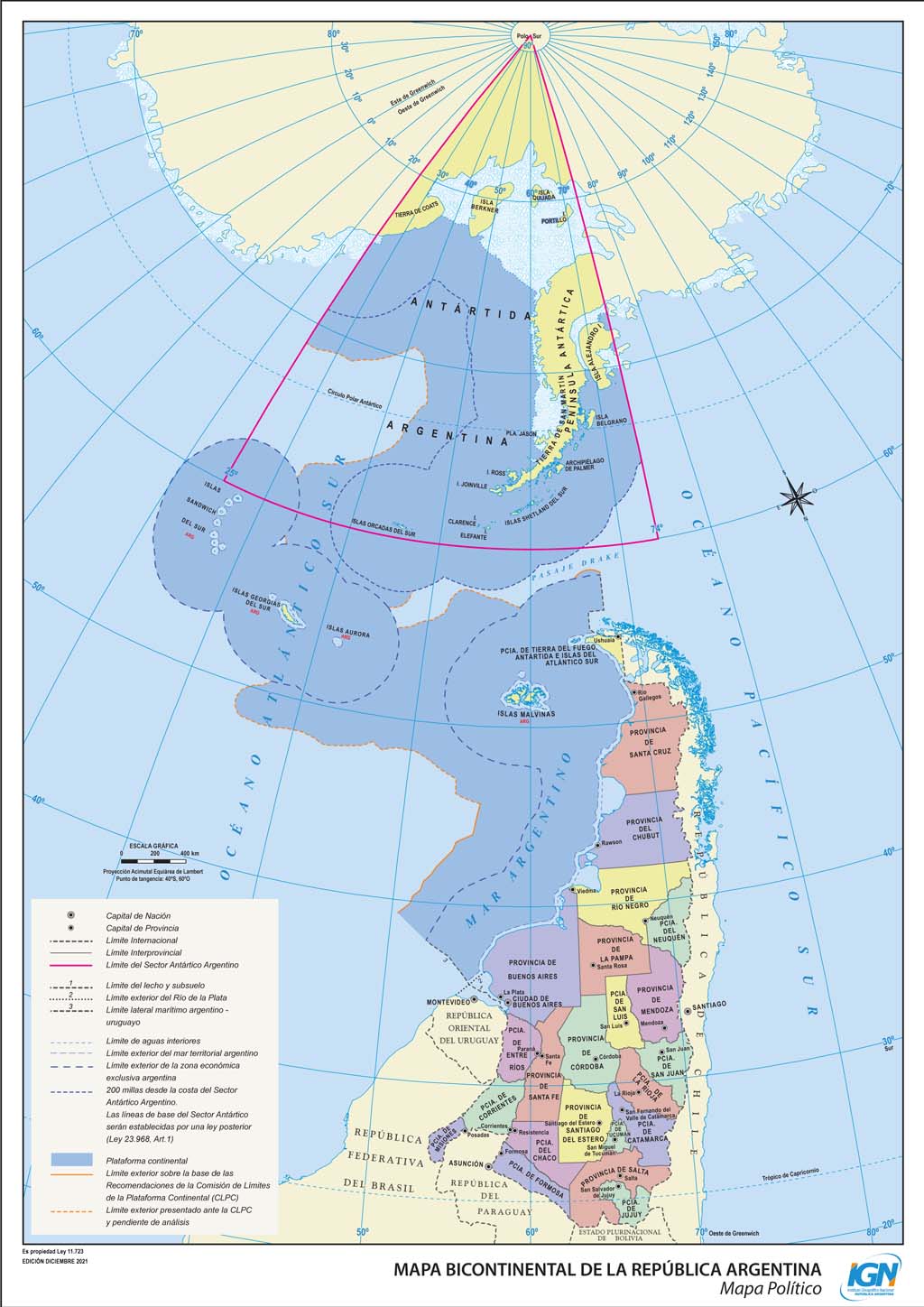
How come this culture war mindset infuses everything we do online now?
Nowhere does this map or its description even imply you are a bad person.
It's pure ... projection
There it is, the implication that "North is up" is morally bad. Since it's an implication, it does not need to be read that way, but it's clearly there.
The oldest maps in the world and in Europe are oriented North at the top and the essential feature in the middle. For the Babylonians it was the Euphrates and Babylon itself. For the Europeans it was the Mediterranean. The implication that everyone sees up/North as better means that generations of Greek or Roman cartographers just accepted that the barbaric northernmost regions of Europe are "better", which is patently false.
Religions that use the cross as a holy symbol also use the Trinitarian formula (In nomine Patris et Filii et Spiritus Sancti, amen) while making the cross. God the Son is the second in the trinity but is put at the bottom of the cross, while God the Holy Spirit is the third yet sits higher. This is also deeply rooted in people's psychology.
So I am not convinced of your argument.
This isn't true, the oldest maps from the Middle Ages were oriented towards the East. (In fact the very word "orient" refers to the East.) The convention of putting north at the top is only a couple of centuries old.
The oldest known world map is the Babylonian Imago Mundi from around the 6th century BCE which has north at the top. Claudius Ptolemy's Geographia also specified north was at the top in 2nd century.
Historically, the prize position on a world map was not the top, but the center.
The oldest European map, of Greek origin, unsurprisingly has the Aegean at the center, and North pointing up.
Creativity historically played a part in drawing maps but the "up on the map is better" philosophy is rejected by the reality of the first documented maps.
I see the statement that the decision of orientation might seem neutral but doesn't turn out that way, but I think reading it as making a moral judgment about any particular orientation might be a stretch. At most, I see it as advocating for the importance of seeing multiple orientations to be able to see the world from multiple perspectives.
These will never meet except in disagreement, and this thread is just more of that.
>Deciding to put south, or north, at the top of maps is a decision of consequence. Psychologically, we tend to view things nearer the top as ‘good’ and those lower as ‘bad.’ This can influence our interpretation of maps at both global and local scales
I think they are certainly doing a lot of inferring here, but I wouldn't call it "pure projection."
When you take something you're very familiar with and turn it upside down, you see all the details - volume, shape, distance between points, geometric similarity, colour - with fresh eyes. With art, it becomes easier to draw a human figure because it discourages symbol drawing. With a map, I find it helps me realise how close certain points are to each other, how small politically significant regions are, which lattitude different climate bands sit at, and so on.
A mug is a pretty boring object which we're all used to seeing upside down and which doesn't have many interesting features, so of course turning it upside down will not reveal anything interesting.
Can you read upside-down or does it become a jumble of lines? I can read upside-down with no special effort so maybe this is canceling something out.
It's not that I don't see the map from the other side, it's that when it's the right way up I see all the extra information I have about it. For example, I bet an eye tracker would show me focusing on Western Europe, Central Asia, Australia, and the US. When the map is flipped, I see it closer to how it really is because I can ignore those preconceived ideas more easily. I don't see e.g. the Iberian peninsula as represented by a land mass, I see the actual land mass, and can concentrate on its size and distance more easily.
This is really interesting!
That's not the case with a map. An "upside down" map is just as valid as a right side up map.
The fact that it is upside down is not supposed to mind blowing, it's the fact that it isn't upside down at all. We are just used to it being represented this way up, but there's nothing in the physical world which prescribes north to be up.
Is it as useful and/or efficient though? I could write a phrase in English from right to left and if you really wanted you could read it, but it would be highly inefficient.
An efficient society sometimes has to pick conventions (how to write text, how to print a map, what characters to use, etc) and I find not interesting to point that other conventions could have been used.
Also thinking of maps and Japan: where I am from (Germany) public overview maps of parks or street maps usually have north as up. In Japan however it is very common for those maps to have up as the cardinal direction you are looking at the map at. So if you are looking at the map in a western direction, the map will have west up. So for walking the map is straight up, backwards down, left left and right right.
Like that it is very easy to know which way to go. Want to go to some place that is on the left on the map? Turn left!
To me at least, it feels very wrong to see English written right to left, but I also know it wouldn't be objectively wrong.
Likewise, maps are traditionally "north up" because most of the population lives north of the equator so that's where most maps hailed from and if you're north of the equator having a "north up" map makes celestial navigation slightly easier.
You can change your entire system of reference and the setup still makes sense. Same with the map.
A drinking mug is a large, cylindrical cup with a handle, typically made of earthenware, used to hold hot beverages like coffee or tea. The orientation relative to gravity is fundamental to the functioning of the mug. It is not arbitrary.
I suspect I don't have this thing the article mentions where I associate the bottoms of things with badness, so I don't get this effect where the bad bottom suddenly becomes the good top if I flip it or myself over. There's just no effect except perhaps getting dizzy.
Yes. Changing your system of reference fixes this too. Just get upside down glasses, gravity now goes "up" and the mug is upside down. Works perfectly. You can live like this if you want.
I had an HR training session that was intended to help folks see things from other perspectives, but by other perspectives they meant a sort of generic minority perspective ... and a lot of finger wagging.
Nobody enjoyed it. It was all unnecessarily adversarial and represented the shallowest cliches. Nobody thought any of the cliches applied to them about any background because they were so absurd. It was of no use except to make everyone kinda hate HR for wasting their time.
I recall an Obama speech where he noted how telling someone that they have advantages over someone else is not an effective route to influence people. For all you know they think they've had a really hard life ... and maybe they have, you really don't know.
It's the same as logical fallacies: you're not a bad person for falling prey to them, but they ARE something you should be aware of if you're trying to make logical arguments.
I can't see anything in either implying people are bad for seeing world maps as "upside down" when the Southern Hemisphere is at the top. The article does say that looking at it that way "encourages us to think more deeply about such conventions" - I don't think it's saying people are morally bad/prejudiced/etc (or anything) for accepting those conventions.
I don't want to acuse but it seems to me like you're assuming a response from an imagined liberal-woke-type-persona(tm) that doesn't exist?
If you come up with a majority of people telling you "down" is "better associated" with "good", I'll live stream myself on Twitch eating the pair of socks I'm currently wearing.
Also, how typical HN to take something that's absolutely obvious and deny it, just so you can escape the terrible idea that you might be subject to unconscious bias.
It is a considerably stronger yet less-supported statement that these biases fundamentally corrupt your thinking: that you look at Australia and can't help yourself but think it's 10% worse than Greenland.
It is an even stronger and even less-supported statement the world is going to be better off if we stop using certain tainted words or drawing maps in a certain way - i.e., that these biases hurt people and can be excised with one simple linguistic or cartographic trick.
It's a lot easier to interpret these debates as the manifestation of a bad personality trait: the desire to get sanctimonious about how other people are living their lives.
[0] page 907: https://onlinelibrary.wiley.com/doi/epdf/10.1002/andp.190532...
It hasn't been a directional term for centuries. Everyone intuitively knows this based on the usage but, every now and then, someone like you thinks they are clever and nobody else understands.
Which is wild, cause Americans also love Rome and it's influence in western culture, and Latin America literally speaks languages that are direct descendants of Latin.
Yep. This is the definition I use.
But it makes no sense to use them as topological area boundaries. It's a globe, nothing is "in the west". Things can just be "west of something" which really just is shorthand for "you'll get there faster going west than east".
Plenty of people genuinely believed that if you were to navigate to the West of Europe you would fall off the border of the world (well, some still do).
What about Africa? North and South America?
> Plenty of people genuinely believed that if you were to navigate to the West of Europe you would fall off the border of the world (well, some still do).
Did they? Who in particular are you referencing here? Are you perhaps falling for the myth of the flat earth[1]?
An outright majority of the world’s population was, and still is, in Asia, so I'm not sure what this split between is supposed to refer to. If you mean Europe was #2 behind Asi, that was true until the 1980s if the Americas are counted as one continent, otherwise the 1990s when Africa took the #2 spot, not “a couple centuries ago”.
It gets unconfusing if you realize it just means White.
It definitely does not. Russia, for example, would be considered "White", but is decidedly not part of "the West".
Also the "only in the Northern Hemisphere" part goes out the window as soon as Australia is mentioned.
It doesn't matter that Canada and USA have strong Native populations, "it's different in the south".
In my view the "you're not West" discourse is just another tool to fuck with the souther hemisphere. Fucks you in the head to get this crap from "both sides".
It used to be "West". Now I can't bring it up without getting lectured by people using weird rationalizations, from both sides of the political spectrum.
I'm just fucking tired of the prejudice, that's it.
In terms of Latin America being a part of the West or not, that's more interesting. I'm currently reading Samuel P. Huntington's "A Clash of Civilizations and the Remaking of World Order" and in it he talks a lot about civilizations which he defines as the highest cultural grouping of people short of what makes us human. Language, law, and religion in Latin America largely derive from Europe, although there are other aspects like economics that tend can differ. Some people consider Latin America as part of the West, others believe it's peripheral to the West or its part of its own civilization as Huntington does.
As others have pointed out Russia is not part of the West and at least according to Huntington would be placed in the Orthodox Civilization. Interestingly Huntington also argues that Greece, despite being the center of Classical Civilization which is the bases for Western Civilization, is not a part of the West, rather they too are Orthodox.
Regardless of whether you agree with these groupings, I think distilling it down to skin color is incorrect and not useful. The West itself is not even remotely homogenous in this aspect. You wouldn't go to sections of the Deep South in the US and declare it as not being a part of the West anymore than you would include Belarus as part of the West.
There is a saying in Florida, that the farther North you go, the more South you get.
It doesn't even make sense there. It's not really a logical group of things that are geographically West of anything. The abstract cultural idea of "Western Civilization" or "the West" are poorly named.
Being a product of history, a legacy, is not a shortcut to sensible. It's an explanation for why the term is used. My complaint was that it does not even "make sense" in the context of the Northern Hemisphere of the Earth.
North is not up. That would make left west. When standing in front of a building, with map in hand, and asking people to go start going to the street in the south, then left, I mean left in direction of travel, which is east.
Not left in direction of map conventions, which for people who cannot read a compass is probably west.
In any case, within the reference frame of earth that seems to be a bad definition. Contrary to popular belief, I am pretty sure that Australian's look up at the sky, not down.
Nope. You're confusing up and front.
This, of course, is the point of the article. It was so predictable that it made me wonder: who is telling me that top is good and lower is bad? The articles themselves.
> And high is better than low, because if you have your head down, the blood goes to your brain, because feet stink and hair doesn’t stink as much, because it’s better to climb a tree and pick fruit than end up underground, food for worms, and because you rarely hurt yourself hitting something above—you really have to be in an attic—while you often hurt yourself falling. That’s why up is angelic and down devilish.
You could also argue that because of gravity and potential energy, up is usually the result of purposive action and effort, while down is often the result of accident or neglect ("you often hurt yourself falling"). That potential energy (and wide-open space) can also be used for maneuvering, so if two people or other creatures are fighting, one who is higher is generally at an advantage compared to one who is lower or lying on the ground. The lower party has less energy available to direct toward the opponent, and usually less room to move, being more constrained by the presence of the ground.
Interestingly, Aristotelian physics would have described down as "the true, appropriate place" for material objects and "up" as the unnatural state, only produced by violence and bound to be corrected by the universe.
Your point about Aristotle is well-taken.
We're deep in contrivance at this point.
It's very likely carcinogenic too, but now I don't know what to expect on the correlation, because it's possible that people die from it before they get the chance of developing a tumor.
Tell that to a BJJ fighter.
The book: https://archive.org/details/lakoff-george-metaphors-we-live-...
Norvig's review discussing the book in the context of AI: https://norvig.com/mwlb.html
The problem is when from that we derive, with little justification and with the by now widely recognized horrible standards of social science, that in those rationalizations lie very important hidden truths about our society and psychology.
Many things boil down to an implicit association test of some sort, and that's now considered basically junk science.
There's a pipeline in which basically anything that can be considered a social issue in some way can get picked up by someone in the social sciences whose biases it confirms and given a justification, and since it has a political backing and is powered by preconceived bias and academia it goes through and actually has a negative effect on the world.
The stupid Stanford prison experiment. Facilitated communication. Power posing. Trigger warnings. Learning styles. Priming. All bullshit. All popular. All part of "the science".
And people wonder why there's a problem of institutional trust.
Could you explain how it's ungrammatical?
Do you have people to look up to, or do you spend more time looking down on others?
Are you on top of the world, or working your way up from the bottom?
Etc, etc. It's suffused throughout our language, and not just this one language, either.
Also "being down" to do something likely came from writing your name down as a commitment, or putting a bet down, committing your money.
What do you mean by discriminatory?
A layman who is not familiar with the reasons behind Global North/South would not think about imperialist relations. I'm somewhat okay with "developing" because the term is easier to understand: some countries are less developed than others. Plus the terms are fluid. If a country becomes developed enough then they switch labels.
Global North/South makes no sense at all, again from a layman's perspective. From the original story:
> Psychologically, we tend to view things nearer the top as ‘good’ and those lower as ‘bad.’
When I see Australia in the southern hemisphere being characterised as "North", I think that the creator of this term is discriminating against countries they consider inferior. There is no room for growth here. A country being characterised as "South" will always be as such, because intuitively we know we can't switch geographies.
"Developing" what, and to what end? The term itself sounds absolute, where in fact it implies a relative order, but doesn't give away what (arbitrary) properties you include in the comparison.
Take Gross National Happiness or the Happy Planet Index, for example. You could very well call countries with a low but slowly rising GNH "developing countries". USA is 122/152 in the HPI, which sounds about right, and probably not "developing" but declining.
The point is that the imperial West defines what is "good" and "bad", and from that point of reference uses terminology that implies an absoluteness; as another example, as if "long life" is a universal goal of humanity, when in fact other cultures prioritize community over individuals. (There's no point in valuing a "long life" when you believe in reincarnation.)
To discriminate between developed and developing countries also means you assume some countries are somewhat "finished" where others can play "catch up", which is not how global economies actually work: Capitalism requires winners and losers.
I come, rob your house, take away most of what you have, and call you "savage". I then give you "development aid", telling you how to spend it and make you dependent on my services and "assistance", calling you "developing". How does that feel? Are we interacting on eye level, or am I looking down on you?
Slow and steady with a plan like Singapore or Taiwan wins the race. Shortcuts, seeking aid from China or the IMF only benefits the local caudilloes.
I'd perhaps call that cynicism.
It’s doable but people will have to want it. It doesn’t come free and it doesn’t come by listening to charlatans like Marx and his peddlers who promise utopia at no cost but the overthrow of the bourgeoisie. From then on it should be all roses in a land of milk and honey. No, sorry, it takes lots of work, delayed gratification and multi-generational effort to get to a good place like Singapore did or even Chile relatively speaking. You need someone with strong singular vision a a populace willing to follow it through. Why even Salvador after decades of civil war is able to overcome its difficulties and now enjoy great personal safety -the best in the western hemisphere. A country doesn’t have to stay stuck in a bad place.
Personally I don't care what language is being used as long as the real conditions are being brought to light. Persecutory investigations into psychology on these matters are dead ends. The successful adoption of "Native" and "developing" did not liberate.
North/South doesn't have anything to do with it, anyway, as you alluded to. What people actually want to talk about is whether a country is a former colonial master, a former settler colony or a former extractive colony (or possibly multiple of these, as with e.g. the US).
How? Most of the population in the southern hemisphere is in ex-colonies from the north; our cultures are thus full of concepts that don't really work but we make do. Simple things like all the holidays being inappropriately aligned to the seasons, or the constellations in our skies being afterthoughts in the system, or of course maps being north up without a second thought.
Nope. That one is the worst of the choices.
The way to think about it is along economic, social, and infra/tech dimensions, and are not coupled to culture or ethnicity (your "white western").
Specifically, developing countries:
- Economic: low income, underdeveloped industry
- Social: lower quality of life, limited access to basic services (jobs, food, clean water, education, healthcare, housing)
- Infra/tech: poor infrastructure, limited access to technology
Furthermore, the following countries in Europe ("white") can be considered developing: Albania, Bulgaria, Romania, etc. while Japan is not developing (and not "white western").
Some countries have a high HDI (e.g. in Africa you can think of Algeria, Egypt, South Africa, Morocco, Botswana, etc.) but can still be considered developing on other dimensions.
In the Middle East, counties like Qatar, UAE, Israel, Kuwait, and Bahrain can be considered developed (and not "white western").
Developing is a fine word, with little taint.
You remind me of a lady who objected to me saying "retarded" who then righteously lectured me about not saying retarded, and she proceeded to give an example of her having a friend in a wheelchair as to why the word was offensive. I couldn't even start to tell her just how grossly disgusting her comments were.
Parts of reality suck, but denying reality sucks even harder - especially if you think you are helping less developed peoples.
If so, do you have a plan for emigrating?
If you've no plan, why not?
I also love that Singapore is both 'developing' on this list and int the Small Island Developing States list, despite it easily being in the top 10 of most developed countries in the world.
Regional politics is complicated. Australia needs to be in the ASEAN group. We have common interests in regional security and stability and have complementary capabilities and resources. But its convenient to label us as outsiders and characterise us as imperialists or American agents (which sadly we sort of are but give us some options). Doesn't matter that we are right here and 20% of our population originated from the asian countries to the north of us. For some reason we are on the imperialist side.
They may deserve to be reclassified now, although their GDP per capita is still much lower than the US.
My wife is Chinese and last year we went to my father in law's home village in Hebei and stayed with his brother and his family. They have a really nice bungalow they moved into about 10 years ago in a compound right next to the decaying remains of their former house. Almost the whole village has been rebuilt in the last few decades. Hardly anywhere in China is anything like the way it was 30 years ago.
Growing up in Shropshire in the 70s and 80s there were plenty of people in the little villages and isolated farm houses that lived like it was still the 1800s. France too in the early 2000s. Development is never evenly distributed.
Australia is the funny one.
Alternatively, "Global North" is just code for "white", with a few apartheid-style token "honorary whites" like Japan added.
For one, starting at the top and ending at the bottom is natural progress of things because of gravity.
I’m not sure if that means anything, but down-to-up seems very unnatural (of coure I can’t ignore my cultural biases). Is there any writing systems like that?
Any one can make arbitrary reasons to support a decision.
It’s all arbitrary.
Writing is done by people and people are almost always subject to gravity. It's one of the 4 fundamental forces. Energy minimization is not an arbitrary selection criteria, it's central to the fitness/design of all living things.
Others have made a possibly more relevant point - in one direction, your arm/hand will block what you have already written.
I agree human mechanics is likely the reason people tend to write down rather than up though. But I’d say it’s more about our muscles, we’re stronger pulling our arms in than pushing them out. But I’m no expert so would never claim confidence in my assumption there.
is this a contrarian impulse or an anti-contrarian impulse?
A green flag for me that someone might be an expert is when their attitude towards answering a questions has that “it depends” energy.
Aren’t most of the people and land and things in the North part? A casual Google [0] suggests 88% of the humans, for example?
I don’t understand the “good” and “bad” thing, but it does make sense to me that you scan something “earlier” or “later” in casting your eye across a mass of stuff.
If we read from top to bottom… doesn't it make sense to put the part where the stuff is earlier in order than the part with mainly oceans?
It makes slightly more sense to me to argue about which continental masses should go on the left or the right of the map, e.g. [1]. Although compositionally, if you put the Eurasian continent on the left side (“first” for left-to-right readers), doesn’t the massive Pacific exaggerate the impression of a discontinuity or a vast gap between geographical clusters of humans?
[0] https://brilliantmaps.com/human-hemisphere/#:~:text=88%25%20...
[1] https://www.mapresources.com/products/world-digital-vector-r...
The author has an inferiority complex.
Up-and-coming.
Top-of-the-line.
I could go on, but I don't want to get you down.
We generally read top down because of this. We generally want the bulk of information at the same level as our eyes. It's why tv's aren't on the ground.
I feel like many are overthinking this.
Same reason for writing left to right probably (given someone that writes with the right, but that seems to be more common).
Anyhow it's a matter of trade-offs and each society ended up with different ones - I mean direction I find least controversial, think of Chinese and Ancient Egyptian scripts that are logographic - why did they end up with that?
We can also analyze if some convention makes sense or not and why, even if the initial decision was taken for the "wrong" (or some irrational) reasons (ex: the village priest heard a voice).
1: https://journals.sagepub.com/doi/abs/10.1177/194855061140104...
Absolutely terrible study. Full paper is here: https://www.researchgate.net/publication/258189192_Spatial_M...
Studies of American college students to prove some sort of universal rule about human psychology.
There’s embarrassing papers that get published in every field but social sciences is where they always try and put a moralistic element in as well.
Sigh.
You can ask Ireland.
Your map should be bottom-heavy for stability.
We should put Asia at the top, Europe bottom left, Africa bottom right.
Its all arbitrary, and we can all make up random minor pro/cons all we like but it don’t change that.
As most people age, that gets less true. The optimum placement ends up being around an arms length away, so being away from the edge could help.
But if you're showing the whole world, typically the details aren't that important, so it's mostly arbitrary.
No, the preference is conventional.
I should note, though, that Chinese maps were traditionally south-up. There's no reason to expect what hemisphere people are from to control that decision.
(Not only did the Chinese come from the northern hemisphere - they had an official orthodoxy holding that the north of China, where they originated, was morally superior to the south!
Nevertheless, they drew their maps with south at the top and referred to compasses as "south-pointing needles".)
The southern hemisphere historically navigated using wave patterns and stars with maps made of sticks and stones. So I expect they have different navigational conventions. I have heard of an southern hemisphere island that provided on their navigational orientation based on a mountain top.
The pole star could also be part of this convention. The pole star appearing in a consistent point may also contribute to this standard.
Though it appears we don't have any cities.
Japanese addresses that name the blocks, not the streets: https://sive.rs/jadr
West African music that uses the "1" as the end of the phrase instead of the start: https://sive.rs/fela
“Whatever you can rightly say about India, the opposite is also true”, Joan Robinson
https://www.ted.com/talks/derek_sivers_weird_or_just_differe...
And BTW, in the old towns of Sweden and Finland blocks do have names!
...Although sometimes it's the opposite, from before it was standardised.
However every development is different. The rules might be set by the city, but they change often enough that we can call this per development, others is really is the developer decides. Even where the city sets the rules, a "small fee" lets you choose your street name and address - which is why for most large companies their headquarters is "1 [company name] drive". Still the observation that in the US address are distance to corner with and even and odd size applies to the vast majority.
(I kid, I know what you mean ;))
China is an incredibly rich, highly developed industrial economy with a history that goes back thousands of years with massive cultural influence. They are firmly in the northern hemisphere. They have high speed electric trains and their cities look like something out of Blade Runner. I live in a comparatively underdeveloped, de-industrialised Australia, way to the South where we get classified as part of the North because white people invaded 200 years ago? If we are ex-colonial doesn't that put us in the South?
As much as I love New Zealand its very clear visiting that they suffer massive under investment compared even to Australia though at least they have an orbital launch capacity but then so does India which is in the South. Is it because we speak a European language. Why is Argentina, the country with nuclear technology that build our research/medical reactor in the South when we don't have that technology?
It is completely arbitrary, political and divisive. It portrays countries like Australia and NZ as being in conflict with our neighbor when we have had really good relations with our neighbors. It puts China in with countries they have territorial disputes with. It puts Russia in with Ukraine. I don't get it.
If it was so offensive, both India and China would not be at loggerheads trying to posture themselves as a leader of the Global South.
Simple fact of the matter is that progress in modern world requires networked systems. Europeans and Euro-descendants were able to achieve this networking through racial bonhomie and colonialism. Non-western countries do not have that available to them, so they have to invent new narratives to facilitate that networking.
The fact that India may have orbital launch and Australia doesn't is the reason to reject Developing/Developed dichotomy and move to a different one, Global North/South seems to be the one gaining traction.
Getting offended over the existence of the idea of Global South just because it doesn't hew closely to some arbitrary parameter is similar to saying that G7 is natural but BRICS is dangerous. It's just a statement of rote comfort. If Australia is not a northern country by direction, it's not a western country by direction either; I doubt any Australians are in a hurry to classify themselves as an Eastern society and not a Western one.
> I doubt any Australians are in a hurry to classify themselves as an Eastern society and not a Western one.
Nearly 20% of the Australian population has origins in Asia so I think at least a fifth would not be too upset. We have a predominantly European descended population and that has a huge influence on our national identity. Even if it makes no geographic sense it is convention to call us a western multi-cultural, multi-ethnic society and I think we would mostly recognize ourselves by that label.
Whatever we are called we are still here a few hundred km to the south of Indonesia. Northern Australians were trading with Sulawesi before Europeans arrived. Te reo Māori is a very distant relative of the languages spoken throughout Malaysia, Indonesia and the Philippines. We aren't moving.
There is nothing "arbitrary" about the classification, and it was created by aid groups originally based upon socioeconomic factors, later adopted by the UN and others as the term third-world went out of favour after the Cold War ended. It got the North/South bifurcation purely because most of the one set were Northern countries, and most of the other set were Southern countries, and most people don't have a defensiveness about the words North or South and aren't offended by it.
As an aside, acting as if the colonial countries aren't empirically successful because you want to push some umbrage is just super weird. Australia and New Zealand are both highly developed rich countries, regardless of whatever your rural area's infrastructure is like.
Countries in the Global South desperately want to be classified in that grouping because it means development funds and benefits that aren't available to Global North countries. China has rapidly risen over the past couple of decades and it's getting hard to still call it a developing country (and its foreign aid intake has been rapidly tapering off as it industrializes), though to be fair, it still has a GDP per capita 1/4 Australia or New Zealand. Similarly Russia is mighty close to losing Global North standing.
And for that matter South Korea and Japan are a part of the Global North. I guess they didn't get your memo that it's only for the white countries or some such social justice prattle.
And once I get to your final paragraph I'm firmly convinced you were just trolling, or at least I honestly hope you were. Delineating the world by socioeconomic conditions doesn't denote allies or enemies, and this bizarre take is nonsensical and has zero relevance to anything but some contrived taking of offense. The mere notion that it is "arbitrary" is so fantastically ridiculous that you have to be having a laugh.
I suspect the Global South at least as far as Asia is concerned is almost entirely about global political alignment.
Countries in the US alliance appear to be labelled North. Singapore is highly developed and like the rest of ASEAN is non-aligned. China is a global superpower and people align to them. SK, Japan, Aus and NZ are strongly US aligned for better or worse.
Ultimately it largely doesn't even matter. It's a casual shorthand that in the overwhelming majority of cases is an accurate split between developed and developing/poorer countries. Some tiny city-state counterpoint isn't really convincing. Orgs like UNCTAD use it to high-level report on progress in lifting up developing nations.
As to alliances, ignoring that you're completely backtracking on your original post regarding that (you know the one where Australia is actual pals with all its neighbours and the N/S thing is a big lie), for obvious reasons the world's most prosperous countries tend to have common interests. Not to mention that a number of countries with a shared history (e.g. the commonwealth and the colonies) ended up being some of the richest countries.
But it's not worse than what we were using before, and it's not completely arbitrary either. It's frequently useful to group countries in this way, people seem to really want to do it regardless, there's going to be names for this idea.
I mean, except that you could of course have the subterranean view of the World, with North point up, East to the left, and West to the right, if you so like... Confusion guaranteed!
Made me think of how much more accurate the end to end process of putting up that map has to be vs. maps oriented by "north is up".
Just imagine the map needs to be moved by 10m and rotated around for some last minute restructuring of the park before finalizing the project.
Anyway, it was fun to read these maps and think about how many assumptions we carry around that are shaped by objects around us we use daily.
At some point I switched to the more common setting (I assume) of having the map rotate.
Then the 3d view came out, and that got my preference, and I'm always hoping one day the clouds will represent actual weather.
Anyway, the first car I got when moving to the USA got one of those direction things in the mirror, and I actually started to force myself to think in those terms. It removes a lot of ambiguity when explaining things, for example: you then turn left is more ambiguous than you then turn West.
Certainly, if you have the other setting where your arrow is following the vehicle's direction, then what you see on the map is just an extension of what your eyes see already. While it might be very helpful in specific situations like crossroads and switching lanes, in general it doesn't help much when one wants to learn how things are interrelated in space around. "North is up" gives that. Mind has amazing capabilities of learing even when busy
If there is no perspective, then at the very least, the car is about halfway between the middle of the screen and the bottom of it. I care far more about what's in front of me than what's behind me.
What I really hate is that the nav in my Tesla will typically show a perspective view while navigating, but as I approach a turn, it changes to a top-down view and zooms in, often to the point where the actual turn is no longer even on the screen, so I don't know where I'm actually supposed to go anymore.
And that applies to high-level apps (like a spam phone call) stealing the screen too.
It just needs to me moved not rotated if it's horizontal though, those are not so uncommon either as physical/tactile minature models or maps on podestals, tables or on the floor even in europe.
Einnorden used to be quite a thing with paper maps in the field.
The term Orientation even goes back further referencing to the era of T and O maps in occidental Europe where east was up and where the sun rises and also of significance to Christianity https://en.wikipedia.org/wiki/T_and_O_map
Then again nobody seems to notice the Manhattan grid is actually not north up.
It was going to be north or south, thanks to the widespread existence of the magnetic compass at the time, and the printing press was invented by people in the north.
Printing press and maps really started following the sailors and navigators knowledge and needs, where previously it was often religious or political (east at top facing jerusalem or 'oriented')
Before compasses all indicated North, "the North" was associated with cold and evil, the south was associated with warmth and prosperity, and the East was considered neutral when establishing bearings.
Even more literally "of the rising" ("occidental" meaning "of the falling"). The sun is of course implied here, but the Latin verbs orior and occido more generally indicate rising and falling motions of anyone and anything.
In Europe. And probably even only far from the Mediterranean.
Effective scene, too -- I've thought a bit differently about maps and some other things ever since, things that might not have ever occurred to me before. It's not a bad idea to expose people to different map projections / configurations to shake up their view of the world.
https://upload.wikimedia.org/wikipedia/commons/5/53/Dymaxion...
Why are the tabs and URL on my browser on top while the OS bar is on the bottom? It looks like it would work if we flipped it over, in fact, on mobile, it would work better, and it is an option you can set!
Another one: US style power outlets, the one with the ground plug. We always tend to make it look like a little face, with the ground plug at the bottom. Now what if you flip it... it is actually better (i.e. safer)!
And clocks. Why is 12 on top? And why do locks have the pins on top in some parts of the world and on the bottom elsewhere? And numeric keypads, why is "1" on top or on the bottom depending on the situation?. Why do trapezoidal connectors (ex: HDMI) have the long side on top?
Turning things upside down is not just for maps, sometimes if may even help give some bit of insight.
https://www.reddit.com/r/mildlyinfuriating/comments/cadent/t...
:)
".snoitnevnoc fo yticilpmis eht dnihneb noitnetni neddih a eb ot dnuob si erehT"
I'd be interested to see if handedness in those countries is different.
So?
Anyway, handedness bias is a humanity thing.
You're not interested to see if they don't care about majority, are you? But let's be honest: it's just other cultures to me. I don't even think WE often care about majority either.
I know this because, well... I'm a left-handed writer and it interested me at one point (strangely enough, I find it very difficult to throw something with my left hand; and I'm right-handed at tennis, and I kick with my left foot in soccer).
Culturally, there has been pressure in the past to use the right hand for writing. But this has been considered harsh for decades and is now seen as an archaic practice.
Sure. But that does not define a person as a right-handed writer. That's precisely why I wrote "individual's ABILITY to write with their right hand".
Yes, the underlying handedness is independent of culture, but the actual ability is cultural.
Even more fun fact: once you’ve seen this, you cannot unsee it. It’s a duck.
The fact of the matter is that any data visualization brings with it some advantages and drawbacks. This can be projection, orientation or centering related. Acknowledging these drawbacks can be useful, and so is trying out alternative representations of the data every so often.
One thing I think can be acknowledged is that the poor job traditional maps do of representing Africa has affected policy towards countries in the continent for the worse. For instance misguided infrastructure projects.
Example: https://ebay.us/m/tN1UfJ
It's long been practice for maps to be centered on the country/continent they're produced in. American world maps centered on the Americas, British world maps centered on Greenwich, Chinese world maps centered on East Asia.
These days we've mostly standardized on the more "neutral" choice of having the edges in the middle of the Pacific because that minimizes the land getting split up, but there are also Asian maps that split in the middle of the Atlantic, since Greenland's population is low.
European and American maps place the Atlantic in the middle, because it minimises the distortions to those regions and makes them more visible. Asian maps put the Pacific in the middle for the same reason.
Reading the article, I am reminded of the medieval maps that put Jerusalem in the center, with Asia at the top and the Mediterranean flowing down from it. A spiritual map.
Perhaps what the article is describing is also a spiritual map in its own way.
Nope, just convention from the places that held cultural hegemony when our current map-making conventions were established.
Most languages read left to right, top the bottom, so it would make since the relatively important stuff to you be at the top.
A similar change of perspective "trick" is knowing that when we look up at the stars, it's not really "up", it can be "down", too. Imagine being suspended head down, feet stuck to the ground looking at the space below, with billions of light years worth of almost nothing out there. A bit terrifying, I suppose, so maybe don't think too much about it :-)
[1] http://mediterraneesansfrontieres.org/babel4.html [2] https://amroali.com/2020/12/what-a-sideway-map-of-the-medite...
Would be interesting to see a world map designed with latitude vertically instead. If the top were the Pacific, your eyes would first appraise East Asia. If the top were the Atlantic, North America.
That said, it is pretty silly. And asserting it is meaningful philosophically reeks of agenda pushing.
It is also just going to be an outdated concern faster than makes sense. Most kids are growing up used to computer maps in navigation devices, and those, by far, default to "up" being "straight ahead." Because they can.
"Because opposite poles attract, Earth's south magnetic pole is physically actually a magnetic north pole"
Is it a sign of strength to require me to use your map, or is it a sign of strength if you adapt to mine, regardless of how many irrational or rational reasons I may give for my preference or not? Why, if somebody expresses discomfort or calls something oppressive or wrong, do you need to “set things right“ instead of just respecting their discomfort? What is the cost to you? This is meant as actual questions for exploration.
Remember that even Darwin meant by “survival of the fittest“ the one who is able to adapt, rather than the one who is sticking to some “principles“ and engaging in unnecessary fights. Unnecessary, in the objective sense of survival.
https://hemamaps.com/products/upside-down-world-in-envelope-...
If that happens, do we stick with putting North at the top and all maps look like this, or do we stick with keeping the maps the same way up and putting South at the top?
But, considering it takes 1,000 to 10,000 years to flip, nobody involved in this will be surprised when they look at their compass. They'll have remembered their local correction from when they were children.
I searched, and Ptolemy was a Greek who lived in Egypt, not an ethnic Egyptian.
When I was 8 or 9 in school we studied Egypt and I had to know and no one could answer. Might have been one of the first things I used Google for.
It's still surprising how much that has colored my mental orientation in Berkeley even 15 years later. I now consciously know to correct for it, but still think of campus "oriented" in that direction. For years I had to really think about it to remember that up-hill was not, in fact, North.
[1]: https://www.berkeley.edu/wp-content/uploads/2025/06/campus-m...
[1]: https://www.berkeley.edu/wp-content/uploads/2025/06/campus-m...
Regulations dictated that north should be at the page top, but exceptions were made so that the relevant land mass would efficiently fit on standard paper sizes. For example, you could fit a lot more detail onto a printed map of Japan with the paper as Portrait, rather than Landscape. So the practical aspects of the printed paper age have long been a side factor in map orientation.
And there was no doubt that the exceptions, where maps had north other-than-up, proved mentally more difficult for everybody to deal with. People not used to working with maps would struggle because it didn't align with other maps, and people used to working with maps would struggle because our minds were locked into the convention that came from 95% working with north-up maps!
Given the context in our movement compared to the milky way, maybe it's better to have East/West for top/bottom, with the poles on each edge of the map ;) [1]
Or better yet, let's make the top of the map Galactic North, instead of Celestial North :P
[0]https://www.youtube.com/watch?v=0jHsq36_NTU
[1]https://www.physicsforums.com/threads/orientation-of-the-ear...
Thing is, in China, any map that doesn't show Taiwan as being part of China is illegal. This map doesn't show that.
Things didn't go as smooth as she expected.
Russia looks small flipped on its head and I can't quite figure out why.
Yes. This is a consequence of the fact that the "land in the north" is, on average, further north (of the Equator) than the "land in the south" is south (of the Equator).
The southernmost point on the South American mainland, per Wikipedia, is Cape Froward, Chile, at about 54°S. For perspective, some cities between 53°N and 54°N include Edmonton, Alberta, Canada; Hamburg, Germany; and Dublin, Ireland. Similarly, the capital of New Zealand is about in line with the capital of Albania, and the capital of South Africa is about in line with the capital of Qatar.
I think that GP is accustomed to Mercator maps and is thus more surprised by it.
(I'm not really sure why this is a thing. My elementary school classrooms in the late 80s showed a variety of projections, and globes.)
˙ɹǝɥʇᴉǝ uʍop ǝpᴉsdn ʇou sᴉ ʇxǝʇ sᴉɥʇ 'ɔᴉʇuɐpǝd ƃuᴉǝq ǝɹ,ǝʍ ɟᴉ 'ɹO
https://gist.github.com/HenkPoley/8fa7a4a8e25f106585584463c1...
Sadly mostly north oriented.
Did some more vibe coding: https://gist.github.com/HenkPoley/0a0eac0e81c53145dec8c19568...
They're reading our freaking brains!
So the conventional association between Upward and Northward is very much grounded in physical reality (for dwellers in the northern hemisphere).
As evidence, see GPS navigation, which shows "forward" at the top.
Actually no, we could say this one is the closest we might build from the most usual one. Now, not everyone might be equally at ease with this but this is it, how much can we stretch from the most frequent view before we feel some difficulties to find familiar repairs. Here it's not even using an alternative projection.
What is even more interesting, is the map put sideways. I suppose this is slightly "more wrong" as the rotation of the earth can't be easily mapped here https://strategiccoffee.chriscfox.com/2020/09/What-if-your-m...
https://external-content.duckduckgo.com/iu/?u=https%3A%2F%2F...
Panel 1: But Libertad¹, you’re hanging it upside down.
Panel 2: Upside down in relation to what? Earth is in space, and space has neither up nor down.
Panel 3: Saying the northern hemisphere is up is a psychological trick from those at the top, so that those who believe we are below continue to believe we are at the bottom. And the worst part is that if we keep believing we’re below, we’ll continue to be. But starting today, that’s over!
Panel 4, top: Where were you, Mafalda?
Panel 4, bottom: I don’t know, but something just came to an end.
¹ It’s her name: https://mafalda.fandom.com/es/wiki/Libertad
The portolan chart from 1439 is already north-up.
https://en.wikipedia.org/wiki/Portolan_chart#/media/File:Gab...
Out of convention we call it the “North Pole” because on a compass the north magnet is point toward its attract magnetic south.
https://www.reddit.com/r/newzealand/comments/o3u6uo/ive_had_...
https://www.gmexconsulting.com/cms/the-world-from-a-brazilia...
Click on New Zealand and you get a nearly perfect "East is up" map.
South up as a default I think is a little boring once you’ve seen it but thinking wider orienting a map to how it would best display whay you’re mapping (rather than defaulting North/South) is a must in my mind.
It is a novel (I would say amazing) map projection that manages to retain proportional landmass size by using an "ioso-area-mapping" technique. It maps the sphere to a tetrahedron and then slices and unfolds that tetrahedron into a 2d plane.
The method places all of the continents into the map (proportionally!), while also being able to tessellate (so you can move the "viewfinder" to focus on different map subsections without changing the overall map). It's easier to see than describe. The "4" link is an example of modifying the "view" of the tessellated surface to create maps that focus on particular regions.
The downside is that "north" and "south" are rather arbitrary points on the map, instead of being at the top/bottom.
It is still by far my favorite 2D map projection!
For a list of alternative projections
And also this one for a whole deep dive in the topic https://en.wikipedia.org/wiki/Map_projection
People have gotten very creative about the topic .. also.. the UN actually uses a north-centered view of the world to compromise on this.. it’s really cool
https://upload.wikimedia.org/wikipedia/commons/thumb/2/2f/Sm...
I believe you should be able to get it shipped wherever. https://www.mapcenter.com/store/p/upside-down-world-by-rober...
The moralizing is indeed tedious, when something is indeed "wrong".
The earth is a sphere and we could just as well pick any pode/anti-pode we want when drawing.
Right now the sun goes from right to left which is the opposite of how we read most languages.
/sarcasm
It would be a deliberately weird design choice to make a globe (which is almost always viewed from above) with the northern hemisphere n bottom.
But, the fact that Africa and South America are pointy on their southern sides makes these kind of maps look awkward and bad IMO. It is like adjusting a paragraph so that the extra white space is in the first, instead of the last, line. Or putting the shortest line of a multi line function definition at the top, instead of the bottom.
We’ve all seen ragged-right and ragged-left typesetting, but never ragged-top.
1. The sun (and moon and planets and many stars) rises in the east.
2. The east represents what is to come. This manifests in natural (day / night cycles) and cultural (timezones / dateline) aspects.
3. Orienting a map to such an easy to locate (day or night) direction requires no compass or other technology.
4. Orienting a map with such an impactful direction at the top creates a strong literal connection to the territory it represents, rather than to a part-abstracted direction that must be identified and agreed.
Also the North Star being a thing is quite influential.
I don’t actually have a strong opinion either way, but I think it’s true that you can find arbitrary explanations for anything you lie here. At the end of the day we just gotta pick a standard and go with it and we have done.
Also, where the sun rises and sets varies enormously over the year. Using the sun to determine north (e.g. shadow-stick method) is more reliable.
Justify your perception.
I wonder how many times I missed similar things just because the perspective was different than I'm used to.
Because most people live there.
Because the people who drew modern maps lived there.
Take your pick.
Yea, sure. That's why we all try to vacation in a "tropical paradise", which tend to be in the middle of the map.
People are dumb, really dumb even, but even a two year old is going to realize vertical map position doesn't equate to "good".
If you do an image search for, say, "world atlas," you'll see all the maps have cut the Pacific in half, so the West Pacific is at the right edge and the East Pacific is at the left edge of the map.
Now, if you search for, say, "세계전도", then you'll see that most maps have cut the Atlantic in half, because otherwise kids (for whom those atlases are intended) would see their own hometown shoved all the way to the end of the map.
Antarctica bug spanning the whole windshield
and people fuss about orientation?
They're looking at nothing but guts!
"Psychologically, we tend to view things nearer the top as ‘good’ and those lower as ‘bad'."
Isn't that the salient point? Just a simple, yet fascinating thing.
In school, everyone learns that north is not up, and south is not down. Only us dumb grown-ups use that. ALL. THE. TIME. ALL. OF. THEM.
(Apple Maps won't work here because it uses a globe.)
I think it is more likely you are being sarcastic or trolling than that you really would not have known. But I am not sure. (I don't know anything about you but this one comment.)